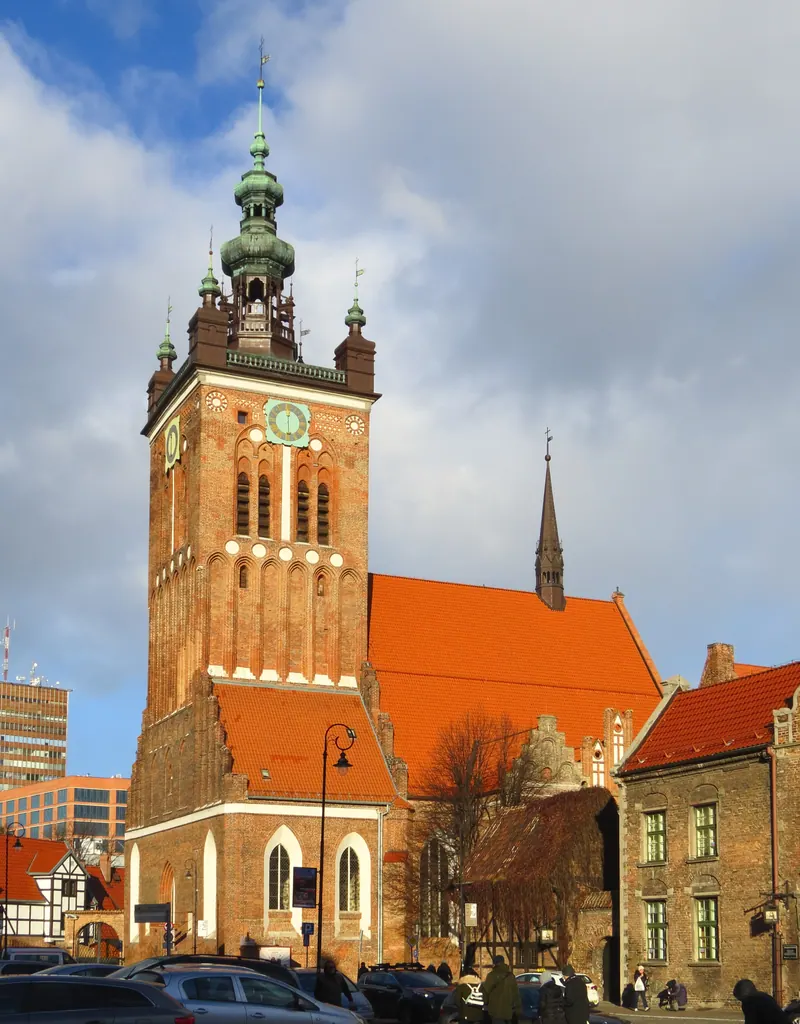
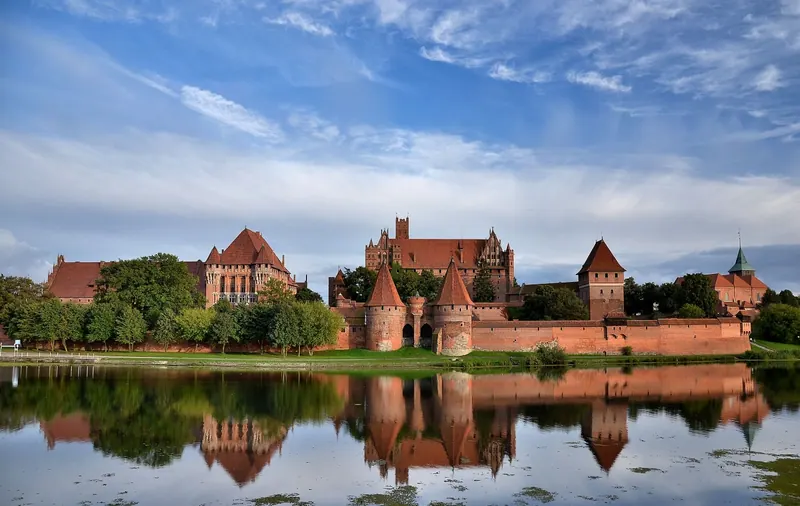
Gdańsk grew from a Pomeranian stronghold at the mouth of the Vistula into one of the richest ports on the Baltic. First recorded in 997 in the life of St Adalbert, the town received its charter in the 13th century and was seized in 1308 by the Teutonic Knights, who held it for more than 150 years. Under the Order the city joined the Hanseatic League and shipped Polish grain and timber to Flanders and England in exchange for cloth, salt and wine.
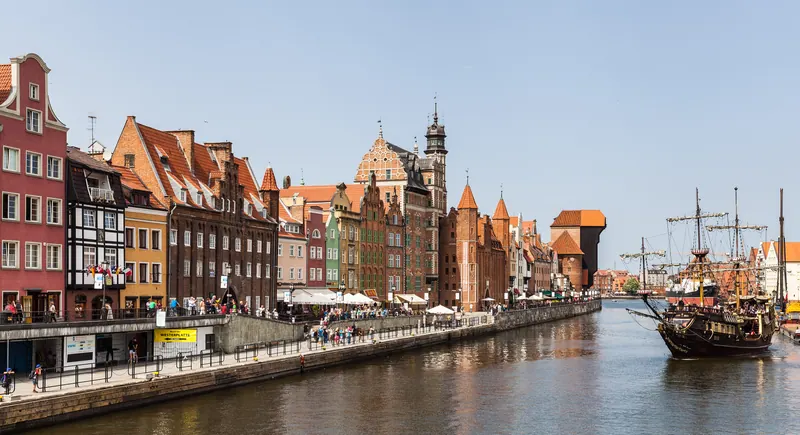
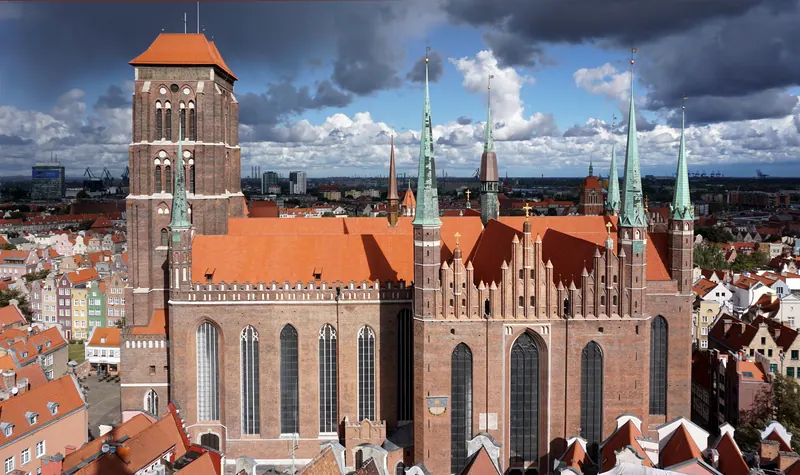
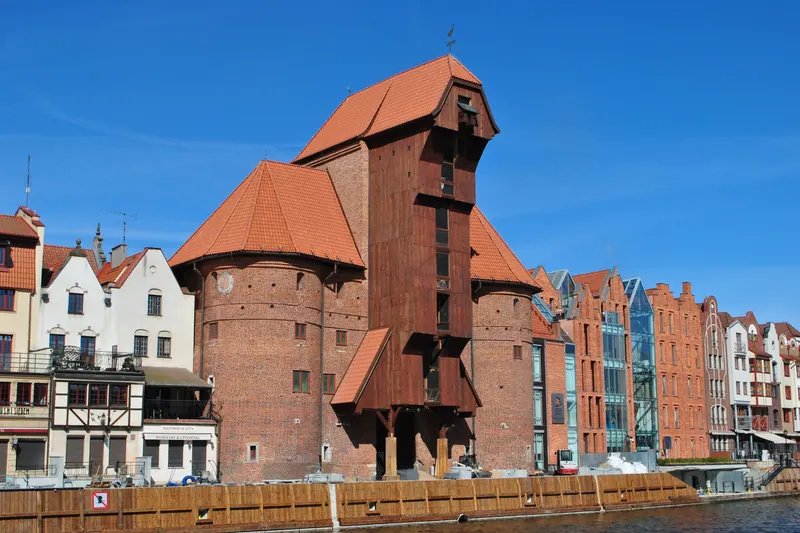
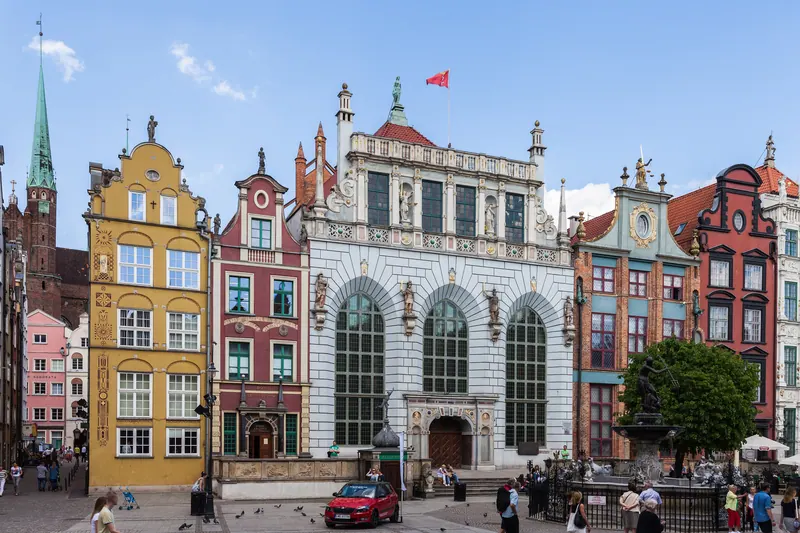
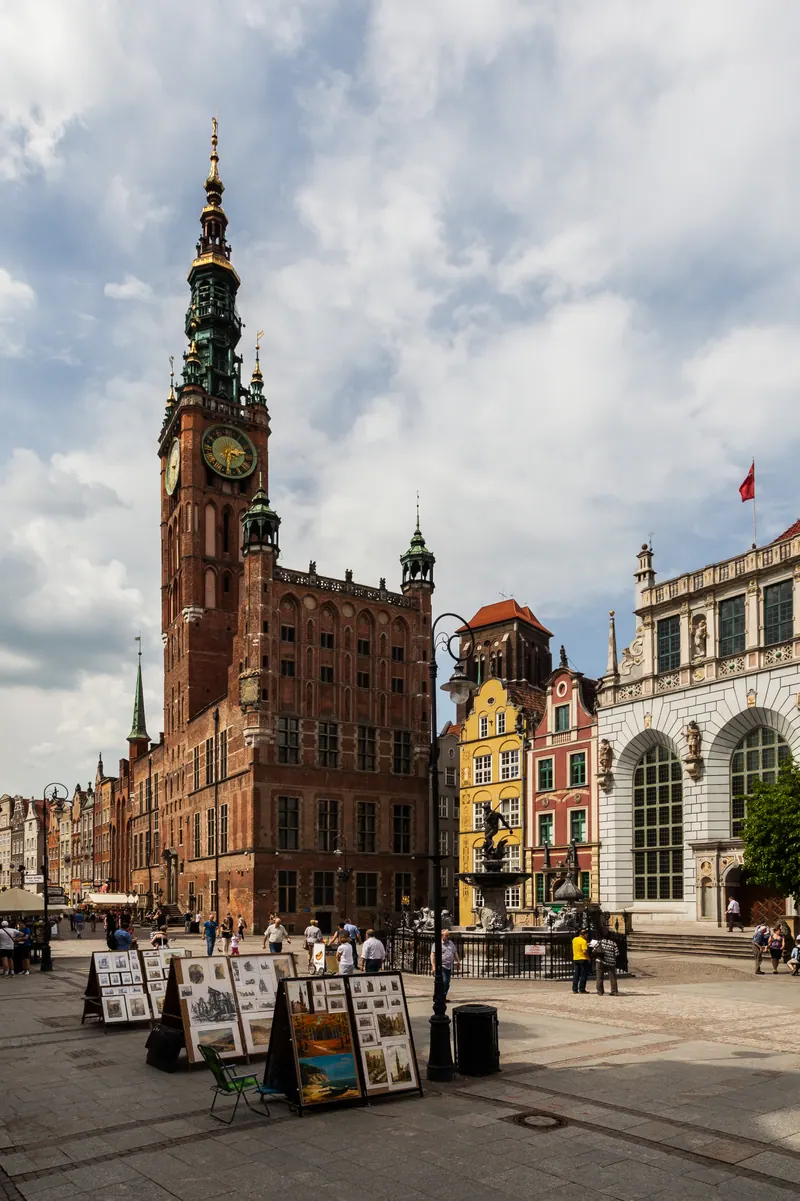
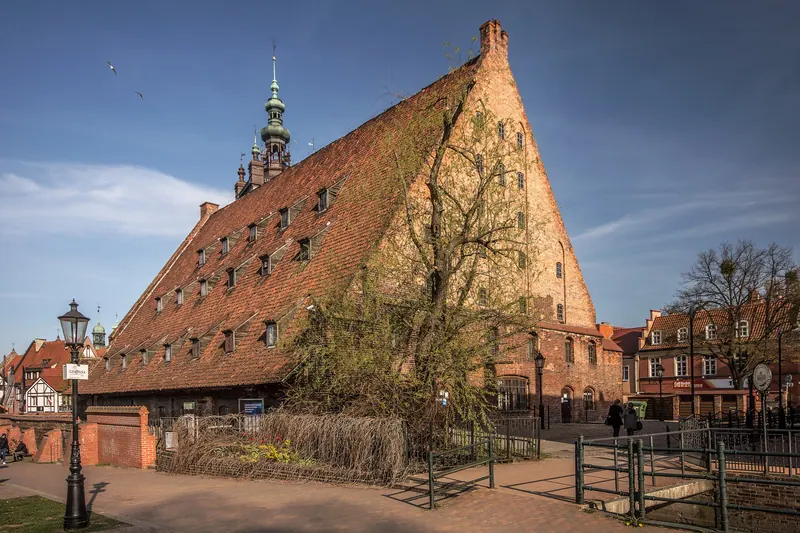
The turning point came in 1454, when the citizens rose against the Knights, demolished their castle and placed the city under the Polish Crown. The Second Peace of Thorn in 1466 confirmed the change and granted Gdańsk wide self-government, which it used to become the largest and wealthiest city in the Polish-Lithuanian Commonwealth. The late-medieval boom paid for the buildings that still define the Main Town: the brick basilica of St Mary’s, one of the largest brick churches in the world, built between 1343 and 1502; Artus Court, the merchants’ hall on Długi Targ; the Main Town Hall with its slender tower; and the Crane (Żuraw) on the Motława, a port gate of 1444 with a treadwheel hoist that could lift two tonnes.
Most of this was reduced to rubble in March 1945. The Main Town that visitors walk through today is a reconstruction of the 1950s and 1960s that restored the street plan and the facades along Długa and Długi Targ, with brick interiors often rebuilt in simplified form. St Mary’s was re-roofed and its astronomical clock of 1470 restored; the Crane became part of the National Maritime Museum.
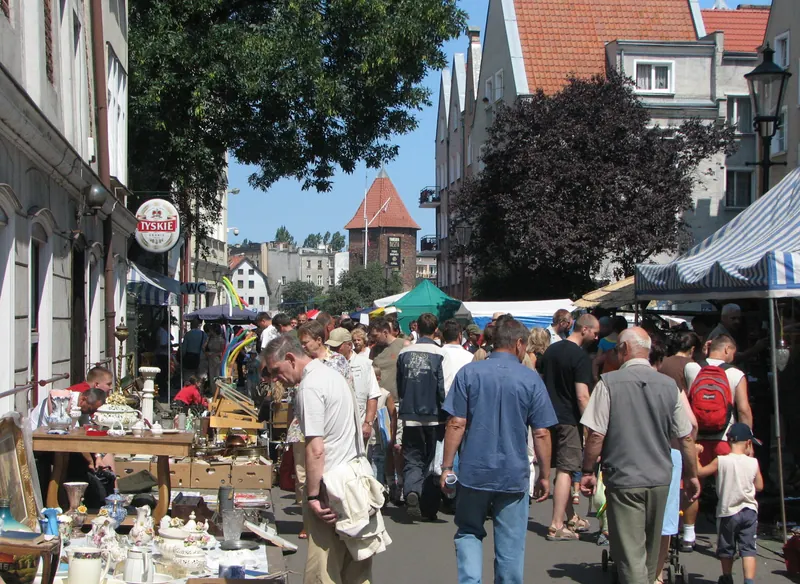
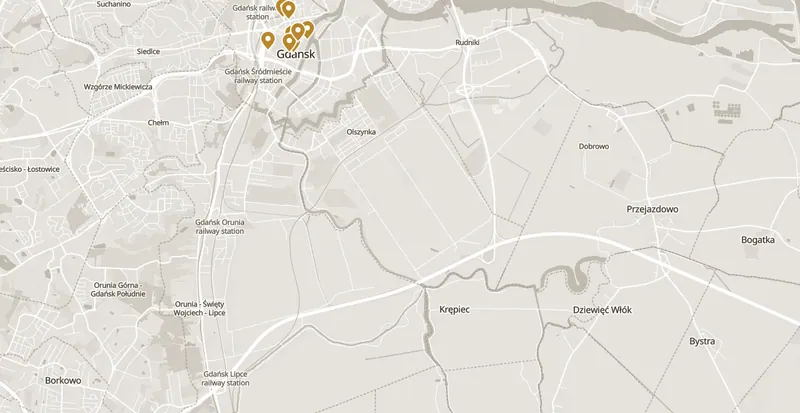
The medieval calendar survives in one very visible form: St Dominic’s Fair, first granted by papal privilege in 1260 and revived in 1972, which fills the same streets with stalls for three weeks every summer. The Main Town is ten minutes on foot from Gdańsk Główny station, and the waterfront, the Crane and the Maritime Museum islands sit together along the Motława.