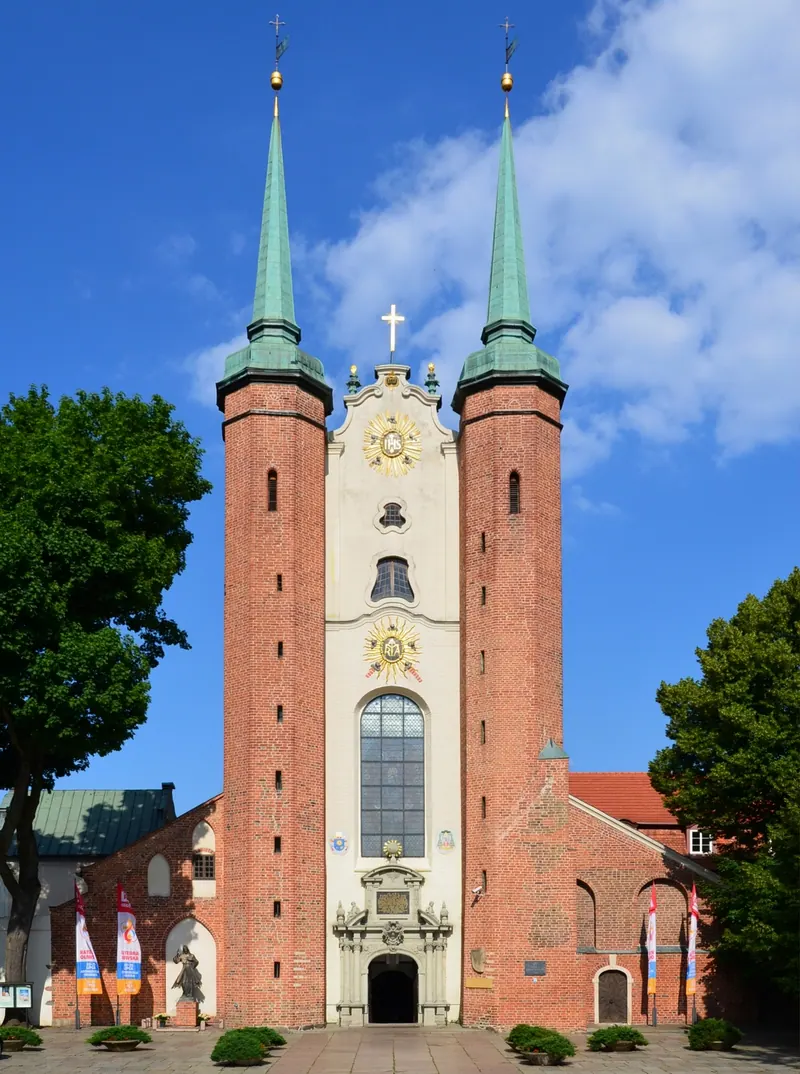
The Pomeranian dukes brought Cistercians to Oliwa in 1186. Their first Romanesque oratory burned in 1224 in a raid by the pagan Prussians; the brick church that replaced it grew through the 13th and 14th centuries into the Gothic basilica standing now — a three-aisled brick church on a Latin cross plan, 107 m long, the longest church in Poland. It is very narrow for its length, which is the first thing you notice from the west door: a tunnel of brick running away from you.
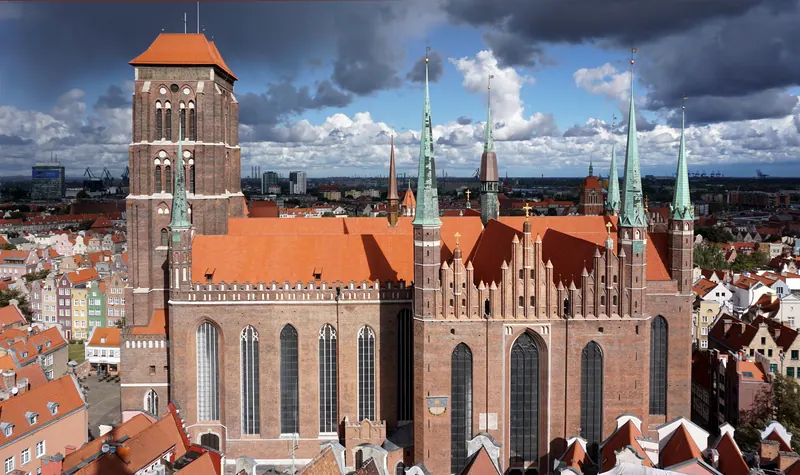
Why this one matters on a Gdańsk list. The Main Town churches were gutted in March 1945 and what you see in them is post-war. Oliwa, four miles out along the coast, came through: the cathedral survived, and so did the monastery, though the abbot’s palace was destroyed. Soviet soldiers broke the organ console, stole pipes and wrecked the electrics, but the instrument survived and was playing again at midnight Mass in 1946. If you want to stand in a medieval Gdańsk building and not have to mentally subtract anything, this is where you go.
Be equally honest about the interior. A fire in 1577 destroyed much of the church and the fitting-out that followed is Baroque and Rococo — twenty-odd altars, black-and-white marble, and the great organ of 1763–88 built by Jan Wulf of Orneta and finished by the Gdańsk organ-builder Friedrich Rudolf Dalitz, with trumpeting angels, stars and a sun that move while it plays. Gothic bones, Baroque skin.
The cathedral runs short organ presentations all year, about twenty minutes each, on a timetable it publishes month by month. In July and August they run on weekdays roughly hourly from 10:00 to 15:00 and on Sundays at 15:00 and 16:00; from November to March it drops to 12:00 on weekdays and 15:00 on Sundays. Three instruments are in use — the great organ, a transept organ and a positive.
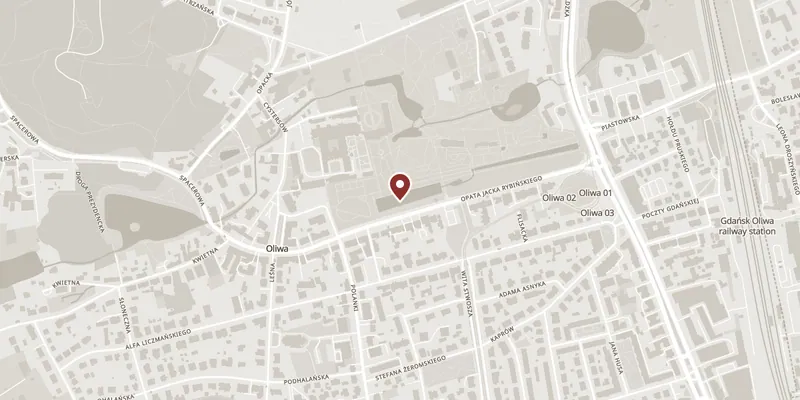
Get here on the SKM commuter train from Gdańsk Główny to Gdańsk Oliwa, roughly a quarter of an hour, then about ten minutes on foot through the park.