Medieval Booker

Landmark ◆ Gdańsk

Mariacka Street

The only street in old Gdańsk that keeps a complete set of przedproża — the raised terraces with steps, balustrades and carved gargoyle downspouts that the town built because the wet ground would not take deep cellars. Walk it before nine in the morning, and look up at the spouts rather than into the amber windows.

Where and when

Where
ul. Mariacka, 80-833 Gdańsk (between the Mariacka Gate on the Motława and St Mary's), Gdańsk, Poland Open in Google Maps Walking directions
Era
Medieval street plan and merchant terraces; houses destroyed March 1945 and rebuilt from the mid-1950s
Opening
Open at all hours. Shops and galleries generally trade from mid-morning into the evening and keep shorter hours out of season (as of August 2026)
Price
Free — it is a public street. The amber shops, galleries and cafés on and under the terraces set their own prices (as of August 2026)
Best time
Before 09:00, when the café tables are stacked and the street is empty, or after the shops close and the lamps come on.
Good for
Free or cheapBest in the eveningQuiet corner
Official site
www.gdansk.pl
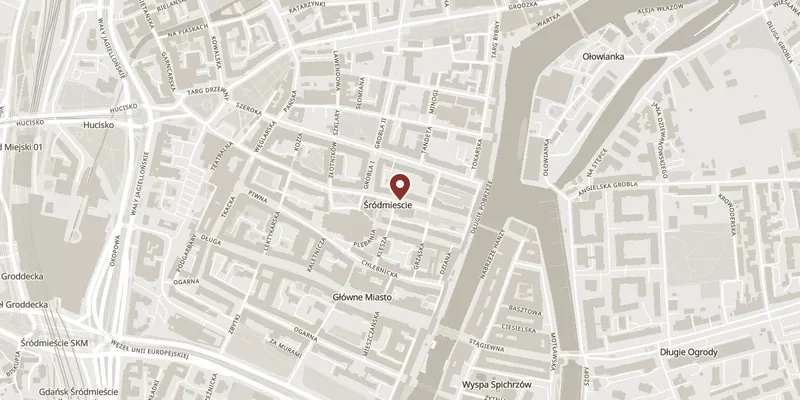
Map showing where Mariacka Street is
Open in Google Maps Walking directions © MapTiler © OpenStreetMap contributors

Checked

What is Mariacka Street?

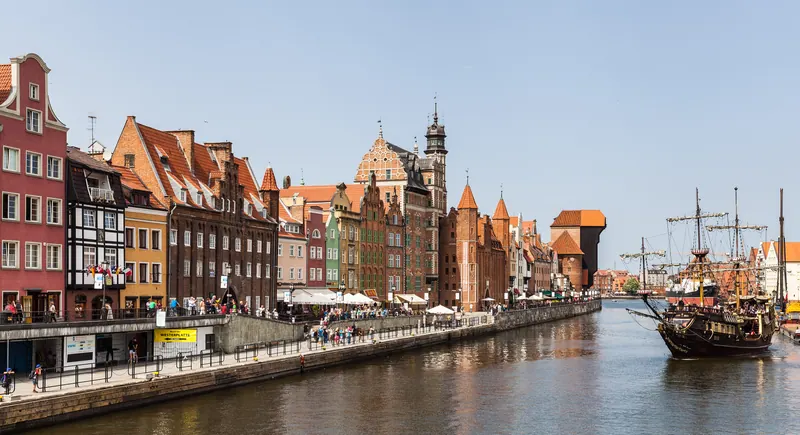
Mariacka runs about 200 m from the Gothic arch of the Mariacka Gate on the Motława to the east end of St Mary’s, a canyon a few metres wide between four-storey houses. It is the best-looking street in Poland and it is almost entirely a reconstruction, and both of those things are worth knowing before you walk down it.

The feature to come for is the przedproża. The ground here is waterlogged and would not take deep cellars, so merchants raised their storage partly above street level and put a terrace in front of each house: a platform reached by a flight of stone steps, edged with balustrades and carved posts, with the cellar mouth underneath. Every house on Mariacka has one, which is true of no other street in the city. Along their edges run the rzygacze — the ornamental spouts that throw roof water clear of the steps, carved as dolphins, fish heads, dragons and worse. They are at eye level from the roadway and almost nobody looks at them.

What is old here. Mariacka was destroyed in March 1945 along with the rest of the centre. One tenement survived, along with some of the przedproża and the battered shells of the Mariacka Gate and the Naturalists’ House at the Motława end. The rubble was cleared in 1952–53 and what was left of the old architecture was inventoried and stored; the houses were rebuilt from the mid-1950s, with the terraces, carving and ornament reconstructed afterwards, and stone that had been salvaged reset where it could be. So the street plan and the terraces are genuine; the facades above them are careful 20th-century work built to an idealised 17th-century picture rather than to what stood here in 1939.

The cellars and ground floors under the terraces are amber shops and small galleries — this is where the Gdańsk amber trade actually happens — with cafés on the terraces themselves. It costs nothing to walk and it is at its best empty: before about 09:00, or late in the evening when the shops shut and the lamps are on.
Frequently asked questions

What are the przedproża on Mariacka Street?

Raised terraces in front of each house, reached by stone steps and edged with balustrades and carved posts, with cellar storage underneath. They were built because the waterlogged ground would not take deep cellars. Mariacka is the only street in old Gdańsk that keeps a complete set.

What are the gargoyles on Mariacka Street?

They are called rzygacze — ornamental spouts that throw roof water clear of the terrace steps, carved as dolphins, fish heads and beasts. They sit at eye level from the roadway.

Is Mariacka Street original or rebuilt?

Rebuilt. The street was destroyed in March 1945 and only one tenement, some of the przedproża and the damaged shells of the Mariacka Gate and the Naturalists' House survived. The rubble was cleared in 1952–53 and the houses were rebuilt from the mid-1950s, with the terraces and carving reconstructed afterwards.

Where do you buy amber in Gdańsk?

Mariacka Street is the amber street: the cellars and ground floors under the terraces are amber shops and galleries. The Amber Museum in the Great Mill is the place to learn what you are looking at before you buy.

Is Mariacka Street free to visit?

Yes. It is a public street, open at all hours and free to walk.

Festivals in Gdańsk

Medieval festivals in Gdańsk
Featured
Medieval Markets & Fairs Historic City Celebrations

St. Dominic's Fair (Jarmark św. Dominika)

Gdańsk, Poland

St. Dominic's Fair is a three-week street fair in the centre of Gdańsk that traces its origins to a papal privilege of 1260, making it one of the oldest trading fairs in Europe. Around 700 stalls of craftspeople, antique dealers, artists and food sellers fill the Main Town from late July to mid-August, with some 200 concerts and events alongside.

Expected 2027
Family

More places in Gdańsk

Places in Gdańsk
Church Start here

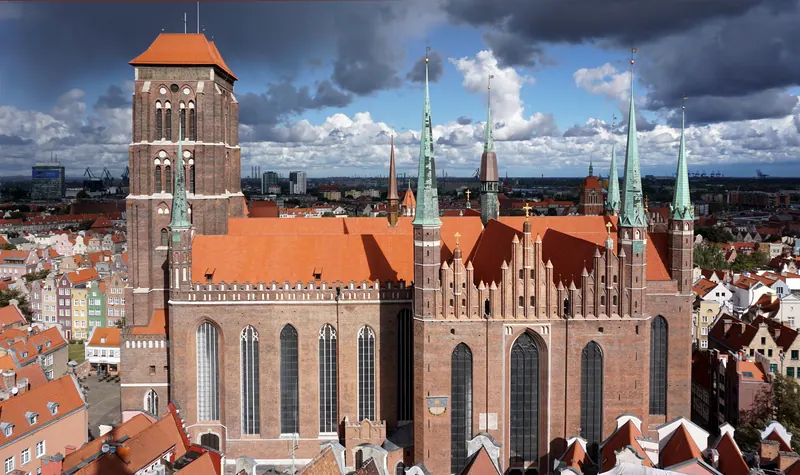
St Mary's Basilica

Begun 25 March 1343, last vault keystone 1502; burned 1945, vaults and roof rebuilt 1952–55

The largest brick church in Europe, begun on 25 March 1343 and closed with its last vault keystone in 1502 — 159 years of building for a merchant parish that wanted room for the whole town. Come at 11:57 for the figure show on Hans Düringer's astronomical clock of 1470, then climb the tower.

Free or cheap Good with children Works in the rain
Walking directions
Landmark

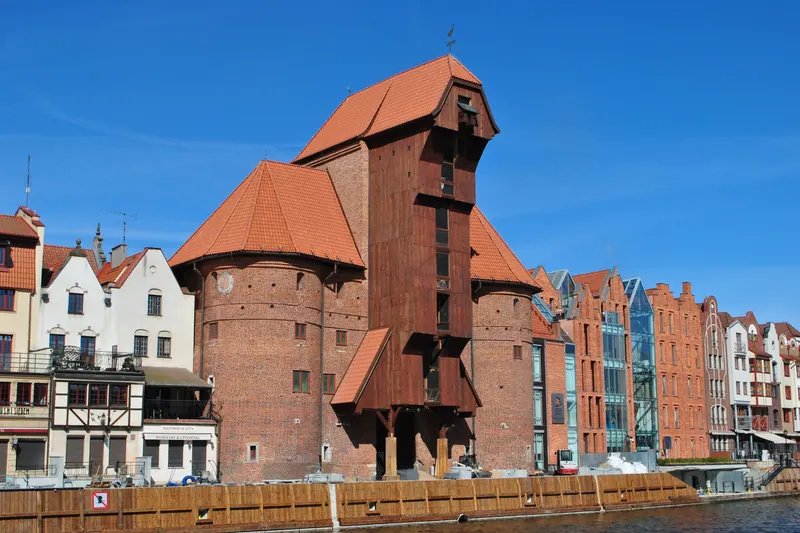
The Gdańsk Crane (Żuraw)

Built 1442–44 as gate and hoist; timber structure burned 1945 and reconstructed by 1962; restored 2021–24

A water gate and port hoist built in 1442–44, with two pairs of treadwheels 6 to 6.5 m across that men walked inside to lift about four tonnes to a height of 11 m — the only medieval port crane of its kind left in Europe. It reopened on 30 April 2024 after a three-year restoration; go on a Wednesday, when the permanent exhibition is free.

Good with children Works in the rain
Walking directions
Castle

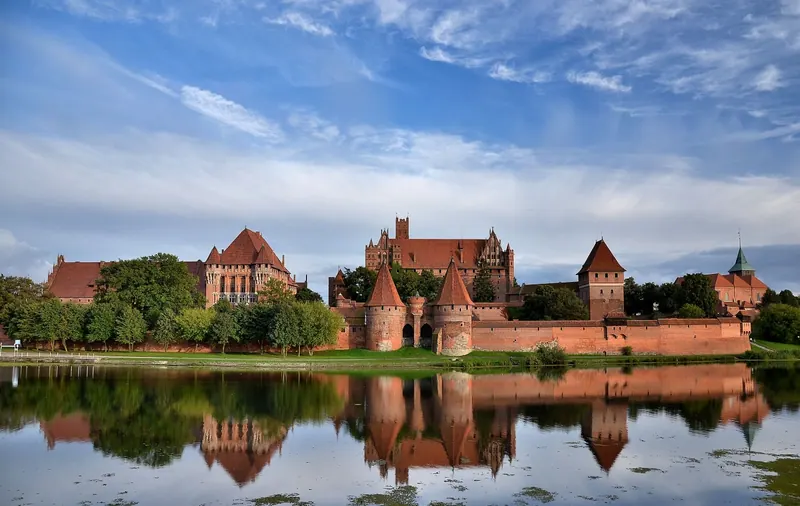
Malbork Castle

Begun 1274; Teutonic Order's headquarters from 1309 to 1457; restored from 1882, rebuilt again after 1945

The Teutonic Order's headquarters from 1309 and the capital of its state until 1457: three castles inside one wall, 21 hectares of it, the largest brick fortress in the world. It is 60 km from Gdańsk and about an hour on the train, and the Historical Route ticket at 80 zł is the one to buy — the cheaper Walking Route only gets you into the grounds.

Good with children
Walking directions
All articles