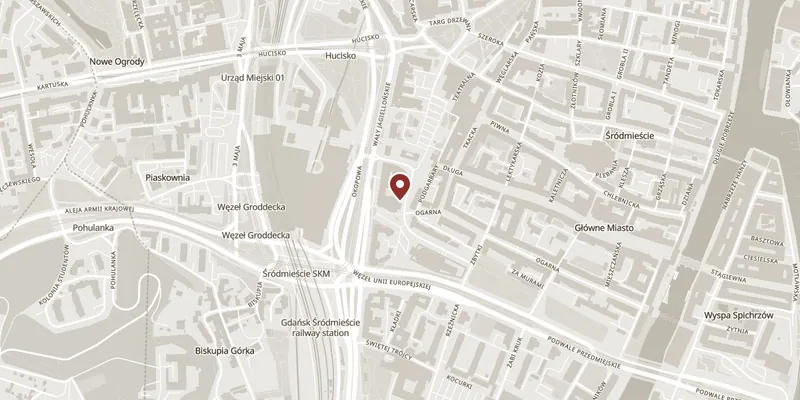
This is the one piece of Gdańsk’s land defences you can walk into. It went up in the middle of the 14th century as part of the Main Town’s medieval fortifications: a rectangular barbican, unusual in its plan, made of two brick buildings — the Torture House (Katownia) in front and the Prison Tower (Wieża Więzienna) behind — linked by a walled neck. It stopped being a military work in the mid-16th century and was rebuilt then into the Gothic-Renaissance shape it now has. From the 17th century to the 19th it was the city gaol: cells on several floors, a torture chamber, and executions outside. Look on the Prison Tower’s face on the Golden Gate side for the remains of the pillory.
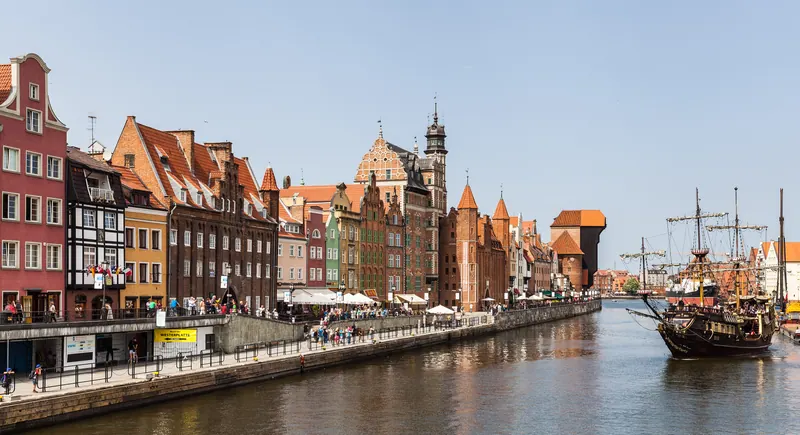
Getting the geography right saves confusion. Walking in from the station you pass the Highland Gate (Brama Wyżynna, 1570s), then this complex, then the Golden Gate (1612–14), and only then Długa street. The Highland and Golden Gates are Renaissance and Mannerist — handsome, and not medieval. The Foregate is the medieval one, and it is the only one of the three you can go inside.
The Museum of Gdańsk runs it, and the displays in the two buildings are about the reconstruction of the city after 1945 and about the history of the complex itself. That first subject is worth a deliberate detour on your first morning: archival photographs, film and salvaged architectural sculpture explaining exactly which parts of the Main Town are original, which were rebuilt from measured drawings and photographs, and which were quietly reinvented. Everything else on this list makes more sense afterwards.
The ticket includes the viewing platform at the top of the tower, over 40 m up, looking straight down Długa. Allow about 45 minutes.
One warning about sources: several city and regional tourism pages still describe this building as the home of the Amber Museum. That moved to the Great Mill in 2021. Trust the museum’s own visit page.