Medieval Booker

Museum ◆ Gdańsk

Amber Museum in the Great Mill

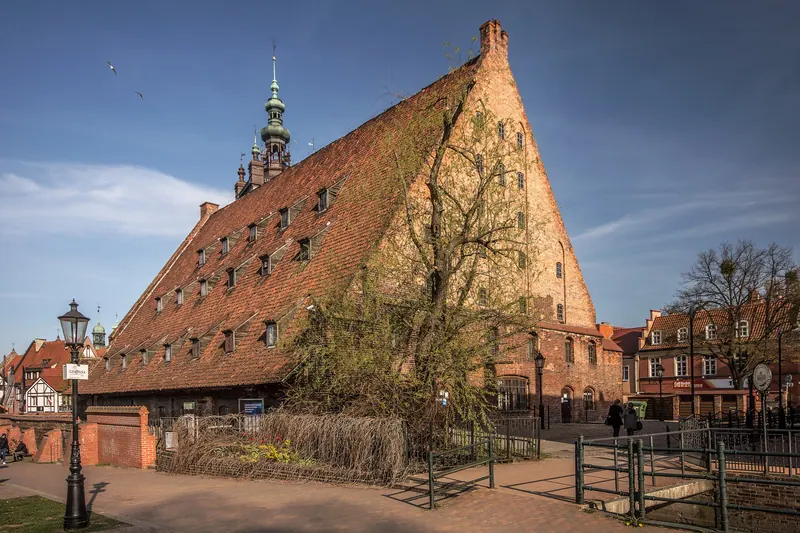
The Teutonic Order's Great Mill of about 1350 — the largest mill of medieval Europe, driven by water wheels in the Radunia canal that still runs past the door — now holding Gdańsk's amber collection over nearly 1,000 m². Amber was the Baltic trade good that made this coast rich long before grain did, and this is where the raw material and the worked object are shown in the same building.

Where and when

Where
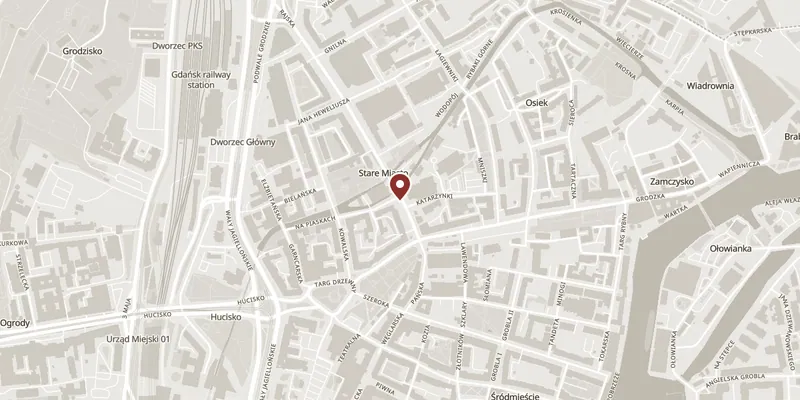
ul. Wielkie Młyny 16, 80-849 Gdańsk, Gdańsk, Poland Open in Google Maps Walking directions
Era
Great Mill built by the Teutonic Order c. 1350; gutted 1945, rebuilt 1962–65; Amber Museum installed 2021
Opening
Monday 12:00–20:00 (free entry), Tuesday–Sunday 10:00–20:00; last admission 60 minutes before closing. These are the Museum of Gdańsk's current listed hours — the branch pages change with the season (as of August 2026)
Price
37 zł normal / 26 zł reduced / 99 zł family. Free on Mondays (as of August 2026)
Best time
Monday afternoon, when it is free and open until 20:00 — the latest closing of any museum on this list.
Good for
Works in the rainGood with children
Official site
muzeumgdansk.pl
Map showing where Amber Museum in the Great Mill is
Open in Google Maps Walking directions © MapTiler © OpenStreetMap contributors

Checked

What is Amber Museum in the Great Mill?

The Great Mill (Wielki Młyn) was put up by the Teutonic Order around 1350 on an artificial channel, the Radunia canal, cut to bring water power into the town. It is a single enormous brick block under a steep roof, and it was the largest industrial building in medieval Europe: twelve water wheels at first, later eighteen, about 5 m across, nine to each long side. It burned in part in 1391 and was extended westward. It ground grain continuously until 1945.

What survives. In 1945 the mill was gutted — the west gable collapsed, the east side was damaged, the roof and all the machinery burned — and only the perimeter walls stood. It was rebuilt in 1962–65, and for years afterwards it held a small shopping arcade, which is what most older guidebooks describe. The wheels are gone and the interior is entirely new. What you get is the medieval envelope, its scale and its site on the water, with a modern museum inside.

The Amber Museum moved here from the Prison Tower and opened on 24 July 2021, tripling its exhibition space to close to 1,000 m². The lower floor deals with the material: Baltic amber as fossil resin roughly 40 million years old, how it forms, the roughly 300 fossil resins known worldwide, and the inclusions — insects and plant matter caught in resin and now under glass. The upper floor deals with the work: amber cut, turned and inlaid from antiquity to now, historic caskets and altars beside contemporary jewellery, and the story of the Amber Room, to which Gdańsk craftsmen contributed.

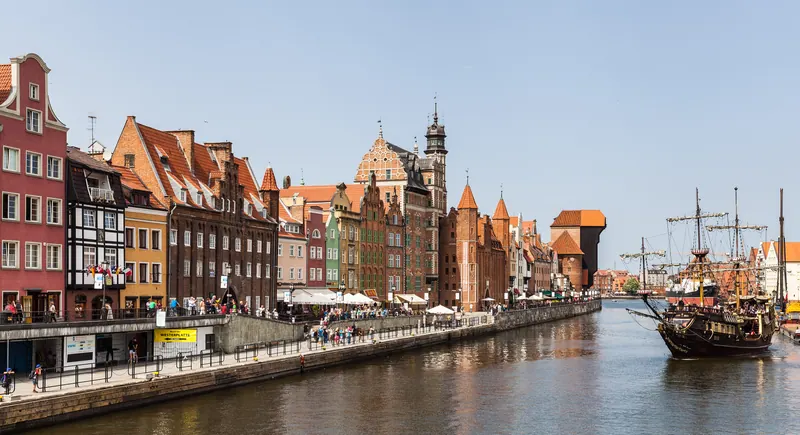
This is the entry that explains everything you will then see on Mariacka street. Gdańsk was an amber town under the Teutonic Order — the Order controlled the beach gathering rights and the guild that worked the stone — and the trade is genuinely medieval, unlike most of what is sold as such along the waterfront.

It is a ten-minute walk north of St Mary’s, past St Catherine’s church, and it is free on Mondays.
What visitors say

4.7 from 12,229 ratings

  • Polona Cimerman

    5 out of 5 a month ago

    One of the best museums ever! Wonderful building, incredible design inside. The collection is amazing and so informative. Thank you!

    Read this review on Google
  • Kenn Andersen

    5 out of 5 a month ago

    This was a very interesting museum. Nice layout and good information about the exhibits. And like all Museums in Gdansk very affordable.

    Read this review on Google
  • Milán Vajda

    5 out of 5 a month ago

    This museum is a good choice for families with 10-14 yr old children, and for anyone who is interested of the amber and for natural wonders. The exhibition shows the formation amber and covers the human usage of the amber as well.

    Read this review on Google

Ratings and reviews from Google. See all on Google Maps

Frequently asked questions

Where is the Amber Museum in Gdańsk?

In the Great Mill at ul. Wielkie Młyny 16, on the Radunia canal about ten minutes' walk north of St Mary's. It moved there from the Prison Tower and opened on 24 July 2021.

How old is the Great Mill in Gdańsk?

It was built by the Teutonic Order around 1350 and is described as the largest mill of medieval Europe. It had twelve water wheels at first and later eighteen, each about 5 m across, and it worked until 1945.

Is the Great Mill an original medieval building?

Only its outer walls. The mill was gutted in 1945, leaving the perimeter standing, and was rebuilt in 1962–65. The wheels and machinery are gone and the interior is a modern museum fit-out.

How much is the Amber Museum in Gdańsk?

37 zł normal, 26 zł reduced and 99 zł family as of August 2026, and free on Mondays. Last admission is an hour before closing.

Is amber actually a medieval Gdańsk trade?

Yes. Baltic amber was gathered on this coast and worked in the city through the Middle Ages; under the Teutonic Order the gathering rights and the amber-workers' guild were controlled by the Order, and the material was traded across Europe.

Festivals in Gdańsk

Medieval festivals in Gdańsk
Featured
Medieval Markets & Fairs Historic City Celebrations

St. Dominic's Fair (Jarmark św. Dominika)

Gdańsk, Poland

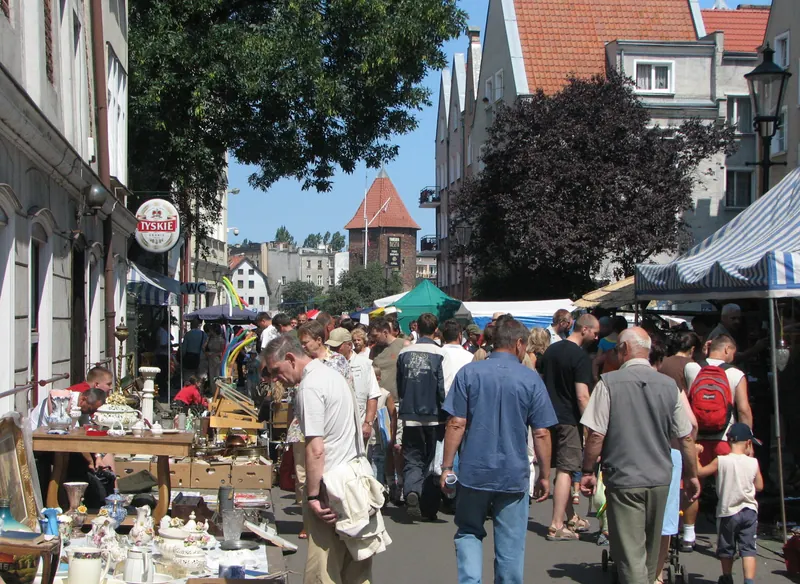
St. Dominic's Fair is a three-week street fair in the centre of Gdańsk that traces its origins to a papal privilege of 1260, making it one of the oldest trading fairs in Europe. Around 700 stalls of craftspeople, antique dealers, artists and food sellers fill the Main Town from late July to mid-August, with some 200 concerts and events alongside.

Expected 2027
Family

More places in Gdańsk

Places in Gdańsk
Church Start here

St Mary's Basilica

Begun 25 March 1343, last vault keystone 1502; burned 1945, vaults and roof rebuilt 1952–55

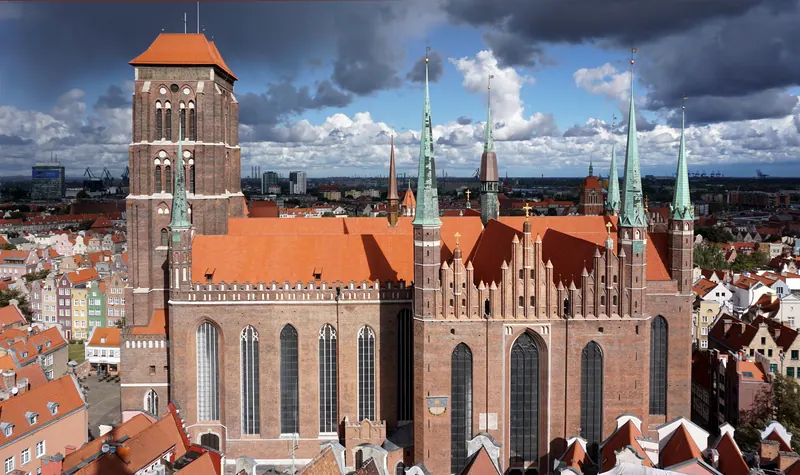
The largest brick church in Europe, begun on 25 March 1343 and closed with its last vault keystone in 1502 — 159 years of building for a merchant parish that wanted room for the whole town. Come at 11:57 for the figure show on Hans Düringer's astronomical clock of 1470, then climb the tower.

Free or cheap Good with children Works in the rain
Walking directions
Landmark

The Gdańsk Crane (Żuraw)

Built 1442–44 as gate and hoist; timber structure burned 1945 and reconstructed by 1962; restored 2021–24

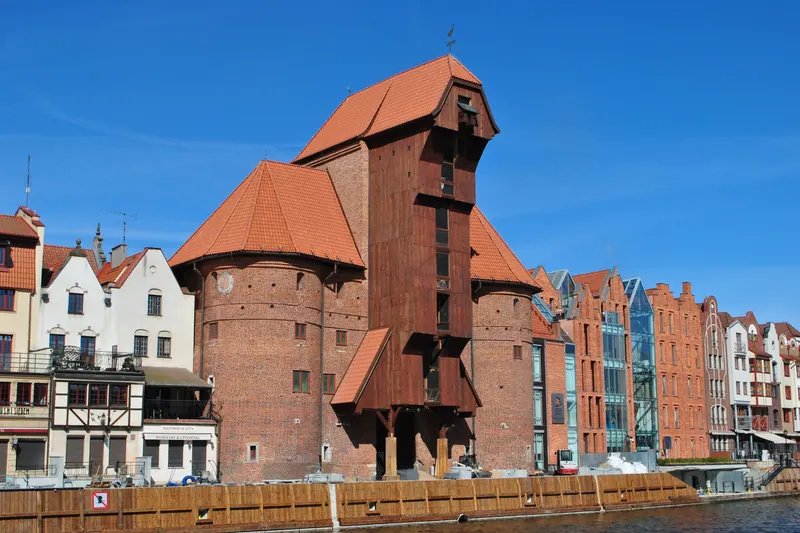
A water gate and port hoist built in 1442–44, with two pairs of treadwheels 6 to 6.5 m across that men walked inside to lift about four tonnes to a height of 11 m — the only medieval port crane of its kind left in Europe. It reopened on 30 April 2024 after a three-year restoration; go on a Wednesday, when the permanent exhibition is free.

Good with children Works in the rain
Walking directions
Castle

Malbork Castle

Begun 1274; Teutonic Order's headquarters from 1309 to 1457; restored from 1882, rebuilt again after 1945

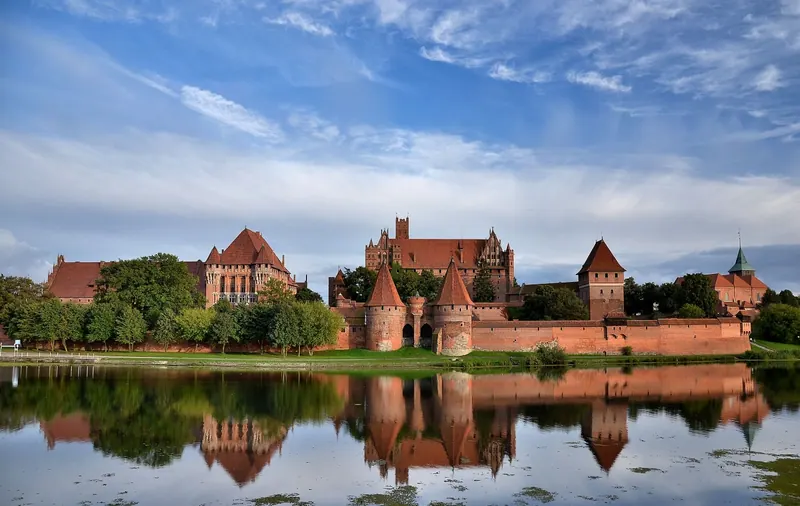
The Teutonic Order's headquarters from 1309 and the capital of its state until 1457: three castles inside one wall, 21 hectares of it, the largest brick fortress in the world. It is 60 km from Gdańsk and about an hour on the train, and the Historical Route ticket at 80 zł is the one to buy — the cheaper Walking Route only gets you into the grounds.

Good with children
Walking directions
All articles