Somewhere on this list is the festival where your child falls asleep on a hay bale during a joust, and the one where you pay £10 in cash to park in a field that was a battlefield in 1471. Fifteen festivals in ten countries, from the first weekend of September 2026 to the middle of August 2027; every 2026 date is confirmed, four 2027 dates are already announced (Up Helly Aa, Tewkesbury, Grunwald and the Landshuter Hochzeit) and the rest are expected from each festival’s fixed pattern, all checked on 23 August 2026. By the end you’ll know which one to book, which month, and whether to bring a cloak or a pushchair.
“Best” here is a selection rule, not a ranking. Each festival is on the list because it is the best of its kind for a particular reader: the free one, the one on the real battlefield, the one in a town that is actually old, the one with a dragon. I’ve applied my three tests (the food, the loos, and whether anyone cried before lunch) and two adult ones: is the town real, and can you get a bed.
Checked 23 August 2026; dates marked expected are not yet announced
September 2026
Jornadas Medievales de Ávila, Ávila, Spain
Jornadas Medievales de Ávila (the Mercado de las Tres Culturas) runs 3–6 September 2026 and is expected 2–5 September 2027, always Thursday to Sunday on the first weekend of the month. It is on the list as the free one: 310 stalls and about 150 shows across some 20 sites in and under a 12th-century wall, nine mounted tournaments at the Atrio de San Isidro, and not a ticket anywhere. The Grand Parade of the Three Cultures leaves at 12:00 on Saturday. The catch is that the council counted 130,000 people in 2025, and expect the thick of them around the Saturday parade; Ávila sits at 1,130 m, so the evenings are cold in a way Madrid, 90 minutes away by train, is not. Take a jumper, and if you have under-twelves, the Sunday children’s race at 11:00 is a calmer morning than the parade.
Karlštejnské vinobraní, Karlštejn near Prague, Czechia
Karlštejnské vinobraní is the Prague add-on: 26–27 September 2026, the weekend before St Wenceslas Day, at the castle Charles IV built to keep the crown jewels in. At 14:30 both days the emperor, empress and a court of more than 150 arrive up through the village; tournaments run at 11:00 and 16:00, and burčák, the half-fermented new wine, is sold by the cup. Saturday costs 350 Kč, Sunday 250 Kč (2026 prices); under-15s are free, and so is anyone in complete medieval costume, which is the cheapest ticket on this list if you own a kirtle. Take the S7 train from Prague, 45 minutes, then climb 20 to 25 minutes; the roads are closed and the hill does not care how you feel about it.
October 2026
Battle of Hastings Re-enactment, Battle, England
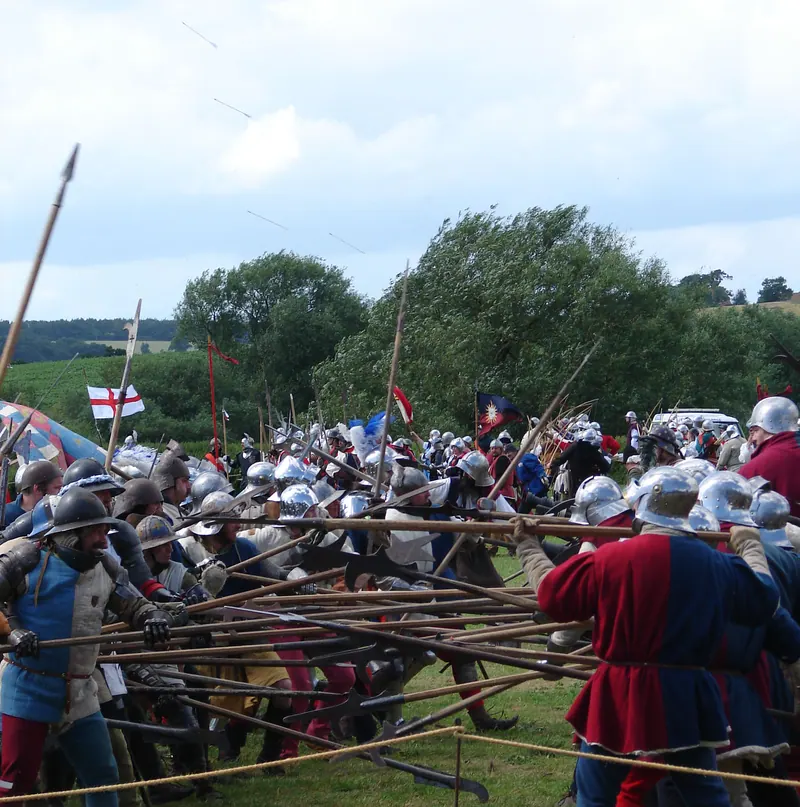
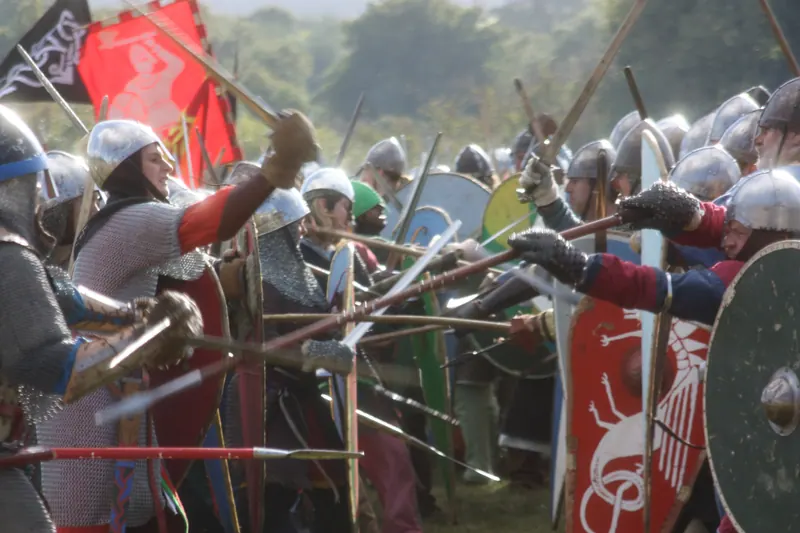
The Battle of Hastings Re-enactment on 10–11 October 2026 marks 960 years since 1066, and it earns its place by happening on the real slope below Battle Abbey, where Harold’s shield wall stood. More than 500 reenactors, one battle a day, a sword school for children, and English Heritage tickets at £24 an adult in advance for 2026 (child £12, family from £36), more on the day. The 2027 edition is expected 16–17 October. Boots, not trainers: English Heritage’s own words for the ground are “grass, can be muddy”, and an October meadow in Sussex honours that. Book the advance ticket; the weekend sells well and the station on the Charing Cross line means you can leave the car at home.
November–December 2026
Esslingen Medieval Market & Christmas Market, Esslingen am Neckar, Germany
The Esslingen Medieval Market & Christmas Market runs 24 November–22 December 2026, daily 11:00–20:30, later on Fridays and Saturdays, and is free to enter. It is the winter entry and the under-tens entry: around 200 stalls, a hand-cranked Ferris wheel, a heated wooden bathing tub on the Hafenmarkt, and some twenty craftspeople at forges and glass furnaces, 15 minutes from Stuttgart on the S1. The organiser counts around a million visitors across the four weeks, which is the catch. My Christmas markets guide sorts the markets that are actually medieval from the ones merely held in old squares. Go on a weekday afternoon for the craft demonstrations and the chance of seeing the blacksmith rather than the back of someone’s coat.
January–February 2027
Up Helly Aa, Lerwick, Shetland, Scotland
Up Helly Aa is Tuesday 26 January 2027, announced, as it is every last Tuesday of January. About a thousand torch-bearing guizers walk a full-size galley through Lerwick from 19:30 and burn it while 5,000 or so people sing, and that is free to watch from the street. Say it plainly: this is an 1880s invention, a torchlit procession from 1881 that acquired a Viking ship in 1889, and it is none the worse for having a date of birth. The halls afterwards are private; Shetland in January is dark, cold and windy; the ferry from Aberdeen takes about 12 hours and beds in Lerwick are booked many months ahead. Book the night the date is public, and stand upwind of the burning.
Jorvik Viking Festival, York, England
The Jorvik Viking Festival takes February half-term, expected 13–21 February 2027 with dates still to be published. It is on the list as the one that wants children: a free encampment and traders’ market on Parliament Street, a march of several hundred warriors on the final Saturday, a best-beard contest open to all ages, and a finale battle by Clifford’s Tower that is ticketed, around £20 a head in recent years. Boat-burning has been dropped, so don’t promise anyone a burning boat. York in February is cold and the centre is full; the Jorvik Viking Centre and Barley Hall are the places to thaw.
April 2027
Setmana Medieval de Montblanc, Montblanc, Spain
The Setmana Medieval de Montblanc is expected 16–25 April 2027, the 40th edition, over the two weekends around Sant Jordi on 23 April. It is the one with a dragon: local tradition, via the folklorist Joan Amades, puts Saint George’s fight outside these 14th-century walls, and the town stages it, with a night show projected on the wall (Dracum Nocte, recommended for ages 12 and up) and an 80-minute open-air Legend. The market of about 130 stalls, the Entrada Reial parade and the rose ceremony are free; in 2026 the Legend cost €22, the joust €15, the children’s cantata €7. The trains from Barcelona Sants take about two hours. Book the shows online as soon as the programme is out and do the cantata, not Dracum Nocte, if anyone in the party is under twelve.
June 2027
Tallinn Old Town Days, Tallinn, Estonia
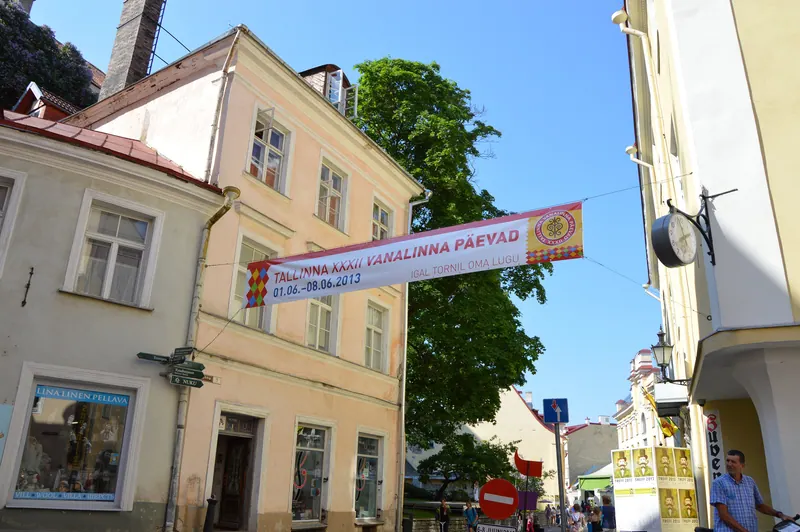
Tallinn Old Town Days (Tallinna Vanalinna Päevad) is expected 4–6 June 2027, usually the first weekend of June, and the draw is the venue itself: a real Hanseatic town with about 1.9 km of wall and 20 towers still standing. Around 300 mostly free concerts, tower visits, craft demonstrations and open doors to buildings shut the rest of the year. Know what you are buying, though: a city festival in an old town, not a costumed market. If you want the stalls and the children’s knights’ tournament, Tallinn’s separate Medieval Days on Town Hall Square come in the first full week of July. Tallinn is a 15-minute walk from the ferry terminals, which makes a weekend of it from Helsinki.
Landshuter Hochzeit 1475, Landshut, Germany
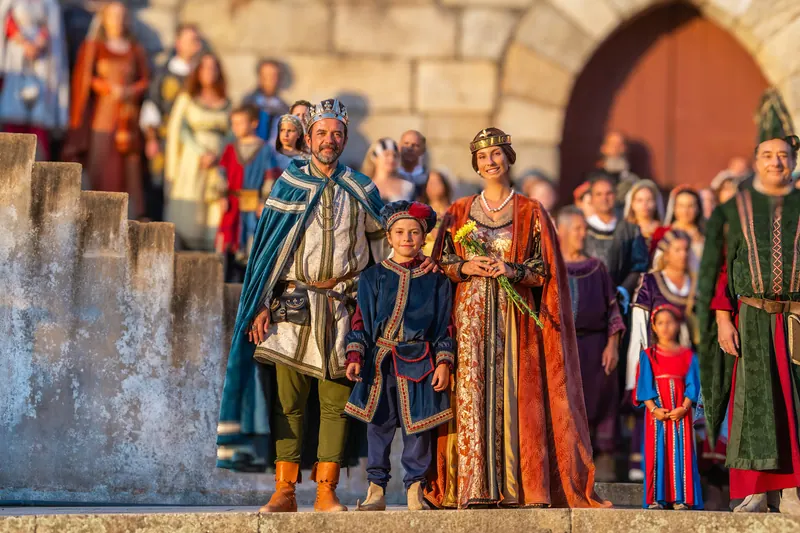
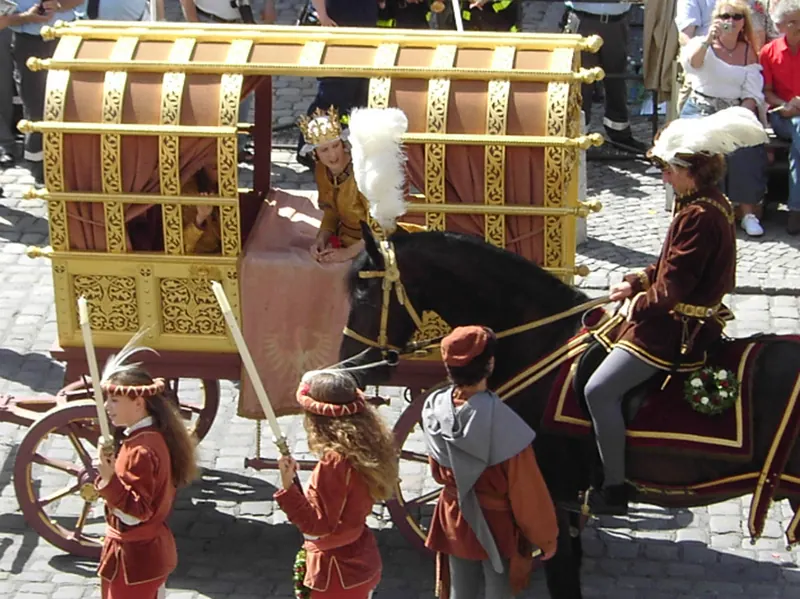
The Landshuter Hochzeit 1475 runs 25 June–18 July 2027, announced, and then not again until 2031. Every four years about 2,500 residents of Landshut, in costume rules that extend to their beards, restage the 1475 wedding of Duke Georg the Rich and Hedwig of Poland: a procession through the old town on each of the four Sundays, tournaments, a play, and camp life in the evenings. The street procession is free to watch; stands, tournaments and the play are ticketed, and sales open on 9 January 2027 at 09:00 (verify on the day). The 2023 edition drew about 600,000 people, and the procession Sundays are a crush with a pushchair. Landshut is 45 minutes by train from Munich. Our guide to the Hochzeit explains why the town does this to itself.
July 2027
Tewkesbury Medieval Festival, Tewkesbury, England
Tewkesbury Medieval Festival is 10–11 July 2027, announced, on fields beside the Bloody Meadow where Edward IV finished the Lancastrians in 1471. Free entry, around 2,000 reenactors, a battle each afternoon with cannon, up to 120 traders’ stalls and a Sunday parade through town at 11:15. The only thing that costs is parking at £10 per car per day, cash only, which is also the only part of the weekend that feels medieval in the wrong way. I have carried a sleeping five-year-old across that meadow at six in the evening, and the car park is further than it looks. For a first festival with children it is hard to beat: one day, no tickets, and a burger van within sight of a shield wall. If it is your first of any kind, read the first-timer’s guide before you read the parking signs.
Kaltenberger Ritterturnier, Kaltenberg, Germany
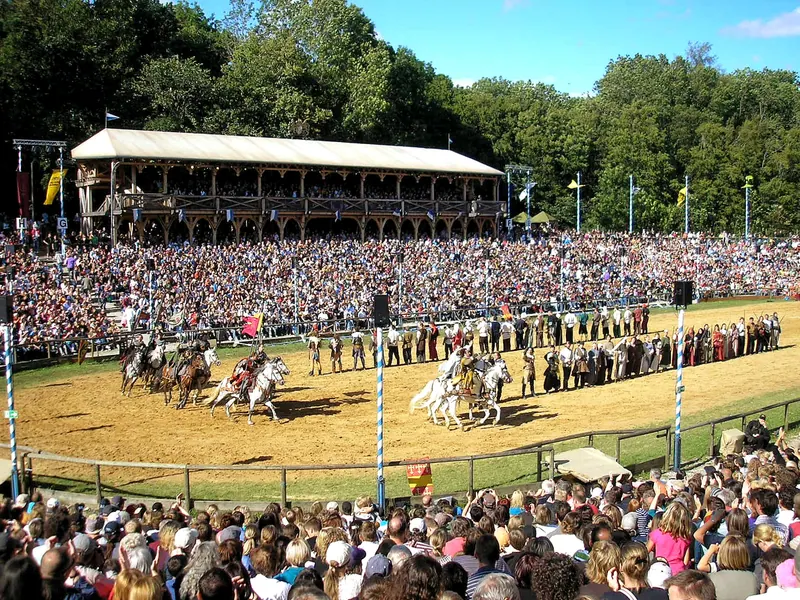
The Kaltenberger Ritterturnier is expected 9–25 July 2027, three weekends, 50 km west of Munich at a castle that is neo-Gothic rather than Gothic. This is the jousting show: full-contact tilting, horse stunts and pyrotechnics in a 13,000-capacity arena, by the French stunt troupe Cavalcade, with a market of more than 100 stalls and five stages around it. Nothing is free; 2026 tickets started at €34.90 a day, which buys roughly eight hours of programme and a Sunday children’s tournament where small visitors are knighted. The Saturday evening tournament runs past midnight and the arena is open-air, so pack a rain layer. The jousting category has the smaller, cheaper alternatives.
Battle of Grunwald Reenactment, Grunwald, Poland
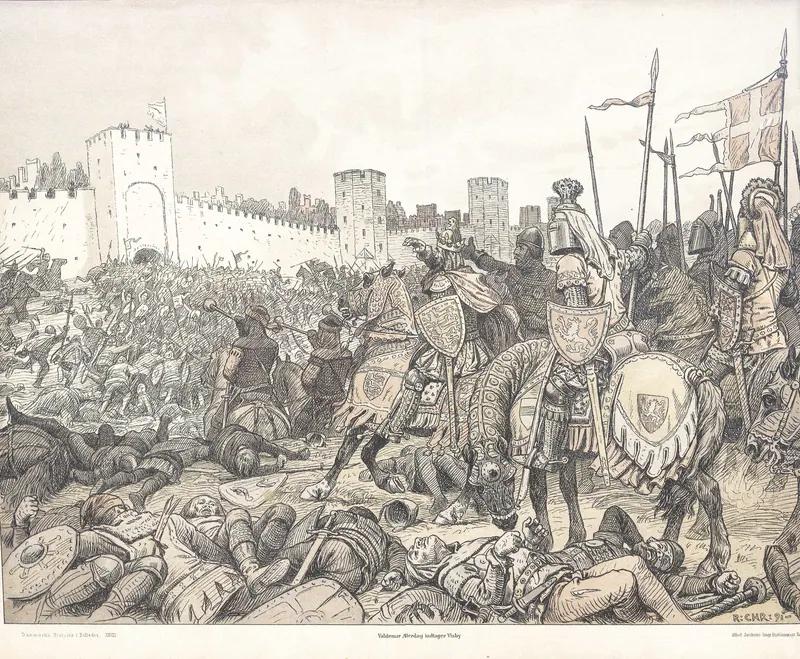
The Battle of Grunwald Reenactment is Saturday 17 July 2027 at 15:00, announced, on the field where Jagiełło and Vytautas beat the Teutonic Order in 1410. Around 1,300 to 1,400 armoured fighters in 2026, more than 3,500 people in the camps, spectators quoted at around 100,000, and all of it free apart from parking. This is the reenactors’ one: a real field, a real anniversary, and camps you can walk through for days before the battle. The catch is rural: little shade, long queues to leave, and the organisers themselves tell you to bring water and something to sit on. Our Grunwald guide covers the camps. Arrive in the morning and treat the battle as the end of the day, not the reason for it.
Sighișoara Medieval Festival, Sighișoara, Romania
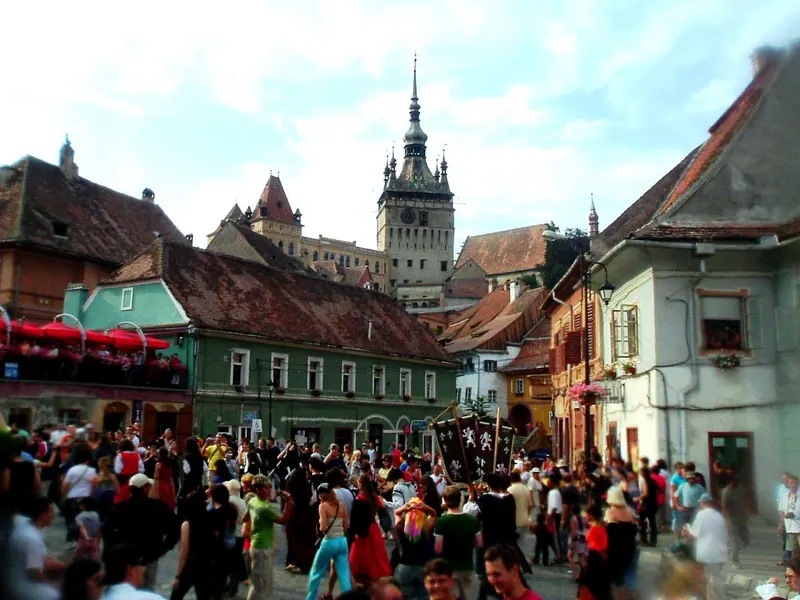
The Sighișoara Medieval Festival is expected 23–25 July 2027 on the last weekend of July. The citadel is the venue, which is the whole argument: a Saxon hill town with nine guild towers, squares renamed for the weekend (Knights’ Market, Troubadours’ Square), parades, mounted displays, a children’s zone by the City Hall, and a free concert stage on Citadel Square. There is no ticket for any of it. The catch is the bed: the citadel has a handful of guesthouses and they go months ahead, so stay in the lower town and climb. The house that claims Vlad the Impaler’s birth is now a restaurant, which tells you most of what you need to know about pricing on the square.
Viagem Medieval em Terra de Santa Maria, Santa Maria da Feira, Portugal
The Viagem Medieval em Terra de Santa Maria is expected 28 July–8 August 2027, 12 days, 30 km south of Porto. It is on the list for scale and for the nights: the whole historic centre below the castle is dressed as market, camps and workshops around a chosen chapter of Portuguese history, with daily processions, a mounted tournament and siege scenes that run to 00:30. In 2026 a day cost €6 from Sunday to Thursday and €8 on Friday and Saturday; a 12-day bracelet was €12 and under-sixes were free. Daily tickets don’t allow re-entry, so eat inside. Weekends are heaving; a Tuesday evening is cheaper, cooler and gets you to the front of the siege.
August 2027
Visby Medieval Week (Medeltidsveckan), Visby, Sweden
Visby Medieval Week (Medeltidsveckan) is expected 8–15 August 2027, held every August since 1984 and fixed to week 32, inside 3.4 km of 13th-century wall on Gotland. The town is free to walk and a large share of the 40,000-odd visitors are in wool; the tournament, concerts in roofless churches and craft courses are ticketed and sell out before the week starts. The catch is in the title of Tom’s Visby guide: the bed. Ferries take about three hours from the mainland and beds inside the wall are spoken for by February. Book the ferry and a flat in winter, and fight about costume on the boat. Visby outside the week is the same wall at a third of the price.
How to choose
Five readers, one rule each, and a reason to ignore it.
First festival, no idea if you’ll like it: Tewkesbury or Ávila. Both free, both one good day, both in a real town with a real wall or a real abbey. Skip Tewkesbury if cannon will end the day for anyone under five.
Family with under-tens: Esslingen on a weekday afternoon, Jorvik in half-term, or Montblanc for the cantata and the school of chivalry, which is the only place on this list a child is handed a shield and told to make it better. Skip Esslingen on a weekend evening, when the organiser’s million visitors feel like they have all come at once.
Reenactor, or travelling with one: Grunwald for the field and Visby for the town. Skip Grunwald if a long queue out of a car park after the battle would undo the day.
A couple who want a town rather than a field: Tallinn or Sighișoara, where the festival is a reason to be in an old town you’d visit anyway. If the Viagem’s twelve days are too much, the Óbidos Medieval Market is the smaller Portuguese alternative inside a walled town of its own.
The once-in-four-years ticket: Landshut, 2027, and nothing else until 2031. Skip it if you want to wander: the procession Sundays are stand-where-you-can, and the good seats are gone the week sales open.
Pick the month first and the festival second; the calendar and the month pages for July, August, September and December show what else is on around your dates.
What we left out, and why
One per town and a checked date, which cost us some good ones. The Óbidos Medieval Market lost to the Viagem on scale; the Médiévales de Provins and the Carcassonne Medieval Tournament are each in a walled town worth a day on its own; Horsens Medieval Festival in Denmark is free and held in a former prison; Turku Medieval Market would have been the Finnish entry. The battles and reenactment category has the full field, and the September and October guide covers the autumn in more detail than one entry each.
Book the bed before the date is announced. The festival will announce its date the week after you have committed to a flat; they always do, and the pattern is the pattern.