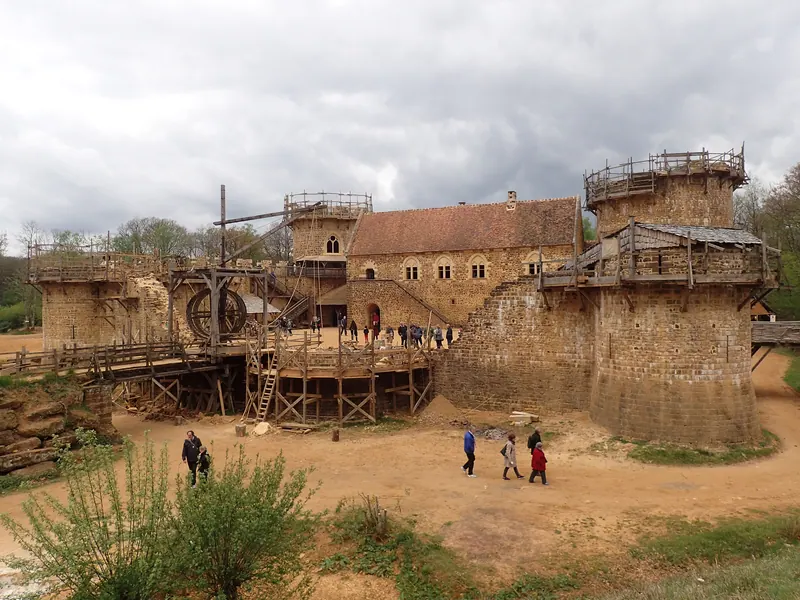
Karlštejn Castle was founded by Charles IV in 1348 and completed in 1365 as a treasury for the imperial regalia and the Bohemian crown jewels, and the emperor who promoted vineyards across Bohemia is the natural patron of its wine festival. Karlštejnské vinobraní is organised by the Karlštejn Cultural Association (Karlštejnské kulturní sdružení) with the castle administration and the municipality; the 28th edition takes place on Saturday 26 and Sunday 27 September 2026. It is the largest recurring medieval-themed event within easy reach of Prague, which is why it serves as the anchor event for the Prague hub.
The programme runs on Saturday from 10:00 to 20:00 and on Sunday from 10:00 to 17:00 across three areas: the castle courtyards, the pedestrian street climbing through the village below the castle, and the meadow on the right bank of the Berounka. At 14:30 on both days the emperor and empress make their ceremonial arrival: a procession of more than 150 courtiers, church dignitaries, knights, musicians and standard-bearers sets out from the wine research station, climbs through the village and ends with a ceremony in the castle courtyard. A royal knights’ tournament by the Traken group is staged at 11:00 and 16:00 each day, and the stages carry trumpeters, pipers, dancers, jugglers, magicians and fencing groups. Saturday ends with a torchlit evening procession. Wine tastings, burčák (partly fermented new wine), a craft market and food stalls fill the village.
Tickets in 2026 cost 350 Kč on Saturday and 250 Kč on Sunday; children under 15 enter free, as do visitors in complete medieval costume and Karlštejn residents. During the festival the castle precinct cannot be entered without a festival ticket; guided tours of the castle interiors are booked separately through the castle.
Karlštejn is 45 minutes from Prague main station by the S7 suburban train towards Beroun. From Karlštejn station cross the Berounka bridge and walk about 20–25 minutes up through the village to the castle; roads are closed and parking is scarce on festival days, so the train is the practical option. The festival weekend sits just before St Wenceslas Day on 28 September, a public holiday in Czechia.