Medieval Booker

Gotland ◆ Sweden

Medieval Visby

Walled Hanseatic port on the island of Gotland, a UNESCO World Heritage town with a 3.4 km ring wall, a dozen church ruins and the best-preserved medieval townscape in Scandinavia.

1 festival 9 places 2 articles next event 8 August 2027

Why is Visby a medieval destination?

Visby grew rich in the 12th and 13th centuries as a hub of Baltic trade, first for Gotland’s own merchant-farmers and then for the German traders who made it an early member of the Hanseatic League. The ring wall, begun in the late 13th century, still runs about 3.4 km around the old town, with dozens of its towers intact.

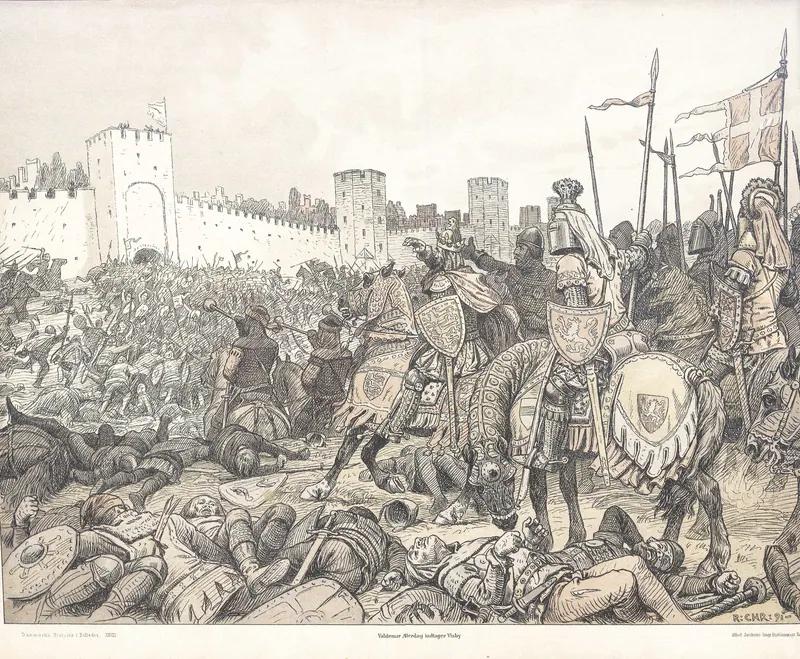
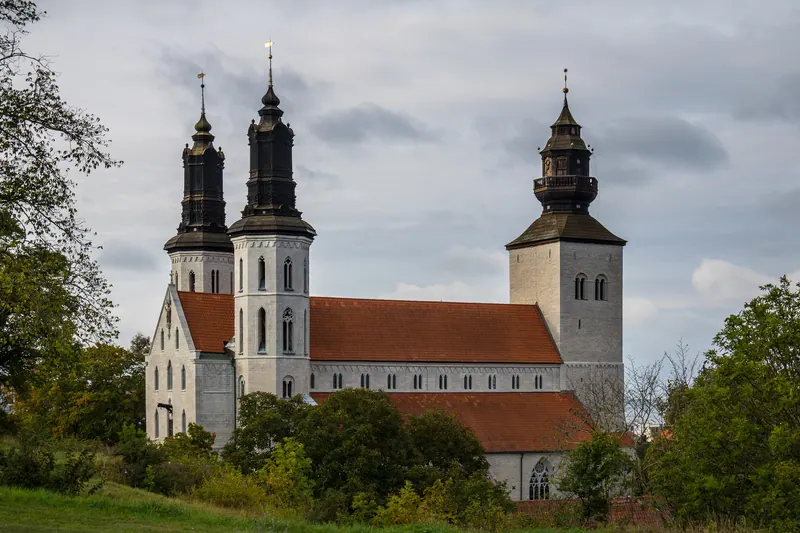
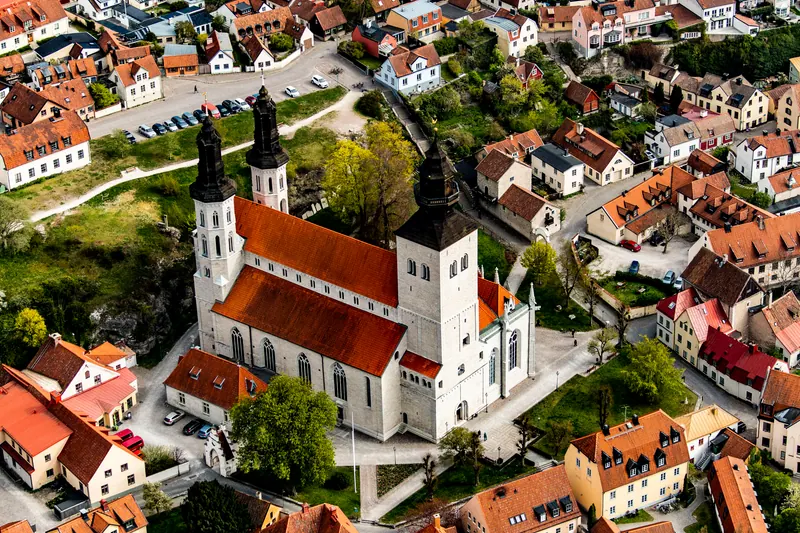
Inside the wall stand the roofless ruins of around a dozen medieval churches, the intact Visby Cathedral (St Mary’s, consecrated 1225) and stone warehouses built for merchants. In 1361 the Danish king Valdemar Atterdag crushed a Gotland peasant army outside the walls and took the town; mass graves from the battle were excavated at Korsbetningen in the early 20th century.

Visby’s decline after the 14th century preserved it: little was rebuilt, and in 1995 the Hanseatic town was inscribed on the UNESCO World Heritage List. Gotlands Museum holds finds including the Spillings hoard, the largest Viking-age silver hoard ever found.

Medieval festivals in Visby

Featured
Medieval Markets & Fairs Jousting & Tournaments +1

Visby Medieval Week

Visby, Sweden

Medeltidsveckan fills the walled Hanseatic town of Visby on Gotland with eight days of medieval markets, jousting, concerts, lectures and camps every August. Founded in 1984, it is Scandinavia's largest medieval festival and draws around 40,000 visitors, many of them in costume.

Expected 2027
Family

Months with a festival are linked. Expected dates say so. August

What else to see in medieval Visby

Short list on purpose. Everything here is somewhere we'd actually send you, checked and still standing.

Landmarks & bridges

Landmark Start here

Visby Ring Wall (Ringmuren)

Seaward wall c. 1250; landward wall 1270s–80s; raised 3–4 m in the 1350s; Kruttornet c. 1160

3.4 km of 13th-century town wall, up to 11 m high, with 27 of its original 29 ground towers still standing — the oldest surviving town wall in northern Europe and the only complete circuit left in the Nordic countries. Walk the outside of the landward stretch between Norderport and Söderport, and know before you come that there is no rampart walk: you cannot get onto the top of it.

Free or cheap Quiet corner Good with children
Walking directions
Landmark

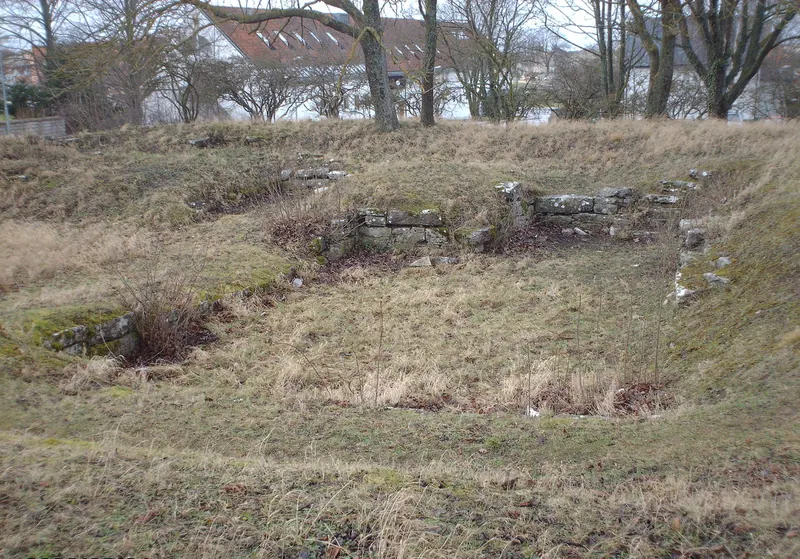
Korsbetningen and Solberga Convent

Cistercian convent founded 1246, abandoned 1404; mass graves of the battle of 27 July 1361; memorial cross raised later in the 14th century

The field where about 1,800 Gotlandic farmers were killed on 27 July 1361 and buried in their armour, in at least five mass graves on the ground of Solberga convent, under a 14th-century limestone cross whose inscription is still legible. Free, unfenced, open at all hours, about fifteen minutes' walk outside Söderport — and it only works if you go to Fornsalen first.

Free or cheap Quiet corner
Walking directions
Landmark

Kruttornet (the Powder Tower)

Built c. 1160–61 as a free-standing harbour tower; converted to a gunpowder magazine c. 1710

Built around 1160 to shoot down at boats entering the medieval harbour, and standing before there was any wall to attach it to — the oldest tower of the Visby ring wall and, by the usual reckoning, the oldest surviving secular building in the Nordic countries. Read the honest catch first: no official source publishes opening hours or a price, so plan on looking at it from outside.

Free or cheap Quiet corner Best in the evening
Walking directions

Churches & ossuaries

Church

Visby Cathedral (Sankta Maria)

Consecrated 27 July 1225 as the German merchants' church; cathedral of the diocese of Visby since 1572

Consecrated on 27 July 1225 as the church of the German merchants in Visby, and the only one of the town's medieval churches that still has a roof and a congregation. Entry is free, and from late June to mid-August it stays open until 21:00 — the one medieval interior here you can sit in during the evening.

Free or cheap Quiet corner Best in the evening
Walking directions
Church

S:ta Karin Church Ruin (Sankta Katarina)

Franciscan convent founded 1233, first church c. 1250; damaged by collapse in 1402, choir consecrated 1412, nave never completed; abandoned late 1520s

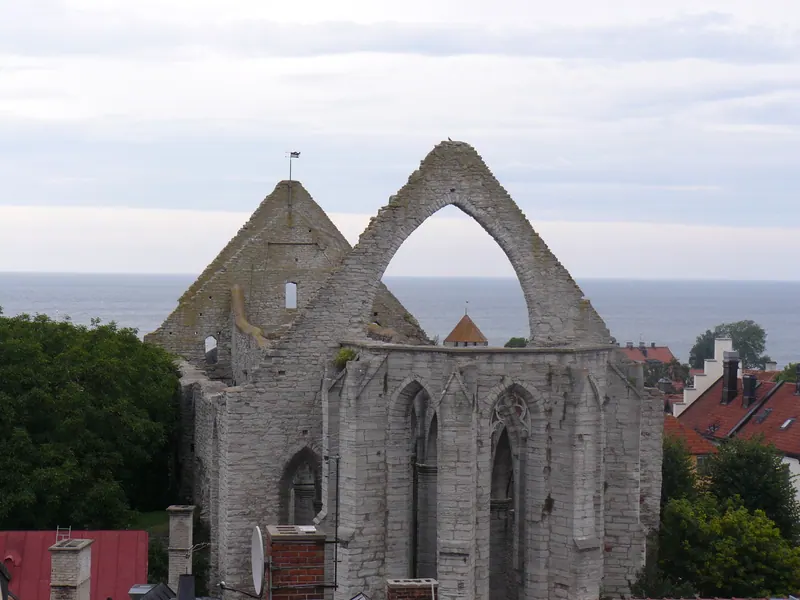
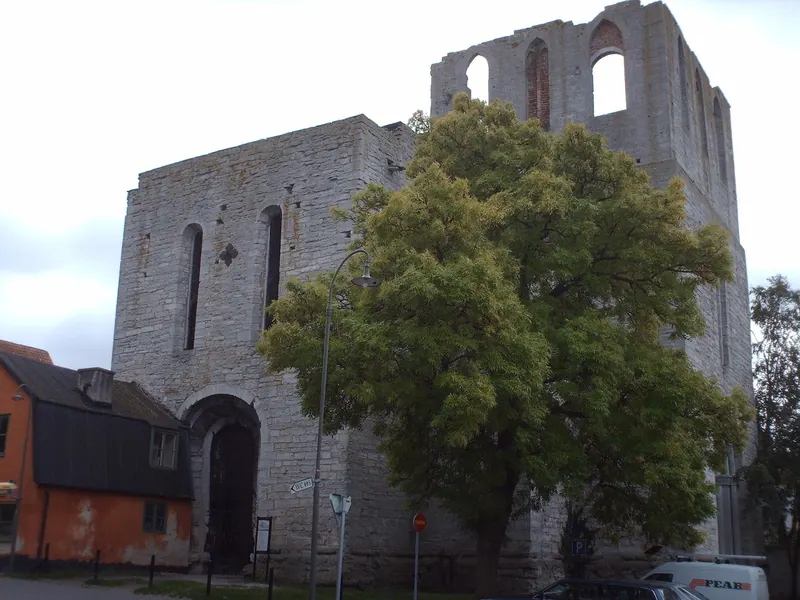
The Franciscan convent church on Stora Torget, begun after the friars arrived in 1233 and never finished — the largest of Visby's church ruins, roofless, free, and open daily from 1 May to 4 October. Its vaults were built of brick, which nothing else in this limestone town was.

Free or cheap Good with children Quiet corner
Walking directions
Church

S:t Lars Church Ruin

13th century (parish usually dated c. 1210–1220); the Gotlanders' parish church, roofless since after the Reformation

A 13th-century parish church two minutes off Stora Torget whose plan owes more to Orthodox churches than to anything else in the Baltic, and whose walls are hollow: narrow stairs and passages run inside the masonry from level to level. Free, and open on the same 1 May – 4 October season as the rest of Visby's ruins.

Free or cheap Quiet corner
Walking directions

Museums & collections

Museum

Gotlands Museum (Fornsalen)

Museum founded 1875; collections from prehistory to the Middle Ages, with the Spillings hoard of the 870s and the 1361 battle finds

The island museum on Strandgatan, holding the Spillings hoard — about 67 kg of Viking-age silver — Gotland's picture stones, and the armour and skulls dug out of the 1361 battle graves at Korsbetningen. It is the room where everything else you look at in Visby is explained, and under-19s get in free.

Works in the rain Good with children
Walking directions

Taverns & beer halls

Tavern

Kapitelhusgården

12th-century cross-vaulted cellar beneath the yard; the tavern operation is modern

A medieval tavern in a walled yard off S:t Drottensgatan, cooking over an open hearth with the staff in period dress, above a 12th-century cellar on cross vaults. It opens for six weeks a year — 30 June to 14 August in 2026, evenings from 17:00, Monday to Saturday — which is the single most important thing to know about it.

Good with children Best in the evening
Walking directions

Views & walks

View

Galgberget and the Visby Gallows

Gallows believed built in the 1200s; last used for an execution in 1845

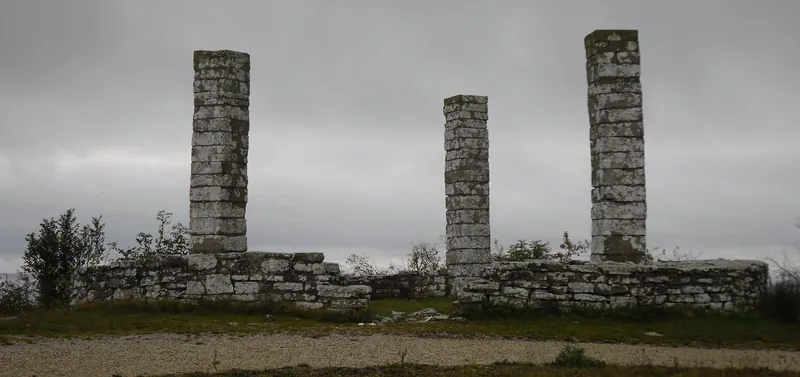
Scandinavia's oldest standing medieval gallows: three limestone pillars about six metres high, inside a circular stone wall sixteen metres across, on the cliff edge 1.5 km north of Visby where they could be seen from the town and from the sea. Free, unfenced, open all year — and the walk out is a nature reserve with sea views, two limekiln ruins and a stone labyrinth.

Free or cheap Quiet corner Good with children
Walking directions
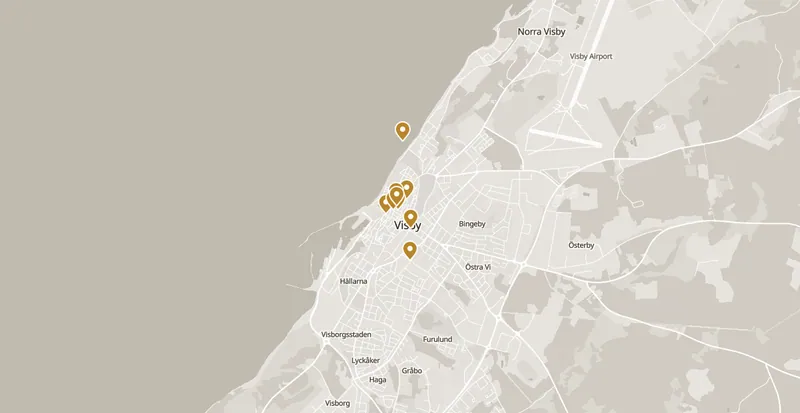
Map of the places worth your time in Visby
Everything above, on one map. Tap a link to open it in Google Maps on your phone. © MapTiler © OpenStreetMap contributors

Stories from medieval Visby

All articles