Medieval Booker

Castilla-La Mancha ◆ Spain

Medieval Toledo

Toledo stands on a granite spur inside a loop of the Tagus, 70 km south of Madrid: a Visigothic capital, then the Muslim city of Ṭulayṭulah, then the seat of Castile after Alfonso VI took it in 1085. A 10th-century mosque, two medieval synagogues and a Gothic cathedral still stand within a few hundred metres of one another.

1 festival 13 places no articles yet next event 27 May 2027

Why is Toledo a medieval destination?

Roman Toletum became the capital of Visigothic Spain in the sixth century, and the church councils held here — the third, in 589, at which King Reccared abandoned Arianism for Catholicism — made the city the ecclesiastical head of the peninsula. Its archbishop is still titled Primate of Spain. Muslim armies took the city in 711 or 712, and for nearly four centuries it was Ṭulayṭulah, capital of the Middle March of al-Andalus, chronically rebellious against Córdoba and, after the caliphate broke apart in 1031, an independent taifa under the Banū Dhī l-Nūn.

Alfonso VI of León-Castile took Toledo in 1085 — the largest prize of the early Reconquista, and the event that pushed the Castilian frontier south past the Tagus. The surrender terms let Muslims and Jews stay, and they did. What followed is the reason to come: three religious communities living in one walled city for four hundred years, building for each other. Muslim craftsmen raised synagogues for Jewish patrons under Christian kings, and the resulting Mudéjar style — brick, horseshoe arches, carved plaster, coffered wooden ceilings — is the physical signature of the whole city.

Toledo was also where Arabic and Hebrew learning entered Latin Europe. From the twelfth century, under Archbishop Raymond and later under Alfonso X (r. 1252–84), scholars working in the city translated Ptolemy’s Almagest, Aristotle with his Arabic commentators, Euclid, Avicenna and al-Khwārizmī out of Arabic and Hebrew into Latin and then into Castilian. Gerard of Cremona came from Italy for the Almagest and stayed for decades. Historians argue about whether the “School of Translators” was ever a school; nobody argues about the output.

The convivencia ended badly. The Jewish quarter was sacked in 1355 and again in the pogroms of 1391, and the Alhambra Decree of 31 March 1492 expelled Spain’s Jews outright; of ten or more synagogues, two survive as monuments. Philip II moved the court to Madrid in 1561 and Toledo stopped growing, which is why so much of the medieval city is still standing. Its steel trade outlived everything: blades have been made here since Roman times, and a few working forges remain.
Medieval festivals in Toledo

Featured
Historic City Celebrations

Corpus Christi in Toledo

Toledo, Spain

On Corpus Christi the 16th-century Custodia de Arfe, a three-metre Gothic tower of gilded silver, is carried out of Toledo Cathedral and through two kilometres of streets hung with awnings and tapestries and strewn with thyme, behind the banners of the city's old confraternities and guilds. Toledo keeps the feast on its traditional Thursday, sixty days after Easter: 4 June in 2026, and 27 May expected in 2027.

Expected 2027
Family

Months with a festival are linked. Expected dates say so. May

What else to see in medieval Toledo

Short list on purpose. Everything here is somewhere we'd actually send you, checked and still standing.

Churches & ossuaries

Church Start here

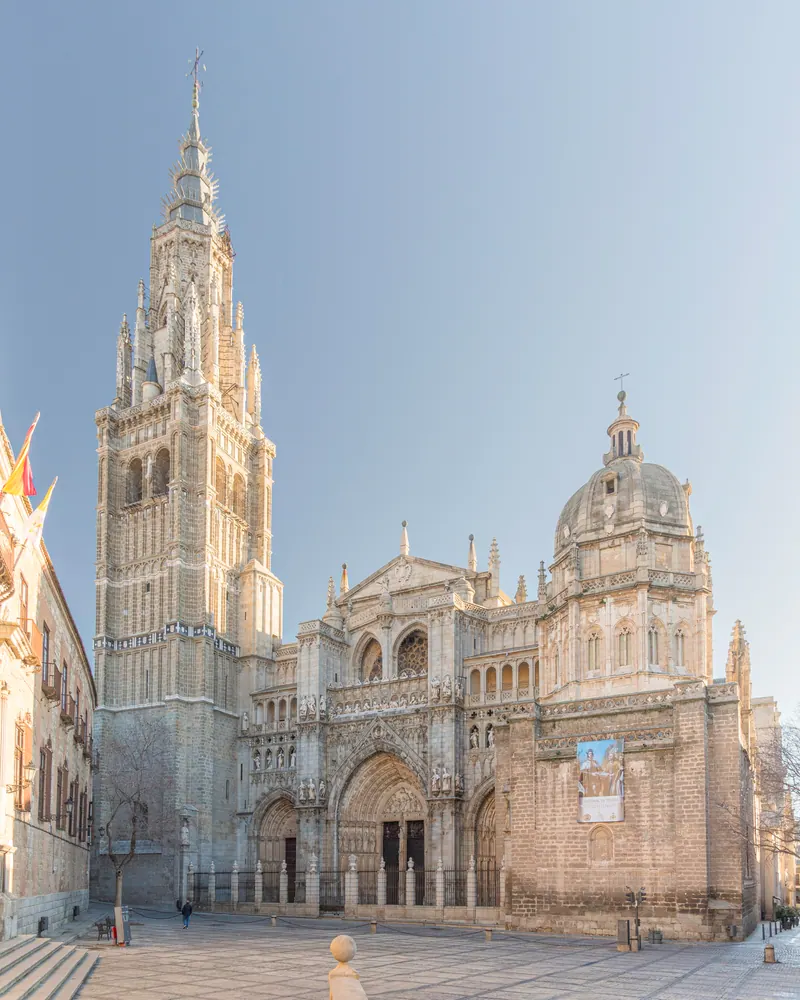
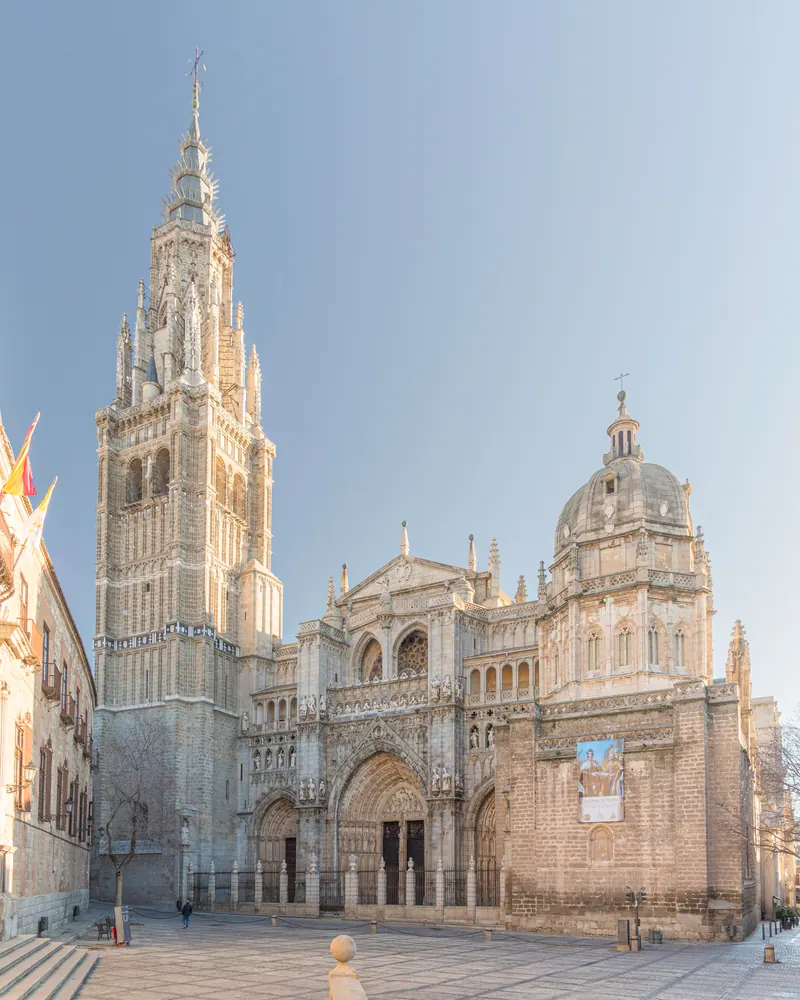
Toledo Cathedral

Begun 1226 under Ferdinand III and Archbishop Jiménez de Rada; completed 1493, on the site of the Friday mosque

Begun in 1226 on the site of the city's Friday mosque, which had itself replaced the Visigothic cathedral, and finished in 1493 — five naves, a double ambulatory and vaults 44 m up. Come for the 09:00 mass in the Mozarabic Chapel, the only daily liturgy left anywhere in the pre-1080 Hispanic rite, and stay for the choir stalls carved with the fall of Granada town by town.

Works in the rain
Walking directions
Church

Mezquita del Cristo de la Luz

Built as the mosque of Bāb al-Mardūm in 999; Christian apse added c. 1182, the earliest known Mudéjar work

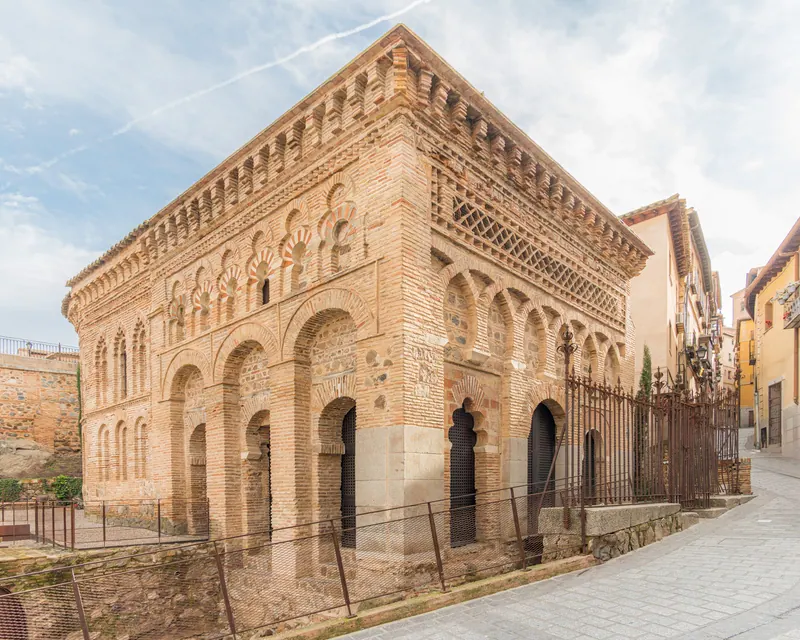
A mosque of the year 999, standing more or less intact on the north slope, with a Christian apse grafted onto it a century after Alfonso VI took the city. Go round to the outside wall and find the Kufic brick inscription that gives the date and the patron — it was hidden behind a later wall until 1899.

Free or cheap Quiet corner
Walking directions
Church

Sinagoga de Santa María la Blanca

Built as the Great Synagogue, late 12th century, in Almohad style; rebuilt after a fire of 1250; taken as a church c. 1411

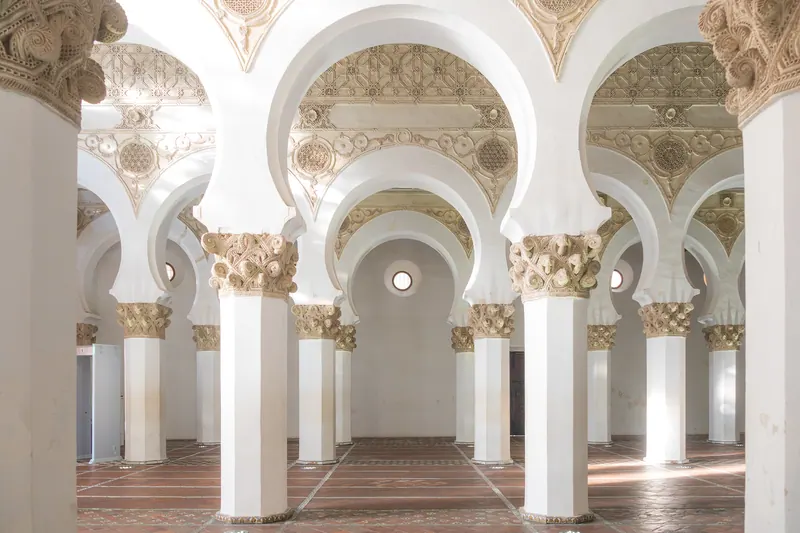
Built as Toledo's Great Synagogue in the late 12th century, by Muslim craftsmen, for a Jewish congregation, under a Christian king — then taken as a church around 1411 and kept by the Catholic Church ever since. Stand at the west end and count the arcades: thirty-two horseshoe arches on brick octagons, whitewashed, with Almohad plasterwork above them.

Quiet corner Free or cheap
Walking directions
Church

Monasterio de San Juan de los Reyes

Begun 1477 for Ferdinand and Isabella; architect Juan Guas; abandoned as a royal pantheon after 1492

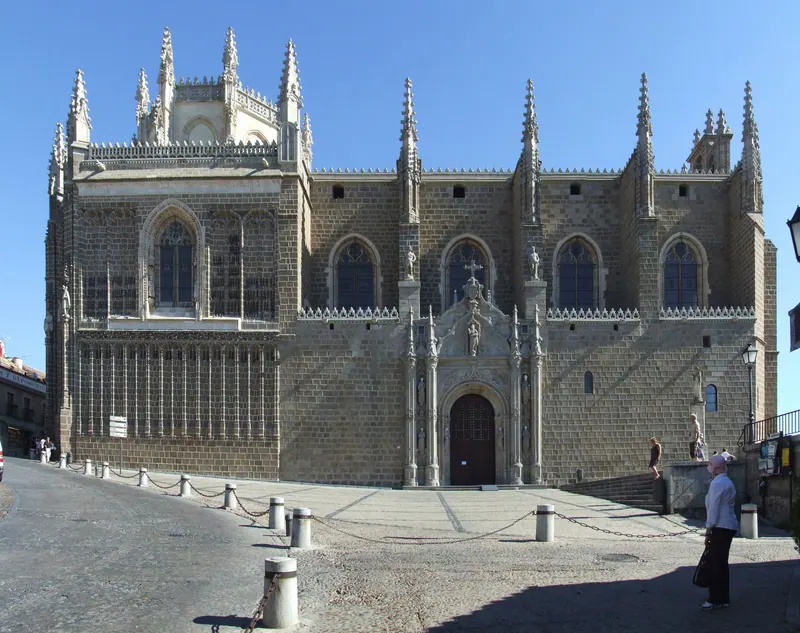
The Franciscan house Ferdinand and Isabella began in 1477 as their own burial church, designed by Juan Guas and covered in royal heraldry at a scale that borders on shouting. The chains hanging on the outside wall belonged to Christian captives freed from the kingdom of Granada — look up at them before you buy a ticket, because they are free.

Good with children Quiet corner
Walking directions
Church

Iglesia de El Salvador

On a 9th-century mosque, with reused Roman and Visigothic material; the carved pilaster is late-Roman or Visigothic

A church built on a 9th-century mosque, whose arcade is held up by columns robbed from Roman and Visigothic buildings — including a carved pilaster showing four miracles of Christ that is older than Islam in Spain. It is the least visited monument on the tourist wristband and the one where the layers are easiest to see.

Quiet corner Free or cheap Works in the rain
Walking directions
Church

Iglesia de Santo Tomé

Mudéjar tower of the 14th century, probably on a minaret; the El Greco was painted 1586–88

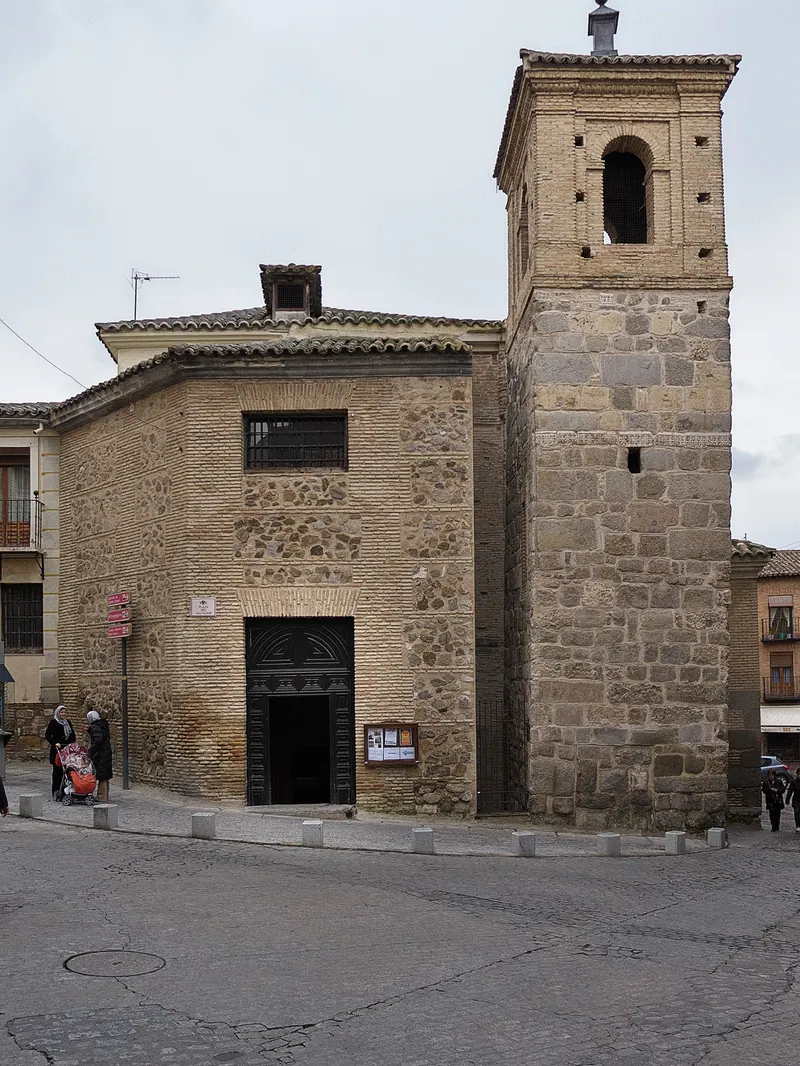
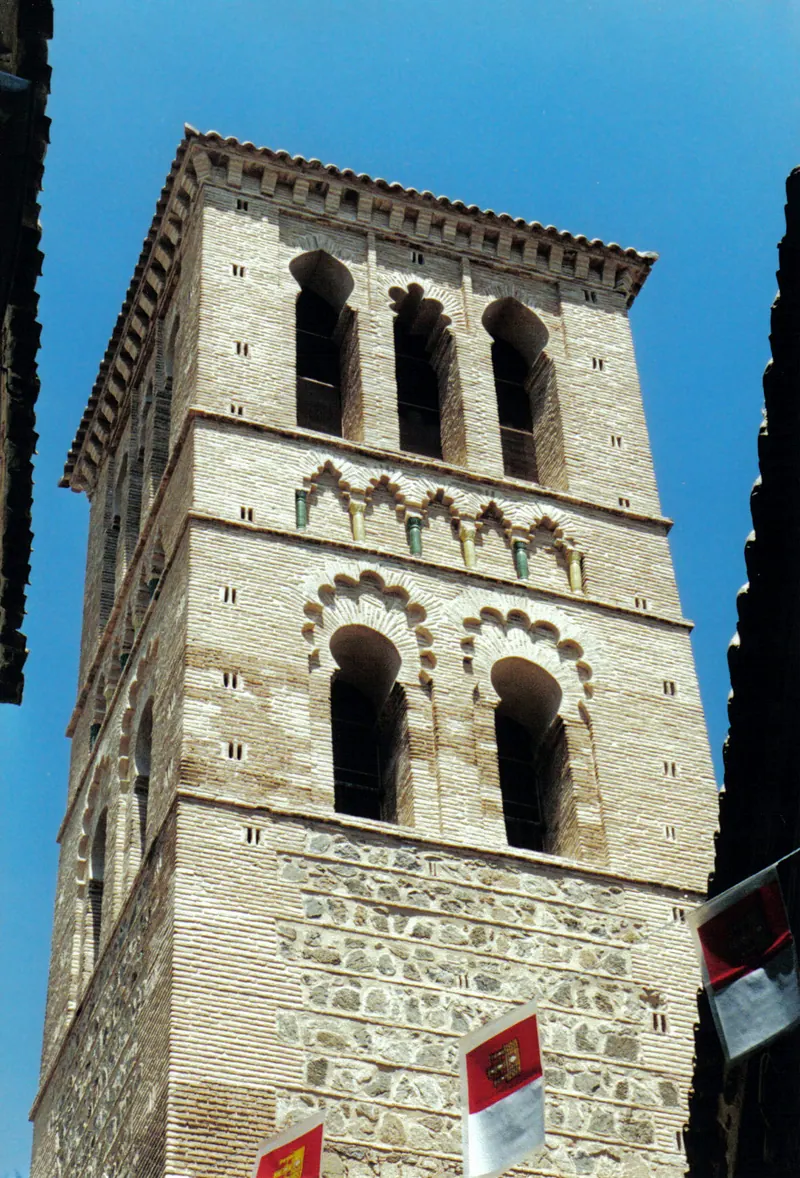
One room and one painting: El Greco's *Burial of the Count of Orgaz*, 4.80 m by 3.60 m, made in 1586–88 for the chapel it still hangs in and showing a Castilian lord of the 1320s in full plate being lowered into his grave by two saints. Look up at the Mudéjar tower from the square before you join the queue — it is the older half of the visit.

Works in the rain
Walking directions

Museums & collections

Museum

Sinagoga del Tránsito and the Sephardic Museum

Built c. 1355–57 for Samuel ha-Levi, treasurer of Pedro I; Museo Sefardí installed 1964

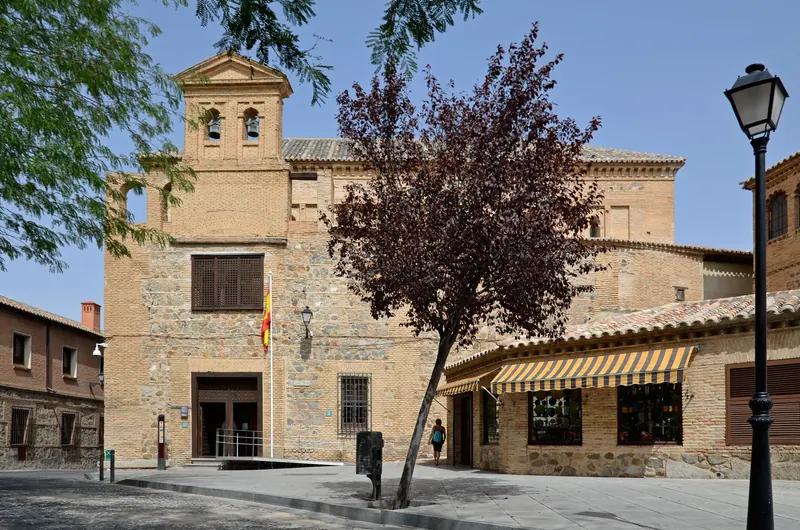
The private synagogue Samuel ha-Levi, treasurer to Pedro I of Castile, built in the 1350s — its prayer hall carved with Hebrew psalms, Arabic script and the castles and lions of Castile in the same band of plaster. It is free on Saturday afternoons and all day Sunday, and it is the one place in Toledo that tells the Jewish story rather than leaving you to infer it.

Free or cheap Works in the rain Quiet corner
Walking directions
Museum

Alcázar de Toledo and the Museo del Ejército

Fortified since Roman times, rebuilt after 1085 and again under Charles V; destroyed in 1936 and rebuilt; museum since 2010

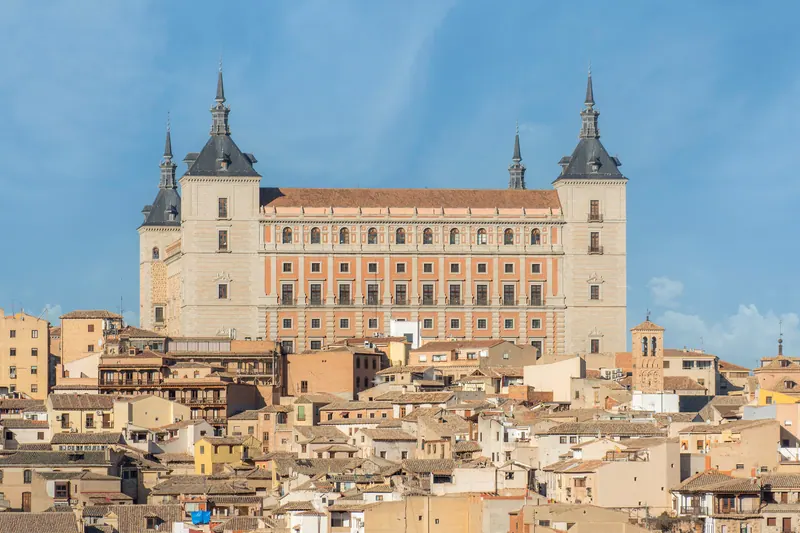
The square fortress on the highest point of the city is almost entirely a post-1936 rebuild — but underneath it lie Roman, Visigothic and Islamic foundations and a rock-cut cistern, and inside it sits Spain's national army museum. The archaeological level and the room on armies before the modern army are free to walk into on any day, without a ticket.

Works in the rain Good with children Free or cheap
Walking directions
Museum

Iglesia de San Román and the Museum of the Councils

Consecrated 1221 by Archbishop Rodrigo Jiménez de Rada; wall paintings of the 1270s; museum since 1968

A church consecrated in 1221 by the same archbishop who began the cathedral five years later — built in Islamic technique, on horseshoe arches carried by looted Roman and Visigothic capitals, and painted right round with a Last Judgement of the 1270s. It holds the city's Visigothic collection, admission is currently free, and hardly anyone finds it.

Free or cheap Quiet corner Works in the rain
Walking directions
Museum

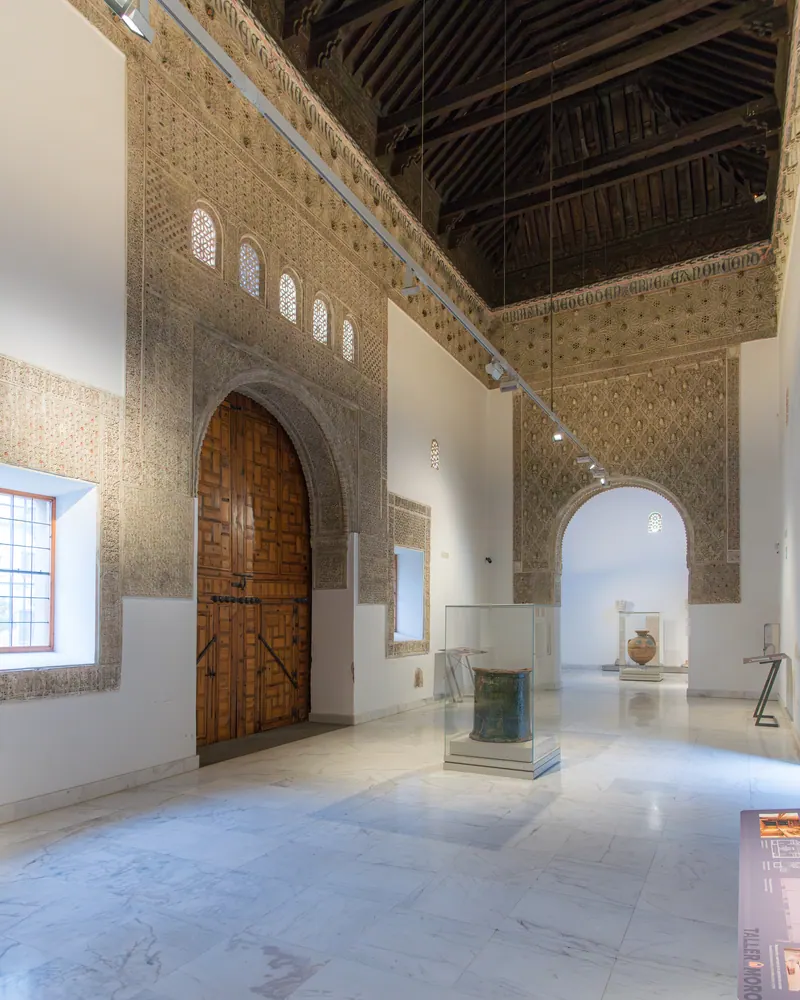
Museo Taller del Moro

Part of a 14th-century noble house on an Andalusi palace plan; museum since 1963, reopened 2017

Part of a fourteenth-century Toledan noble house, built to an Andalusi palace plan and lined with carved plaster — officially the best surviving example of palace architecture of its date in the city. Entry is free, it is three minutes from the queue at Santo Tomé, and virtually nobody in that queue knows it exists.

Free or cheap Quiet corner Works in the rain
Walking directions

Landmarks & bridges

Landmark

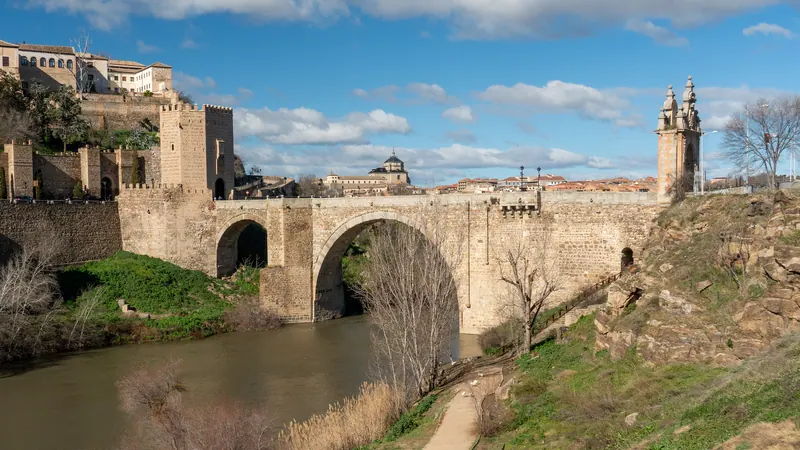
Puente de Alcántara

Roman origin; rebuilt in the 10th century under Muslim rule; western tower from the reign of Alfonso X; east arch 1721

Roman in origin, rebuilt by Muslim engineers in the tenth century and again under Alfonso X after a flood, this is the eastern door into the city and the oldest crossing of the Tagus here. Look at the royal arms on the western tower: they have no pomegranate, because Granada had not been taken when they were carved.

Free or cheap Best in the evening Good with children
Walking directions

Craft & curiosities

Workshop

Espadas Mariano Zamorano

Toledo has forged blades since antiquity; this workshop has run since 1951 and holds the Maestro Artesano title in swordmaking (2016)

A working sword forge in the old town — the family has been at it since 1951 and holds the regional title of Master Craftsman in swordmaking, awarded in 2016. The forge is behind the shop counter, so go on a weekday morning if you want to hear a hammer rather than just buy a blade.

Good with children
Walking directions

Views & walks

View

Mirador del Valle

A viewpoint, not a monument: the medieval city it looks at is 11th–15th century

The balcony on the far side of the Tagus where the whole rock lines up at once — Alcázar, cathedral tower, walls, gorge and both bridges. Come in the last hour of daylight, when the sun is square on the front of the city, and plan your transport, because no bus actually stops here.

Free or cheap Best in the evening Good with children
Walking directions
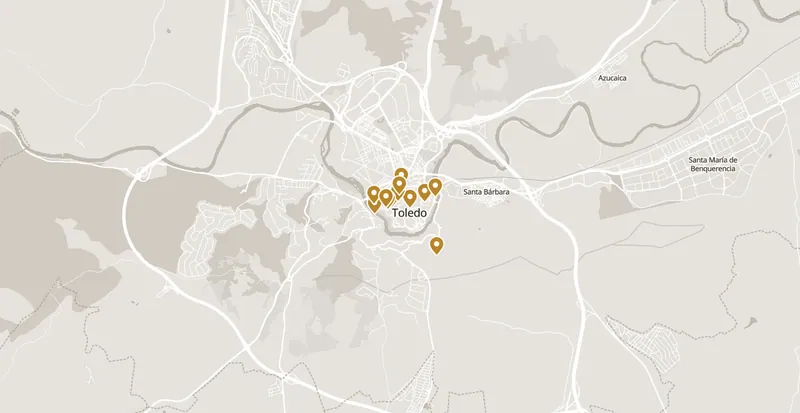
Map of the places worth your time in Toledo
Everything above, on one map. Tap a link to open it in Google Maps on your phone. © MapTiler © OpenStreetMap contributors

More medieval festivals in Spain

All festivals in Spain
Featured
Medieval Markets & Fairs Jousting & Tournaments +1

Jornadas Medievales de Ávila (Mercado de las Tres Culturas)

Ávila, Spain

Ávila's Jornadas Medievales turn the walled UNESCO city into the 'Market of the Three Cultures' for four days on the first weekend of September, with more than 300 stalls, around 150 free shows, nine mounted tournaments and a grand parade recalling the town's Christian, Jewish and Muslim past. Held since 1997 and declared a Festival of National Tourist Interest, it drew about 130,000 visitors in 2025.

2026
Family
Medieval Markets & Fairs Jousting & Tournaments +1

Setmana Medieval de Montblanc

Montblanc, Spain

Montblanc's Setmana Medieval de la Llegenda de Sant Jordi turns the walled Catalan town into a medieval fair over the two weekends around Saint George's Day (23 April), with a free daily market and camp, parades, a night-time dragon show projected on the 14th-century walls and an open-air staging of the Saint George legend, which local tradition sets in Montblanc. Founded in 1987 and declared a festival of national tourist interest, it reached its 39th edition in April 2026.

Expected 2027
Family

Other medieval cities in Spain: Ávila · Montblanc