Medieval Booker

Church ◆ Toledo

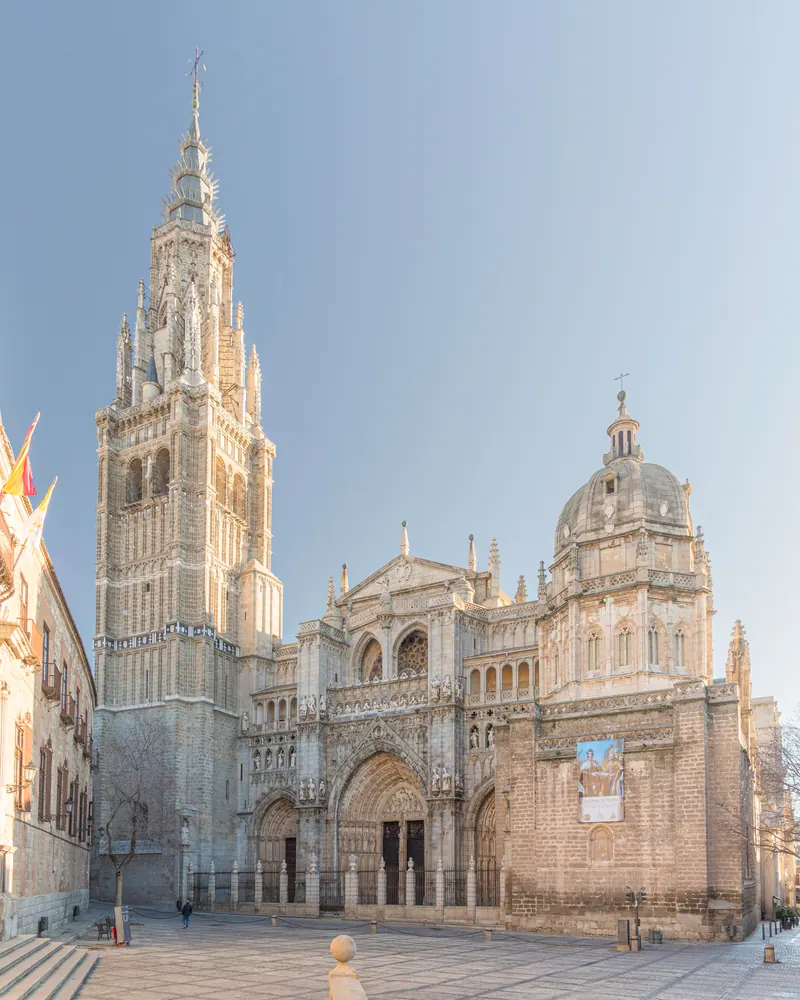
Toledo Cathedral

Begun in 1226 on the site of the city's Friday mosque, which had itself replaced the Visigothic cathedral, and finished in 1493 — five naves, a double ambulatory and vaults 44 m up. Come for the 09:00 mass in the Mozarabic Chapel, the only daily liturgy left anywhere in the pre-1080 Hispanic rite, and stay for the choir stalls carved with the fall of Granada town by town.

Where and when

Where
Calle Cardenal Cisneros 1, 45002 Toledo, Toledo, Spain Open in Google Maps Walking directions
Era
Begun 1226 under Ferdinand III and Archbishop Jiménez de Rada; completed 1493, on the site of the Friday mosque
Opening
Monday–Saturday 10:00–18:30; Sundays and feast days 14:00–18:30. Access closes 30 minutes before. Closed 1 January, 25 December and for certain celebrations. Worship access is separate, from 08:00, through the Puerta del Reloj (as of August 2026)
Price
General €12; reduced €8 (over-65s, students under 18, large families, disability up to 64%); children 8–14 €6; free for under-8s with an adult and for Toledo residents. Audio guide included, played on your own phone — bring headphones. The night-time Lumina show is a separate €24.90 ticket, €33 combined with the day visit (as of August 2026)
Best time
A weekday, first thing. The 09:00 Mozarabic mass puts you inside the chapel an hour before the ticketed circuit opens; the ticket queue thickens with the Madrid trains from about 11:00.
Good for
Works in the rain
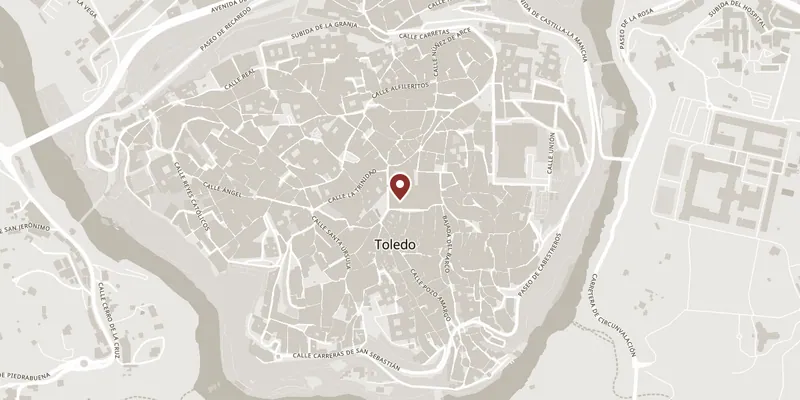
Map showing where Toledo Cathedral is
Open in Google Maps Walking directions © MapTiler © OpenStreetMap contributors

Checked

What is Toledo Cathedral?

A Visigothic cathedral of Santa María stood on this ground. After 711 it carried the city’s Friday mosque, the aljama, and the surrender terms Alfonso VI granted in 1085 guaranteed that mosque to Toledo’s Muslims. The chronicles say that in 1087, while the king was away, Archbishop Bernard of Sedirac and Queen Constance occupied the building and had it consecrated as a church, and that Alfonso rode back intending to burn them for it and was talked out of it by the Muslim jurist Abū l-Walīd. Whatever the truth of the detail, the site is the whole argument of Toledo in one footprint.

The Gothic cathedral was begun in 1226 under Ferdinand III and Archbishop Rodrigo Jiménez de Rada — chronicler of De rebus Hispaniae, and present at Las Navas de Tolosa in 1212 — and finished in 1493. The plan is French, closest to Bourges: five naves, a double ambulatory, and dimensions usually given as 120 m long by 59 m wide with vaults 44.5 m high. The Toledan detail is overhead in the triforium, where the arcading runs to multifoil arches of Almohad type, cut by local masons into a French cathedral.

Give the choir in the middle of the nave more time than feels reasonable. Rodrigo Alemán carved the lower stalls between 1489 and 1495 with fifty-four panels of the war of Granada, one conquered town per panel, worked while the campaign was still running — a documentary relief carved almost as it happened. The upper tier is Renaissance, by Alonso Berruguete and Felipe Vigarny.

Behind the high altar, Narciso Tomé’s Transparente of 1729–32 cuts a hole clean through the ambulatory vault so that daylight lands on the back of the tabernacle; it is unapologetically Baroque and it is the one Baroque thing here nobody should skip. The Sacristy holds El Greco’s Espolio, painted for that room in 1577–79. The Treasury holds Enrique de Arfe’s monstrance of about 1515–24, still carried through the streets at Corpus Christi.

In the corner by the cloister door is the Capilla Mozárabe, endowed by Cardinal Cisneros in 1504 to keep the Hispano-Mozarabic rite alive after Rome suppressed it everywhere else. It is still sung every morning — Monday to Saturday at 09:00, Sundays and feasts at 09:45. That is a service and not a visit, and it is the only way most people will ever get inside the chapel.
What visitors say

4.7 from 38,977 ratings

  • Mark

    5 out of 5 a month ago

    A highlight of visiting Toledo. The scale of the Gothic style church is impressive from the outside, and once you step inside you see an impressive display of historic craftsmanship, golden detailing, and religious art. The altarpiece in the main chapel is an incredibly intricate, massive golden work of art. Make sure to fully walk the interior perimeter to appreciate all the side chapels. Worth the 12 euro entry price.

    Read this review on Google
  • Heidi M

    5 out of 5 a month ago

    Toledo is a historic city sitting on a hill above the Tagus River, with views that feel almost unreal. From viewpoints like Mirador del Valle, you see the whole skyline at once the cathedral rising in the center, the old fortress standing strong, and the city wrapped in warm stone light. Sunset here is especially memorable, everything turns golden and still. Inside the city, the Toledo Cathedral is massive and detailed, with stained glass light falling quietly across the space. It feels powerful, but calm at the same time. The real charm is in the narrow streets small stone alleys, hidden squares, and winding paths that make you slow down without noticing.

    Read this review on Google
  • Kalina Yordanova

    3 out of 5 2 months ago

    The Cathedral is absolutely beautiful. We were pleasantly surprised to discover that it contains paintings by famous artists, which made the visit even more special. The building itself is stunning and well worth seeing. However, our experience was somewhat spoiled by the attitude of one of the guards. There was an exhibition celebrating the Cathedral's 800th anniversary, featuring paintings and sculptures that we were very interested in seeing. When we approached the exhibition entrance, we were told that we could not enter, in a very strict and abrupt tone, without any explanation. Although we do not speak perfect Spanish, we asked why and were informed that a different type of ticket was required, separate from the €12 admission ticket we had already purchased for the Cathedral. Unfortunately, no one explained where these tickets could be obtained, how much they cost, or how we could access the exhibition. We were simply turned away. We found this interaction quite rude and unhelpful, and it left us with a bitter impression of what was otherwise a wonderful visit.

    Read this review on Google

Ratings and reviews from Google. See all on Google Maps

Frequently asked questions

How much does Toledo Cathedral cost?

General admission is €12, reduced €8 and children aged 8–14 pay €6, as of August 2026. Under-8s with an adult and Toledo residents enter free. The audio guide is included and runs on your own phone.

Is the cathedral included in the Toledo tourist wristband?

No. The €14 Pulsera Turística covers seven monuments run by Toledo Monumental; the cathedral is an entirely separate ticket sold by the cathedral chapter.

What stood on the site of Toledo Cathedral before it?

A Visigothic cathedral, and then from the eighth century the city's Friday mosque. Alfonso VI's terms of 1085 guaranteed the mosque to the Muslim community; the chronicles record its seizure and consecration as a church in 1087, and the Gothic cathedral was begun in 1226.

Can you attend the Mozarabic rite mass in Toledo Cathedral?

Yes. The Hispano-Mozarabic rite is sung in the Capilla Mozárabe Monday to Saturday at 09:00 and on Sundays and feast days at 09:45. Worship access is through the Puerta del Reloj and is free, but it is a service, not a tour.

What are the Toledo Cathedral choir stalls?

The lower stalls were carved by Rodrigo Alemán between 1489 and 1495 with fifty-four relief panels showing the towns taken in the war of Granada, made while the campaign was still being fought. The upper stalls are Renaissance work by Alonso Berruguete and Felipe Vigarny.

Festivals in Toledo

Medieval festivals in Toledo
Featured
Historic City Celebrations

Corpus Christi in Toledo

Toledo, Spain

On Corpus Christi the 16th-century Custodia de Arfe, a three-metre Gothic tower of gilded silver, is carried out of Toledo Cathedral and through two kilometres of streets hung with awnings and tapestries and strewn with thyme, behind the banners of the city's old confraternities and guilds. Toledo keeps the feast on its traditional Thursday, sixty days after Easter: 4 June in 2026, and 27 May expected in 2027.

Expected 2027
Family

More places in Toledo

Places in Toledo
Church

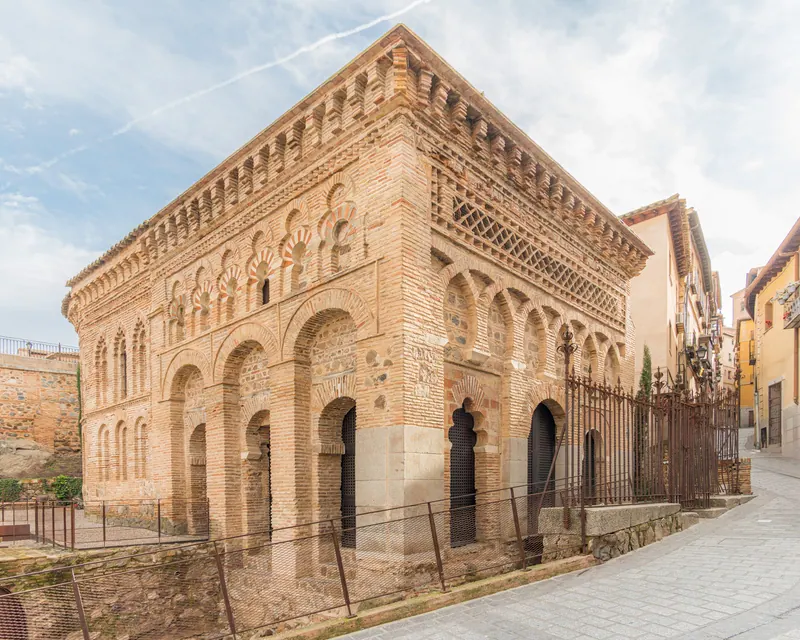
Mezquita del Cristo de la Luz

Built as the mosque of Bāb al-Mardūm in 999; Christian apse added c. 1182, the earliest known Mudéjar work

A mosque of the year 999, standing more or less intact on the north slope, with a Christian apse grafted onto it a century after Alfonso VI took the city. Go round to the outside wall and find the Kufic brick inscription that gives the date and the patron — it was hidden behind a later wall until 1899.

Free or cheap Quiet corner
Walking directions
Church

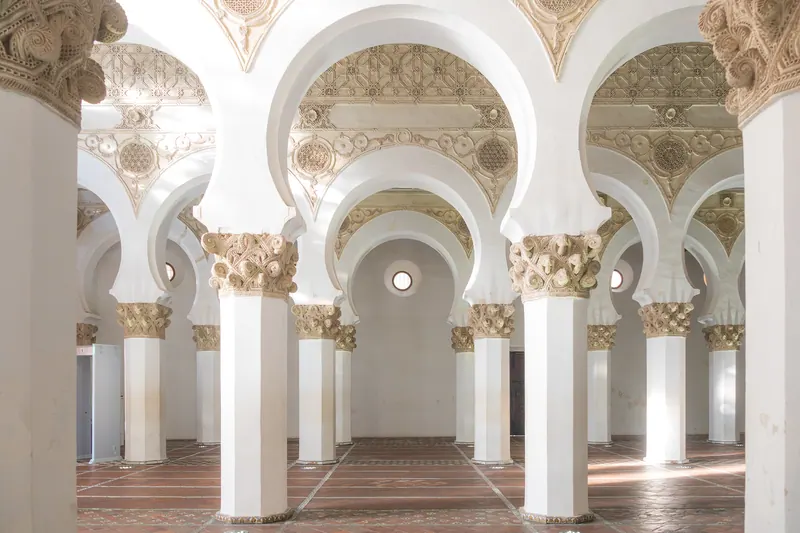
Sinagoga de Santa María la Blanca

Built as the Great Synagogue, late 12th century, in Almohad style; rebuilt after a fire of 1250; taken as a church c. 1411

Built as Toledo's Great Synagogue in the late 12th century, by Muslim craftsmen, for a Jewish congregation, under a Christian king — then taken as a church around 1411 and kept by the Catholic Church ever since. Stand at the west end and count the arcades: thirty-two horseshoe arches on brick octagons, whitewashed, with Almohad plasterwork above them.

Quiet corner Free or cheap
Walking directions
Museum

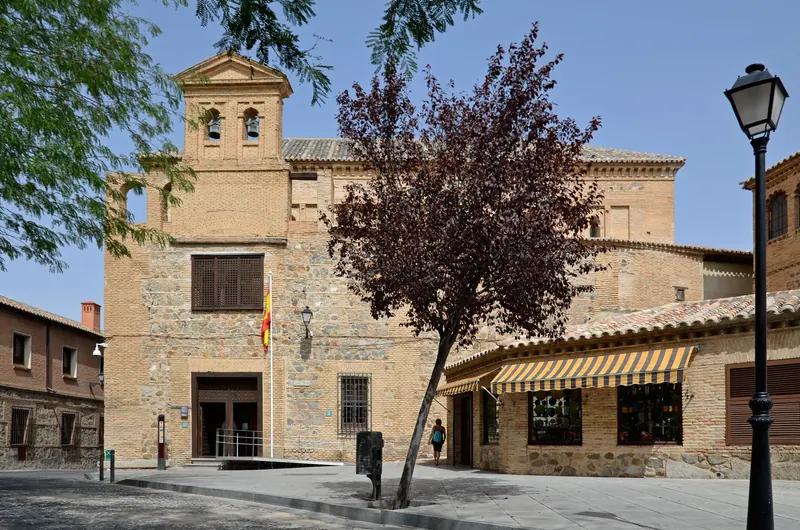
Sinagoga del Tránsito and the Sephardic Museum

Built c. 1355–57 for Samuel ha-Levi, treasurer of Pedro I; Museo Sefardí installed 1964

The private synagogue Samuel ha-Levi, treasurer to Pedro I of Castile, built in the 1350s — its prayer hall carved with Hebrew psalms, Arabic script and the castles and lions of Castile in the same band of plaster. It is free on Saturday afternoons and all day Sunday, and it is the one place in Toledo that tells the Jewish story rather than leaving you to infer it.

Free or cheap Works in the rain Quiet corner
Walking directions