Medieval Booker

Church ◆ Toledo

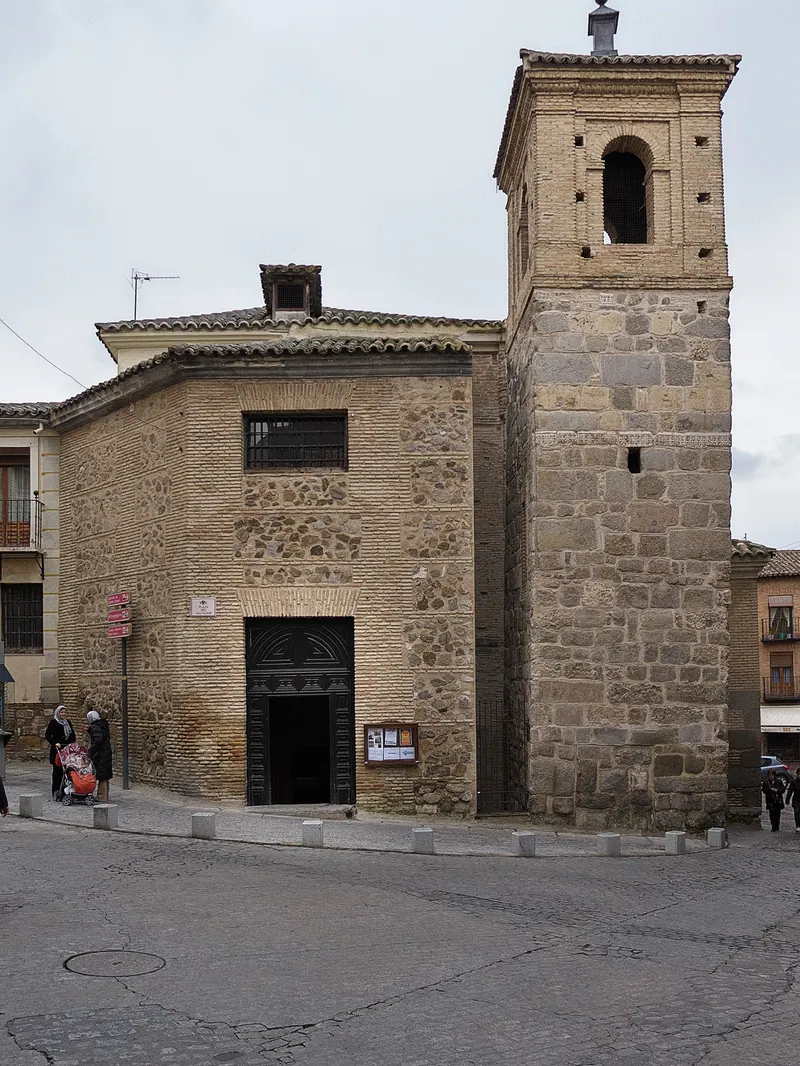
Iglesia de El Salvador

A church built on a 9th-century mosque, whose arcade is held up by columns robbed from Roman and Visigothic buildings — including a carved pilaster showing four miracles of Christ that is older than Islam in Spain. It is the least visited monument on the tourist wristband and the one where the layers are easiest to see.

Where and when

Where
Plaza del Salvador s/n, 45002 Toledo, Toledo, Spain Open in Google Maps Walking directions
Era
On a 9th-century mosque, with reused Roman and Visigothic material; the carved pilaster is late-Roman or Visigothic
Opening
Daily. 1 March–15 October 10:00–18:45; 16 October–28 February 10:00–17:45. The ticket desk closes 15 minutes before (as of August 2026)
Price
€4 general, with reductions for students, youth-card holders, large families and Toledo residents and free entry for small children; covered by the €14 Pulsera Turística (as of August 2026)
Best time
Any time; it never has a queue. Late afternoon suits the interior, which is dim and lit unevenly.
Good for
Quiet cornerFree or cheapWorks in the rain
Official site
toledomonumental.com
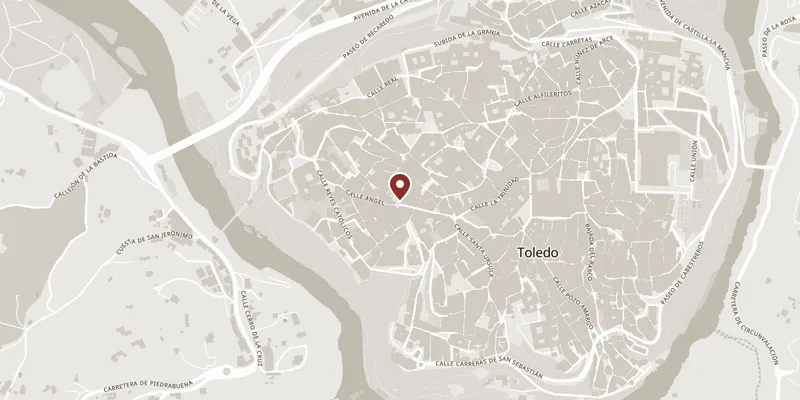
Map showing where Iglesia de El Salvador is
Open in Google Maps Walking directions © MapTiler © OpenStreetMap contributors

Checked

What is Iglesia de El Salvador?

Everything Toledo claims about itself is stacked inside this one small parish church, and almost nobody goes in.

The building stands on a mosque of the ninth century, which had its own minaret, and Toledo Monumental notes that its walls still hold fragments of late-Roman and Visigothic buildings. The mosque’s arcade survives inside: horseshoe arches on a collection of columns and capitals lifted from whatever was standing nearby three hundred years before — Roman shafts, Visigothic capitals, no two matching.

The object to find is the pilaster. It is a square carved pier of late-Roman or Visigothic date, decorated with four scenes from the life of Christ, and it was reused — placed in the arcade as a support, sideways, as building material. It is among the most important pieces of Visigothic-era sculpture in Spain and it is doing structural work in a mosque that became a church. If you want a single object that explains how this city was built, that is it.

Under the floor, excavations have exposed the Roman origins of the site, and the dig is part of the visit. Above ground the church picked up chapels through the Middle Ages and later; the Mudéjar and Gothic fittings sit on top of the Islamic arcade without any pretence that the two belong together.

Practically: it is on the Plaza del Salvador, about three minutes from Santo Tomé and four from the cathedral, on the natural line between the Jewish quarter and the centre. It is €4 on its own and is one of the seven monuments on the €14 wristband. It takes fifteen to twenty minutes.

The reason to put it high on your list is negative and useful: it is the only building of this quality in Toledo where you are likely to be alone. Everyone else is queuing at Santo Tomé, three streets away, for one painting.
What visitors say

4.3 from 1,090 ratings

  • Gregory Clarke

    3 out of 5 6 months ago

    Simple cure little church with history being found within it's foundations and the surrounding area of the church. They have included it into the churches operations and you can step back in time and walk the same arches and tunnels. Included into the wristband price, defo worth a visit.

    Read this review on Google
  • Chelsea Hardwick

    5 out of 5 a year ago

    My husband and I visited only 4 of the sites on the Toledo Bracelet so we didn't buy the pass for them all. Instead we paid €4 per person for each site on our day trip. This was our first and one of the best. The main church is small and similar to nearly every other Spanish Catholic church. What's really cool is the old Visigoth ruins below the main floor. There weren't a lot of information cards but it was still cool to walk around and see the designs. We also went up the narrow stairs to the bell tower. Not the best views of Toledo, other churches and the Alcazar have that, but still fun for a photo op.

    Read this review on Google
  • Kirk Belmont

    5 out of 5 a year ago

    Visited in August 2024 The Iglesia de El Salvador is located in Toledo, near the Churches of Santo Tomé and Convento de Santa Úrsula. It is one of the churches mentioned in the Lazarillo de Tormes, and here Joanna of Castile ("the Mad") and the dramatist Francisco de Rojas Zorrilla were baptized. The current church is built on the mosque, so it is oriented southeast in direction toward Mecca. For which construction, different elements of the previous Visigothic building were reused, because of that a horseshoe arcade supported on Visigothic pilasters has been preserved with sculpted decoration of figurative themes, unusual in this type of remains. The Pilaster of El Salvador, shows in one of its faces various Visigothic miraculous scenes from the life of Jesus: the Cure of the Blind, the Resurrection of Lazarus, the Samaritan and the Hemorroísa, as well as other themes of eucharistic hue that alluding to Christ as the salvation. Its crude treatment shows the abandonment in which the work had fallen on the stone. Although it conserves the shape of the minaret, that carries incrustations of borders, in 1159 it made several Christian modifications, and the construction in the end-15th century of the Gothic chapel of Santa Catalina. The tower corresponds to the minaret of the mosque, with a Baroque brick addition at the body of the bells. It is dedicated to St. Savior. The church suffered a fire in the 15th century, which forced an important restoration. Álvarez de Toledo was commissioned to the restoration and he added new chapels highlighting the chapel of Santa Catalina.

    Read this review on Google

Ratings and reviews from Google. See all on Google Maps

Frequently asked questions

What is the Visigothic pilaster in El Salvador?

A carved late-Roman or Visigothic pier decorated with four scenes from the life of Christ, reused as a structural support in the arcade of the mosque that stood here. It is one of the more important pieces of Visigothic-era sculpture in Spain.

Was the Iglesia de El Salvador a mosque?

Yes. The church was built over a ninth-century mosque that had its own minaret, and the mosque's horseshoe-arched arcade and its collection of reused Roman and Visigothic columns survive inside.

How much does the Iglesia de El Salvador cost?

€4 for a general ticket as of August 2026, or included in the €14 Pulsera Turística that covers seven monuments.

Can you see the excavations?

Yes. Excavations under the floor exposing the Roman origins of the building are part of the visit.

How long does it take?

Fifteen to twenty minutes. It is on the Plaza del Salvador, three minutes from Santo Tomé and four from the cathedral.

Festivals in Toledo

Medieval festivals in Toledo
Featured
Historic City Celebrations

Corpus Christi in Toledo

Toledo, Spain

On Corpus Christi the 16th-century Custodia de Arfe, a three-metre Gothic tower of gilded silver, is carried out of Toledo Cathedral and through two kilometres of streets hung with awnings and tapestries and strewn with thyme, behind the banners of the city's old confraternities and guilds. Toledo keeps the feast on its traditional Thursday, sixty days after Easter: 4 June in 2026, and 27 May expected in 2027.

Expected 2027
Family

More places in Toledo

Places in Toledo
Church Start here

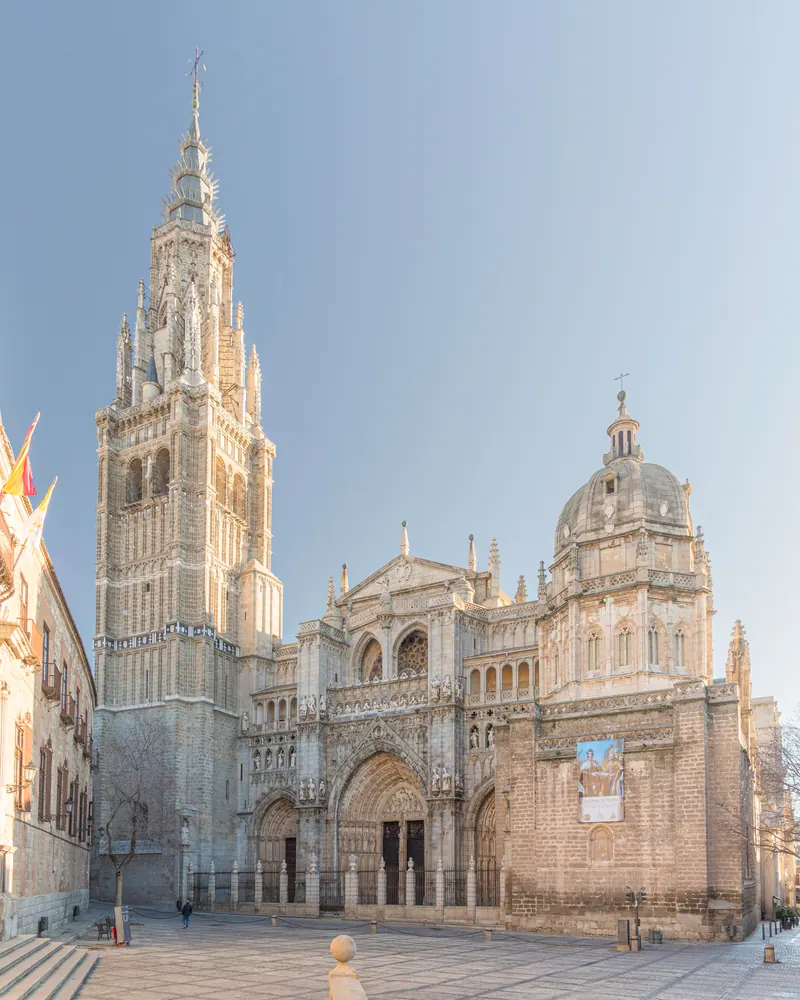
Toledo Cathedral

Begun 1226 under Ferdinand III and Archbishop Jiménez de Rada; completed 1493, on the site of the Friday mosque

Begun in 1226 on the site of the city's Friday mosque, which had itself replaced the Visigothic cathedral, and finished in 1493 — five naves, a double ambulatory and vaults 44 m up. Come for the 09:00 mass in the Mozarabic Chapel, the only daily liturgy left anywhere in the pre-1080 Hispanic rite, and stay for the choir stalls carved with the fall of Granada town by town.

Works in the rain
Walking directions
Church

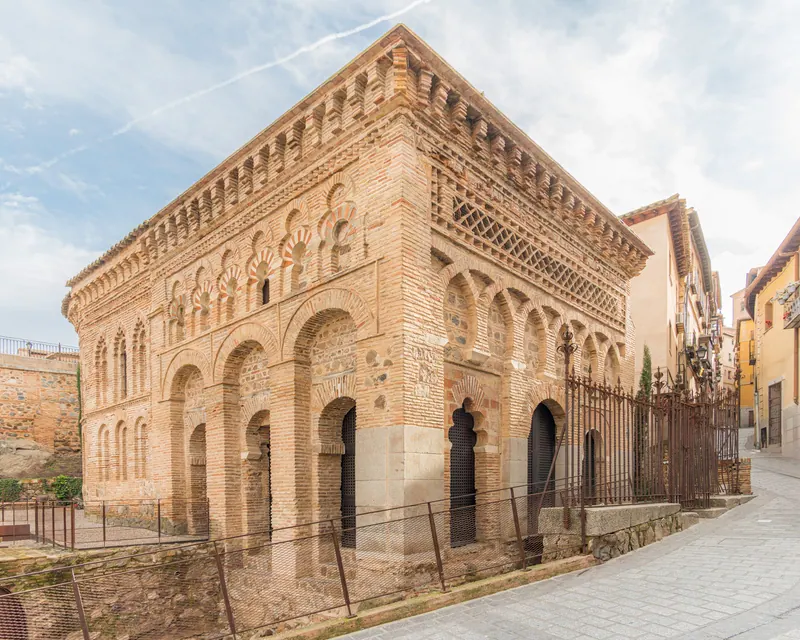
Mezquita del Cristo de la Luz

Built as the mosque of Bāb al-Mardūm in 999; Christian apse added c. 1182, the earliest known Mudéjar work

A mosque of the year 999, standing more or less intact on the north slope, with a Christian apse grafted onto it a century after Alfonso VI took the city. Go round to the outside wall and find the Kufic brick inscription that gives the date and the patron — it was hidden behind a later wall until 1899.

Free or cheap Quiet corner
Walking directions
Church

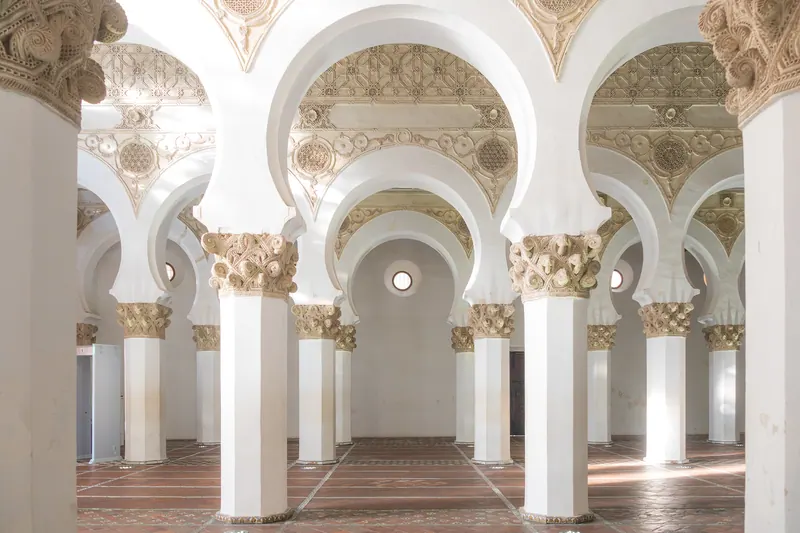
Sinagoga de Santa María la Blanca

Built as the Great Synagogue, late 12th century, in Almohad style; rebuilt after a fire of 1250; taken as a church c. 1411

Built as Toledo's Great Synagogue in the late 12th century, by Muslim craftsmen, for a Jewish congregation, under a Christian king — then taken as a church around 1411 and kept by the Catholic Church ever since. Stand at the west end and count the arcades: thirty-two horseshoe arches on brick octagons, whitewashed, with Almohad plasterwork above them.

Quiet corner Free or cheap
Walking directions