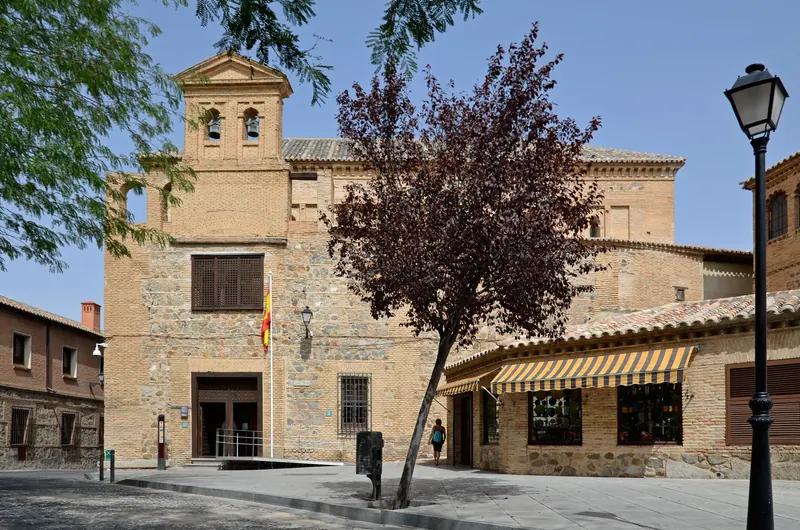
This is the building that explains Toledo, and the sentence that explains the building has four clauses. It was raised as the Sinagoga Mayor — the congregational synagogue of a Jewish community living under Castilian rule — in the late twelfth century, in the Almohad architectural idiom of Muslim Spain, by Mudéjar craftsmen. The official account puts its construction between the late twelfth and the fourteenth century, with a rebuilding after a fire in 1250 for which Alfonso X gave permission in 1260. Around 1411, in the wave of pressure that followed the pogroms of 1391 and the preaching campaigns of Vicente Ferrer, it was taken from the community and turned into a church. It has belonged to the Catholic Church since, and today it is neither synagogue nor parish: it is a ticketed monument run by Toledo Monumental, with no congregation of any faith.
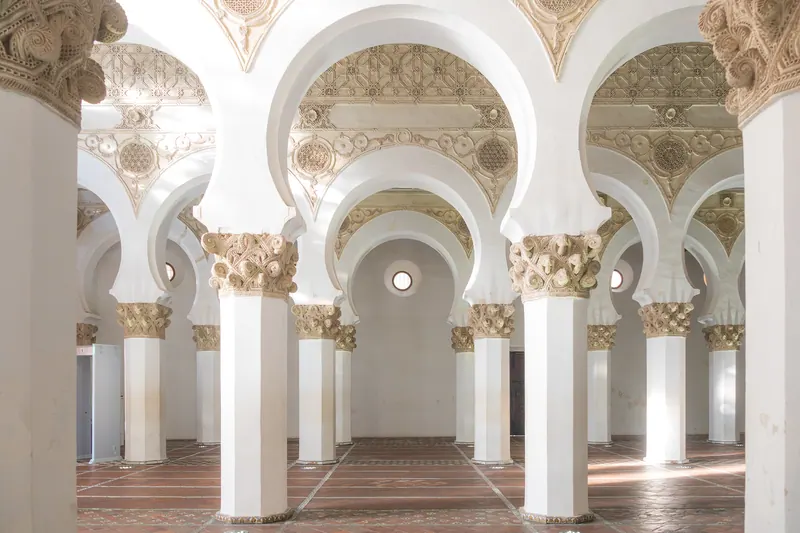
The interior is five naves of horseshoe arches — thirty-two of them — carried on octagonal brick piers, everything limewashed white. The capitals are the thing to look at closely: carved plaster with pine cones and spiralling volutes, a workshop pattern found nowhere else, and above them a band of blind arcading and sebka lattice of exactly the type Almohad builders were using in Seville and Marrakesh at the same date. The roof is beamed and coffered. There is no ark and no bimah: they went when the building changed hands.
At the east end are three Plateresque chapels installed in the sixteenth century, when the building was serving as a church. They sit inside the Islamic arcade without any attempt to reconcile the two, and that visible seam is worth a minute of your attention — it is the clearest picture in the city of one culture moving into another’s room.
The ownership is not a closed subject. The Federation of Jewish Communities of Spain has asked for the building to be recognised as a synagogue and symbolically returned; the Archbishopric of Toledo has publicly defended its title and refused. It remains Church property, with no worship of any kind held in it and a ticket desk at the door.
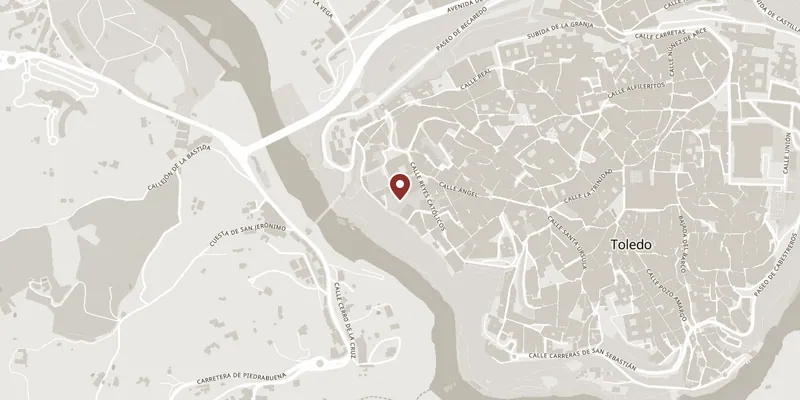
It is a five-minute visit, ten if you are looking properly, and it is on the same street as San Juan de los Reyes and a three-minute walk from the Sinagoga del Tránsito. Doing all three in one hour is the standard and correct way to see the Jewish quarter.