Medieval Booker

Historic City Celebrations ◆ Spain

Corpus Christi in Toledo

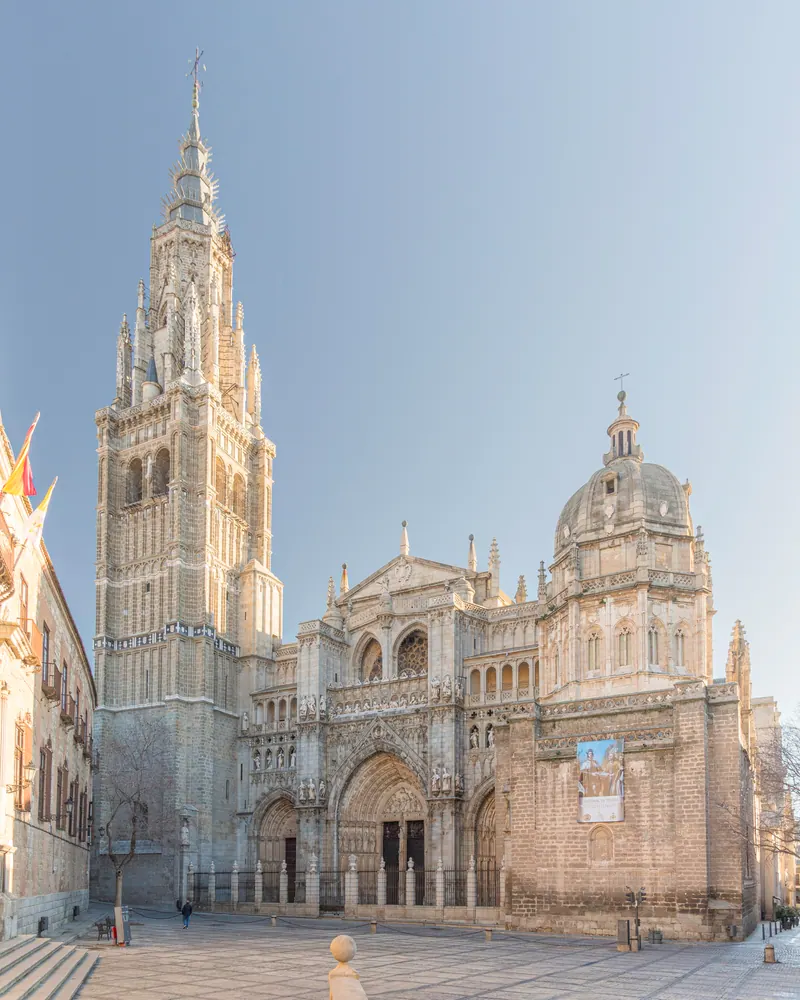
On Corpus Christi the 16th-century Custodia de Arfe, a three-metre Gothic tower of gilded silver, is carried out of Toledo Cathedral and through two kilometres of streets hung with awnings and tapestries and strewn with thyme, behind the banners of the city's old confraternities and guilds. Toledo keeps the feast on its traditional Thursday, sixty days after Easter: 4 June in 2026, and 27 May expected in 2027.

When is Corpus Christi in Toledo 2027?

Next edition
Expected 2027 Corpus Christi in Toledo 2027 See all editions
Where
Toledo, Spain
How often
Every year
Entry
Free to watch standing along the route; the city council sells 2,500 numbered chairs on the processional route (€11 in person, €11.60 online in 2026) from the Zocodover kiosk and toledoentradas.es.
Family-friendly
Yes — bring the kids

Checked · we re-check every festival twice a year.

Past and upcoming editions

Editions of Corpus Christi in Toledo
EditionDatesStatusCalendar
2027 edition Expected 2027 Google Calendar · .ics

Expected means the organiser hasn't announced yet; we show the usual window.

Past editions (1)
  • 2026 edition — 4 June 2026

What happens at Corpus Christi in Toledo?

Toledo’s Corpus Christi is one of the great processions of Spain, and unlike most Spanish cities Toledo has kept it on its proper day — the Thursday sixty days after Easter Sunday — instead of moving it to the following Sunday. The date therefore shifts every year with Easter: 4 June in 2026, 27 May in 2027. The Thursday is a holiday in the city, and the old town inside the walls closes to traffic.

The centrepiece is the Custodia de Arfe. Cardinal Cisneros commissioned it in 1515 from Enrique de Arfe, a goldsmith of German origin working in Castile, and it took him until the early 1520s: a Gothic tower in miniature, 3.09 m tall, assembled from more than 5,000 pieces of gilded silver weighing close to 200 kg, with some 260 figures, enamels and precious stones. Inside it sits a smaller gold monstrance that the cathedral chapter bought in 1505 at the auction of Queen Isabella the Catholic’s possessions. For the procession it is mounted on a silver carriage with a balancing mechanism that keeps it upright on Toledo’s slopes; the rest of the year it stands in the cathedral Treasury.

The route is dressed for days beforehand. More than two kilometres of streets are covered with awnings against the June sun and hung with tapestries, lanterns and cloths from the balconies, and the ground is strewn with thyme and rosemary — over 6,000 decorative elements along 1,700 m of street in 2026. Behind the Custodia walk the banners of Toledo’s historic confraternities and guilds, among them the Brotherhood of the Holy Charity, founded in 1085, and the Gardeners’ Guild, the only medieval guild in the city still active. The feast was instituted by Pope Urban IV in 1264 and the Toledo procession is documented from 1418; it was declared a Fiesta de Interés Turístico Internacional in 1980.

In 2026 the procession began at 11:00 and the Custodia left the cathedral by the Puerta Llana at 11:30, passing the Plaza del Ayuntamiento, the Arco de Palacio, Hombre de Palo, Cuatro Calles and Zocodover at about 12:10, then the Cuesta de Carlos V, Tornerías and the Plaza Mayor before returning to the Puerta Llana. Watching from the street is free; the city council also sells 2,500 numbered chairs along the processional route — €11 at the kiosk on Plaza de Zocodover or €11.60 online through toledoentradas.es in 2026, on sale from late May. Around the Thursday runs a fortnight of programme (27 May to 7 June in 2026) with concerts, exhibitions and open private patios. Toledo is about 35 minutes by Avant train from Madrid; trains and chairs both sell out, and the good standing places on the route fill well before 11:00.

Frequently asked questions

When is Corpus Christi in Toledo in 2027?

Thursday 27 May 2027 is expected. Toledo keeps the feast on its traditional Thursday, sixty days after Easter Sunday, rather than transferring it to the Sunday as most of Spain does; the programme is usually published in May.

Is the Corpus Christi procession in Toledo free?

Yes, standing anywhere along the route is free. The city council also sells 2,500 numbered chairs on the processional route — €11 in person at the Plaza de Zocodover kiosk and €11.60 online in 2026.

What time does the Corpus Christi procession start in Toledo?

In 2026 it began at 11:00, with the Custodia leaving the cathedral's Puerta Llana at 11:30 and passing Zocodover at about 12:10. The route is a little over two kilometres and ends back at the cathedral.

What is the Custodia de Arfe?

The monstrance carried in the procession: a 3.09 m Gothic tower of gilded silver made by Enrique de Arfe for Cardinal Cisneros from 1515, weighing close to 200 kg, with more than 5,000 pieces and about 260 figures. It is kept in the cathedral Treasury the rest of the year.

Why are Toledo's streets covered with awnings and herbs?

Awnings shade the processional route from the June sun and carry the tapestries and hangings; thyme and rosemary are strewn on the ground so the crowd crushes them underfoot. In 2026 the city installed more than 6,000 decorative elements along 1,700 m of street.

How old is Toledo's Corpus Christi procession?

The feast was instituted by Pope Urban IV in 1264 and the Toledo procession is documented from 1418. The banners of the old confraternities and guilds still walk in it, including the Brotherhood of the Holy Charity (founded 1085) and the Gardeners' Guild.

More medieval festivals in Spain

Same country, upcoming first.

All festivals in Spain
Featured
Medieval Markets & Fairs Jousting & Tournaments +1

Jornadas Medievales de Ávila (Mercado de las Tres Culturas)

Ávila, Spain

Ávila's Jornadas Medievales turn the walled UNESCO city into the 'Market of the Three Cultures' for four days on the first weekend of September, with more than 300 stalls, around 150 free shows, nine mounted tournaments and a grand parade recalling the town's Christian, Jewish and Muslim past. Held since 1997 and declared a Festival of National Tourist Interest, it drew about 130,000 visitors in 2025.

2026
Family
Medieval Markets & Fairs Jousting & Tournaments +1

Setmana Medieval de Montblanc

Montblanc, Spain

Montblanc's Setmana Medieval de la Llegenda de Sant Jordi turns the walled Catalan town into a medieval fair over the two weekends around Saint George's Day (23 April), with a free daily market and camp, parades, a night-time dragon show projected on the 14th-century walls and an open-air staging of the Saint George legend, which local tradition sets in Montblanc. Founded in 1987 and declared a festival of national tourist interest, it reached its 39th edition in April 2026.

Expected 2027
Family

Other historic city celebrations

All historic city celebrations
Featured
Living History & Museums Historic City Celebrations

Der Meistertrunk (Rothenburg Whitsun Festival)

Rothenburg ob der Tauber, Germany

Rothenburg ob der Tauber's Whitsun festival re-enacts the legend of 1631, when former mayor Nusch supposedly saved the town from General Tilly's army by emptying a tankard holding more than three litres of wine in one draught. Citizens have performed the play 'Der Meistertrunk' since 1881, framed by a four-day festival with a costumed procession, military camp, shepherds' dance and crafts market.

2026
Family
Reenactment & Battles Medieval Markets & Fairs +1

Sajam u srednjovjekovnom Šibeniku (Medieval Fair in Šibenik)

Šibenik, Croatia

The Medieval Fair in Šibenik turns the Dalmatian port's waterfront below the UNESCO-listed Cathedral of St James and the lanes of the old town into a three-day market of costumed craftspeople, with knights' combat, cannon fire, period music and an evening re-enactment of a 1378 naval battle along the riva. Revived in 2025 after a five-year pause, the 17th edition is scheduled for 4–6 September 2026 and the programme is free.

2026
Free Family
Featured
Music, Feasts & Theatre Viking & Norse +1

Up Helly Aa (Lerwick)

Lerwick, Scotland

Up Helly Aa is Lerwick's Viking-themed fire festival, held on the last Tuesday of January: about a thousand torch-bearing guizers led by the Guizer Jarl's squad in Norse dress march through the town and burn a full-size replica longship, then tour a dozen halls performing skits until morning. It grew out of 19th-century tar-barrelling, with the first torch procession in 1881 and the first galley burning in 1889; the next edition is Tuesday 26 January 2027.

2027
Family

Read more about Toledo

Stories and guides from medieval Toledo.

Medieval Toledo — the city guide

Toledo stands on a granite spur inside a loop of the Tagus, 70 km south of Madrid: a Visigothic capital, then the Muslim city of Ṭulayṭulah, then the seat of Castile after Alfonso VI took it in 1085. A 10th-century mosque, two medieval synagogues and a Gothic cathedral still stand within a few hundred metres of one another.