Medieval Booker

Church ◆ Toledo

Iglesia de Santo Tomé

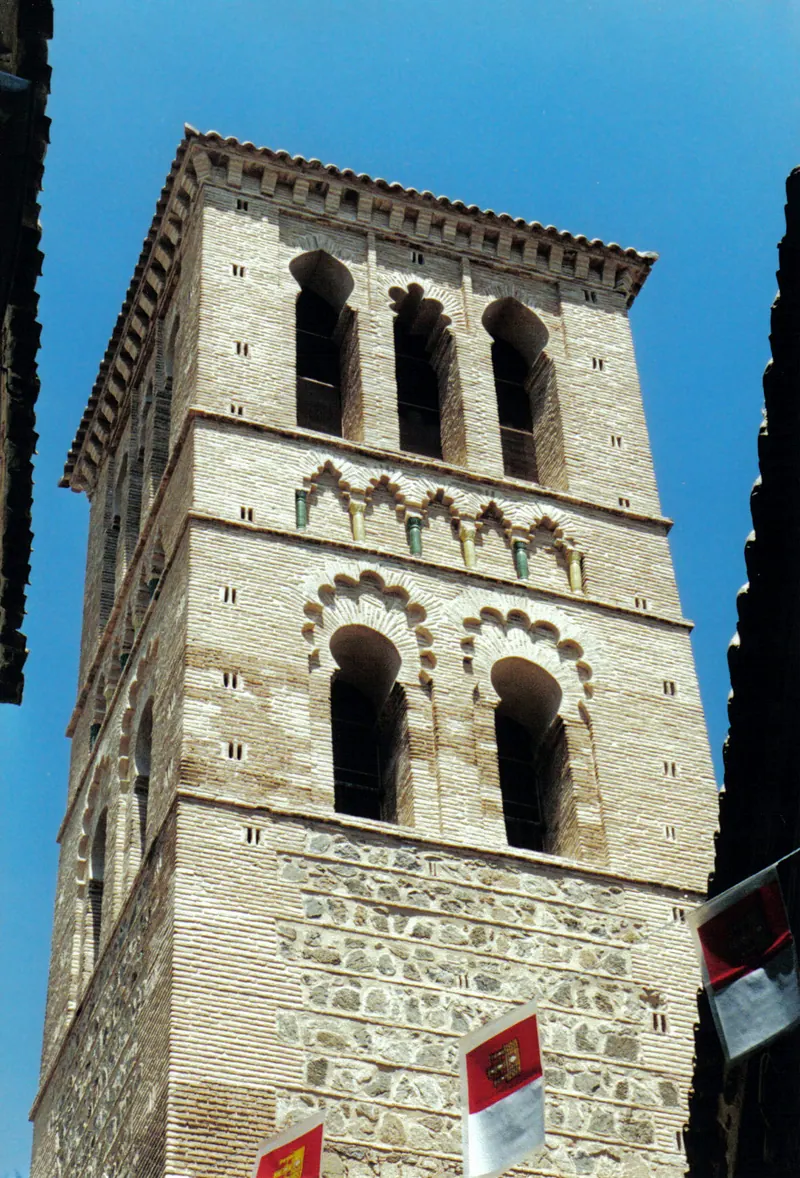
One room and one painting: El Greco's *Burial of the Count of Orgaz*, 4.80 m by 3.60 m, made in 1586–88 for the chapel it still hangs in and showing a Castilian lord of the 1320s in full plate being lowered into his grave by two saints. Look up at the Mudéjar tower from the square before you join the queue — it is the older half of the visit.

Where and when

Where
Plaza del Conde 4, 45002 Toledo, Toledo, Spain Open in Google Maps Walking directions
Era
Mudéjar tower of the 14th century, probably on a minaret; the El Greco was painted 1586–88
Opening
Daily. 1 March–15 October 10:00–18:45; 16 October–28 February 10:00–17:45. The ticket desk closes 10 minutes before (as of August 2026)
Price
€4 general, with reductions for students, youth-card holders, large families and Toledo residents and free entry for small children; covered by the €14 Pulsera Turística (as of August 2026)
Best time
At 10:00 when the doors open, or in the last hour. Between about 11:30 and 16:00 it is the busiest small monument in the city.
Good for
Works in the rain
Official site
toledomonumental.com
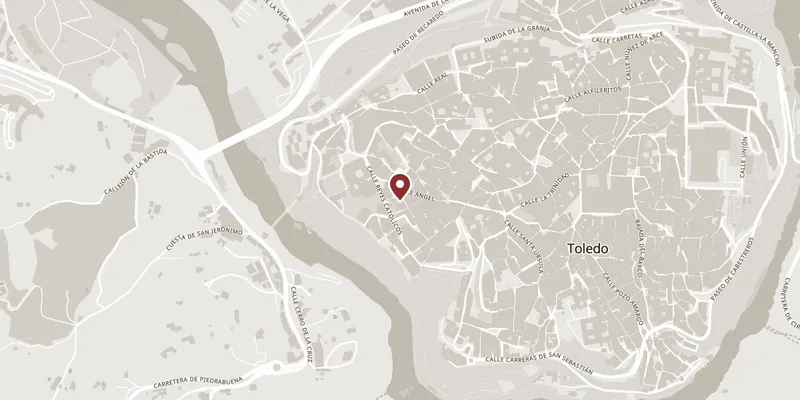
Map showing where Iglesia de Santo Tomé is
Open in Google Maps Walking directions © MapTiler © OpenStreetMap contributors

Checked

What is Iglesia de Santo Tomé?

Judge this one honestly before you spend your time. The painting is Renaissance, not medieval, and it is a five-minute visit. It is on the list because of what it depicts and what it hangs in.

The tower is fourteenth-century Mudéjar, slender, brick, visible across half the city, and it stands — as Toledo Monumental notes — most probably on the foundation of an Islamic minaret. The church was rebuilt at the expense of Gonzalo Ruiz de Toledo, lord of Orgaz, who died in 1323, which is the connection that produced the painting two and a half centuries later.

The Entierro del Señor de Orgaz was painted between 1586 and 1588 for the burial chapel, and it stays where it was made — a rare thing for a picture of this rank. It shows the miracle in which Saint Stephen and Saint Augustine came down in person to bury Don Gonzalo. The lower half is a Toledo funeral of 1586: two rows of local gentlemen in black with white ruffs, contemporary portraits, standing in as witnesses to an event of the 1320s. The boy at the left, generally identified as the painter’s son Jorge Manuel, holds a handkerchief inscribed with the year of his birth.

What to look at, for our purposes: the armour. The count is lowered into the grave in a full harness of polished and gilt plate, and El Greco painted the reflections in it — the faces and robes of the saints coming back off the breastplate. It is one of the finest pieces of painted metal anywhere, and it is the reason this entry sits in a list about a city of armourers.

The practicalities are blunt. Entry is from the Plaza del Conde, the painting is shown in a room off the church built for the purpose, and the rest of the interior — sculpture, a silver tabernacle — is not what anyone is there for. €4, or nothing extra on the €14 wristband. In the middle of the day there is a queue on the square.
What visitors say

4.4 from 6,676 ratings

  • Artie G 5000

    5 out of 5 5 months ago

    Beautiful Historic church in the upper part of Toledo

    Read this review on Google
  • Dave Proffer

    4 out of 5 5 months ago

    As Rick Steves states, everyone comes (and pays for) the famous painting. Otherwise, the church is nice, but not spectacular.

    Read this review on Google
  • Gregory Clarke

    4 out of 5 6 months ago

    Stunning church that's needed to visit if you are in the area... Stunning art work in the main entrance to church. Included in the wristband for the town churches, so make sure you get

    Read this review on Google

Ratings and reviews from Google. See all on Google Maps

Frequently asked questions

Where is The Burial of the Count of Orgaz?

In the church of Santo Tomé on the Plaza del Conde in Toledo, in the chapel it was painted for. It has never left the building.

When did El Greco paint The Burial of the Count of Orgaz?

Between 1586 and 1588. The canvas measures 4.80 by 3.60 metres and shows the burial of Gonzalo Ruiz de Toledo, lord of Orgaz, who died in 1323.

How much is Santo Tomé?

€4 for a general ticket as of August 2026, or included in the €14 Pulsera Turística along with six other monuments.

How long does the visit take?

Five to ten minutes. The visit is essentially the room holding the painting; the rest of the church interior holds sculpture and a silver tabernacle.

What should I look for in the painting?

The count's plate armour, and the reflections of the two saints in the polished breastplate; the two rows of contemporary Toledo gentlemen acting as witnesses; and the boy at the left, usually identified as the painter's son, holding a handkerchief with the year of his birth.

Festivals in Toledo

Medieval festivals in Toledo
Featured
Historic City Celebrations

Corpus Christi in Toledo

Toledo, Spain

On Corpus Christi the 16th-century Custodia de Arfe, a three-metre Gothic tower of gilded silver, is carried out of Toledo Cathedral and through two kilometres of streets hung with awnings and tapestries and strewn with thyme, behind the banners of the city's old confraternities and guilds. Toledo keeps the feast on its traditional Thursday, sixty days after Easter: 4 June in 2026, and 27 May expected in 2027.

Expected 2027
Family

More places in Toledo

Places in Toledo
Church Start here

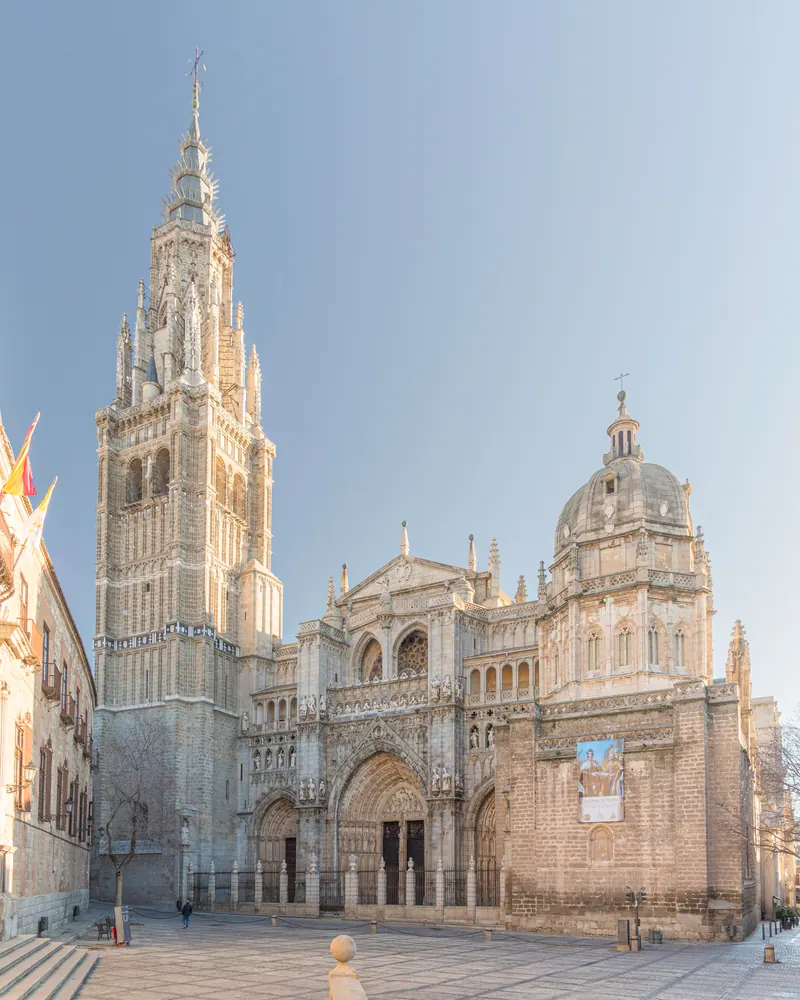
Toledo Cathedral

Begun 1226 under Ferdinand III and Archbishop Jiménez de Rada; completed 1493, on the site of the Friday mosque

Begun in 1226 on the site of the city's Friday mosque, which had itself replaced the Visigothic cathedral, and finished in 1493 — five naves, a double ambulatory and vaults 44 m up. Come for the 09:00 mass in the Mozarabic Chapel, the only daily liturgy left anywhere in the pre-1080 Hispanic rite, and stay for the choir stalls carved with the fall of Granada town by town.

Works in the rain
Walking directions
Church

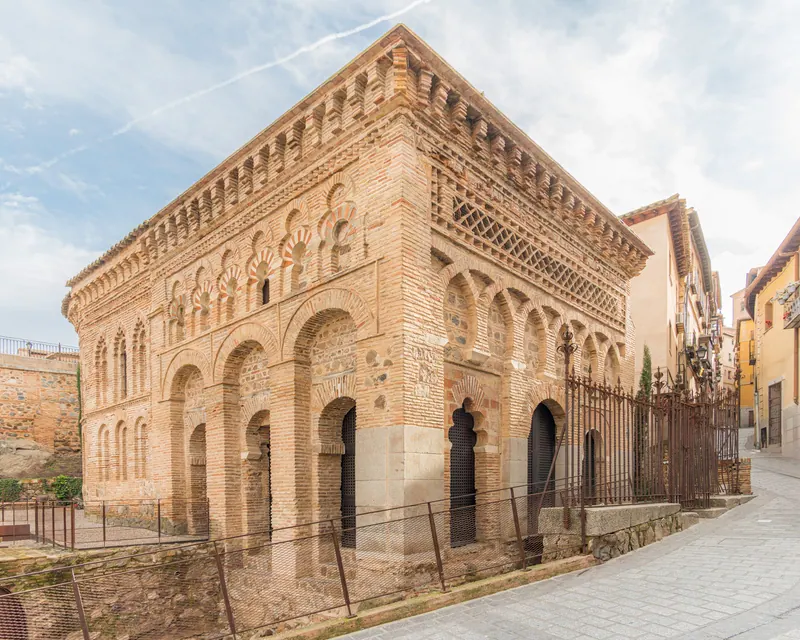
Mezquita del Cristo de la Luz

Built as the mosque of Bāb al-Mardūm in 999; Christian apse added c. 1182, the earliest known Mudéjar work

A mosque of the year 999, standing more or less intact on the north slope, with a Christian apse grafted onto it a century after Alfonso VI took the city. Go round to the outside wall and find the Kufic brick inscription that gives the date and the patron — it was hidden behind a later wall until 1899.

Free or cheap Quiet corner
Walking directions
Church

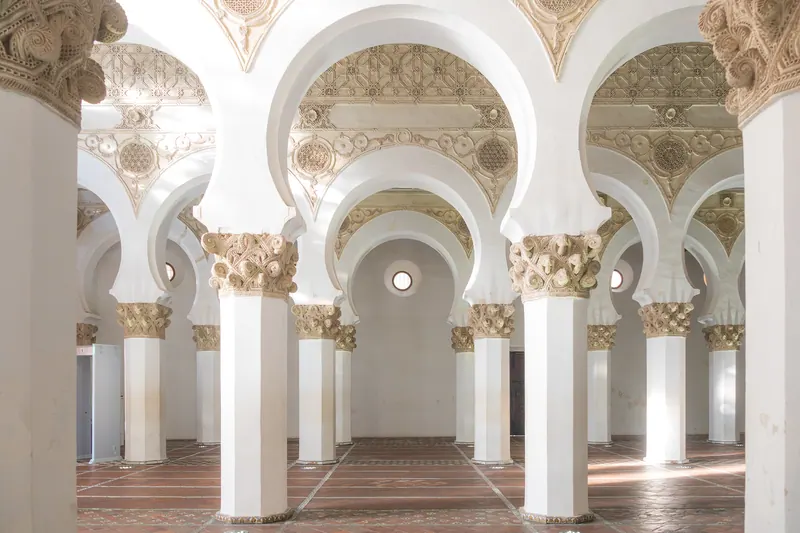
Sinagoga de Santa María la Blanca

Built as the Great Synagogue, late 12th century, in Almohad style; rebuilt after a fire of 1250; taken as a church c. 1411

Built as Toledo's Great Synagogue in the late 12th century, by Muslim craftsmen, for a Jewish congregation, under a Christian king — then taken as a church around 1411 and kept by the Catholic Church ever since. Stand at the west end and count the arcades: thirty-two horseshoe arches on brick octagons, whitewashed, with Almohad plasterwork above them.

Quiet corner Free or cheap
Walking directions