Medieval Booker

Church ◆ Toledo

Mezquita del Cristo de la Luz

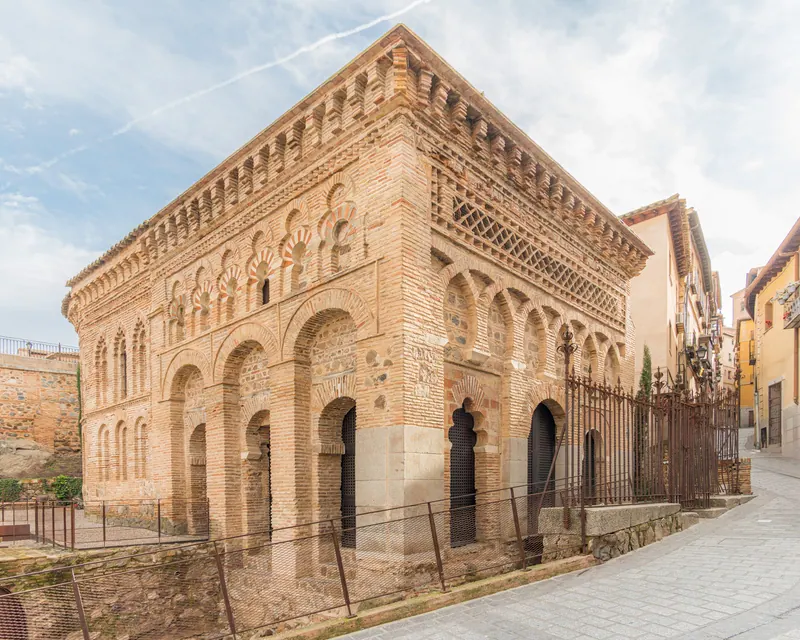
A mosque of the year 999, standing more or less intact on the north slope, with a Christian apse grafted onto it a century after Alfonso VI took the city. Go round to the outside wall and find the Kufic brick inscription that gives the date and the patron — it was hidden behind a later wall until 1899.

Where and when

Where
Calle Cristo de la Luz 22, 45002 Toledo, Toledo, Spain Open in Google Maps Walking directions
Era
Built as the mosque of Bāb al-Mardūm in 999; Christian apse added c. 1182, the earliest known Mudéjar work
Opening
Daily. 1 March–15 October 10:00–18:45; 16 October–28 February 10:00–17:45; ticket desk closes 10 minutes before. Closed 1 January and 25 December (as of August 2026)
Price
€4 general, with reductions for students, youth-card holders, large families and Toledo residents and free entry for small children; covered by the €14 Pulsera Turística. Audio guide available in Spanish, English, French and German (as of August 2026)
Best time
Early, before the coach groups work their way up from Bisagra, or the last hour of the day. It is a small room and one tour group fills it completely.
Good for
Free or cheapQuiet corner
Official site
toledomonumental.com
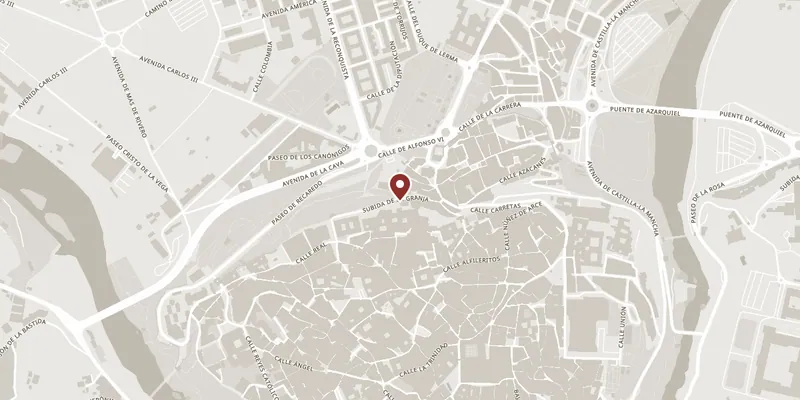
Map showing where Mezquita del Cristo de la Luz is
Open in Google Maps Walking directions © MapTiler © OpenStreetMap contributors

Checked

What is Mezquita del Cristo de la Luz?

This is the oldest building in Toledo you can walk into, and one of the oldest standing buildings in Spain. It was raised in 999 — the year 390 of the Hijra — in the caliphate of Hishām II, paid for by one Aḥmad ibn Ḥadīdī, as a small neighbourhood oratory beside the city gate of Bāb al-Mardūm. All of that is recorded in the inscription itself: a band of Kufic Arabic built out of shaped brick on the south-west façade, which was found in 1899 when a later wall covering it was pulled down.

The mosque is about eight metres square. Four columns, carrying reused Visigothic and late-Roman capitals, divide it into nine bays, and every one of the nine vaults over them is different — interlacing ribs of the kind the builders of the Great Mosque of Córdoba had worked out a generation earlier. Stand in the middle and look up slowly; that ceiling is the reason architectural historians come here.

After 1085 the building passed into Christian hands and was consecrated as a church, and a horseshoe-arched apse in brick was added at the east end — dated by the monument’s own account to 1182, and generally reckoned the earliest surviving Mudéjar work anywhere. Traces of Romanesque wall painting survive in it. The result is a single small room in which the Islamic and the Christian halves are separated by about 180 years and no argument at all.

The name comes from the legend: that when Alfonso VI rode into Toledo in 1085 his horse knelt at this spot, and behind a blocked-up wall a lamp was found still burning before a crucifix, lit since Visigothic times. Take it for what it is.

Outside, the terraced garden has been excavated. A Roman road of granite flagstones about five metres wide runs north–south across the northern esplanade, and under the Mudéjar apse archaeologists found a second, thicker apse and a cave cut into the rock, both belonging to a Roman-era building. The garden is also the best rest stop on the climb up from the Puerta de Bisagra.

One footnote for anyone counting mosques: this is not the last one. The Mezquita de Tornerías, a few minutes below Zocodover, has been dated by recent excavation to the ninth or tenth century and now holds Castilla-La Mancha’s craft promotion centre — €3, closed Mondays, and almost nobody goes in.
What visitors say

4.2 from 5,651 ratings

  • Marcus Hurley

    5 out of 5 2 months ago

    We walked the short distance to the converted mosque of Christo de la Luz, a small but beautiful building with the usual Visigothic horseshoe arches inside and an added Christian apse with a Christ the Pantocrator fresco. This fresco confused me at first as the halo and hair had all faded and looked more like a turban which made me think it was a blasphemous image of Muhammed! The gardens at the church were very pretty, with rose bushes and a small fountain and there were also views over the Gate of the Sun and the main entry to the city in medieval times, the Gate of Bisagra.

    Read this review on Google
  • Kamal Kabalan

    1 out of 5 3 months ago

    not worth to pay for 2minutes visit inside the building! seriously they make us pay to see one spot!! that is weird and i wouldnt go or do it again. waste of money. the building structure from inside is nice but u can see much nicer

    Read this review on Google
  • Golan Kendler

    4 out of 5 3 months ago

    Nice views and it is an old piece of architecture. Not really worth the 4€ but if you buy the 14€ ticket (access to 7 places) then it’s worth it for sure.

    Read this review on Google

Ratings and reviews from Google. See all on Google Maps

Frequently asked questions

How old is the Mezquita del Cristo de la Luz?

It was built in 999, in the year 390 of the Hijra, under the caliphate of Hishām II. The date and the name of the patron, Aḥmad ibn Ḥadīdī, are recorded in the Kufic brick inscription on the outside wall, uncovered in 1899.

Is the Cristo de la Luz a mosque or a church?

It was built as a mosque and became a church after the Christian conquest, when a brick apse was added at the east end — dated to 1182 by the monument's own account and usually called the oldest surviving Mudéjar work. It is now a ticketed monument.

What should I look for inside?

The nine vaults. Four columns with reused Visigothic and Roman capitals divide the little hall into nine bays, and no two of the nine ribbed vaults above them are the same.

How much does the Cristo de la Luz cost?

€4 for a general ticket as of August 2026, or nothing extra if you hold the €14 Pulsera Turística, which includes it along with six other monuments.

What is in the garden outside?

Excavated remains, including a Roman road of granite flagstones about five metres wide crossing the northern esplanade, and — under the medieval apse — a second apse and a cave cut into the rock from a Roman-period building.

Festivals in Toledo

Medieval festivals in Toledo
Featured
Historic City Celebrations

Corpus Christi in Toledo

Toledo, Spain

On Corpus Christi the 16th-century Custodia de Arfe, a three-metre Gothic tower of gilded silver, is carried out of Toledo Cathedral and through two kilometres of streets hung with awnings and tapestries and strewn with thyme, behind the banners of the city's old confraternities and guilds. Toledo keeps the feast on its traditional Thursday, sixty days after Easter: 4 June in 2026, and 27 May expected in 2027.

Expected 2027
Family

More places in Toledo

Places in Toledo
Church Start here

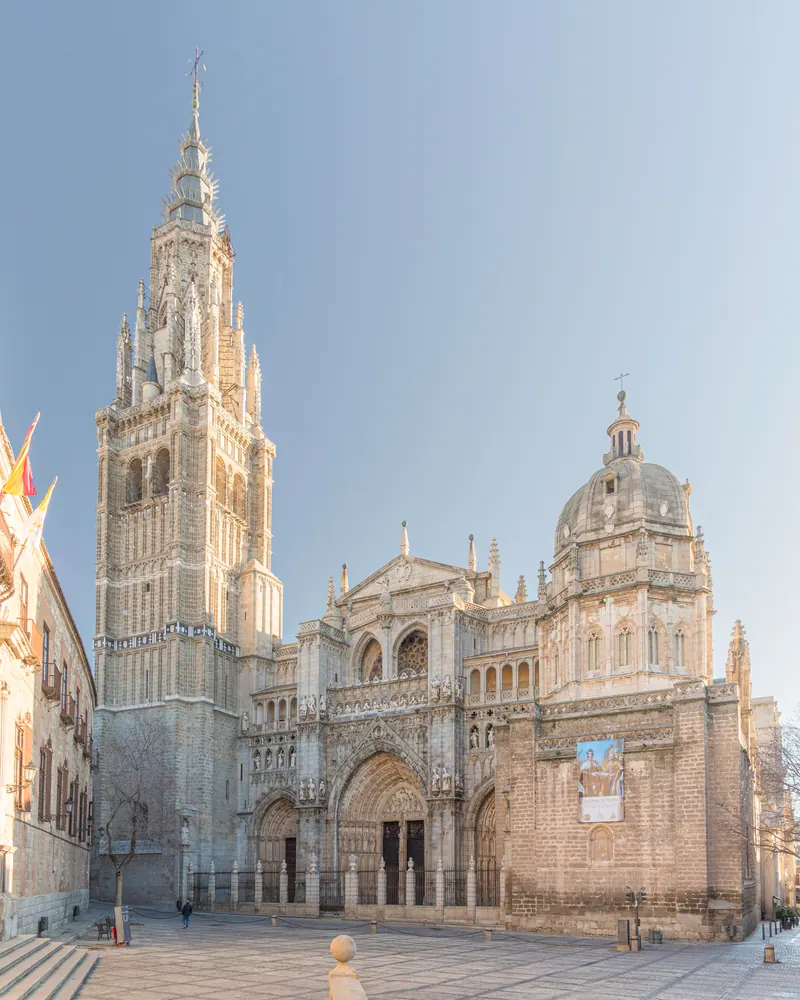
Toledo Cathedral

Begun 1226 under Ferdinand III and Archbishop Jiménez de Rada; completed 1493, on the site of the Friday mosque

Begun in 1226 on the site of the city's Friday mosque, which had itself replaced the Visigothic cathedral, and finished in 1493 — five naves, a double ambulatory and vaults 44 m up. Come for the 09:00 mass in the Mozarabic Chapel, the only daily liturgy left anywhere in the pre-1080 Hispanic rite, and stay for the choir stalls carved with the fall of Granada town by town.

Works in the rain
Walking directions
Church

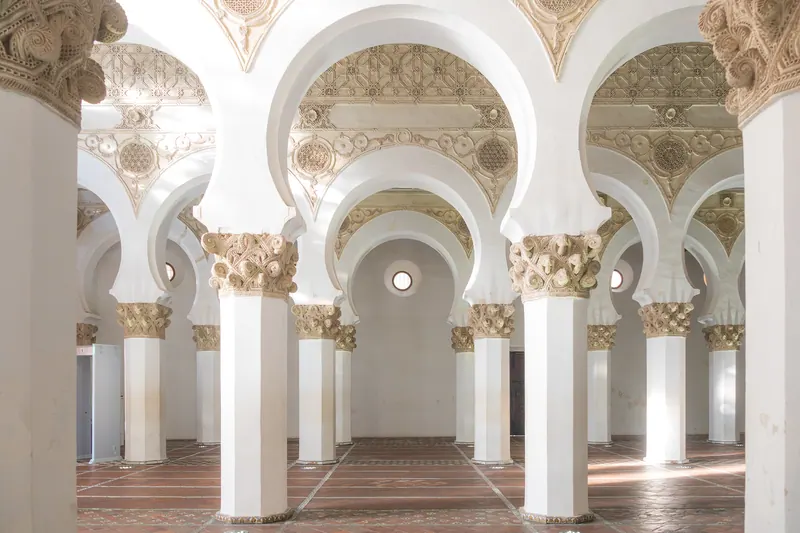
Sinagoga de Santa María la Blanca

Built as the Great Synagogue, late 12th century, in Almohad style; rebuilt after a fire of 1250; taken as a church c. 1411

Built as Toledo's Great Synagogue in the late 12th century, by Muslim craftsmen, for a Jewish congregation, under a Christian king — then taken as a church around 1411 and kept by the Catholic Church ever since. Stand at the west end and count the arcades: thirty-two horseshoe arches on brick octagons, whitewashed, with Almohad plasterwork above them.

Quiet corner Free or cheap
Walking directions
Museum

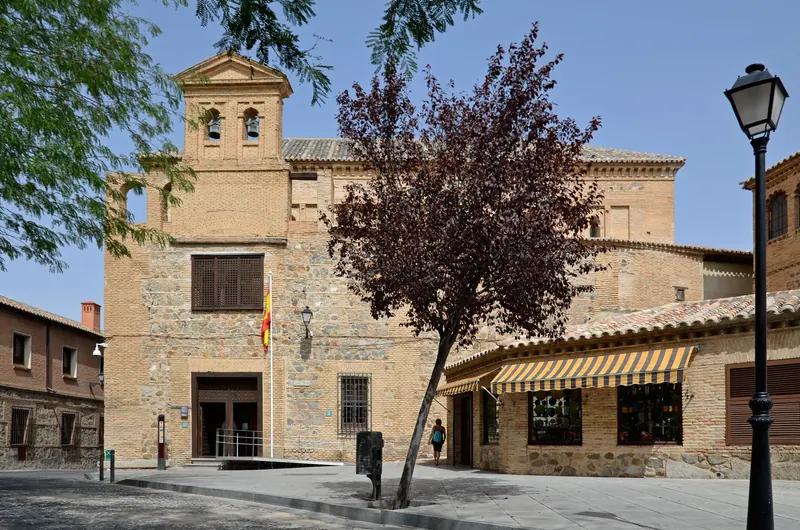
Sinagoga del Tránsito and the Sephardic Museum

Built c. 1355–57 for Samuel ha-Levi, treasurer of Pedro I; Museo Sefardí installed 1964

The private synagogue Samuel ha-Levi, treasurer to Pedro I of Castile, built in the 1350s — its prayer hall carved with Hebrew psalms, Arabic script and the castles and lions of Castile in the same band of plaster. It is free on Saturday afternoons and all day Sunday, and it is the one place in Toledo that tells the Jewish story rather than leaving you to infer it.

Free or cheap Works in the rain Quiet corner
Walking directions