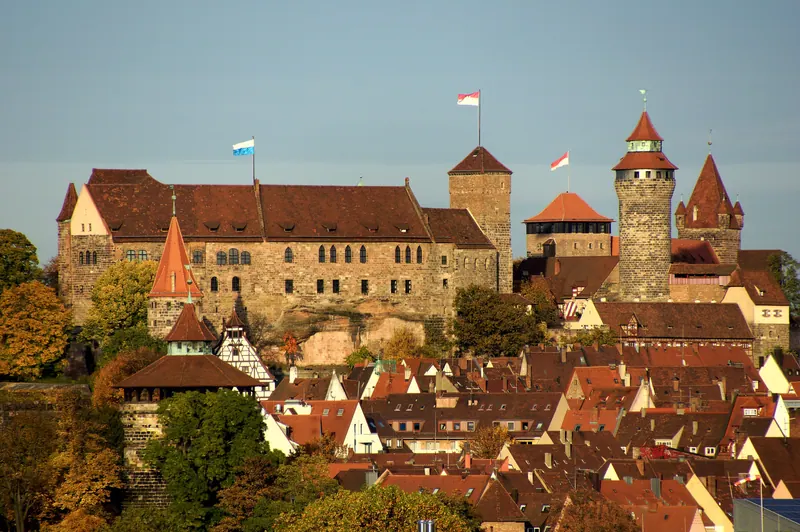
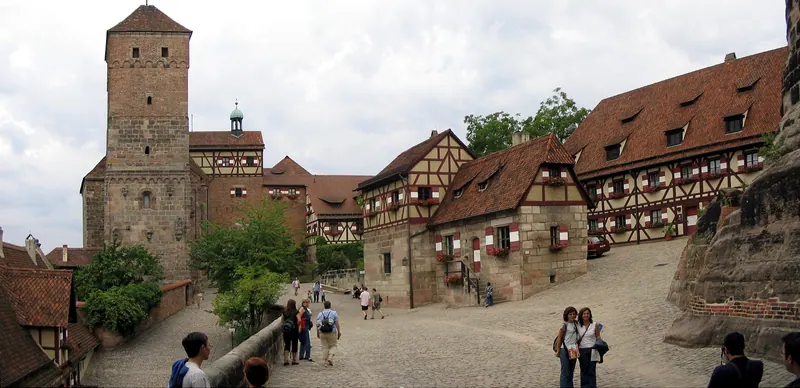
Nuremberg is first documented as royal property in 1050. Frederick II granted the town a freedom charter in 1219, and by the 14th century it was a free imperial city answerable to no one but the emperor. The Golden Bull of 1356 wrote that relationship into the constitution of the Holy Roman Empire: every newly elected king was required to hold his first imperial diet here. Between 1422 and 1427 the city bought out the burgraves and took possession of the castle itself.
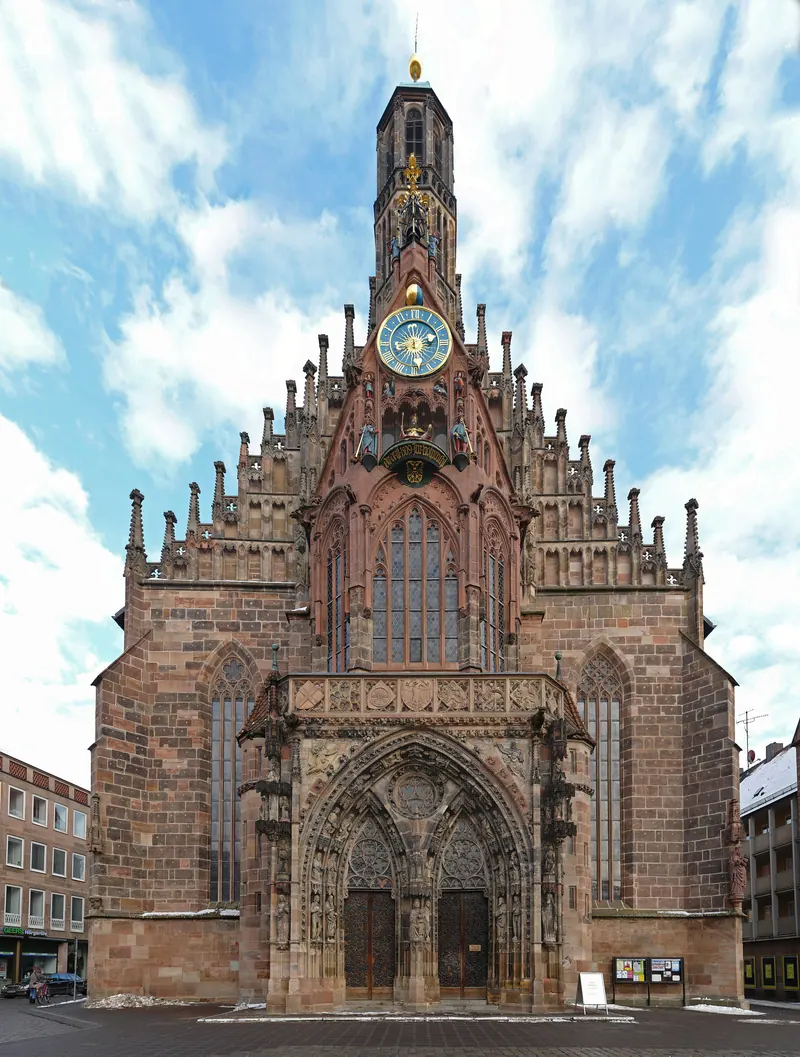
In a charter of 29 September 1423 King Sigismund assigned the imperial regalia — crown, sword, orb, holy lance, relics — to Nuremberg “for all eternity, irrevocably”. They arrived on 22 March 1424 and were kept in the church of the Hospital of the Holy Ghost. Once a year, on the fourteenth day after Good Friday, they were carried out and shown to the crowd from a wooden gallery on the Hauptmarkt: the Heiltumsweisung, held from 1424 to 1523. The regalia stayed in the city until 1796, when they were moved to Regensburg ahead of the French army and then, from 1800, to Vienna.
The money came from craft and trade. Nuremberg made armour, brass and copper ware, wire, compasses, scientific instruments, weapons, toys and gingerbread, and sold them along the trade roads that crossed here. Its late-medieval workshops produced Albrecht Dürer (1471–1528), the sculptors Veit Stoss and Adam Kraft, the bronze founder Peter Vischer the Elder, Martin Behaim, whose terrestrial globe of 1492 is the oldest to survive, and the locksmith Peter Henlein, credited with the first portable watches around 1510.
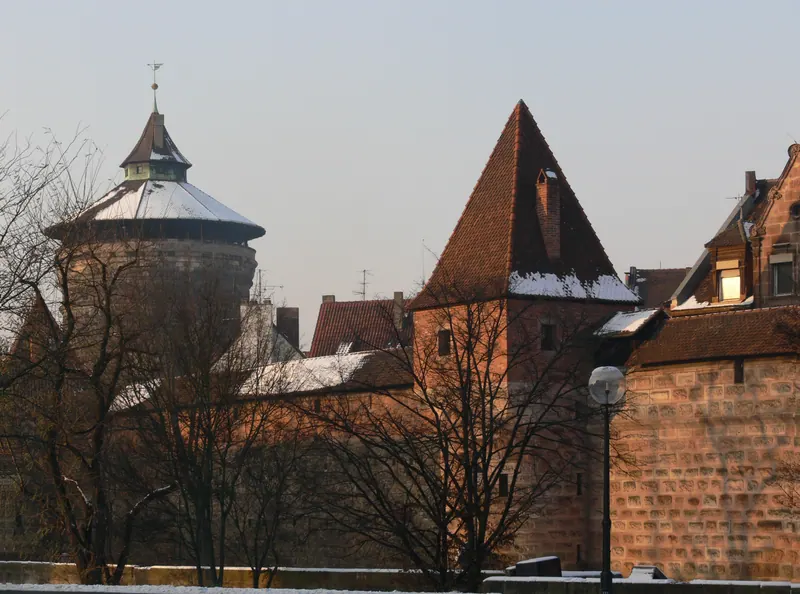
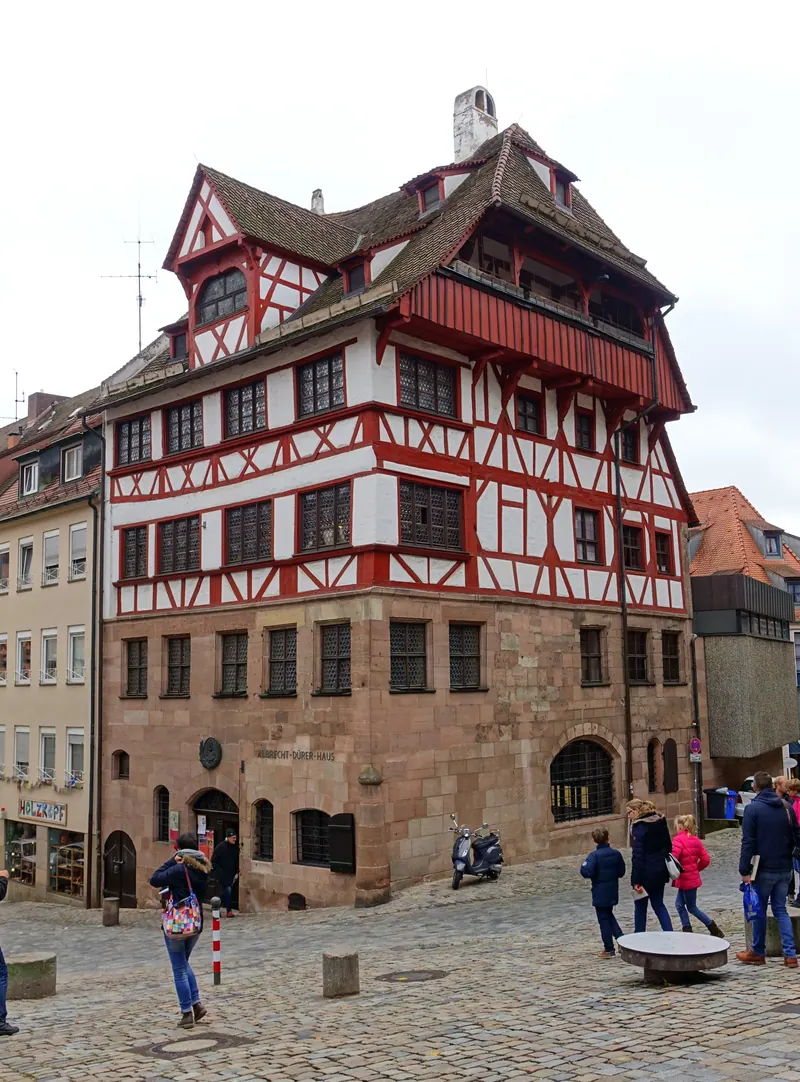
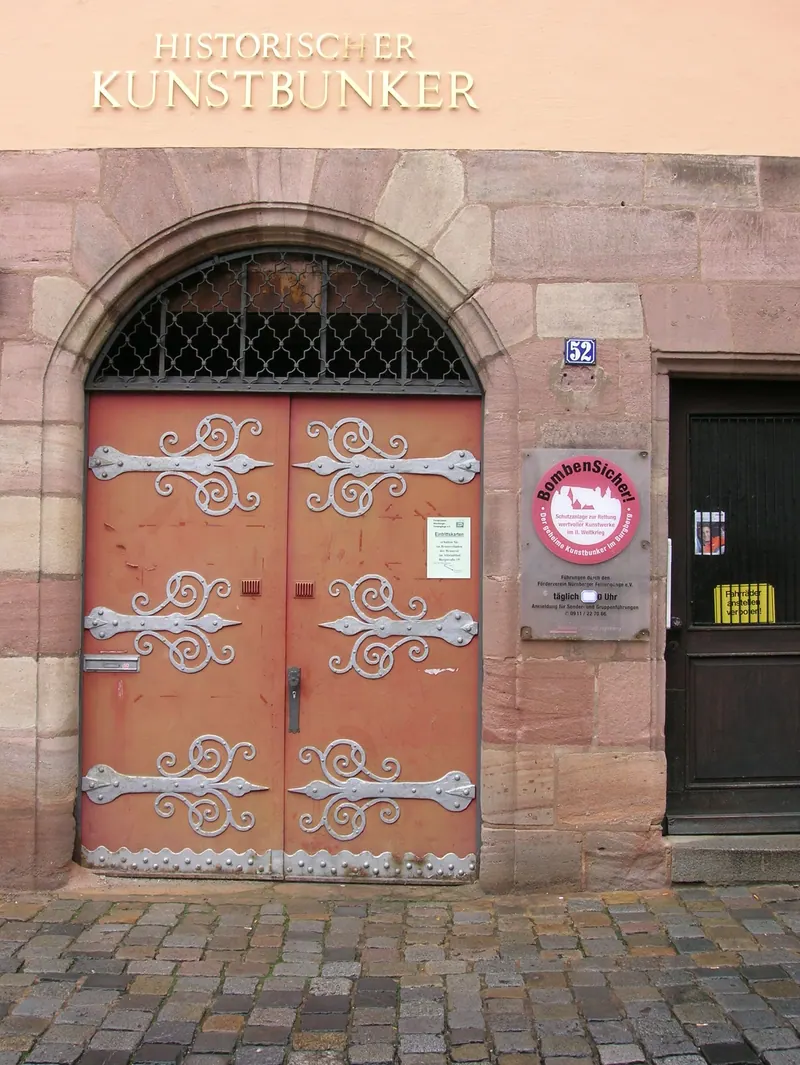
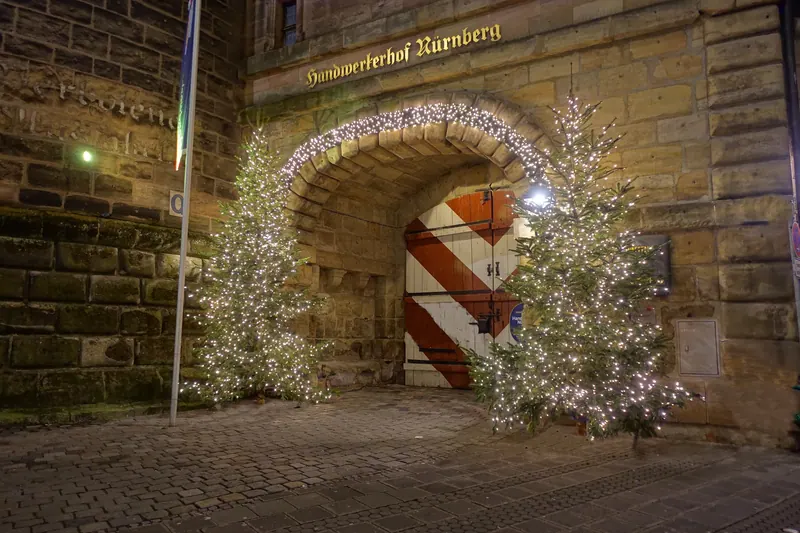
On the night of 2 January 1945, 521 RAF bombers destroyed roughly ninety per cent of the old town in under an hour; more than 1,800 people were killed and about 2,000 medieval houses burned. Reconstruction followed the medieval street plan rather than replacing it, and was largely finished by the late 1950s. What is genuinely old: the castle’s Romanesque double chapel and the Sinwell tower, which came through almost undamaged; 3.8 km of the 5 km city wall and 74 wall towers; the timber frame of the Dürer House; and the great fixed works of art, which were bricked in on the spot or carried into a rock-cut art bunker under the castle hill before the raids came.