Medieval Booker

Medieval Christmas ◆ Germany

Nürnberger Christkindlesmarkt

Nuremberg's Christkindlesmarkt fills the Hauptmarkt and the Rathausplatz from the Friday before the first Advent to Christmas Eve with 168 red-and-white wooden stalls and about 180 traders, opened each year by the Christkind's prologue from the gallery of the Frauenkirche and drawing around two million people; the 2026 market runs 27 November to 24 December. It is not a medieval market: the square is 14th-century and the Frauenkirche was Charles IV's imperial court chapel, but the market itself is first documented in 1678 — a date the market's own historians revised from 1628 — and t...

When is Nürnberger Christkindlesmarkt 2026?

Next edition
2026 Nürnberger Christkindlesmarkt 2026 See all editions
How often
Every year
Entry
Free to enter; you pay only for what you eat, drink and buy. The market's own Christkindlesmarkt-Taler token has a value of €5 at the stalls.
Family-friendly
Yes — bring the kids
Attendance
~2,000,000 visitors

Checked · we re-check every festival twice a year.

Past and upcoming editions

Editions of Nürnberger Christkindlesmarkt
EditionDatesStatusCalendar
2026 edition 2026 Google Calendar · .ics
2027 edition Expected 2027 Google Calendar · .ics

Expected means the organiser hasn't announced yet; we show the usual window.

Past editions (1)
  • 2025 edition — 28 November – 24 December 2025

What happens at Nürnberger Christkindlesmarkt?

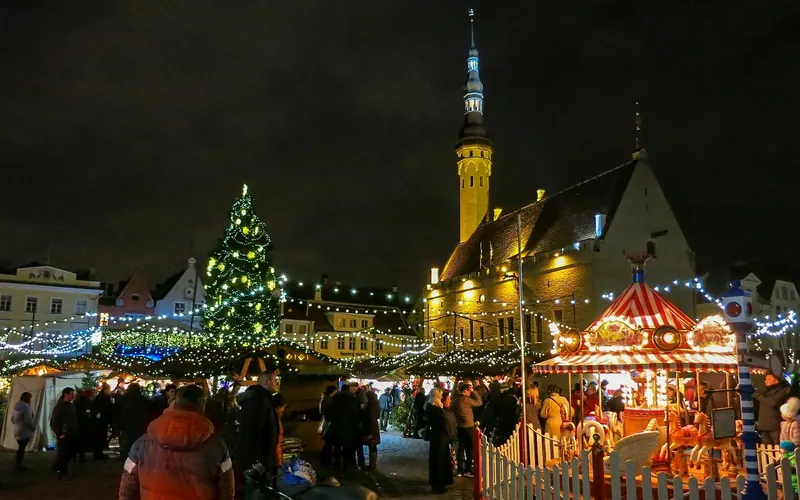
The Christkindlesmarkt takes over the Hauptmarkt, Nuremberg’s main square, and the Rathausplatz beside it: 168 wooden stalls with red-and-white cloth roofs, worked by about 180 traders, from the Friday before the first Advent until Christmas Eve. In 2026 that means 27 November to 24 December, daily 10:00 to 21:00 and on 24 December only until 14:00. Entry is free. The city put the 2025 season at around two million visitors, which is the single most useful fact for anyone planning when to go.

It is not a medieval market, and the market’s own historians are the reason we can say so precisely. The oldest evidence for it is an inscription on a small wooden box in the Germanisches Nationalmuseum recording a gift sent to the Kindles-Marck. The date was long read as 1628, but the Stadtarchiv Nürnberg and the museum checked the two women named in it — Regina Susanna Harsdörffer, who lived from 1663 to 1731, and her friend Susanna Eleonora Elbs, who died in 1721 — and neither was alive in 1628. The smudged digit reads 1678, so on the market’s own reckoning its 350th anniversary falls in 2028. A list of 1737 shows 140 people licensed to sell here.

What is medieval is the ground it stands on. The Hauptmarkt was laid out in the 1340s under Charles IV, and the Frauenkirche on its east side was his imperial court chapel. From a wooden gallery on this square the imperial regalia were shown to the crowd once a year between 1424 and 1523 — a genuinely medieval annual event on this exact spot, and it ended more than 150 years before the Christmas market is first recorded. The stalls today sell Nuremberg gingerbread, fruit loaf, tree ornaments, candles, toys and crafts, and the gold-leaf angels and prune-figure Zwetschgenmännle that are the market’s trademarks appear on copper engravings from around 1830. Nobody works in period dress and there are no craft demonstrations of the kind Esslingen’s medieval Christmas market puts on.

The opening is the thing to time. On the first Friday at 17:30 the Christkind — a young Nuremberger aged between 16 and 19, chosen every two years — speaks the prologue from the gallery of the Frauenkirche and the lights of the market go on; about 25,000 people watched in 2025. Even that ceremony is modern: an actress first appeared as the Christkind in 1933, and the prologue was written in 1948 by Friedrich Bröger.

Three things run alongside the main market. The Markt der Partnerstädte, the twin-cities market, stands on the Rathausplatz; the Kinderweihnacht on Hans-Sachs-Platz has a carousel, a steam railway and a small big wheel and runs on to 30 December 2026; and the Sternenhaus puts on a programme for children from 28 November to 23 December 2026. The market sells a Christkindlesmarkt-Taler token worth €5 at the stalls.
Frequently asked questions

When is the Nuremberg Christkindlesmarkt in 2026?

Friday 27 November to Thursday 24 December 2026, daily 10:00–21:00 and on 24 December only until 14:00. The opening ceremony is on 27 November at 17:30, when the Christkind speaks the prologue from the gallery of the Frauenkirche.

When does the Nuremberg Christmas market open in 2027?

Friday 26 November to Friday 24 December 2027 is expected, but the city has not announced it yet. The rule never changes: the market opens on the Friday before the first Advent — Advent Sunday falls on 28 November 2027 — and always ends on Christmas Eve at 14:00.

Is the Nuremberg Christkindlesmarkt a medieval market?

No. The Hauptmarkt is 14th-century and the Frauenkirche beside it was Charles IV's imperial court chapel, but the market is early modern, first documented in 1678, and the traders are ordinary stallholders in ordinary clothes. For an actually medieval Christmas market, with costumed traders and working crafts, the German one is Esslingen am Neckar's.

How old is the Nuremberg Christkindlesmarkt?

Its oldest evidence is an inscribed wooden box in the Germanisches Nationalmuseum, once dated 1628 but re-read as 1678 after the Stadtarchiv Nürnberg and the museum found that neither woman named in the inscription was alive in 1628. The market's own site now dates it from 1678, making 2028 its 350th anniversary. A list of 1737 records 140 licensed sellers.

Is the Nuremberg Christkindlesmarkt free?

Yes, entry is free and there is no ticket. You pay for food, drink and goods; the market sells a Christkindlesmarkt-Taler token worth €5 at the stalls.

Who is the Nuremberg Christkind and when does she appear?

A young woman from Nuremberg, aged between 16 and 19, chosen every two years. She opens the market at 17:30 on the first Friday with a prologue from the gallery of the Frauenkirche — about 25,000 people watched in 2025 — and appears at the market and around the city through the season. The role dates from 1933 and the prologue was written in 1948 by Friedrich Bröger.

More medieval festivals in Germany

Same country, upcoming first.

All festivals in Germany
Featured
Living History & Museums Historic City Celebrations

Der Meistertrunk (Rothenburg Whitsun Festival)

Rothenburg ob der Tauber, Germany

Rothenburg ob der Tauber's Whitsun festival re-enacts the legend of 1631, when former mayor Nusch supposedly saved the town from General Tilly's army by emptying a tankard holding more than three litres of wine in one draught. Citizens have performed the play 'Der Meistertrunk' since 1881, framed by a four-day festival with a costumed procession, military camp, shepherds' dance and crafts market.

2026
Family
Featured
Medieval Markets & Fairs Medieval Christmas

Esslingen Medieval Market & Christmas Market

Esslingen am Neckar, Germany

Esslingen am Neckar's combined medieval market and Christmas market fills the half-timbered old town from the last week of November until just before Christmas. Around 200 stalls and roughly 500 programme slots of jugglers, fire artists, craft demonstrations and music make it the largest event of its kind in southern Germany.

2026
Free Family
Featured
Jousting & Tournaments Living History & Museums +1

Landshuter Hochzeit 1475

Landshut, Germany

Every four years about 2,500 costumed citizens of Landshut restage the 1475 wedding of Duke Georg the Rich and Princess Hedwig of Poland over three and a half weeks of processions, tournaments, camp life and plays. First performed in 1903, it is Europe's largest historical costume festival; the next edition runs 25 June–18 July 2027.

2027
Family

Read more about Nuremberg

Stories and guides from medieval Nuremberg.

Medieval Nuremberg — the city guide

An imperial free city and the workshop of late-medieval Germany: the Golden Bull of 1356 made Nuremberg the place where every newly elected king had to hold his first imperial diet, and the imperial regalia were kept here from 1424 to 1796. About ninety per cent of the old town was destroyed in a single raid on 2 January 1945 and rebuilt on the medieval street plan, so most of what you walk past is careful post-war reconstruction around a hard core of genuine survivals.