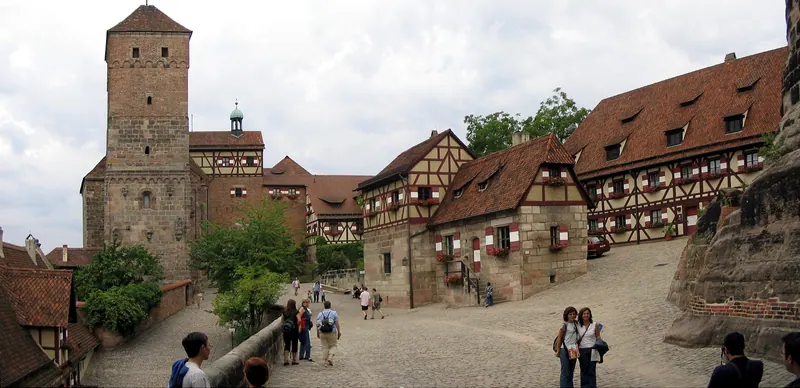
Nuremberg had been digging cellars into the sandstone under the castle hill since the 14th century. From the outbreak of the Second World War the city took a set of those vaults, some of them 24 m below the surface, fitted them out for constant temperature and humidity, and moved its art into them.
The museum’s own list of what was sheltered here reads like an index to this city:
- Veit Stoss’s Engelsgruß from St Lorenz, taken down off its chains and carried underground;
- the Kraków Marian altarpiece, also by Stoss — looted from St Mary’s in Kraków and brought here, and listed by the museum plainly as Kunstraub;
- the art clock from the Frauenkirche, the Männleinlaufen;
- Martin Behaim’s globe of 1492;
- paintings, prints and writings by Albrecht Dürer;
- the “Nuremberg Egg”, the early watch attributed to Peter Henlein;
- Nuremberg goldsmiths’ work, church glass and fountain figures;
- and the imperial regalia — orb, sceptre, imperial and ceremonial swords, relics and coronation robes — which the Nazi authorities had brought back from Vienna to Nuremberg in 1938. American soldiers found them in this bunker in 1945, and they were returned to the Hofburg in January 1946.
So the regalia that Sigismund gave the city in 1423 spent the last months of the Second World War two hundred metres from where they had been kept in the Middle Ages, in a hole in the same rock.
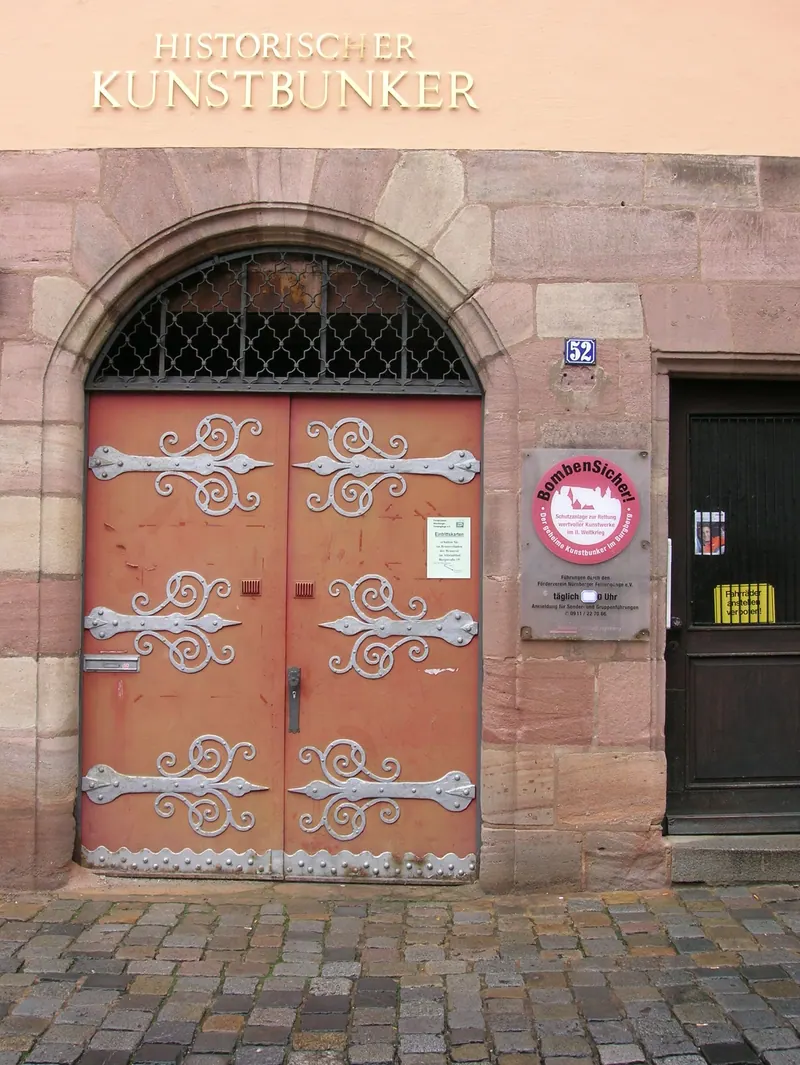
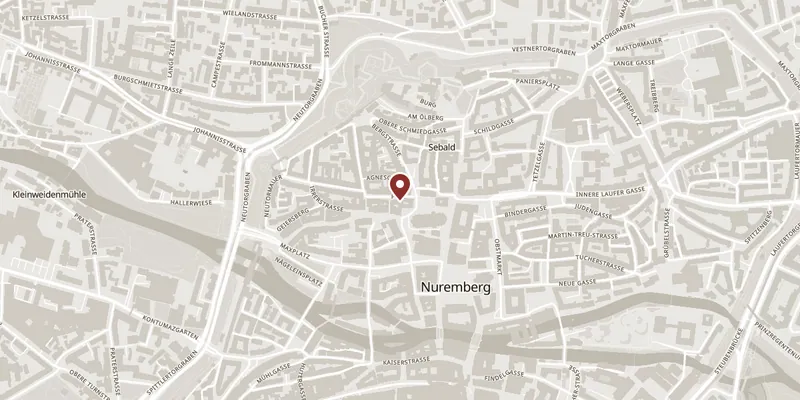
Entry is by guided tour only, from Obere Schmiedgasse 52, and takes about 75 minutes. The permanent exhibition was redesigned and reopened on 1 February 2026. It is 8°C down there in August; take a jacket you would wear in November.