Medieval Booker

West Flanders ◆ Belgium

Medieval Bruges

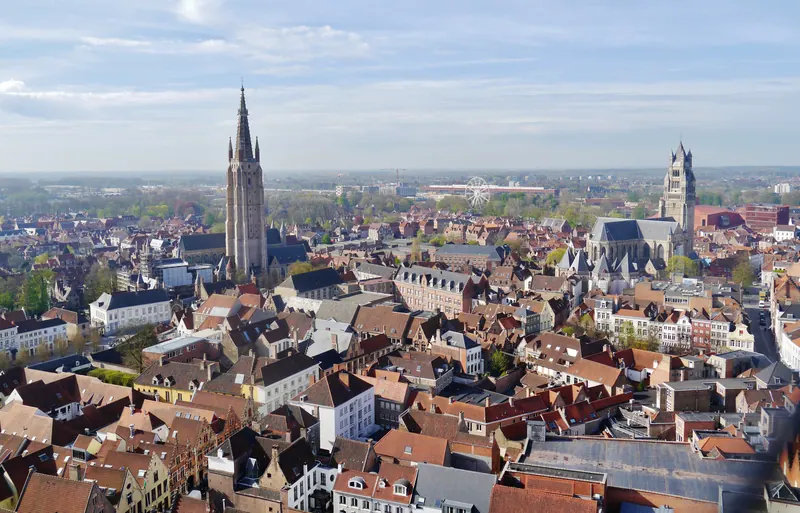
For roughly two centuries Bruges was the commercial capital of north-west Europe: English wool arrived here, left as Flemish cloth, and the Burgundian dukes kept their court in the middle of it. The sea channel that made the town rich silted up, the money moved to Antwerp, and Bruges became too poor to rebuild itself — which is the real reason so much of it is still standing.

1 festival 11 places no articles yet next event 6 May 2027

Why is Bruges a medieval destination?

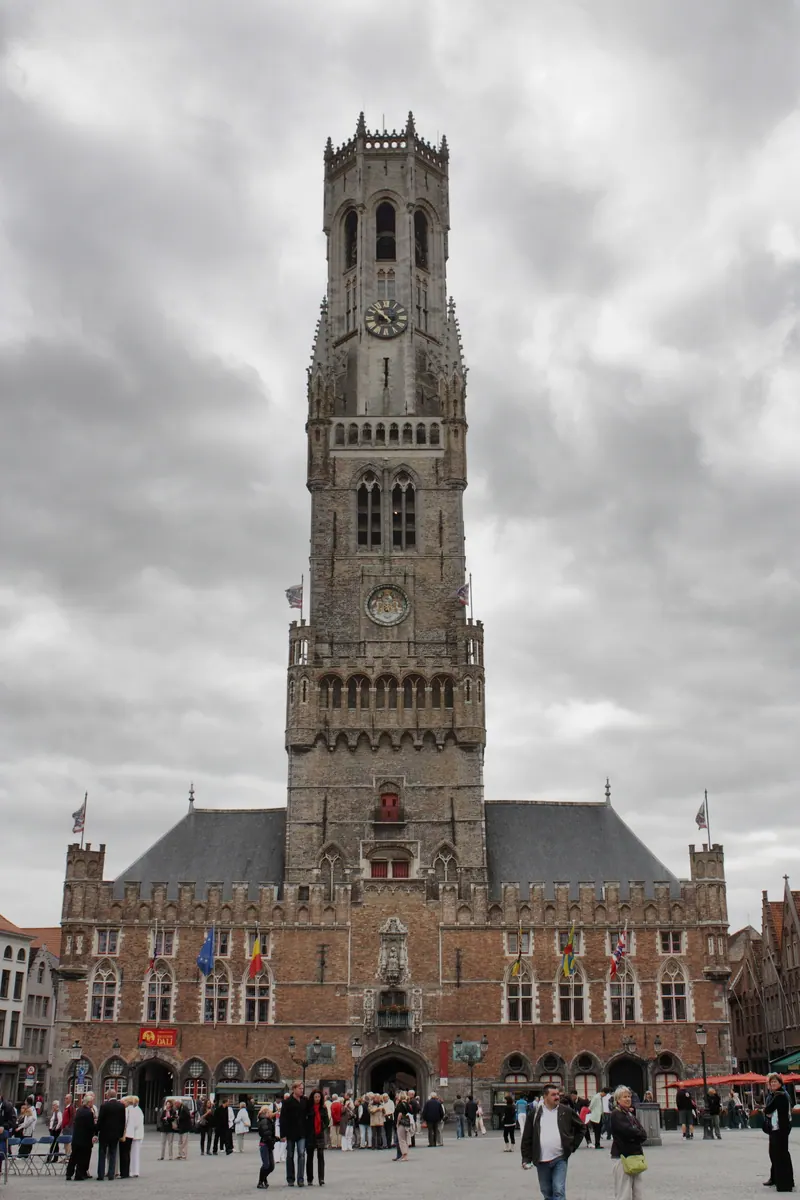
Bruges was built on cloth. Flemish weavers, fullers and dyers worked English wool into the finest cloth in Europe, and by about 1300 the town was one of the largest north of the Alps, with a population usually estimated at 40,000–45,000. The trades were organised in guilds, the guilds sat in the town’s government, and the town’s own charters, seal and treasury were locked in a stone room inside the belfry on the market square — which is why the belfry, not the cathedral, is the building the town put its identity in.

The port made it possible. Bruges is not on the sea; it reached the sea through the Zwin, a tidal inlet that storm floods opened up in the 12th century, with outports at Damme and later Sluis handling the deep-draught ships. Merchants from everywhere came to the money rather than the other way round: the German Hanse kept a house here, and so did the Genoese, the Florentines, the Venetians and the Lucchese. The Van der Beurze family’s inn on Vlamingstraat, where brokers met, gave its name to the bourse — the word for a stock exchange in half the languages of Europe.

Then the court arrived. The dukes of Burgundy made Bruges one of their principal residences in the 15th century, and Philip the Good founded the Order of the Golden Fleece here on 10 January 1430, during the celebrations of his marriage to Isabella of Portugal. Jan van Eyck lived and worked in the town until his death in 1441; Hans Memling settled here in 1465. Charles the Bold married Margaret of York in Bruges in 1468 and the town staged the Tournament of the Golden Tree for them. Charles and his daughter Mary of Burgundy, who died after a riding accident in 1482, are both buried in the Church of Our Lady.

The decline was fast and it is the reason for everything a visitor sees. The Zwin silted through the 15th century, the foreign merchants moved to Antwerp after the town’s disastrous revolt against Maximilian of Austria in 1488, and Bruges spent three centuries poor. Nothing was demolished for something grander because there was no money for something grander. The town was then rediscovered by 19th-century travellers and by Georges Rodenbach’s novel Bruges-la-Morte (1892), and rebuilt to look the way that century thought the Middle Ages should look: a good deal of what is photographed on the Markt and the Burg is neo-Gothic work of roughly 1877 onwards, most obviously the Provinciaal Hof. The historic centre was inscribed on the UNESCO World Heritage list in 2000. Knowing which half is which is the whole difference between a nice day out and an interesting one.
Medieval festivals in Bruges

Featured
Historic City Celebrations

Procession of the Holy Blood

Bruges, Belgium

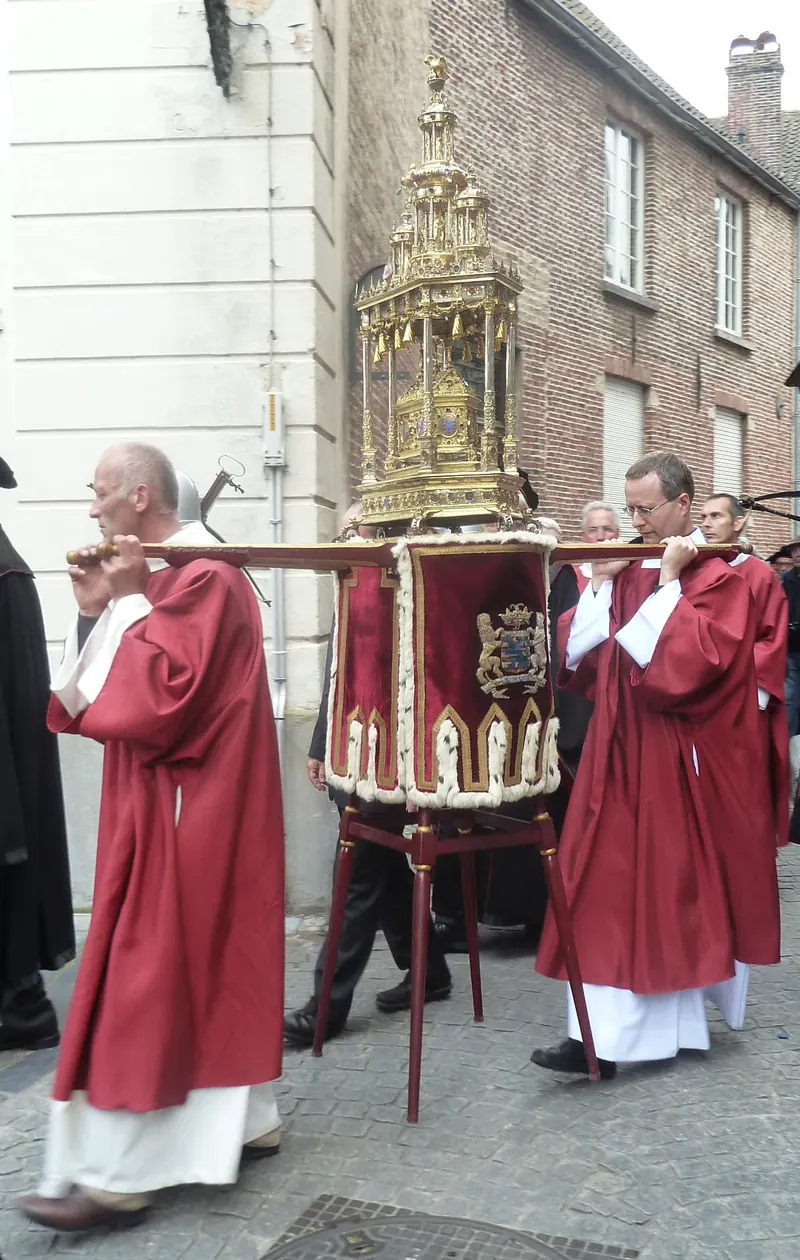
Every Ascension Day more than 1,800 people from Bruges carry the relic of the Holy Blood through the historic centre in a four-part pageant of Old Testament, New Testament and city history, with horses, carts, choirs and over 250 live musicians. The procession is dated by the city to 1304, has been on UNESCO's Representative List of Intangible Cultural Heritage since 2009, and next takes place on Thursday 6 May 2027.

2027
Family

Months with a festival are linked. Expected dates say so. May

What else to see in medieval Bruges

Short list on purpose. Everything here is somewhere we'd actually send you, checked and still standing.

Museums & collections

Museum Start here

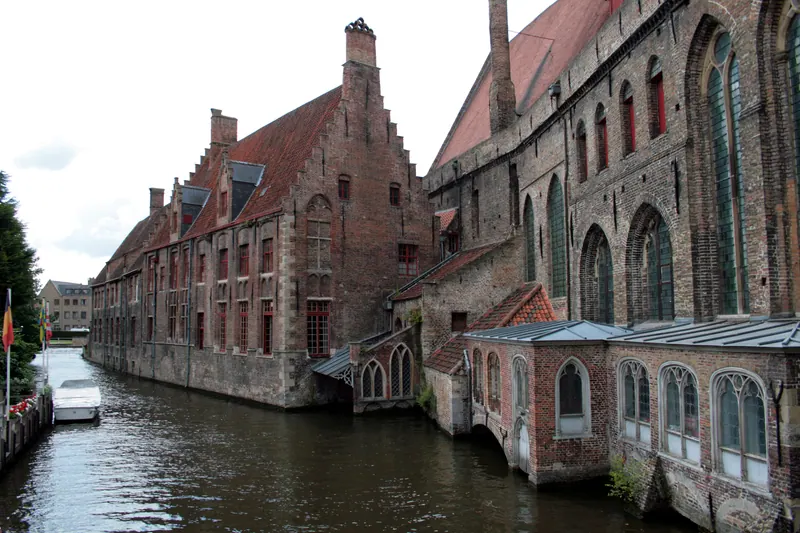
Museum Sint-Janshospitaal

Hospital documented from 1188; medieval wards and church; Memling panels made for the house from the 1470s–1480s

A hospital first documented in 1188, run by lay brothers and sisters, and still taking patients until 1977 — with seven paintings by Hans Memling, four of them made for this building and never moved out of it. Go for the Shrine of St Ursula, a gilded reliquary painted as a miniature Gothic chapel, and then climb to the attic roof truss.

Works in the rain Quiet corner
Walking directions
Museum

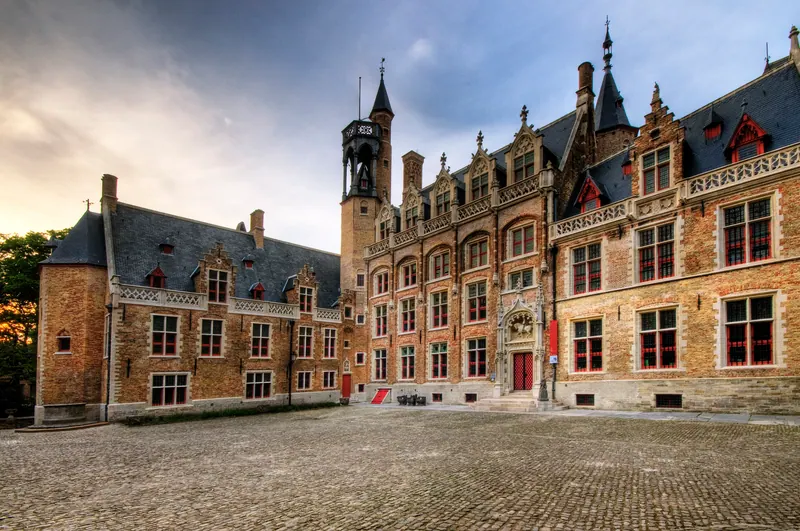
Gruuthusemuseum

15th-century city palace of the Van Gruuthuse family; oratory into the Church of Our Lady late 15th century; restored and reopened 25 May 2019

The city palace of a family that got rich taxing the herb mixture used to flavour beer before hops, and of Louis de Gruuthuse — Burgundian courtier, knight of the Golden Fleece and one of the great book collectors of the 15th century. It reopened in 2019 after five years of restoration, and its last section is the only place in Bruges that explains, honestly and at length, how the town was rebuilt in the 19th century to look medieval.

Works in the rain Quiet corner
Walking directions
Museum

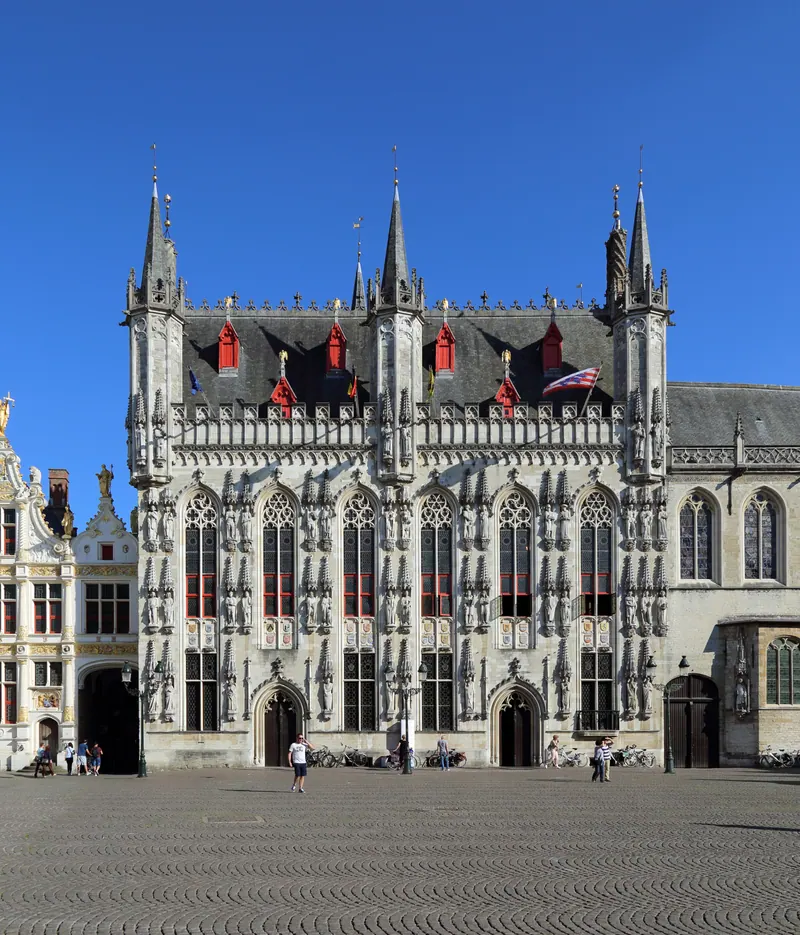
Stadhuis and the Gothic Hall

Built 1376–1421; Gothic Hall vault on original 14th-century consoles; wall paintings 20th-century; façade statues modern replacements

One of the oldest town halls in the Low Countries, begun in 1376 and finished in 1421, built by a town that governed itself and wanted the fact visible from the square. The vault of the Gothic Hall rests on original 14th-century polychromed consoles; the history paintings below them are 20th-century, and knowing which is which is the whole visit.

Free or cheap Works in the rain Good with children
Walking directions
Museum

Groeningemuseum

The core of the collection is 15th–early 16th century Flemish painting made in Bruges: Van Eyck 1436, Memling 1484, David 1498

Around thirty major 15th-century Flemish paintings in a handful of rooms, including Jan van Eyck's Madonna with Canon Joris van der Paele of 1436 — painted in this town, for a church on the Burg that no longer exists. Go for that room; the other five centuries of Belgian art are a bonus you can walk through quickly.

Works in the rain Quiet corner
Walking directions
Museum

Adornes Estate and the Jerusalem Chapel

Jerusalem Chapel consecrated 1429, modelled on the Church of the Holy Sepulchre; tomb of Anselm Adornes (d. 1483); stained glass c. 1560; still privately owned by his descendants

A private chapel consecrated in 1429, built by a Genoese merchant dynasty in Bruges and modelled on the Church of the Holy Sepulchre in Jerusalem — still owned and used by the same family, now in its seventeenth generation. Anselm Adornes made the pilgrimage in 1470, was murdered in Scotland in 1483, and lies here only in part: his body stayed at Linlithgow and his heart came home to the tomb.

Quiet corner Works in the rain
Walking directions

Churches & ossuaries

Church

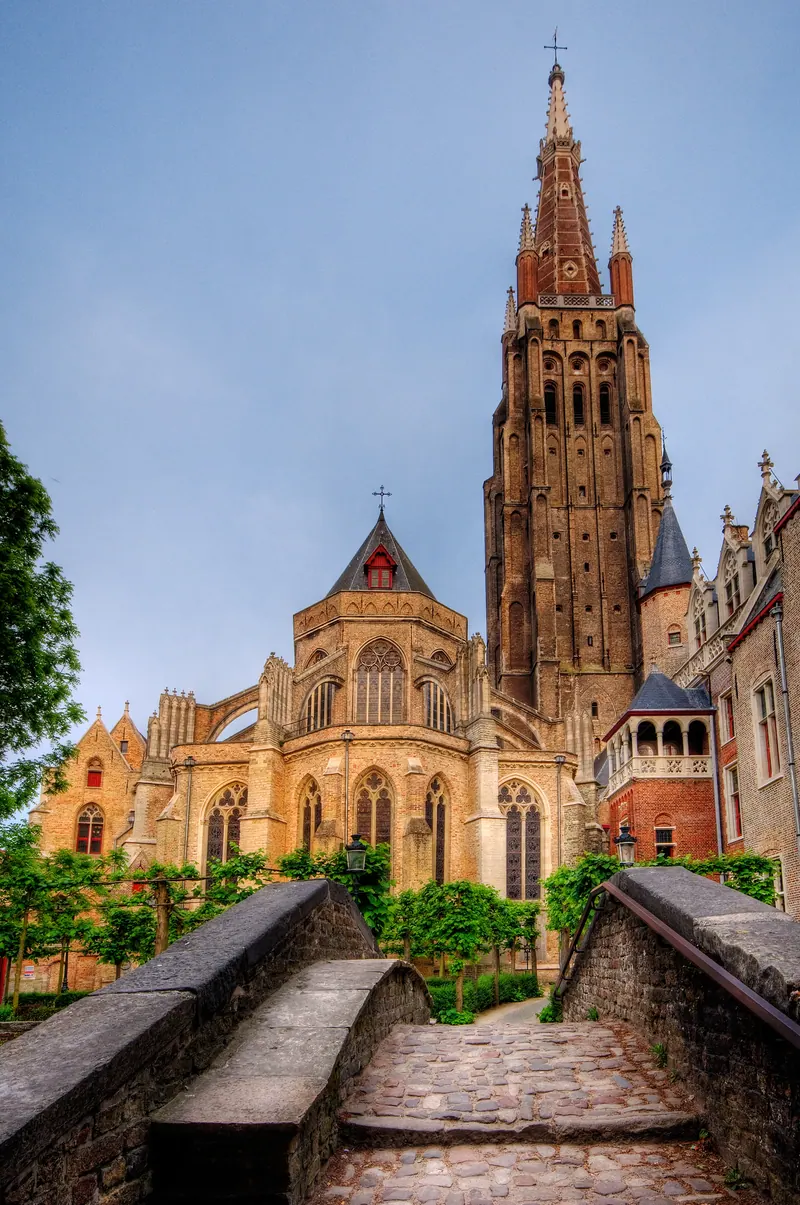
Church of Our Lady and the O.L.V.-kerk Museum

Brick tower and church 13th–15th century; Michelangelo Madonna c. 1504, given 1514; Mary of Burgundy's tomb c. 1501–02, Charles the Bold's 1558–63

A 115.5-metre brick tower — Musea Brugge calls it the second-highest brick church tower in the world — over the only sculpture Michelangelo let leave Italy in his lifetime and the tombs of the last two rulers of Burgundy. The nave is free; the Madonna, the mausoleums and the painted grave niches under the glass floor are all inside the ticketed part, which is the part you came for.

Works in the rain Quiet corner
Walking directions
Church

Basilica of the Holy Blood

Lower chapel of St Basil c. 1134–1157, Romanesque; upper chapel 15th-century Gothic with late-19th-century neo-Gothic decoration; Great Shrine 1614

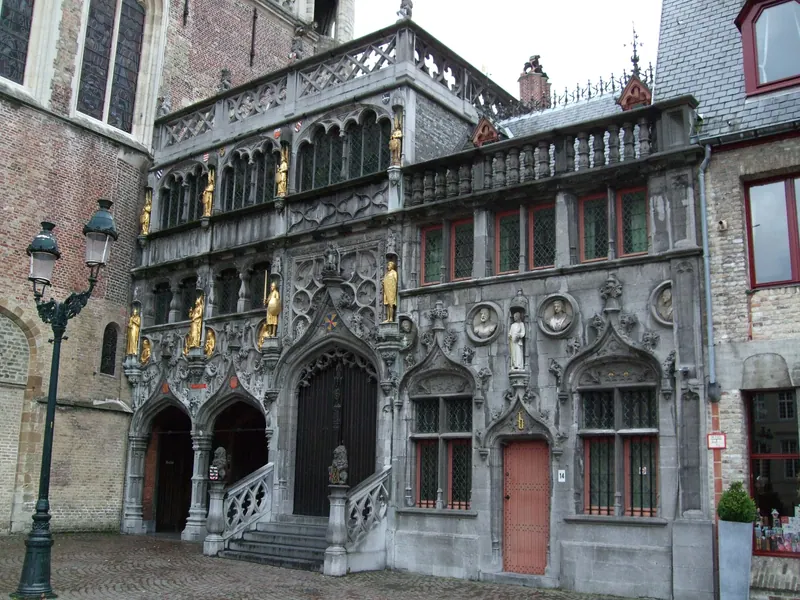
Two chapels stacked on the corner of the Burg: a bare 12th-century Romanesque one downstairs that Visit Bruges calls the only nearly complete Romanesque church building in West Flanders, and a Gothic one upstairs whose colour is almost entirely late-19th century. The relic of the Holy Blood is brought out for veneration daily between 14:00 and 16:00, and entry to both chapels is free.

Free or cheap Works in the rain Quiet corner
Walking directions

Views & walks

View

The Belfry

Begun 13th century on the market halls; octagonal upper stage 1483–86; spire lost to lightning 1741

83 metres and 366 steps of the building the guilds and the town council put their identity into, begun in the 13th century and topped with its octagonal lantern in the 1480s. Stop on the way up at the treasury room, where the town's charters, seal and money were locked in iron chests behind double wrought-iron doors.

Good with children
Walking directions
View

The city ramparts and the four gates

Second town wall 1297–1304; Smedenpoort 1297–99, rebuilt 1367; Kruispoort 1400; Sint-Janshuismolen 1770; the ramparts laid out as parkland in the 19th century

A 7 km green circuit on the line of the second town wall of 1297–1304, with four medieval gates still standing on it and four windmills between them. It is free, it is always open, and it is the only part of Bruges where you can walk for an hour without meeting a coach party.

Free or cheap Good with children Best in the evening +1
Walking directions

Landmarks & bridges

Landmark

Princely Beguinage Ten Wijngaerde

Founded 1245 by Margaret of Constantinople; princely status 1299; the surviving houses are late 16th–18th century; Benedictine community since 1927; UNESCO 1998

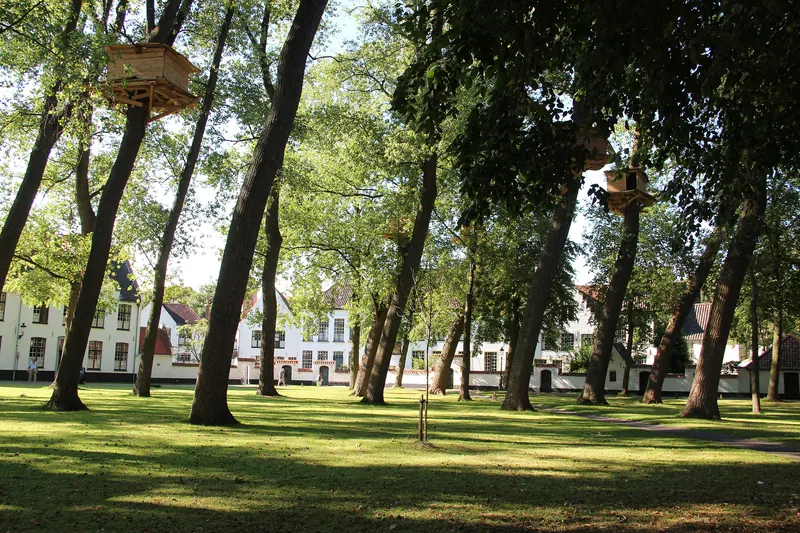
Founded in 1245 for beguines — women who lived religious, celibate and self-supporting lives without taking permanent vows, which was a genuinely odd thing to be allowed to do in the 13th century. The walled courtyard is free and still a working convent; be honest with yourself that the medieval thing here is the institution and the plan, not the buildings.

Free or cheap Quiet corner
Walking directions

Tours & workshops

Experience

Kantcentrum — the Lace Centre and working lace school

Lace is a 16th-century-onwards craft, not a medieval one; the building is a 19th-century lace school, and the Kantcentrum non-profit was founded in 1970

The only place in Bruges where you can watch a hand craft actually being worked rather than reconstructed: lacemakers at their pillows, Monday to Saturday from 14:00 to 17:00, in a former lace school in the old Sint-Anna quarter. Be clear before you go that lace is not medieval — the Kantcentrum's own history says lace was born in the 16th century — but the cloth trade it descends from is the reason this town exists.

Works in the rain Good with children
Walking directions
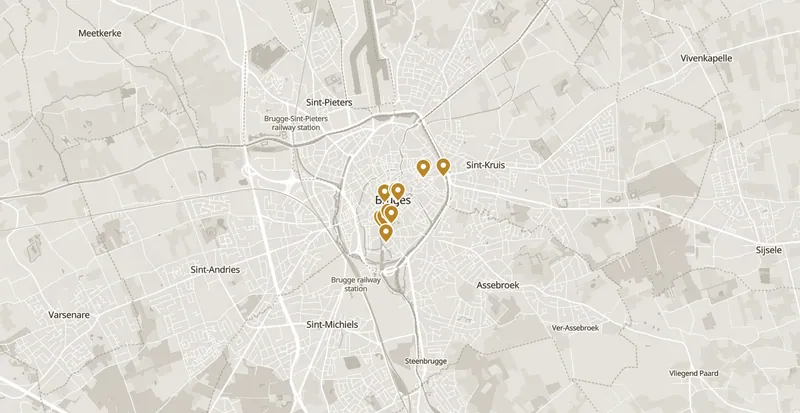
Map of the places worth your time in Bruges
Everything above, on one map. Tap a link to open it in Google Maps on your phone. © MapTiler © OpenStreetMap contributors

More medieval festivals in Belgium

All festivals in Belgium
Featured
Jousting & Tournaments Living History & Museums +1

Ommegang of Brussels

Brussels, Belgium

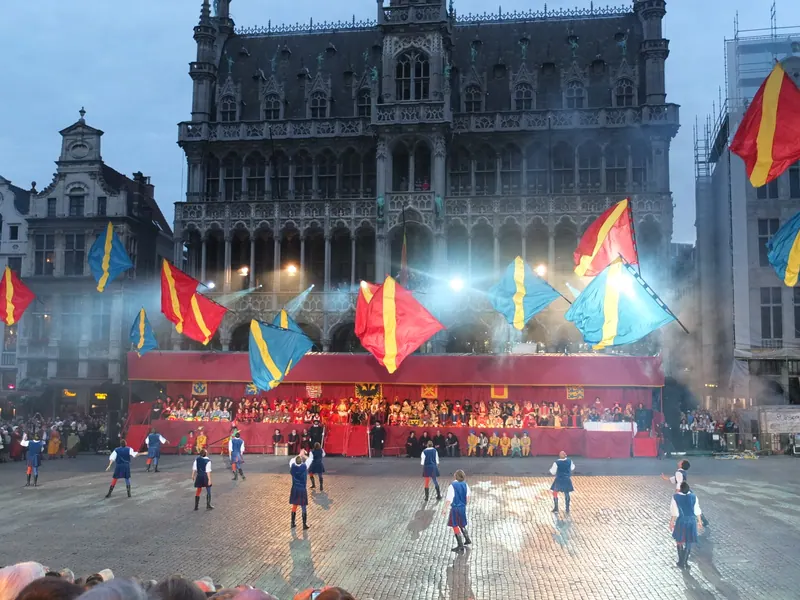
The Ommegang is Brussels' great historical pageant: more than 1,400 participants in costume, with horses, giants, stilt-walkers, crossbowmen and flag-throwers, process from the Sablon to the Grand-Place on two evenings in early July to recreate the 1549 entry of Emperor Charles V and his son Philip. Its roots go back to a 1348 procession of the crossbowmen's guild; it was revived in 1930 and has been on UNESCO's intangible heritage list since 2019. The 2026 shows were on 1 and 3 July.

Expected 2027
Family

Other medieval cities in Belgium: Brussels