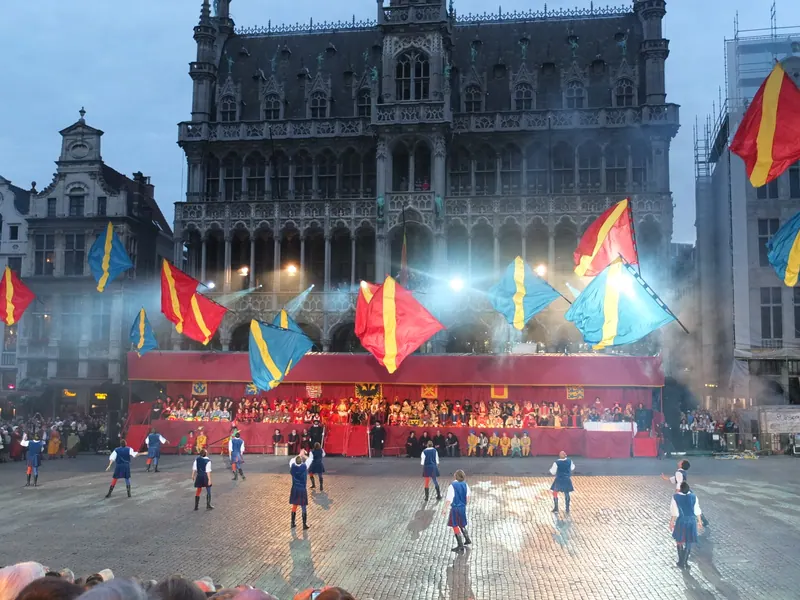
Mons grew on a hill around the abbey founded by Saint Waudru in the 7th century and was the seat of the counts of Hainaut, one of the principalities that made up the medieval Low Countries. The collegiate church of Sainte-Waudru, built between 1450 and 1621 in Brabantine Gothic and holding the saint’s shrine, and the 15th-century town hall on the Grand-Place are the medieval core; the belfry above the town, built in 1662–1672 and the only Baroque belfry in Belgium, is on the UNESCO World Heritage List with the other belfries of Belgium and France.
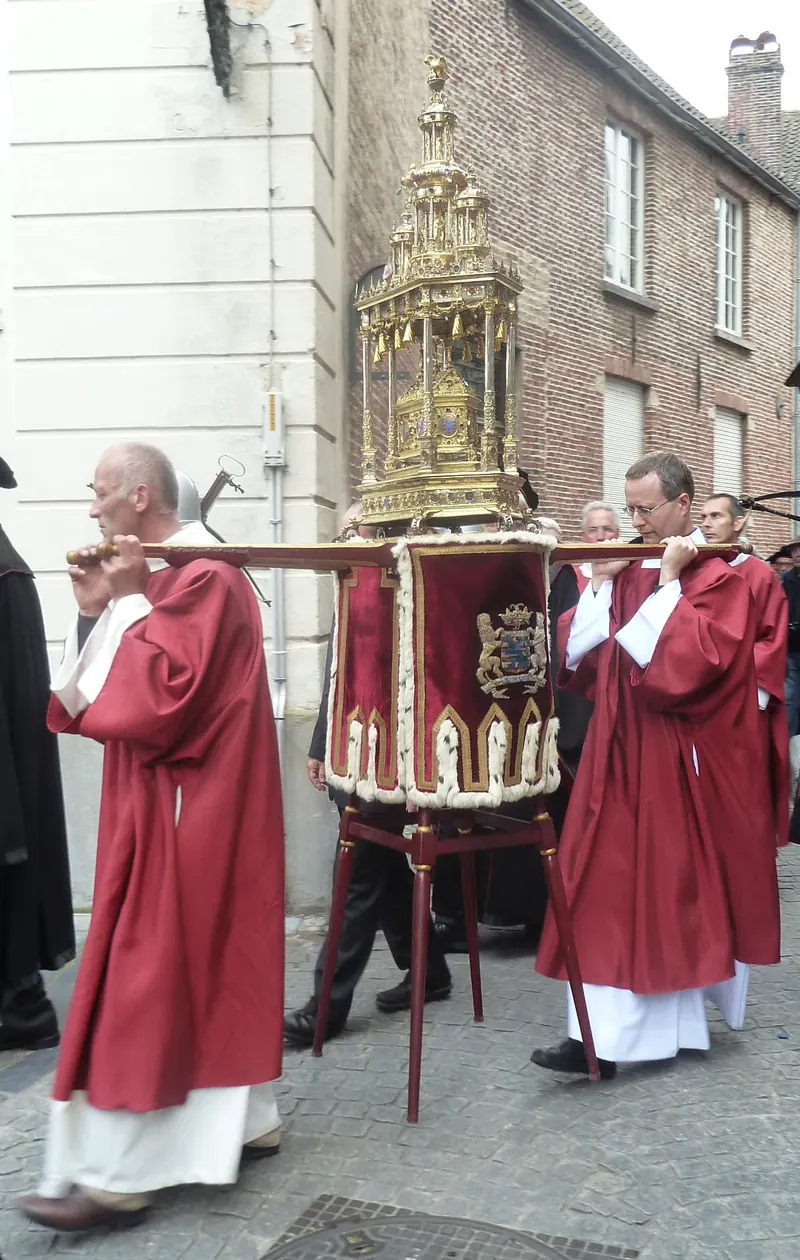
The town’s great festival is the Ducasse de Mons, the Doudou, on Trinity Sunday. It descends from a procession first made in 1349, in the year of the plague, when Saint Waudru’s shrine was carried around the town, and it culminates in the Lumeçon, the combat between Saint George on horseback and a dragon on the Grand-Place, in which the crowd fights to seize hairs from the dragon’s tail. UNESCO inscribed the Doudou on its intangible heritage list in 2005. It is the oldest dragon fight in this guide, and the reason a fantasy festival in Mons stands on real ground.
Mons was European Capital of Culture in 2015. Trolls & Légendes, Belgium’s fantasy festival, is held every two years at Lotto Mons Expo, the exhibition halls by the ring road, while its free summer Estivales take place at the former abattoirs in town. Mons station is about 50 minutes by train from Brussels.