Medieval Booker

Jousting & Tournaments ◆ Belgium

Ommegang of Brussels

The Ommegang is Brussels' great historical pageant: more than 1,400 participants in costume, with horses, giants, stilt-walkers, crossbowmen and flag-throwers, process from the Sablon to the Grand-Place on two evenings in early July to recreate the 1549 entry of Emperor Charles V and his son Philip. Its roots go back to a 1348 procession of the crossbowmen's guild; it was revived in 1930 and has been on UNESCO's intangible heritage list since 2019. The 2026 shows were on 1 and 3 July.

When is Ommegang of Brussels 2027?

Next edition
Expected 2027 Ommegang of Brussels 2027 See all editions
Where
Brussels, Belgium
How often
Every year
Entry
Street procession and Sablon village free; Grand-Place show ticketed, roughly €55–89 per seat in 2026
Family-friendly
Yes — bring the kids
Founded
1930
Official site
ommegang.be

Checked · we re-check every festival twice a year.

Past and upcoming editions

Editions of Ommegang of Brussels
EditionDatesStatusCalendar
2027 edition Expected 2027 Google Calendar · .ics

Expected means the organiser hasn't announced yet; we show the usual window.

Past editions (1)
  • 2026 edition — 1–4 July 2026

What happens at Ommegang of Brussels?

The Ommegang (‘walk-around’) began as a religious procession. According to the legend, in 1348 a devout woman named Beatrijs Soetkens brought a miraculous statue of the Virgin from Antwerp to the chapel of the crossbowmen’s guild at the Sablon, and the guild’s annual procession in its honour grew into a civic parade of guilds, magistrates and giants. On 2 June 1549 the city staged it in full splendour for Emperor Charles V, who had come to present his son, the future Philip II, to his Brabant subjects. The modern Ommegang, revived in 1930 for the centenary of Belgian independence, reconstructs that evening rather than the medieval procession, and in 2019 it was inscribed on UNESCO’s Representative List of the Intangible Cultural Heritage of Humanity.

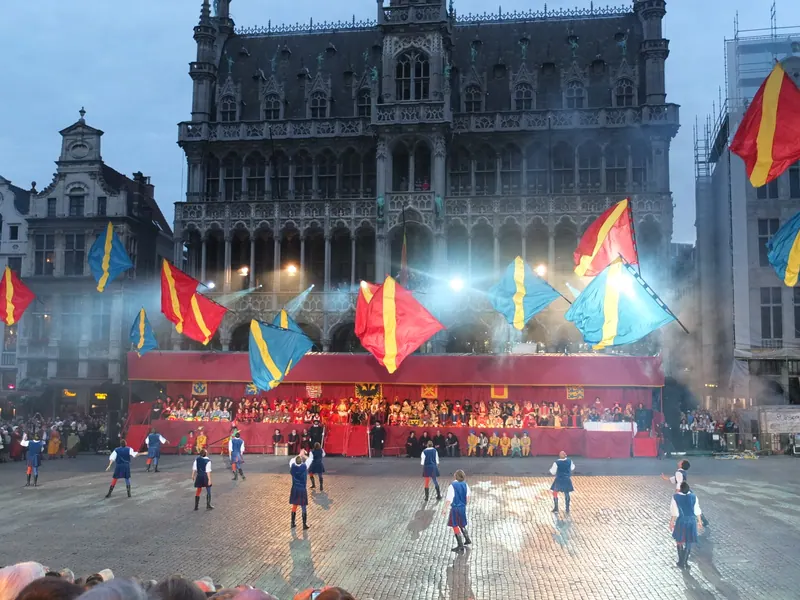
It is staged on two evenings in the first week of July; in 2026 these were Wednesday 1 and Friday 3 July. From about 20:30 the cortège of more than 1,400 participants leaves the Royal Park and the Sablon and winds through the city centre to the Grand-Place, where the gates open at 19:30 and the show begins at 21:00: the entry of the emperor and the court, the guilds and chambers of rhetoric, the city magistrates, horsemen, the giants, flag-throwers, the stilt-fighters of Namur, crossbowmen and folklore groups from across Belgium. Watching the procession in the streets is free; seats on the Grand-Place are ticketed.

Around the two shows the Sablon hosts a free Renaissance village and market (1–4 July 2026, 12:00–21:30) with equestrian jousting, knights’ foot combat and a camp of 15th-century mercenaries, and the crossbowmen’s guilds hold their traditional competition on the two show evenings at 19:15. Although the pageant recreates a Renaissance event, its procession, guilds, giants and crossbowmen are medieval institutions that have survived in the city.

Grand-Place tickets for 2026 ranged from about €55 for tribune seats to €85–89 for covered seats in front of the House of the Dukes of Brabant, sold through the Ommegang’s website and Ticketmaster; a bilingual programme costs €5 on the night. The Grand-Place is a ten-minute walk from Brussels Central station. The 2027 dates had not been announced as of August 2026; the pageant is normally held on the Wednesday and Friday of the first week of July.
Frequently asked questions

When is the Ommegang in Brussels in 2027?

Dates are not yet announced. The pageant is held on the Wednesday and Friday of the first week of July, so 30 June and 2 July 2027 are the likely dates. In 2026 it took place on 1 and 3 July.

Is the Ommegang free?

Watching the procession in the streets between the Sablon and the Grand-Place is free, as is the Renaissance village at the Sablon. Seats for the show on the Grand-Place are ticketed, from about €55 to €89 in 2026.

What does the Ommegang commemorate?

The festivities Brussels gave on 2 June 1549 for Emperor Charles V and his son, the future Philip II. The procession itself descends from a 1348 pilgrimage procession of the crossbowmen's guild of the Sablon.

How many people take part in the Ommegang?

More than 1,400 costumed participants, with horses, giants, stilt-walkers, flag-throwers and crossbowmen.

Is the Ommegang on the UNESCO list?

Yes. It was inscribed on UNESCO's Representative List of the Intangible Cultural Heritage of Humanity in 2019.

What else happens during the Ommegang?

A free Renaissance village and market on the Sablon with jousting, knights' combat and a mercenary camp (1–4 July in 2026), and crossbow competitions on the two show evenings.

More medieval festivals in Belgium

Same country, upcoming first.

All festivals in Belgium
Featured
Historic City Celebrations

Procession of the Holy Blood

Bruges, Belgium

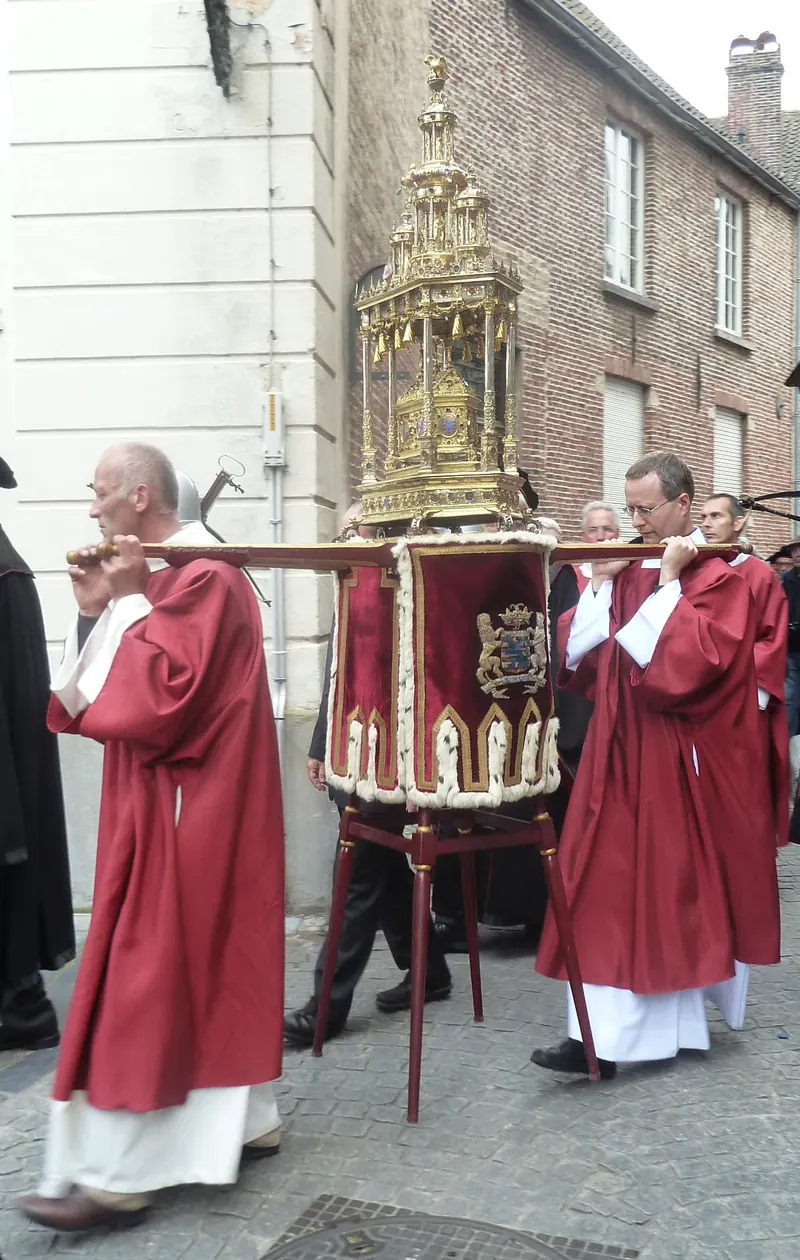
Every Ascension Day more than 1,800 people from Bruges carry the relic of the Holy Blood through the historic centre in a four-part pageant of Old Testament, New Testament and city history, with horses, carts, choirs and over 250 live musicians. The procession is dated by the city to 1304, has been on UNESCO's Representative List of Intangible Cultural Heritage since 2009, and next takes place on Thursday 6 May 2027.

2027
Family

Other jousting tournaments

All jousting tournaments
Featured
Living History & Museums Castle Events

Guédelon Castle (living medieval construction site)

Treigny, France

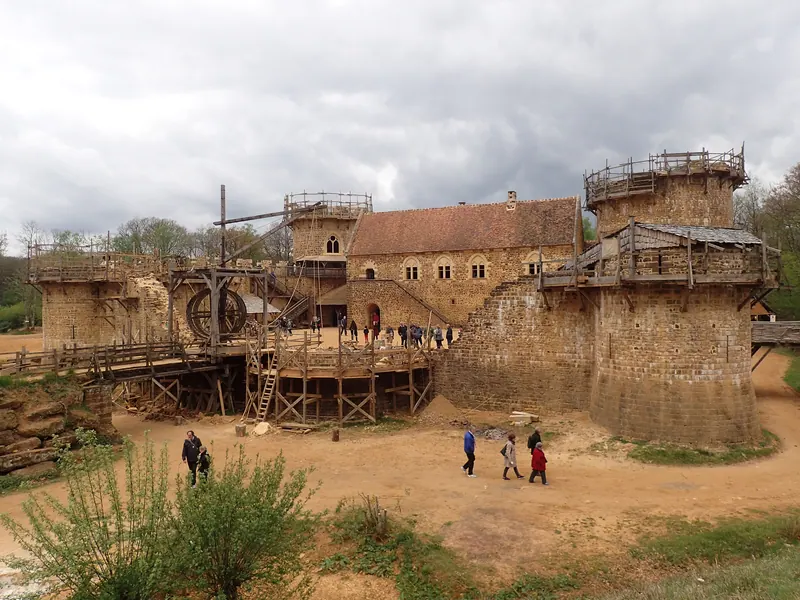
Guédelon is a 13th-century castle being built from scratch in a Burgundy forest quarry using only the tools, materials and techniques of the 1230s, open to visitors from spring to autumn since the first stone was laid in 1997. Around forty masons, carpenters, blacksmiths, tilers, rope-makers and carters work in front of the public, and the site draws roughly 300,000 visitors a season.

On now until
Family
Jousting & Tournaments Living History & Museums

Middelaldercentret (The Medieval Centre), Nykøbing Falster

Nykøbing Falster, Denmark

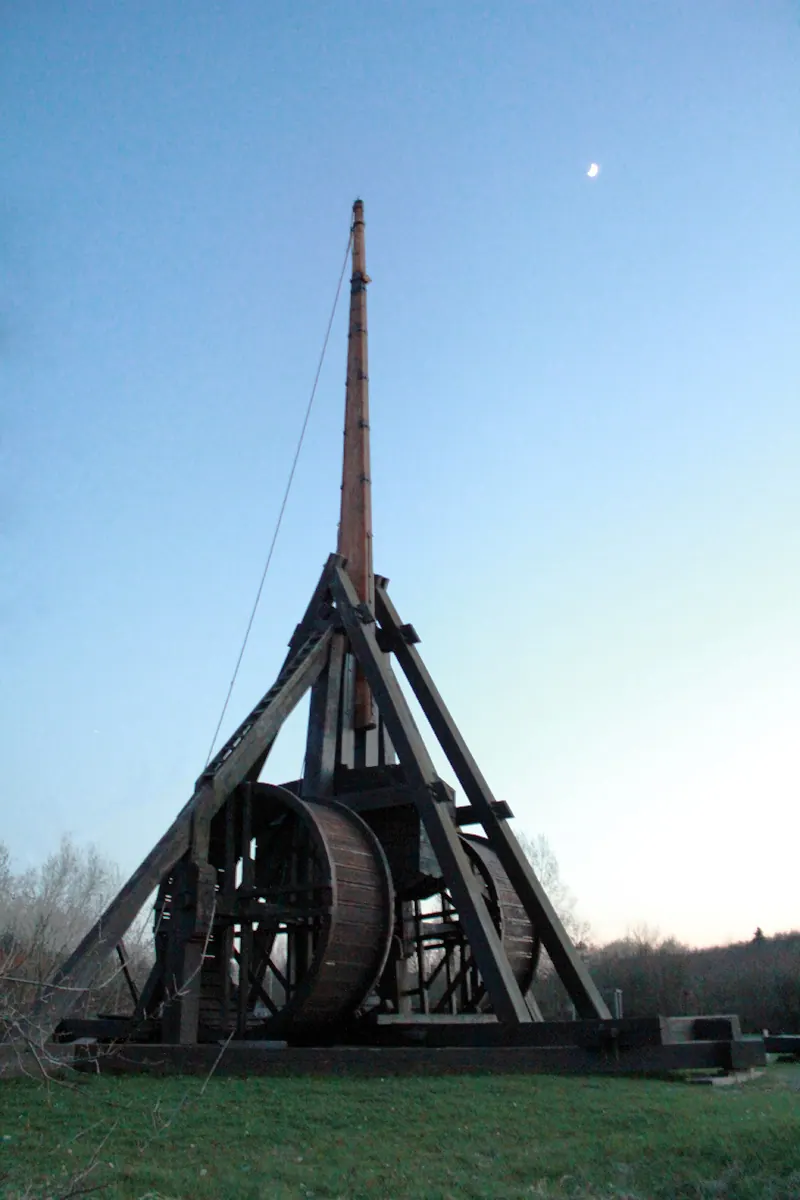
Middelaldercentret is an experimental living-history museum on the Guldborgsund opposite Nykøbing Falster, where a reconstructed Danish market town of around the year 1400, Sundkøbing, is populated by costumed staff who stay in character all day. Its season runs from early May to late September with daily trebuchet firing, jousting and craft demonstrations, plus an autumn-holiday week in October and a Christmas market.

On now until
Family
Featured
Jousting & Tournaments Castle Events

Tournoi de Chevalerie de Carcassonne (Knights' Tournament and Falconry Show)

Carcassonne, France

Every summer the lices between the double walls of the Cité de Carcassonne host a daily knights' tournament, a 45-minute show of mounted combat in armour, billed in 2026 as 'Tournois de chevalerie et spectacle de fauconnerie' after a falconry display was added. The 2026 season runs from 12 July to 27 August with three performances a day, every day except Saturday.

On now until
Family