Say the honest thing first, because the souvenir shops will not. Bruges lace is post-medieval. The Kantcentrum’s own account of the craft begins with the flat statement that lace was born in the 16th century; the great age of Bruges lace and of its lace schools is the 17th to 19th centuries. If you are here for the Burgundian dukes, no lacemaker ever made anything Philip the Good wore.
What it is, and why it belongs on this list, is the last working end of the trade that built the city. Bruges got rich turning English wool into cloth. That industry died with the port; lace was the textile skill that replaced it and kept thousands of Bruges women in work into living memory, and this building — Visit Bruges describes it as the renovated old lace school of the Sisters of the Immaculate Conception — is where girls were taught to do it. The nuns founded the Kantcentrum as a non-profit in 1970 specifically to keep the teaching alive.
The ground floor is a lace museum: multimedia displays on the different types of lace, where each came from, and how Bruges’ industry and its schools worked. It is a small museum and forty minutes is plenty.
The reason to come is upstairs. In the atelier, lacemakers work in the open every afternoon from 14:00 to 17:00, Monday to Saturday, and you can stand beside a pillow and watch several hundred bobbins being moved by someone who has done it for decades. They will talk to you. Nothing is behind glass and nothing is a performance for tourists on a timetable — this is a school with pupils, running real courses, from beginners’ classes to teacher training, which you can book if you are in town long enough.
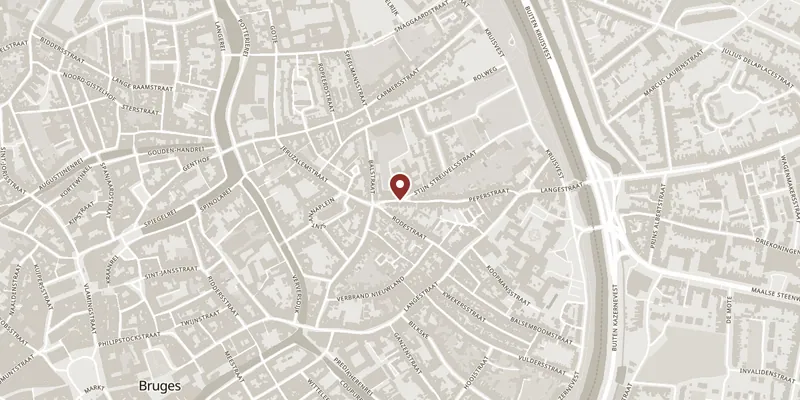
It is two minutes from the Adornes Estate and the Jerusalem Chapel, so do the two together — the Sint-Anna quarter is the one part of central Bruges that still reads as a working neighbourhood rather than a stage set.