Medieval Booker

Museum ◆ Bruges

Gruuthusemuseum

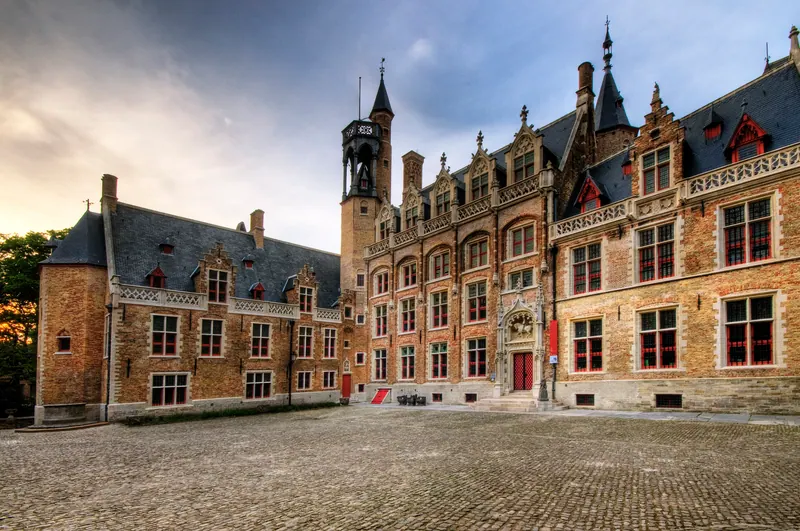
The city palace of a family that got rich taxing the herb mixture used to flavour beer before hops, and of Louis de Gruuthuse — Burgundian courtier, knight of the Golden Fleece and one of the great book collectors of the 15th century. It reopened in 2019 after five years of restoration, and its last section is the only place in Bruges that explains, honestly and at length, how the town was rebuilt in the 19th century to look medieval.

Where and when

Where
Dijver 17C, 8000 Brugge, Bruges, Belgium Open in Google Maps Walking directions
Era
15th-century city palace of the Van Gruuthuse family; oratory into the Church of Our Lady late 15th century; restored and reopened 25 May 2019
Opening
09:30–17:00, closed Wednesdays (as of August 2026)
Price
€15 adult, €13 under 26, €7 under 18, free under 13; a combined ticket with the Church of Our Lady museum next door is €19 (as of August 2026)
Best time
First thing, and ideally on a wet or cold day — this is a long indoor visit and the crowd here is thinner than at the Belfry at any hour. Buy the €19 combined ticket and do the Church of Our Lady museum straight afterwards; the two buildings physically interlock and the oratory only makes sense if you see both sides of it.
Good for
Works in the rainQuiet corner
Official site
www.museabrugge.be
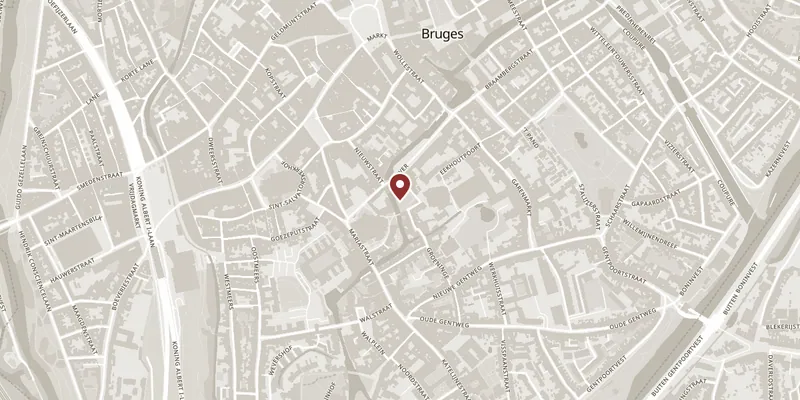
Map showing where Gruuthusemuseum is
Open in Google Maps Walking directions © MapTiler © OpenStreetMap contributors

Checked

What is Gruuthusemuseum?

The name is the story. Gruut was a mixture of dried flowers and herbs used to flavour and preserve beer before hops took over, and the Van Gruuthuse family held the right to levy the tax on it in Bruges. Beer money built this. The house is a genuine 15th-century city palace, not a museum built to look like one, and it stands directly against the Church of Our Lady.

Louis de Gruuthuse (Lodewijk van Gruuthuse, c. 1427–1492) is the man the building is really about, and he is squarely our audience’s kind of figure: soldier and diplomat for the dukes of Burgundy, knight of the Order of the Golden Fleece, and the owner of one of the finest illuminated libraries in Europe. His statue stands in the museum under his personal motto, Plus est en vous — “there is more in you” — which is carved and painted throughout the house.

The single best thing here costs nothing extra and is easy to walk past. The oratory, an authentic late-15th-century private prayer box, is built through the wall into the chancel of the Church of Our Lady, so that the family could hear mass from inside their own home. You stand in it and look down into a Gothic chancel from a window that a duke’s chamberlain had cut for himself. There is also a balcony with a view over the Dijver and the Bonifacius bridge.

The route runs through three periods: Bruges in its Burgundian prime, then the neglected 17th and 18th centuries, and finally the 19th-century “rediscovery” of Bruges and its rebuilding in neo-Gothic. That last part is why this museum matters more than its ticket price suggests. Almost every other site in town shows you the result of that rebuilding without naming it; this one takes it apart, with the tapestries, stained glass, carved wood, lace and porcelain to show what was collected, copied and invented. Do the Gruuthuse before you walk round the Burg and the Markt, and you will read both squares completely differently.

The museum closed in 2014 and reopened on 25 May 2019. Entry is now through a new glass-and-steel pavilion set between the palace and the church — modern, deliberately so, and the source of most of the complaints about the place.
What visitors say

4.6 from 1,394 ratings

  • GNAL

    1 out of 5 3 months ago

    Closed on May 14. Don’t visit the city when there’s a parade. Everything is closed. Even though there are people in the ticket office just to let you know it’s closed. It would probably be better to put a sign on the door saying it’s closed.

    Read this review on Google
  • Michael Conway

    5 out of 5 5 months ago

    Really interesting museum in a beautiful palace, the highlight for me was the private chapel the owner of the house had, with a direct view into the neighbouring Church of Our Lady. A beautiful view out from the gazebo balcony another floor up too. If you don't have a Bruges card, buy a combined ticket with the neighbouring Church of Our Lady. An old building, so many stairs.

    Read this review on Google
  • Ju Guillén

    5 out of 5 5 months ago

    I recommend to visit this museum among with the Church. The private oratory is amazing, and music was being played while we were there so it was magical.

    Read this review on Google

Ratings and reviews from Google. See all on Google Maps

Frequently asked questions

What does Gruuthuse mean?

"Gruut" was a mixture of dried herbs and flowers used to flavour beer before hops came into use. The Van Gruuthuse family held the right to tax it in Bruges, and the palace is named after that right.

Who was Louis de Gruuthuse?

Lodewijk van Gruuthuse (c. 1427–1492), a Burgundian courtier, soldier and diplomat, a knight of the Order of the Golden Fleece, and the owner of one of the great illuminated libraries of 15th-century Europe. His motto, Plus est en vous, appears throughout the house.

How much does the Gruuthusemuseum cost?

€15 for an adult, €13 under 26, €7 under 18 and free under 13 as of August 2026. A combined ticket with the Church of Our Lady museum is €19.

Is the Gruuthusemuseum open on Wednesdays?

No. It opens 09:30–17:00 and closes on Wednesdays, as of August 2026.

What is the Gruuthuse oratory?

A late-15th-century private prayer room built through the wall of the palace into the chancel of the Church of Our Lady, so the family could attend mass without leaving home. It is authentic, it is included in the museum ticket, and it is the best single thing in the building.

Festivals in Bruges

Medieval festivals in Bruges
Featured
Historic City Celebrations

Procession of the Holy Blood

Bruges, Belgium

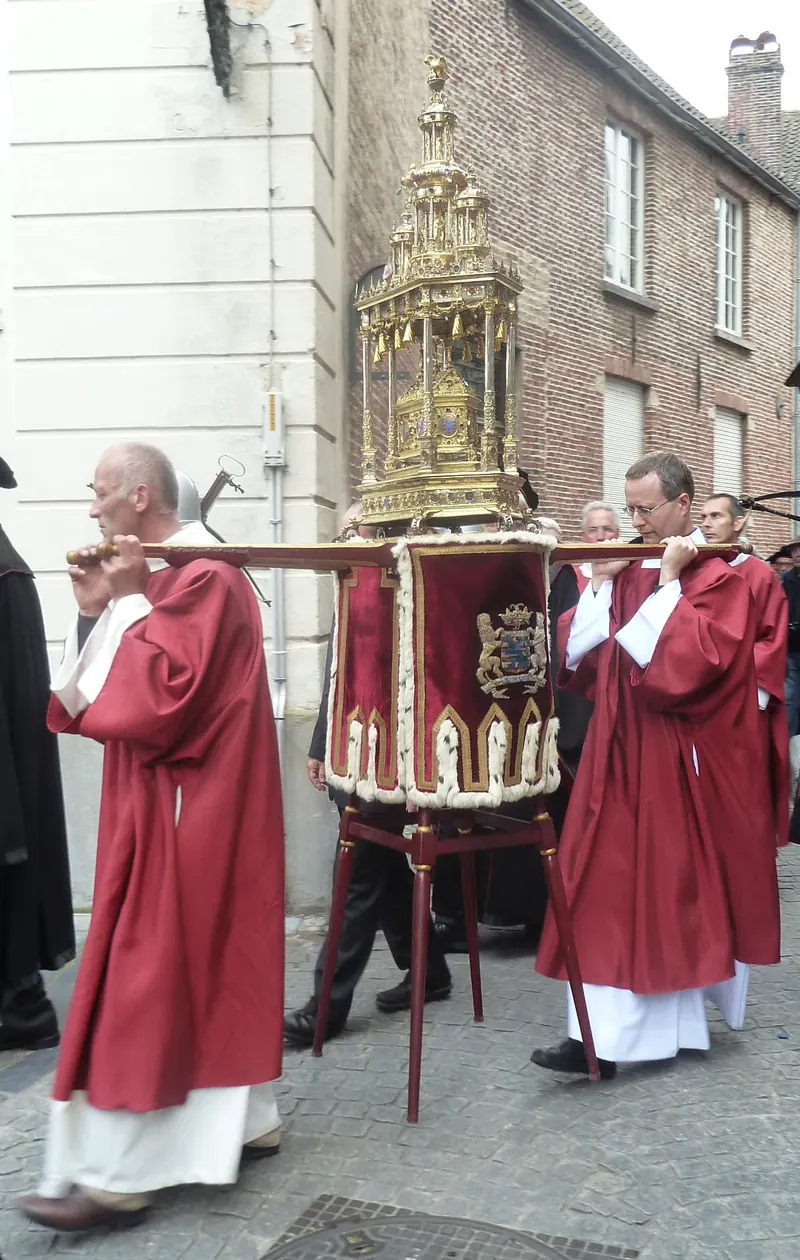
Every Ascension Day more than 1,800 people from Bruges carry the relic of the Holy Blood through the historic centre in a four-part pageant of Old Testament, New Testament and city history, with horses, carts, choirs and over 250 live musicians. The procession is dated by the city to 1304, has been on UNESCO's Representative List of Intangible Cultural Heritage since 2009, and next takes place on Thursday 6 May 2027.

2027
Family

More places in Bruges

Places in Bruges
Museum Start here

Museum Sint-Janshospitaal

Hospital documented from 1188; medieval wards and church; Memling panels made for the house from the 1470s–1480s

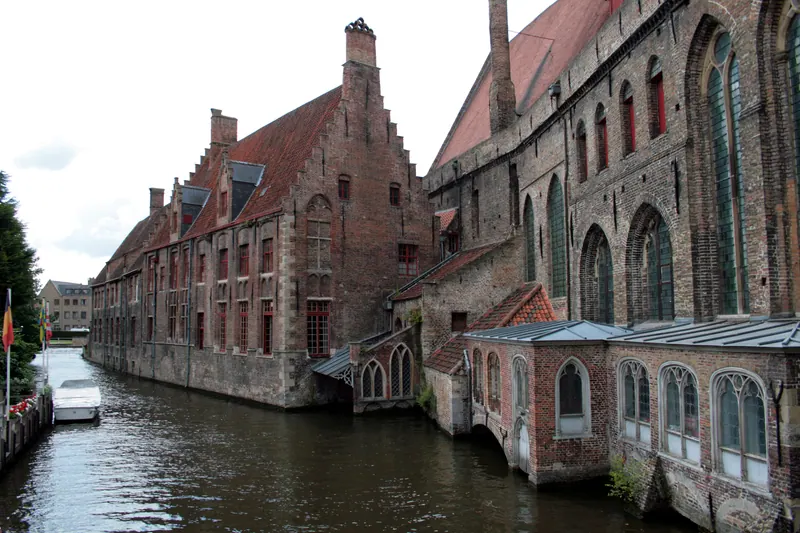
A hospital first documented in 1188, run by lay brothers and sisters, and still taking patients until 1977 — with seven paintings by Hans Memling, four of them made for this building and never moved out of it. Go for the Shrine of St Ursula, a gilded reliquary painted as a miniature Gothic chapel, and then climb to the attic roof truss.

Works in the rain Quiet corner
Walking directions
Church

Church of Our Lady and the O.L.V.-kerk Museum

Brick tower and church 13th–15th century; Michelangelo Madonna c. 1504, given 1514; Mary of Burgundy's tomb c. 1501–02, Charles the Bold's 1558–63

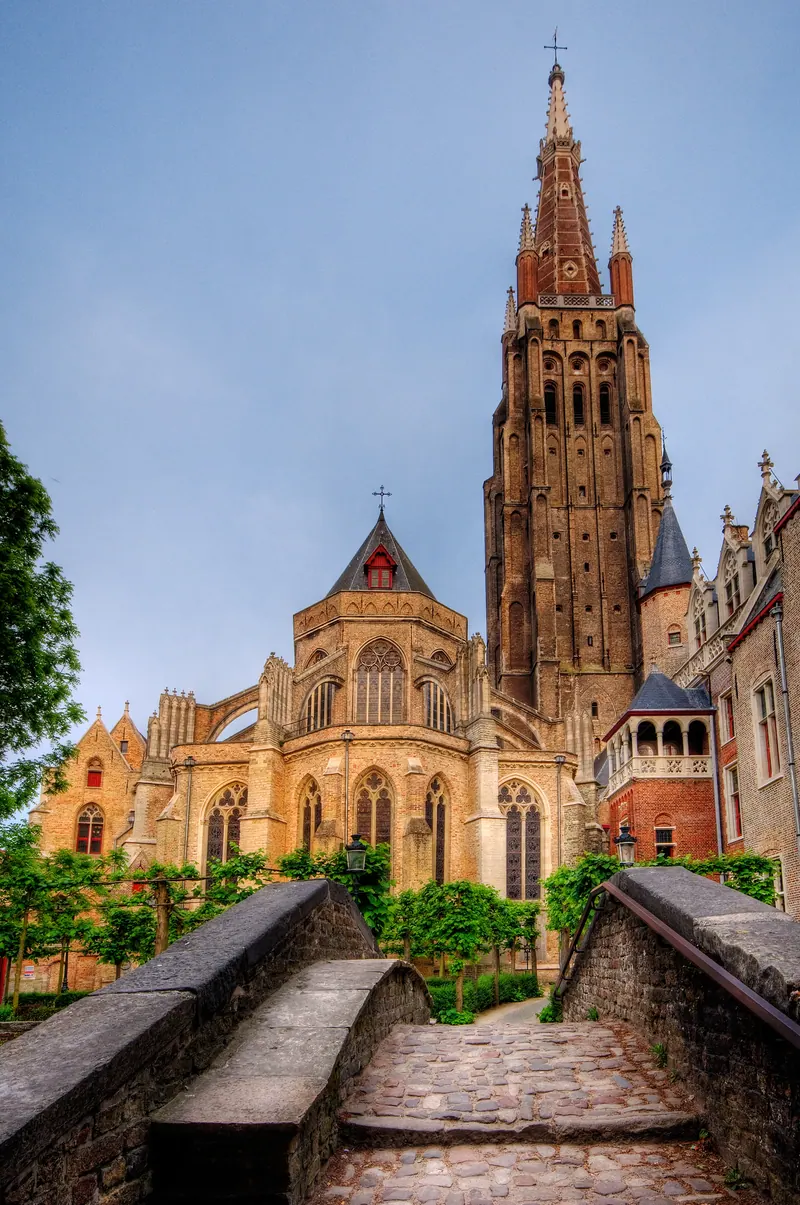
A 115.5-metre brick tower — Musea Brugge calls it the second-highest brick church tower in the world — over the only sculpture Michelangelo let leave Italy in his lifetime and the tombs of the last two rulers of Burgundy. The nave is free; the Madonna, the mausoleums and the painted grave niches under the glass floor are all inside the ticketed part, which is the part you came for.

Works in the rain Quiet corner
Walking directions
View

The Belfry

Begun 13th century on the market halls; octagonal upper stage 1483–86; spire lost to lightning 1741

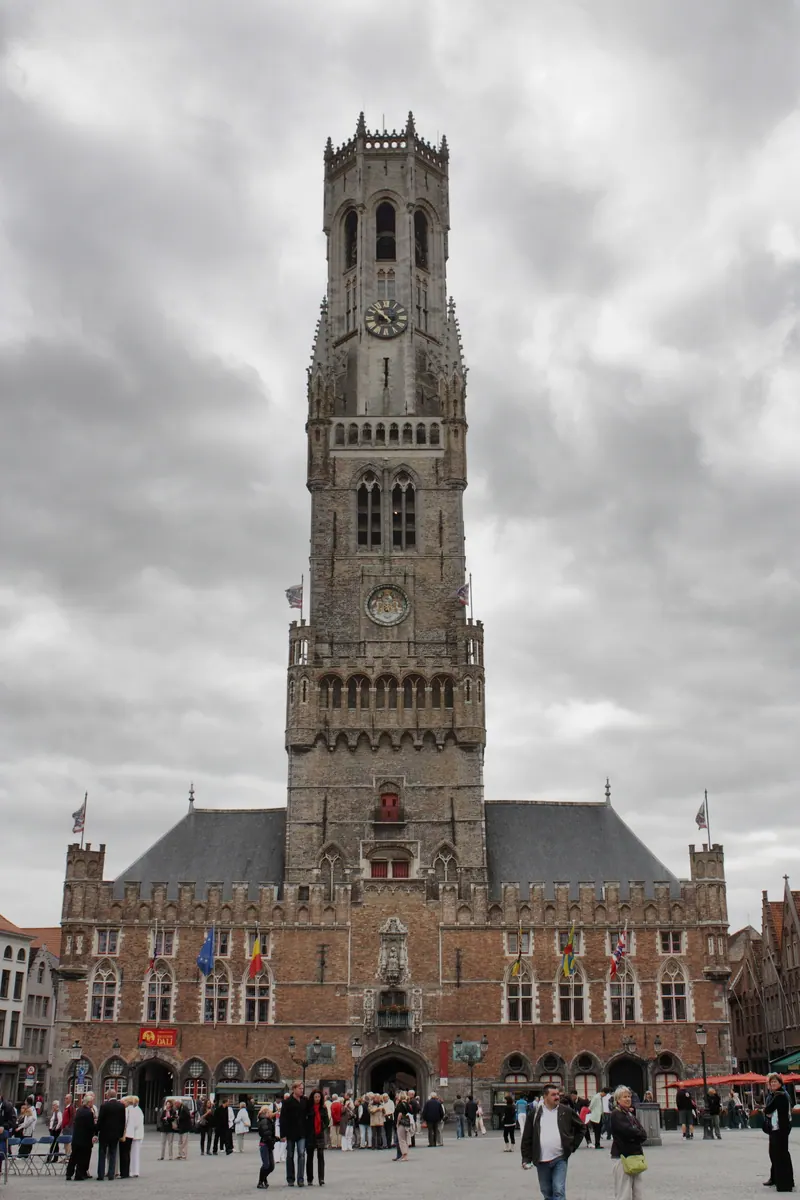
83 metres and 366 steps of the building the guilds and the town council put their identity into, begun in the 13th century and topped with its octagonal lantern in the 1480s. Stop on the way up at the treasury room, where the town's charters, seal and money were locked in iron chests behind double wrought-iron doors.

Good with children
Walking directions