Medieval Booker

Landmark ◆ Bruges

Princely Beguinage Ten Wijngaerde

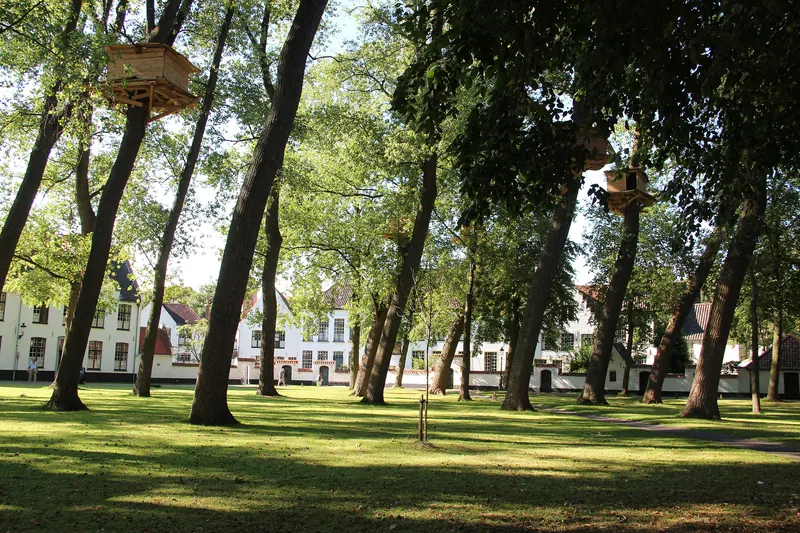
Founded in 1245 for beguines — women who lived religious, celibate and self-supporting lives without taking permanent vows, which was a genuinely odd thing to be allowed to do in the 13th century. The walled courtyard is free and still a working convent; be honest with yourself that the medieval thing here is the institution and the plan, not the buildings.

Where and when

Where
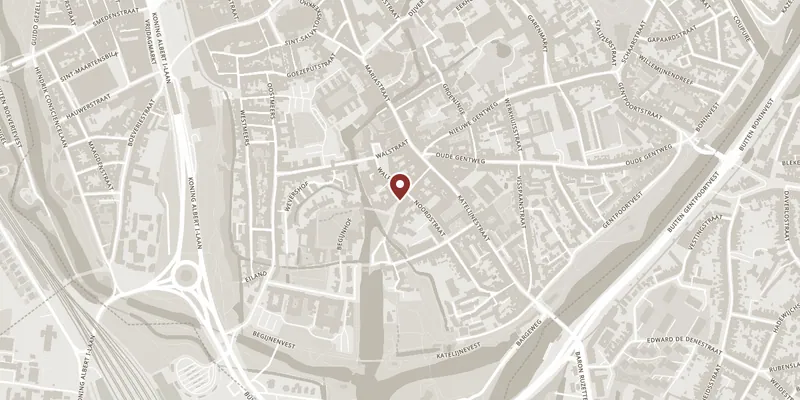
Begijnhof, 8000 Brugge, Bruges, Belgium Open in Google Maps Walking directions
Era
Founded 1245 by Margaret of Constantinople; princely status 1299; the surviving houses are late 16th–18th century; Benedictine community since 1927; UNESCO 1998
Opening
The gates are open during daylight hours and closed overnight; the times are posted at the bridge and Visit Bruges warns they are subject to change. The Begijnhuisje keeps its own shorter hours (as of August 2026)
Price
The courtyard and gardens are free. The Begijnhuisje house museum charges a small separate admission — Visit Bruges does not print the figure and secondary sources quote about €2, so check at the door (as of August 2026)
Best time
It sits five minutes past the Church of Our Lady, which is where most day-trippers turn round, so it is one of the very few central sights that is calm at midday. Early morning is still better: the courtyard's daffodils flower for a few weeks from about late March, and if you are staying the night this is the right place to be at eight in the morning, before the first coaches have parked. Avoid the middle of a summer Saturday, when the walk in from Wijngaardplein backs up.
Good for
Free or cheapQuiet corner
Official site
www.visitbruges.be
Map showing where Princely Beguinage Ten Wijngaerde is
Open in Google Maps Walking directions © MapTiler © OpenStreetMap contributors

Checked

What is Princely Beguinage Ten Wijngaerde?

Beguines were not nuns. They lived chastely and devoutly in a closed community, but they took no permanent vows, kept their own property, worked for their living and could leave and marry. Across the Low Countries in the 13th century that was an unusual amount of independence for a woman to hold legally, and the beguinages are the physical evidence that it existed. Visit Bruges calls them “emancipated lay-women who nevertheless led a pious and celibate life”, which is about right.

This one was founded in 1245 — some sources say 1244 — by Margaret of Constantinople, countess of Flanders, and it became a Princely Beguinage in 1299 when it passed under the direct authority of Philip the Fair of France. It is one of the Flemish Béguinages inscribed on the UNESCO World Heritage list in 1998, and unlike almost every other beguinage in Europe it never stopped being a religious community: since 1927 it has been occupied by Benedictine sisters, together with a handful of single laywomen, and the Monasterium De Wijngaard along the west side is theirs.

Now the honest part, because Bruges makes this easy to get wrong. The buildings are not medieval. The thirty-odd whitewashed houses round the courtyard date from the late 16th, 17th and 18th centuries; nothing medieval survives above ground. What is medieval is the layout — the wall, the single gated bridge, the enclosed green, the church on one side — and the fact that a community of women has lived inside it continuously for nearly 800 years. That is a better thing to look at than fake half-timbering, but it is a different thing, and the postcards do not say so.

One house is fitted out as the Begijnhuisje, a small museum of a beguine’s living quarters, with its own modest charge; the beguinage church stands at Begijnhof 5. Otherwise there is nothing to buy, nothing to queue for and nothing to climb.

Silence is asked for at the gate and it is not decoration: Visit Bruges states that silence is one of the intangible values behind the UNESCO listing, and people live here. Talk quietly, do not photograph doorways and windows, and stay out of the private courtyards.
What visitors say

4.6 from 4,966 ratings

  • Vanessa Morais

    5 out of 5 3 weeks ago

    So peaceful and beautiful. I went on a hot day but here it wasn’t hot at all, because of the wind

    Read this review on Google
  • Chris Low

    3 out of 5 3 weeks ago

    Beguinage Ten Wijngaerde is one of the most peaceful places to visit in Bruges. Founded in the 13th century, it was home to a community of beguines, women who lived a religious life without taking permanent vows. Today, it is still a quiet place that reflects its long history. The whitewashed houses, simple architecture, and rows of tall trees create an elegant setting. The open courtyard is beautifully maintained, and the lack of crowds makes it easy to slow down and appreciate the surroundings. If you need a break from the busy streets of Bruges, this is a wonderful spot to relax.

    Read this review on Google
  • Bharathi Mani

    5 out of 5 4 months ago

    It’s an incredibly peaceful and tranquil spot. It’s best visited early in the morning around 9 AM or later in the evening after 5 PM, before the tourist crowds arrive. With its serene atmosphere and picturesque setting, it’s not to be missed when in Bruges. Free to enter Beguinage Ten Wijngaerde, also known as the Begijnhof, dates back to the 17th century and was home to beguines—single women who lived in a religious community without taking formal vows as nuns. They led self-sufficient lives, baking their own bread and brewing their own beer, in a space largely separate from men. In the current times it's home to some nuns.

    Read this review on Google

Ratings and reviews from Google. See all on Google Maps

Frequently asked questions

Is the Bruges Beguinage free to visit?

Yes, the walled courtyard and gardens are free. Only the Begijnhuisje, the single house fitted out as a museum, charges admission, and the figure is best checked at the door.

What were beguines?

Women who lived a religious, celibate, self-supporting life in a closed community but took no permanent vows, kept their own property and were free to leave and marry. Bruges' beguinage was founded for them in 1245 by Margaret of Constantinople.

Are the houses in the Bruges Beguinage medieval?

No. The roughly thirty whitewashed houses date from the late 16th, 17th and 18th centuries. What survives from the Middle Ages is the institution, the enclosing wall and the plan of the site, not the buildings.

Do beguines still live in the Bruges Beguinage?

Not beguines. Since 1927 the community has been Benedictine sisters, alongside some single laywomen. It has been continuously inhabited by women since the 13th century.

Do you have to be quiet in the Beguinage?

Yes. Silence is requested at the gate, residents live in the houses, and Visit Bruges names silence as one of the values underpinning the site's UNESCO World Heritage listing.

Festivals in Bruges

Medieval festivals in Bruges
Featured
Historic City Celebrations

Procession of the Holy Blood

Bruges, Belgium

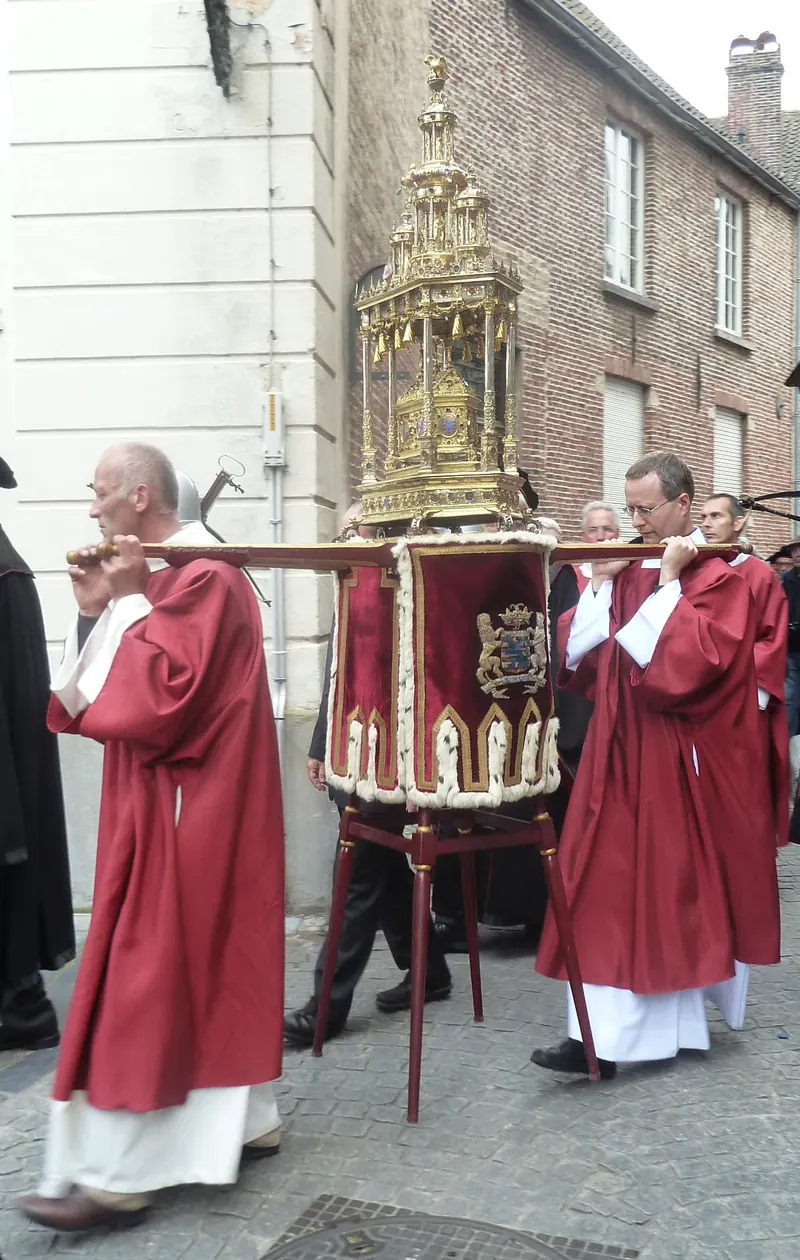
Every Ascension Day more than 1,800 people from Bruges carry the relic of the Holy Blood through the historic centre in a four-part pageant of Old Testament, New Testament and city history, with horses, carts, choirs and over 250 live musicians. The procession is dated by the city to 1304, has been on UNESCO's Representative List of Intangible Cultural Heritage since 2009, and next takes place on Thursday 6 May 2027.

2027
Family

More places in Bruges

Places in Bruges
Museum Start here

Museum Sint-Janshospitaal

Hospital documented from 1188; medieval wards and church; Memling panels made for the house from the 1470s–1480s

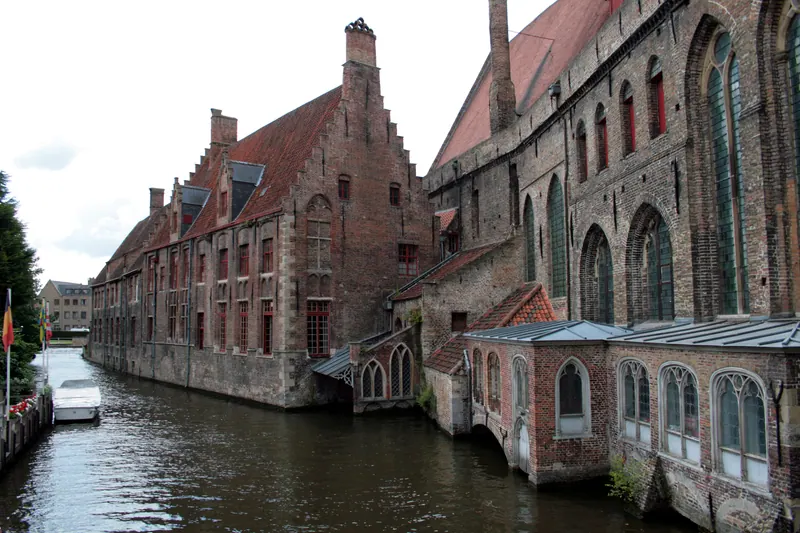
A hospital first documented in 1188, run by lay brothers and sisters, and still taking patients until 1977 — with seven paintings by Hans Memling, four of them made for this building and never moved out of it. Go for the Shrine of St Ursula, a gilded reliquary painted as a miniature Gothic chapel, and then climb to the attic roof truss.

Works in the rain Quiet corner
Walking directions
Church

Church of Our Lady and the O.L.V.-kerk Museum

Brick tower and church 13th–15th century; Michelangelo Madonna c. 1504, given 1514; Mary of Burgundy's tomb c. 1501–02, Charles the Bold's 1558–63

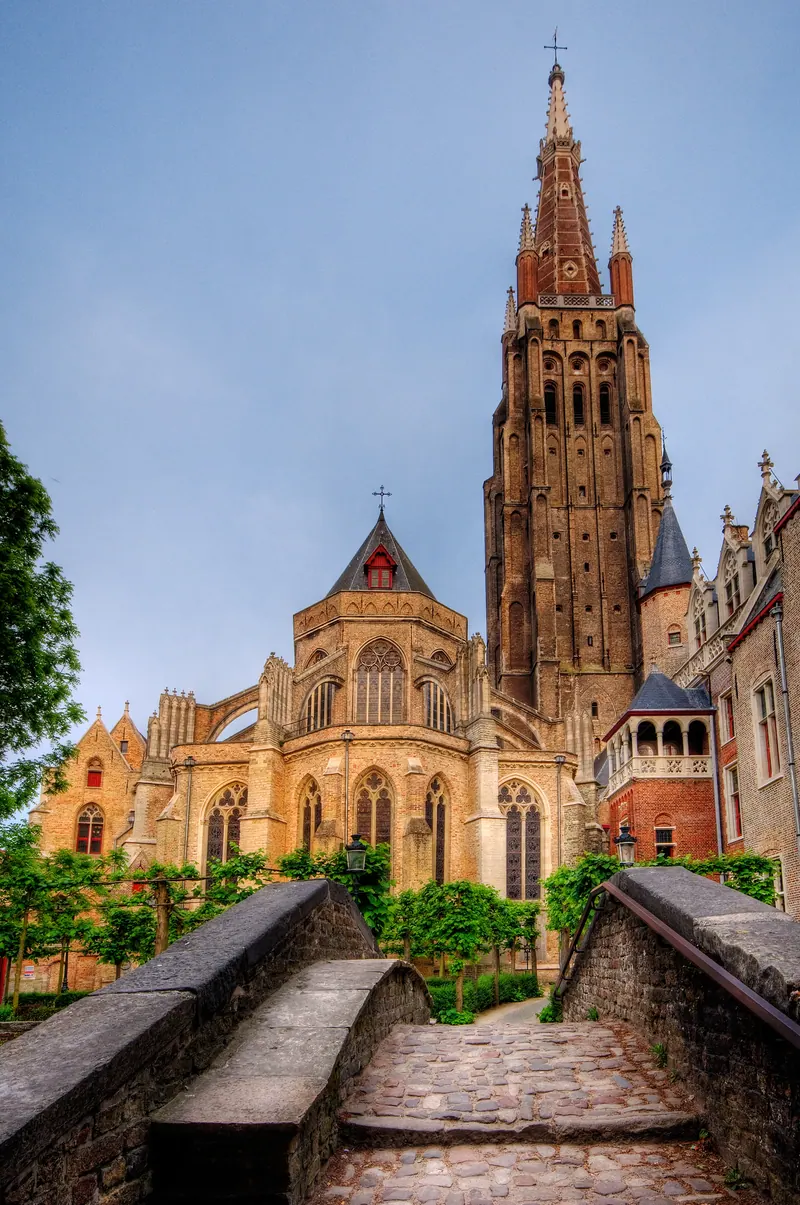
A 115.5-metre brick tower — Musea Brugge calls it the second-highest brick church tower in the world — over the only sculpture Michelangelo let leave Italy in his lifetime and the tombs of the last two rulers of Burgundy. The nave is free; the Madonna, the mausoleums and the painted grave niches under the glass floor are all inside the ticketed part, which is the part you came for.

Works in the rain Quiet corner
Walking directions
View

The Belfry

Begun 13th century on the market halls; octagonal upper stage 1483–86; spire lost to lightning 1741

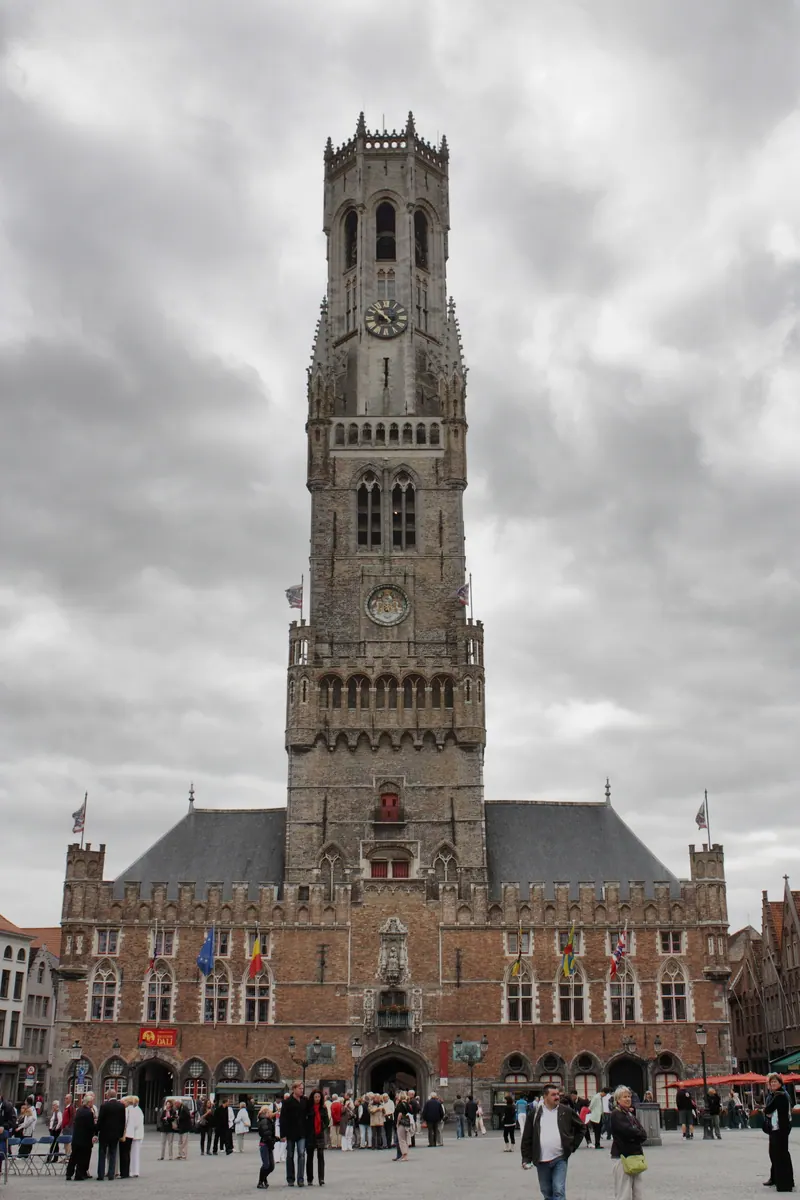
83 metres and 366 steps of the building the guilds and the town council put their identity into, begun in the 13th century and topped with its octagonal lantern in the 1480s. Stop on the way up at the treasury room, where the town's charters, seal and money were locked in iron chests behind double wrought-iron doors.

Good with children
Walking directions