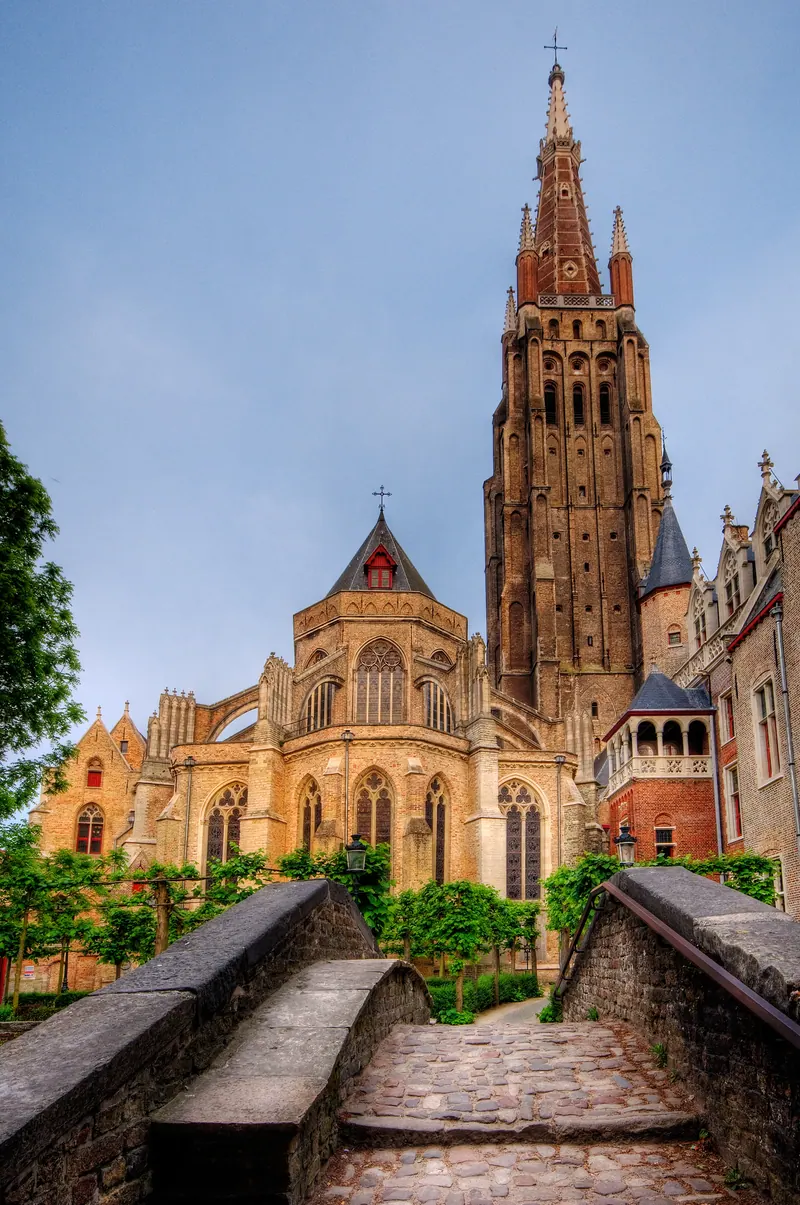
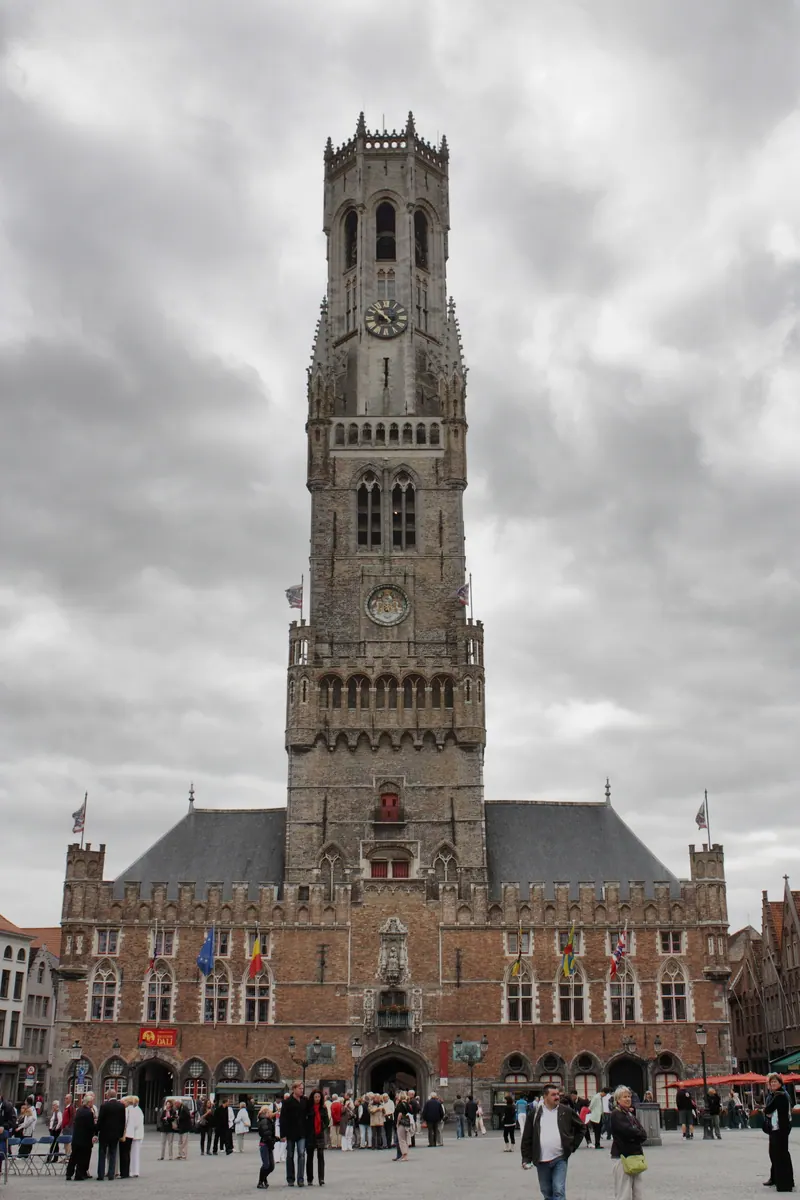
Start with the tower, because it settles the question this town keeps raising. The brick tower is 115.5 m and is, on Musea Brugge’s own description, the second-highest brick church tower in the world. It is not a 19th-century fantasy: it is medieval fabric, built in stages between the 13th and 15th centuries, and it is the thing on the Bruges skyline that is exactly as old as it looks.
The Madonna and Child stands on the altar of the chapel in the south aisle. Michelangelo carved it in white marble around 1504, probably for Siena Cathedral; the Bruges merchant brothers Jan and Alexander Mouscron bought it in Italy and gave it to this church, and Musea Brugge describes it as the only work by Michelangelo that left Italy during his lifetime. It has been taken away twice — by the French in 1794 and by the retreating Germans in 1944 — and brought back twice. The Mouscron family are buried nearby.
The tombs in the chancel are the reason a Burgundy-minded visitor comes at all, and they are not the matched pair they look like. Mary of Burgundy died in 1482 at twenty-five after a riding accident, and her gilt-bronze monument was finished around 1501–02. Charles the Bold died in the snow at Nancy in 1477; his remains were only brought to Bruges in 1550, and his monument was made in 1558–63 by Jacques Jonghelinck on the orders of Philip II — a Renaissance imitation of a late-Gothic original, built roughly sixty years afterwards to make father and daughter look contemporary. Read the two side by side and the difference in the lettering and the heraldry is obvious once you are looking for it.
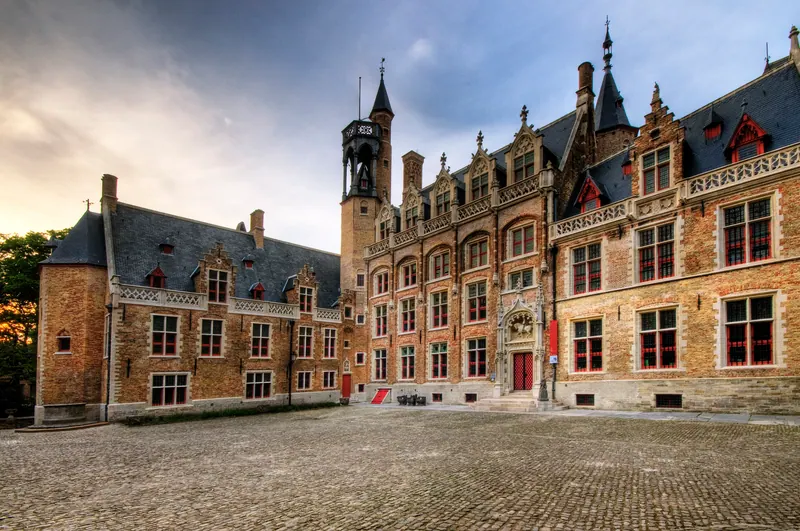
Under your feet, glass panels in the chancel floor show painted grave niches: medieval burial vaults, their plaster walls painted with the Virgin and with angels swinging censers, found when the church was excavated. Musea Brugge states that human remains are visible through the glass floor beneath the mausoleum. High on the chancel wall hangs the oratory of Louis de Gruuthuse, built in 1470 — a private box that let the family hear mass without leaving their palace, and it connects directly into the Gruuthusemuseum next door. The chancel also holds the Passion triptych by Bernard van Orley and Marcus Gheeraerts.
One practical warning: this is a working parish church as well as a museum, so weddings and funerals can close the museum section at short notice.