Medieval Booker

Museum ◆ Bruges

Adornes Estate and the Jerusalem Chapel

A private chapel consecrated in 1429, built by a Genoese merchant dynasty in Bruges and modelled on the Church of the Holy Sepulchre in Jerusalem — still owned and used by the same family, now in its seventeenth generation. Anselm Adornes made the pilgrimage in 1470, was murdered in Scotland in 1483, and lies here only in part: his body stayed at Linlithgow and his heart came home to the tomb.

Where and when

Where
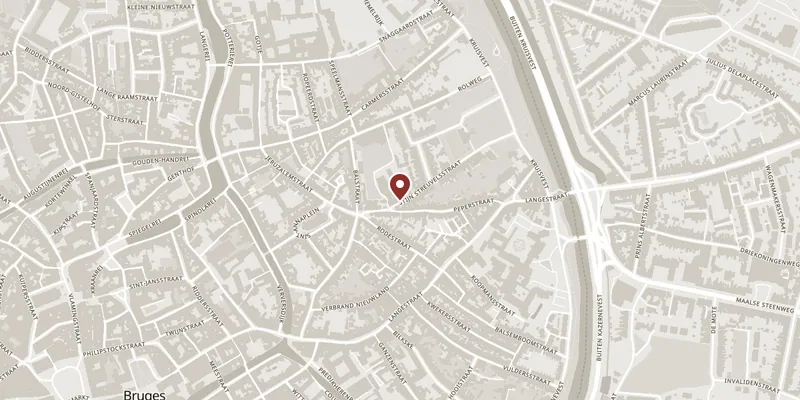
Peperstraat 3, 8000 Brugge, Bruges, Belgium Open in Google Maps Walking directions
Era
Jerusalem Chapel consecrated 1429, modelled on the Church of the Holy Sepulchre; tomb of Anselm Adornes (d. 1483); stained glass c. 1560; still privately owned by his descendants
Opening
1 April–30 September Monday–Friday 10:00–17:00 and Saturday 10:00–18:00; 1 October–31 March Monday–Saturday 10:00–17:00. Closed on Sundays and public holidays (as of August 2026)
Price
€11 adult, €9 for 65+ and groups of 15+, €7 for ages 7–25 and visitors with a disability, free under 7; free with a museumPASSmusées, and free entry from the third child onwards. Tickets are sold only at the reception desk — there is no online booking (as of August 2026)
Best time
Any weekday morning — this is in the quiet Sint-Anna quarter, about fifteen minutes' walk north-east of the Burg, and the crowd that clogs the Markt never gets here. Doing it early also lets you carry on to the Kruispoort and the windmills on the ramparts afterwards, which is the best hour's walking in Bruges. Do not plan it for a Sunday.
Good for
Quiet cornerWorks in the rain
Official site
www.adornes.org
Map showing where Adornes Estate and the Jerusalem Chapel is
Open in Google Maps Walking directions © MapTiler © OpenStreetMap contributors

Checked

What is Adornes Estate and the Jerusalem Chapel?

This is the best story in Bruges and almost nobody walks the fifteen minutes to hear it.

The Adornes were a Genoese merchant family who settled in Bruges — one of the foreign trading colonies that made the town rich — and rose into the Flemish nobility. Their private Jerusalem Chapel was consecrated in 1429 and built in imitation of the Church of the Holy Sepulchre in Jerusalem, which is why it looks unlike anything else on the skyline here: a tall, dark, oriental-looking tower over a plan borrowed from the Holy Land.

Anselm Adornes (born 1424) is the man to follow. He travelled to Jerusalem in 1470 with his son Jan and wrote up the journey; he served the dukes of Burgundy as curator of Scottish privileges and was close enough to James III of Scotland to be made keeper of the royal palace at Linlithgow; and on 23 January 1483 he was ambushed and killed in Scotland. His body remained there. His heart was brought back to Bruges and placed in the tomb in this chapel, where his wife Margareta van der Banck had been buried in 1480. Visit Bruges states it plainly: the grave monument, carved by Cornelis Tielman, holds his heart while his body is in Scotland. The tomb, in Tournai stone, was restored in 2022.

Inside, look for the Golgotha altarpiece in white limestone, a representation of Calvary, and the family’s private oratory gallery. The stained glass was made around 1560, and Visit Bruges calls it the oldest stained glass in Bruges — a useful reminder that in a city this heavily restored, “oldest surviving” and “oldest built” are rarely the same date.

The rest of the estate is the family’s former almshouses, now holding a museum on the Adornes and their world, plus a short film and the “Scottish Lounge”, an honesty bar where you make your own coffee. Allow about 45 minutes to an hour.

Two practical things that catch people out. The estate is closed on Sundays and public holidays — the exact day most weekend visitors have free. And tickets are sold only at the reception desk: there is no online booking, so do not go looking for one.
What visitors say

4.5 from 810 ratings

  • Thomas Gryson

    5 out of 5 3 weeks ago

    Beautiful and quite unknown gem in Brugge with museum, chapel and Scottish bar.

    Read this review on Google
  • Max

    4 out of 5 a month ago

    Beautifully kept estate that has thankfully been made available to the public to view. Visiting both the estate and area around it is well worth it.

    Read this review on Google
  • Nick Ajderian

    5 out of 5 10 months ago

    Anselm Adorne was a complete renaissance man, a mover and shaker, who travelled from Genoa to Scotland to Bruges to Jerusalem . He's a major character in Dorothy Dunnet's Nicolo series. We were delighted by the maps, artifacts and descriptions. Then we had coffees sitting in Anselm's garden.

    Read this review on Google

Ratings and reviews from Google. See all on Google Maps

Frequently asked questions

How old is the Jerusalem Chapel in Bruges?

It was consecrated in 1429 as the private chapel of the Adornes family, a Genoese merchant dynasty settled in Bruges, and was built in imitation of the Church of the Holy Sepulchre in Jerusalem.

Is the Jerusalem Chapel privately owned?

Yes. It is still owned by descendants of the Adornes family, the de Limburg Stirum family, now the seventeenth generation, and they still use the chapel for family religious occasions.

Who was Anselm Adornes?

A Bruges merchant and nobleman of Genoese descent, born in 1424, who made a pilgrimage to Jerusalem in 1470, served the dukes of Burgundy as curator of Scottish privileges and was keeper of James III's palace at Linlithgow. He was murdered in Scotland on 23 January 1483.

Is Anselm Adornes buried in the Jerusalem Chapel?

Only partly. His body remained in Scotland; his heart was brought back and placed in the grave monument here, carved by Cornelis Tielman, beside his wife Margareta van der Banck, who died in 1480.

How much is the Adornes Estate and can you book online?

€11 for an adult and €7 for ages 7–25 as of August 2026, free under 7. There is no online booking — tickets are sold only at the reception desk, and the estate is closed on Sundays and public holidays.

Festivals in Bruges

Medieval festivals in Bruges
Featured
Historic City Celebrations

Procession of the Holy Blood

Bruges, Belgium

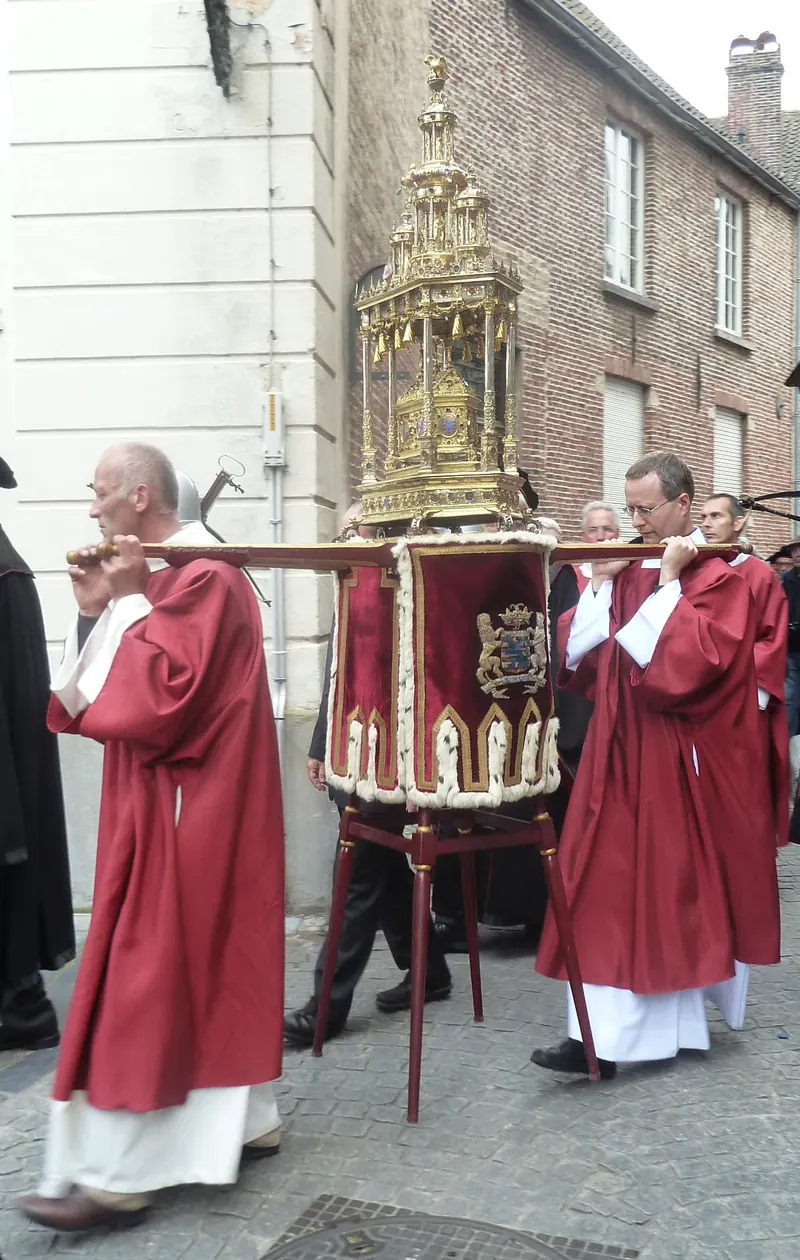
Every Ascension Day more than 1,800 people from Bruges carry the relic of the Holy Blood through the historic centre in a four-part pageant of Old Testament, New Testament and city history, with horses, carts, choirs and over 250 live musicians. The procession is dated by the city to 1304, has been on UNESCO's Representative List of Intangible Cultural Heritage since 2009, and next takes place on Thursday 6 May 2027.

2027
Family

More places in Bruges

Places in Bruges
Museum Start here

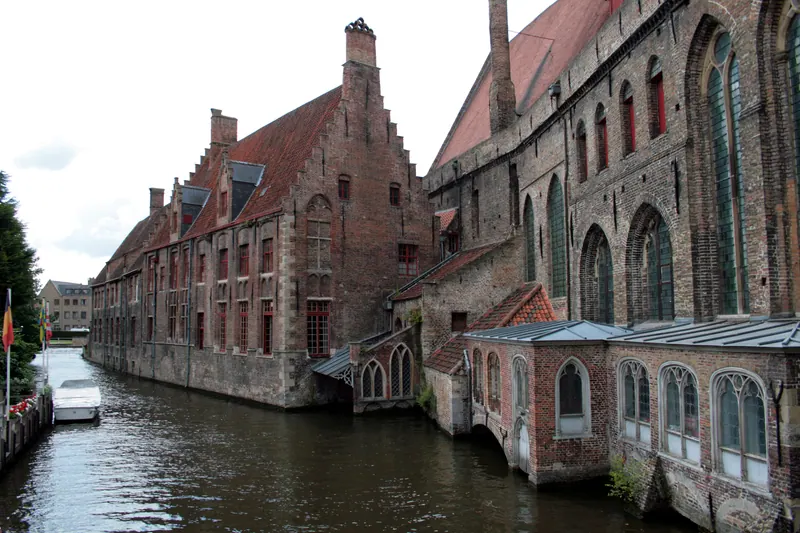
Museum Sint-Janshospitaal

Hospital documented from 1188; medieval wards and church; Memling panels made for the house from the 1470s–1480s

A hospital first documented in 1188, run by lay brothers and sisters, and still taking patients until 1977 — with seven paintings by Hans Memling, four of them made for this building and never moved out of it. Go for the Shrine of St Ursula, a gilded reliquary painted as a miniature Gothic chapel, and then climb to the attic roof truss.

Works in the rain Quiet corner
Walking directions
Church

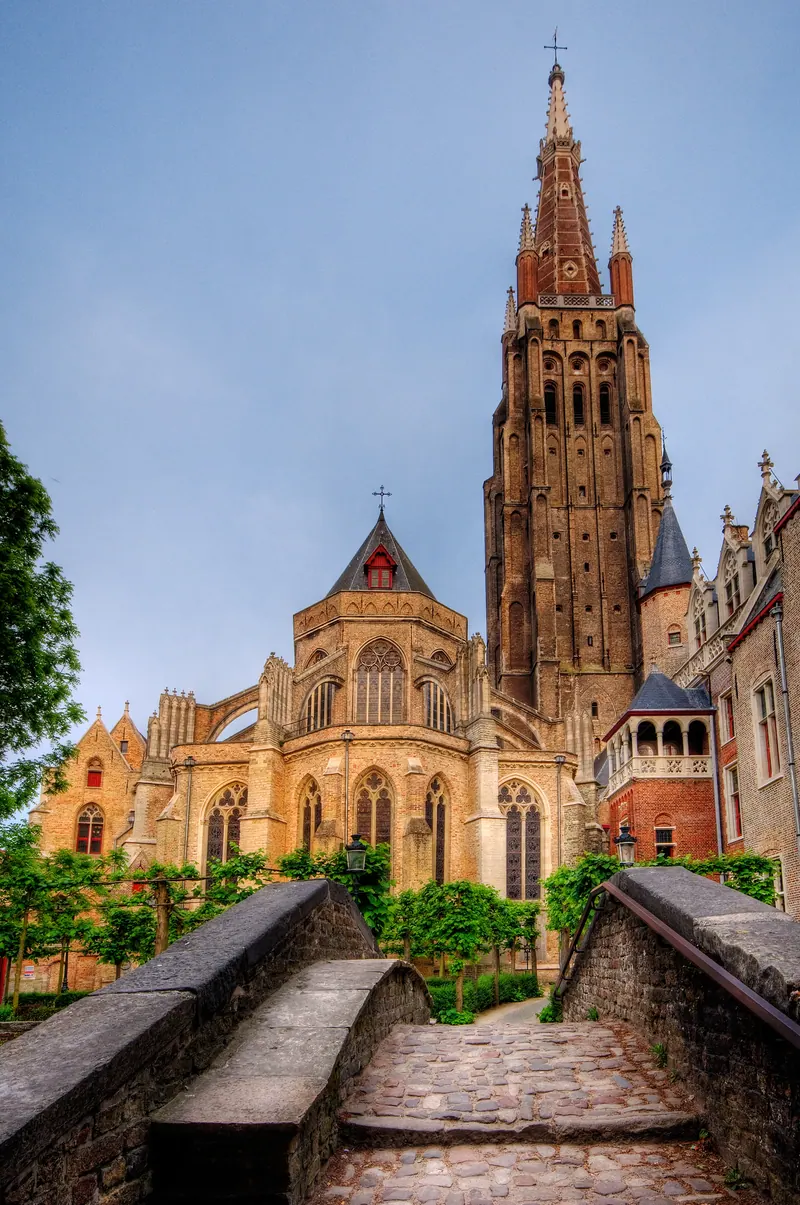
Church of Our Lady and the O.L.V.-kerk Museum

Brick tower and church 13th–15th century; Michelangelo Madonna c. 1504, given 1514; Mary of Burgundy's tomb c. 1501–02, Charles the Bold's 1558–63

A 115.5-metre brick tower — Musea Brugge calls it the second-highest brick church tower in the world — over the only sculpture Michelangelo let leave Italy in his lifetime and the tombs of the last two rulers of Burgundy. The nave is free; the Madonna, the mausoleums and the painted grave niches under the glass floor are all inside the ticketed part, which is the part you came for.

Works in the rain Quiet corner
Walking directions
View

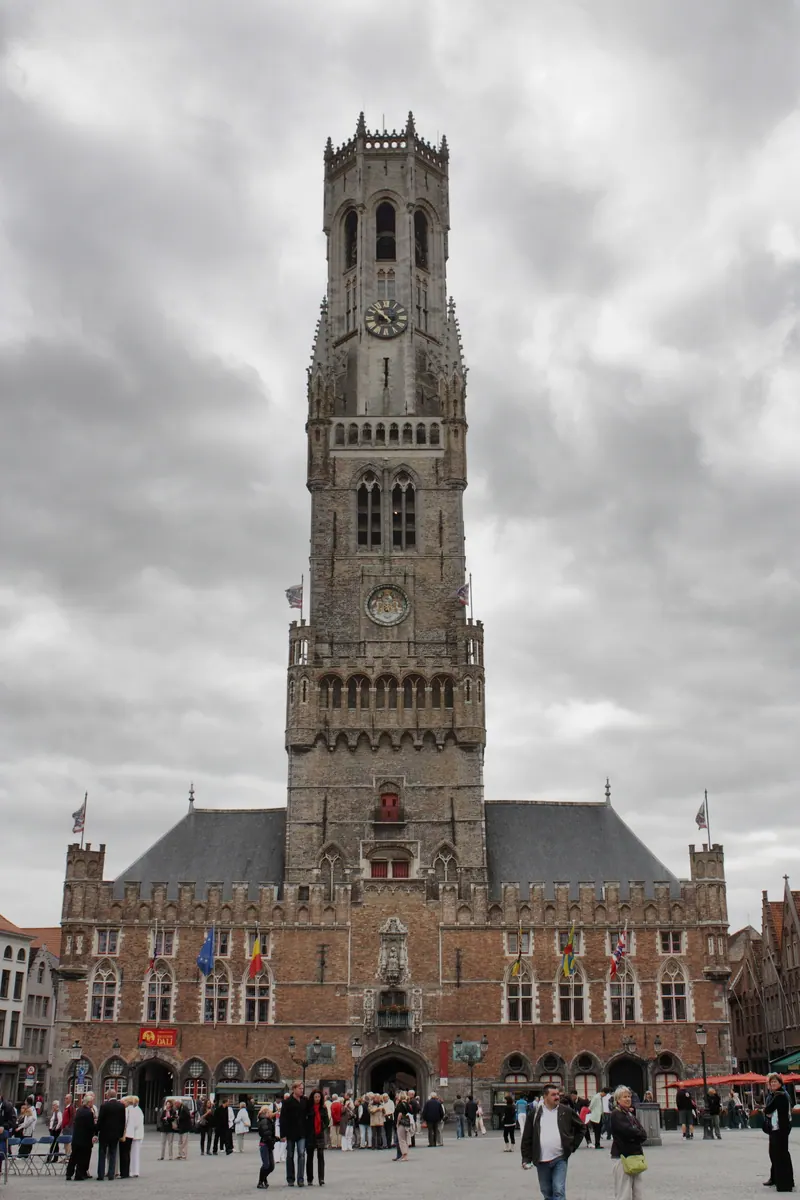
The Belfry

Begun 13th century on the market halls; octagonal upper stage 1483–86; spire lost to lightning 1741

83 metres and 366 steps of the building the guilds and the town council put their identity into, begun in the 13th century and topped with its octagonal lantern in the 1480s. Stop on the way up at the treasury room, where the town's charters, seal and money were locked in iron chests behind double wrought-iron doors.

Good with children
Walking directions