Medieval Booker

Vaucluse, Provence ◆ France

Medieval Avignon

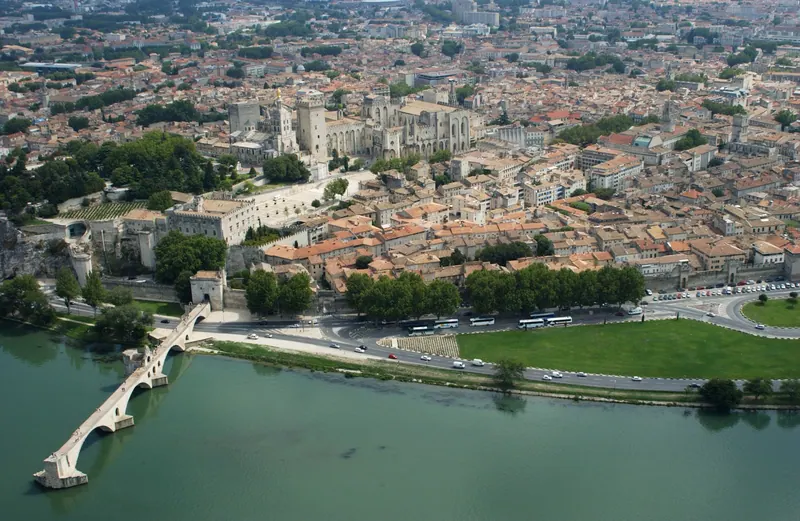
From 1309 to 1377 the popes ruled the Latin Church from Avignon, not Rome, and from 1378 the city held one of the two rival popes of the Great Schism. The Palais des Papes they built is the largest Gothic palace in Europe, and the 4.3 km of wall the popes threw around the town in 1355–70 still runs the whole way round it.

1 festival 10 places no articles yet next event 10 October 2026

Why is Avignon a medieval destination?

Clement V, a Gascon archbishop elected in 1305, never went to Rome. The curia moved to Avignon in 1309, and seven French popes ruled from here in succession — Clement V, John XXII, Benedict XII, Clement VI, Innocent VI, Urban V and Gregory XI — until Gregory XI took the papacy back to Rome in January 1377. Avignon was not then part of France: it belonged to the counts of Provence — the Angevin kings of Naples — and stood beside the Comtat Venaissin, which had been papal territory since 1274. Clement VI bought the town itself from Queen Joanna of Naples in 1348, and it stayed papal property until the French Revolution.

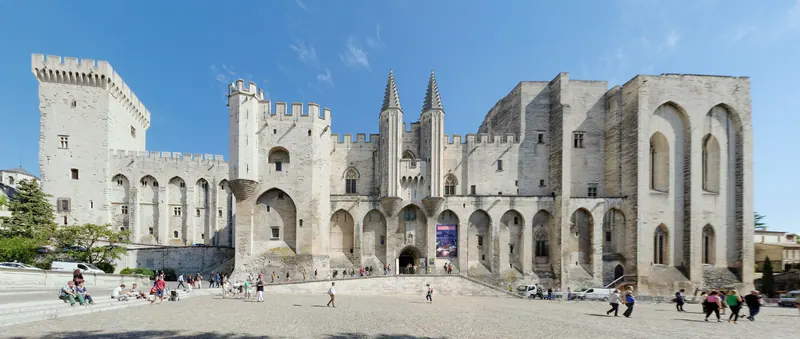
The Palais des Papes was built in two campaigns, from 1335 under Benedict XII and from 1342 under Clement VI, and covers roughly 15,000 m². It is a palace built as a fortress: blank walls, machicolated towers, a single defensible entrance. That was not decoration. The papacy had abandoned an ungovernable Rome, the countryside was crossed by unemployed mercenary companies, and after Gregory XI’s death in 1378 the cardinals elected two popes and the Great Schism split Europe for thirty-nine years. From 1378 to 1403 an Avignon pope held the palace against the Roman one, and in 1398 the palace was besieged with a pope inside it.

The city walls date from the same fear. Innocent VI began them in 1355 against the Great Companies and they were finished under Urban V by 1370: about 4.3 km of curtain, some 35 large towers and dozens of smaller ones, still enclosing the old town on all sides. Few European cities of this size kept their circuit whole; Avignon did because the ring was never demolished for boulevards. Outside the walls, the Pont Saint-Bénézet carried the road over the Rhône from the 1180s until the river finally beat it in the 17th century, and across the water the French crown watched the popes from the towers of Villeneuve-lès-Avignon.

The Revolution took the interiors. The palace was sacked in 1791, then used as a prison and from the early 1800s as a military engineers’ barracks — extra floors inserted, walls plastered, frescoes cut out and sold. The army left in 1906 and the building opened to the public in 1907. That history is why Avignon’s medieval rooms are bare stone rather than furnished apartments, and why the handful of surviving painted rooms matter as much as they do.
Medieval festivals in Avignon

Reenactment & Battles Medieval Markets & Fairs +1

Festival Médiéval de la Rose d'Or

Avignon, France

Every autumn some 60 to 70 historical associations camp on the Île de la Barthelasse, the island in the Rhône facing the Palais des Papes, for a re-enactors' festival with a market, archery, tournaments and a closing battle. Running since 2007 and organised by volunteers without public subsidy, it is one of the largest medieval gatherings in southern France; the 2026 edition, billed as the twentieth, falls on 10–11 October.

2026
Family

Months with a festival are linked. Expected dates say so. October

What else to see in medieval Avignon

Short list on purpose. Everything here is somewhere we'd actually send you, checked and still standing.

Castles & fortresses

Castle Start here

Palais des Papes

Palais Vieux from 1335 under Benedict XII, Palais Neuf from 1342 under Clement VI; papal residence to 1403; prison and barracks until 1906

Two palaces welded together — Benedict XII's fortress of 1335 and Clement VI's wing of 1342 — and at roughly 15,000 m² the largest Gothic palace in Europe. The rooms are bare because the army used them as a barracks for a century, so go for the four painted spaces that survived and find the Chambre du Cerf first.

Good with children Works in the rain
Walking directions
Castle

Fort Saint-André

Royal fortress ordered by Philip the Fair, built in the second half of the 14th century under John the Good and Charles V, around a Benedictine abbey of the late 10th century

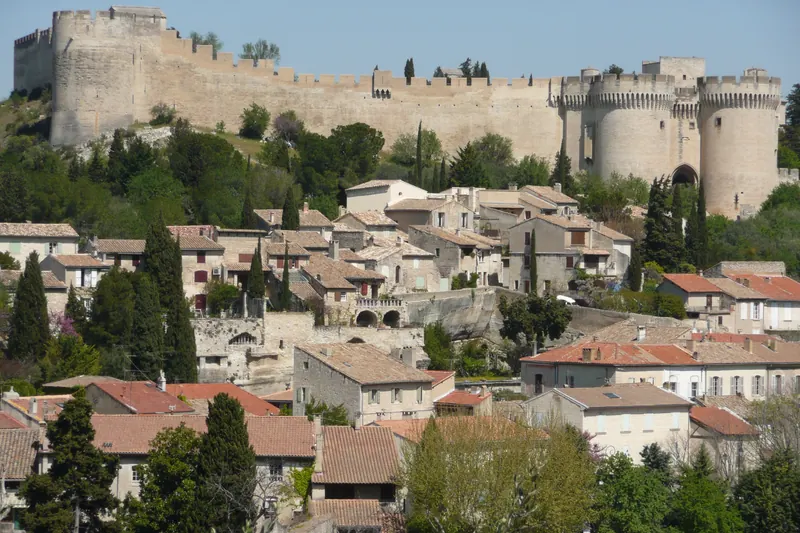
The King of France's fortress on the hill opposite Avignon, built to stare at the popes across the Rhône, and the only place you see the whole papal city from outside itself. Ten minutes by bus from the Porte de l'Oulle — go up through the twin drum towers of the gate and turn left along the rampart.

Good with children Quiet corner
Walking directions

Landmarks & bridges

Landmark

Pont Saint-Bénézet

Built from the late 12th century, traditionally begun 1177; 22 arches originally, 4 today; abandoned after the flood of 1669

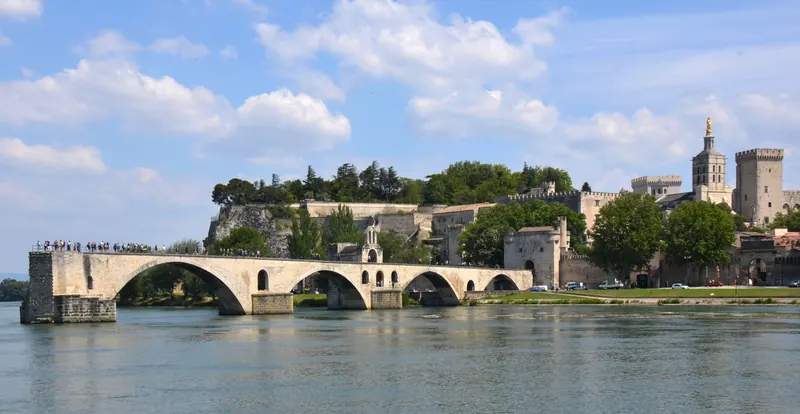
Four arches of a bridge that once had twenty-two and ran some 900 m across both channels of the Rhône, abandoned in the 17th century after the river knocked it down once too often. Walk out to the end, look at the two-storey chapel built into the second pier, then read the honest note below about the song.

Good with children Free or cheap
Walking directions
Landmark

The city walls of Avignon

Begun 1355 under Innocent VI, completed c. 1370 under Urban V; restored by Viollet-le-Duc 1860–69

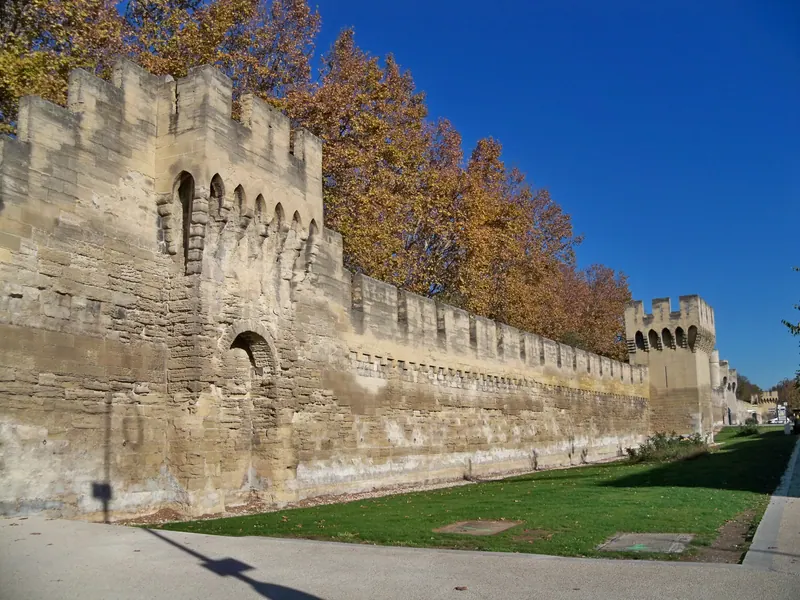
Four and a third kilometres of papal wall, begun in 1355 against the mercenary companies and finished by 1370, still running the entire way round the old town — one of the few complete circuits left in France. Read the honest note below before you come expecting a wall walk, because there mostly is not one.

Free or cheap Quiet corner
Walking directions
Landmark

Chartreuse du Val de Bénédiction

Founded by Innocent VI from 1353–56; Giovannetti frescoes 1355; sold and broken up at the Revolution; restored from 1909

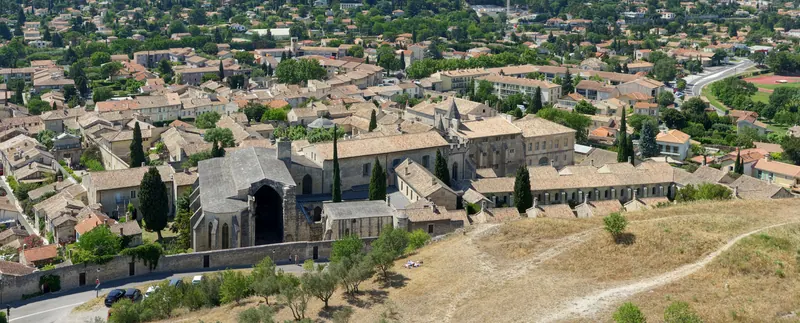
The largest Carthusian monastery in France, founded by Pope Innocent VI in the 1350s on his own cardinal's palace, with three cloisters, forty cells and his tomb in the church. The chapel beside the refectory was painted by Matteo Giovannetti in 1355 — the same hand as the Palais des Papes, without the queue. Find the Tinel and it is next door.

Quiet corner Good with children
Walking directions

Churches & ossuaries

Church

Cathédrale Notre-Dame des Doms

Provençal Romanesque, built c. 1150; papal tombs and Gothic chapels added from the 14th century

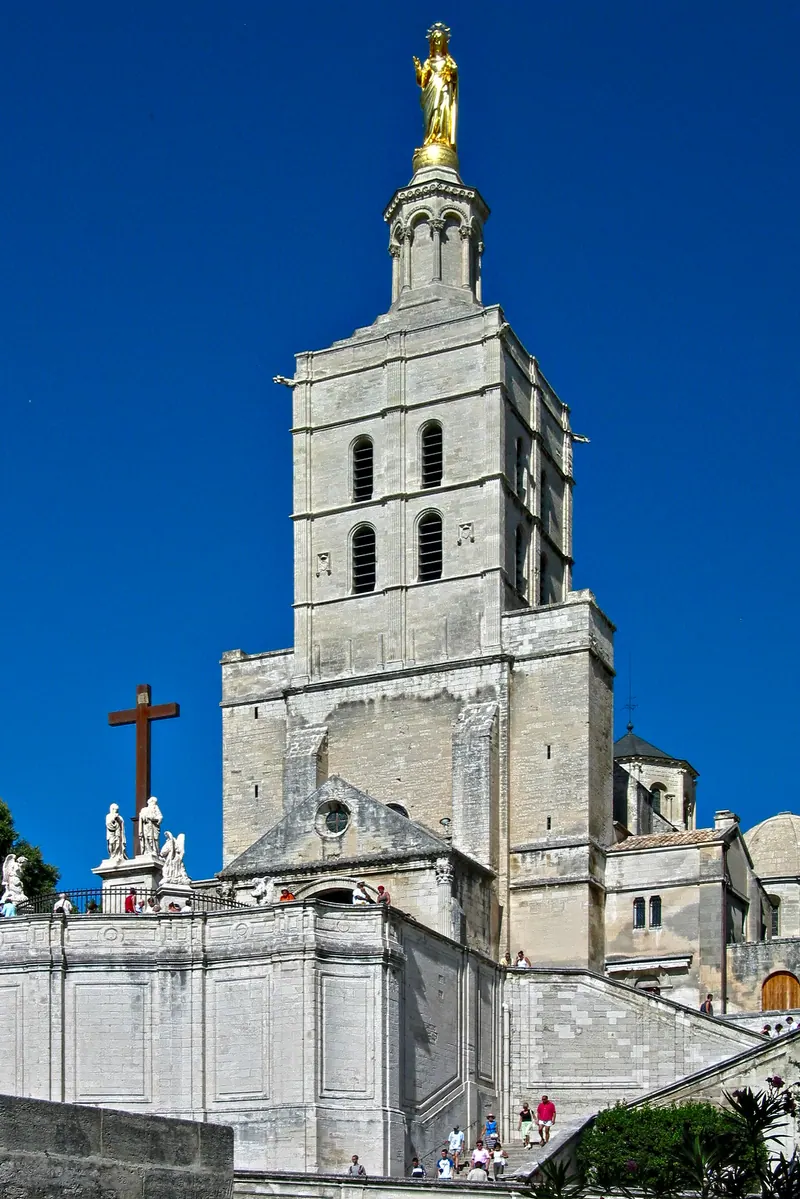
The Provençal Romanesque cathedral of about 1150 that the popes found already standing and built their palace against, free to enter and skipped by most of the queue next door. Go in for the canopied tomb of John XXII, the pope who ruled here for eighteen years and is still lying in his own chapel.

Free or cheap Quiet corner Works in the rain
Walking directions
Church

Collégiale Saint-Didier

Built 4 May 1356 – 20 September 1359 for Cardinal Bertrand de Deaux; Laurana retable 1478–81

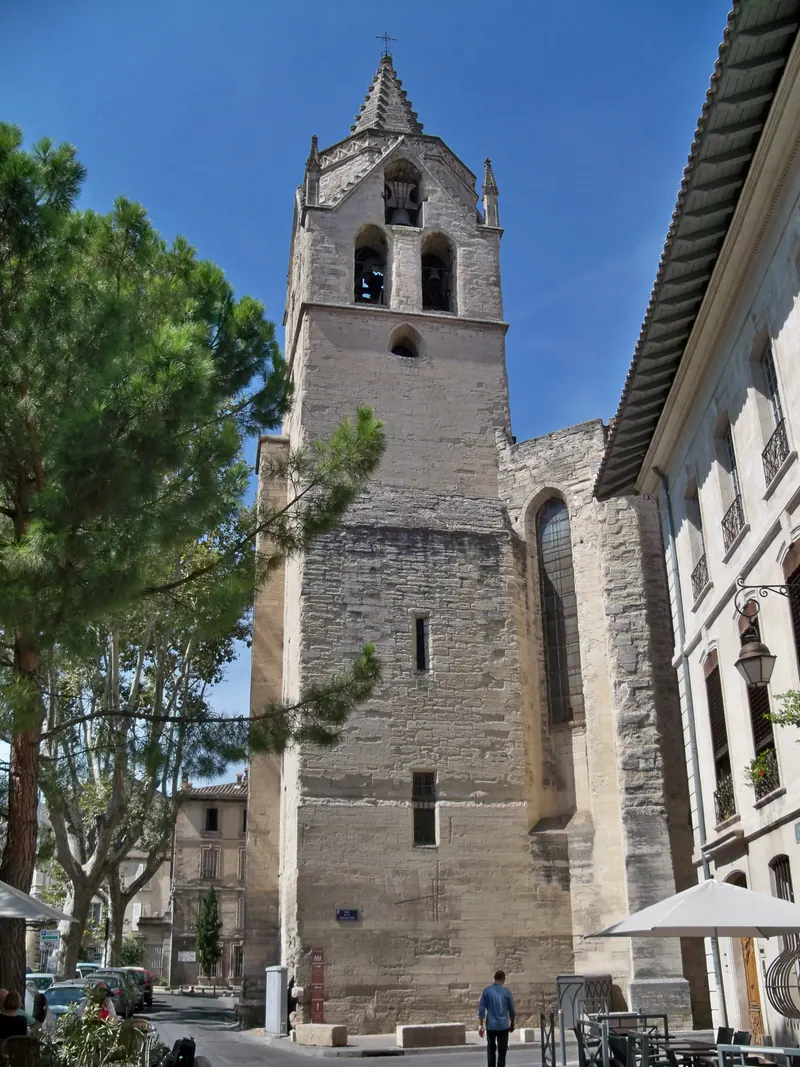
A cardinal's church put up in three years, from May 1356 to September 1359, and the most complete example of the Avignon Gothic the papal court built: one wide nave, no aisles, nothing in the way. Free, open all day, and the first chapel on the right holds what is usually called the first Renaissance sculpture made in France.

Free or cheap Quiet corner Works in the rain
Walking directions

Museums & collections

Museum

Musée du Petit Palais

Cardinal's livrée from the 1310s; archbishops' palace from 1475, rebuilt by Giuliano della Rovere (later Julius II); museum since 1976

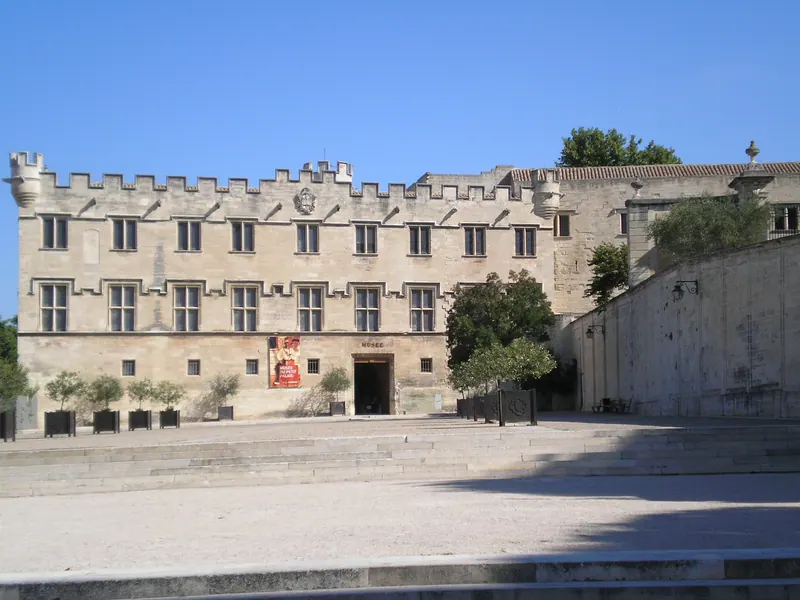
The archbishops' palace at the top of the Place du Palais, free to enter, holding over 300 Italian paintings from the Campana collection alongside the best room of 14th-century Avignon sculpture anywhere. Find the fragments of Cardinal Jean de Lagrange's tomb — the earliest French transi, a cardinal carved as a rotting corpse.

Works in the rain Free or cheap Quiet corner
Walking directions
Museum

Musée Pierre-de-Luxembourg

Housed in a 17th-century mansion within Cardinal Annibal de Ceccano's 14th-century livrée; key works c. 1310 and 1453–54

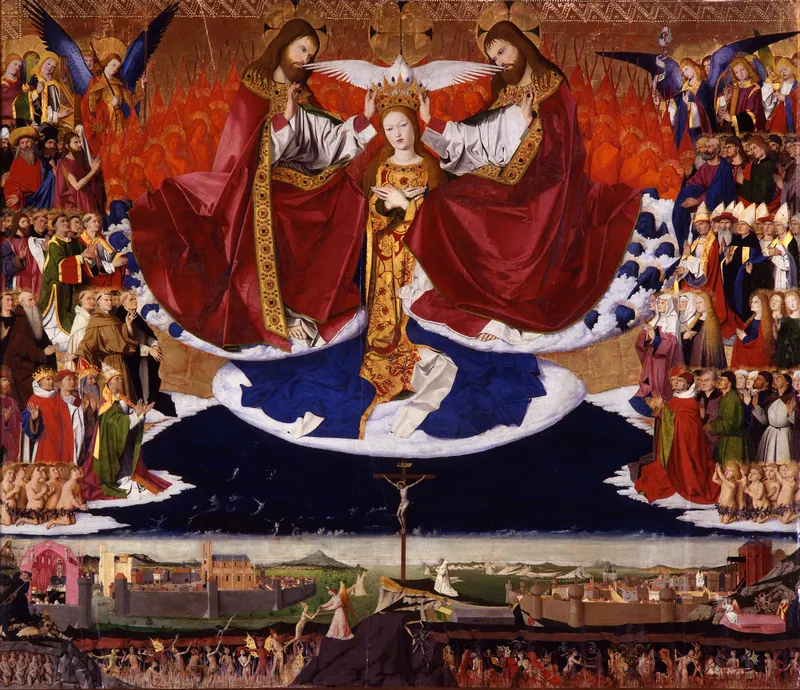
A small town museum in Villeneuve holding two objects of the first rank: Enguerrand Quarton's Coronation of the Virgin of 1453–54 and a Gothic ivory Virgin carved from a single elephant tusk around 1310. Go for those two and be honest with yourself that the rest is 16th- to 18th-century church painting.

Works in the rain Quiet corner Free or cheap
Walking directions

Views & walks

View

Rocher des Doms

Occupied since prehistory; the rock the cathedral and papal palace were built on; the garden itself is 19th-century

The limestone outcrop the whole city grew on, now a free public garden above the palace and the one place you look down on the broken bridge rather than along it. Walk in from the Place du Palais, then take the free rampart passage from the garden down to the Pont Saint-Bénézet instead of doubling back.

Free or cheap Good with children Quiet corner
Walking directions
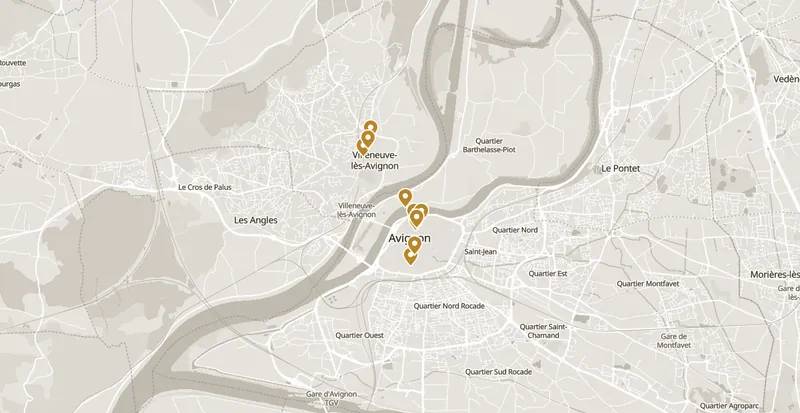
Map of the places worth your time in Avignon
Everything above, on one map. Tap a link to open it in Google Maps on your phone. © MapTiler © OpenStreetMap contributors

More medieval festivals in France

All festivals in France
Featured
Living History & Museums Castle Events

Guédelon Castle (living medieval construction site)

Treigny, France

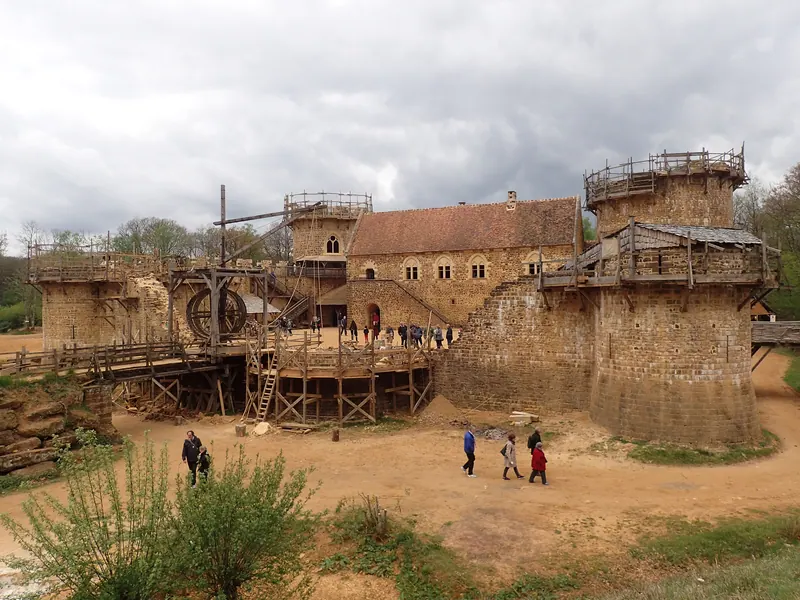
Guédelon is a 13th-century castle being built from scratch in a Burgundy forest quarry using only the tools, materials and techniques of the 1230s, open to visitors from spring to autumn since the first stone was laid in 1997. Around forty masons, carpenters, blacksmiths, tilers, rope-makers and carters work in front of the public, and the site draws roughly 300,000 visitors a season.

On now until
Family
Featured
Jousting & Tournaments Castle Events

Tournoi de Chevalerie de Carcassonne (Knights' Tournament and Falconry Show)

Carcassonne, France

Every summer the lices between the double walls of the Cité de Carcassonne host a daily knights' tournament, a 45-minute show of mounted combat in armour, billed in 2026 as 'Tournois de chevalerie et spectacle de fauconnerie' after a falconry display was added. The 2026 season runs from 12 July to 27 August with three performances a day, every day except Saturday.

On now until
Family
Featured
Medieval Markets & Fairs Music, Feasts & Theatre +1

Les Médiévales de Provins

Provins, France

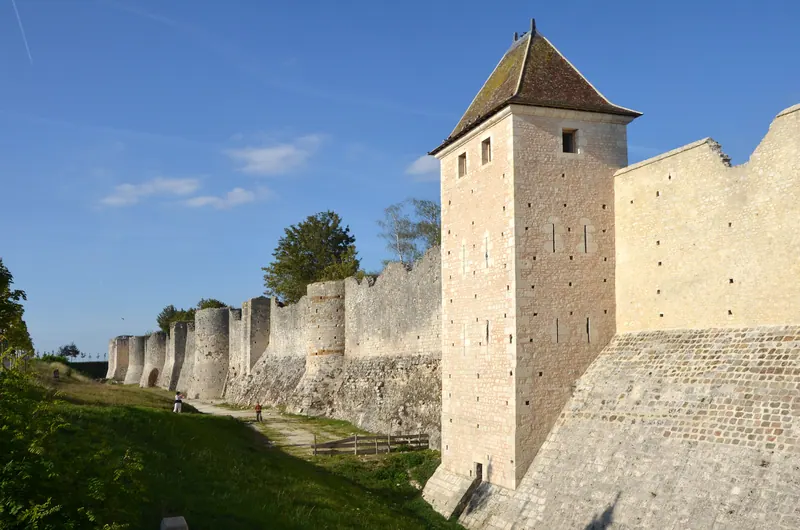
Les Médiévales de Provins turn the UNESCO-listed upper town into a two-day medieval fair each June, with a market of around 320 stalls, tournaments, a Saturday-night ball and concert and a Sunday parade of about 700 costumed participants. Held since 1984, it attracted 120,000 visitors in 2025, the largest attendance of any medieval festival in France.

Expected 2027
Family

Other medieval cities in France: Bayeux · Carcassonne · Dinan · Provins