Medieval Booker

Church ◆ Avignon

Collégiale Saint-Didier

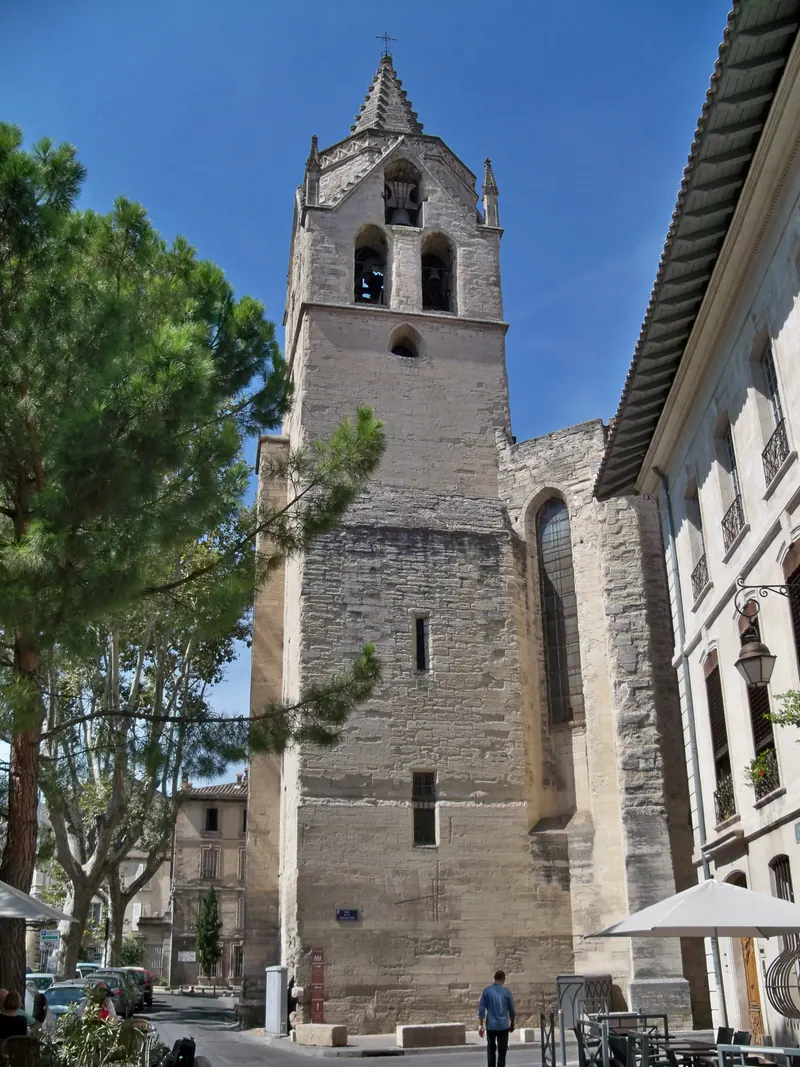
A cardinal's church put up in three years, from May 1356 to September 1359, and the most complete example of the Avignon Gothic the papal court built: one wide nave, no aisles, nothing in the way. Free, open all day, and the first chapel on the right holds what is usually called the first Renaissance sculpture made in France.

Where and when

Where
Place Saint-Didier, 84000 Avignon, Avignon, France Open in Google Maps Walking directions
Era
Built 4 May 1356 – 20 September 1359 for Cardinal Bertrand de Deaux; Laurana retable 1478–81
Opening
Avignon Tourisme lists daily 10:00–18:00, and notes that hours depend on the availability of supervisory staff. It closes for services (as of August 2026)
Price
Free (as of August 2026)
Best time
Late morning, when there is enough light in the side chapels to read the Laurana relief and the fresco fragments. It is on the way between the Palais des Papes and the southern gates.
Good for
Free or cheapQuiet cornerWorks in the rain
Official site
avignon-tourisme.com
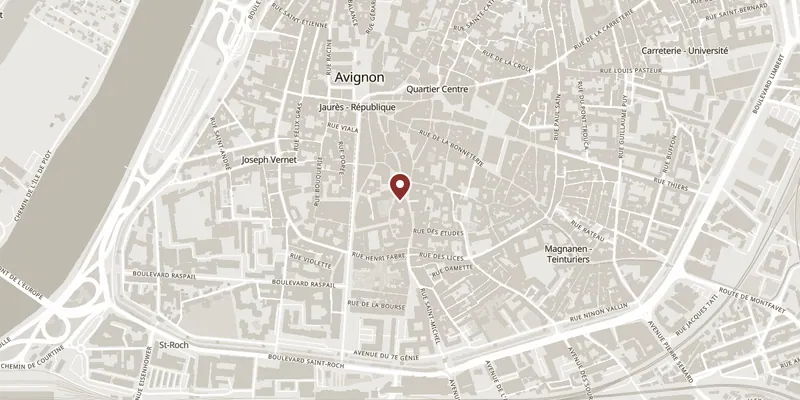
Map showing where Collégiale Saint-Didier is
Open in Google Maps Walking directions © MapTiler © OpenStreetMap contributors

Checked

What is Collégiale Saint-Didier?

Cardinal Bertrand de Deaux left money in his will for a collegiate church; Innocent VI approved it on 22 November 1355; the first stone went down on 4 May 1356 and the building was consecrated on 20 September 1359. Three years and four months, start to finish. That speed is the point — it makes Saint-Didier a single, unaltered statement of the style the papal court was building in, with none of the century-long compromises most Gothic churches carry.

The type is southern Gothic: a single wide nave under one span, no aisles, chapels sunk into the space between the buttresses, and a plain polygonal apse. It was designed for preaching to a crowd, and if you have come from the vast subdivided interiors of the north it reads as almost aggressively simple. The heavy six-sided bell tower is the other signature, and it is the best-proportioned one in the city.

In the first chapel on the right stands the Portement de Croix, the carrying of the Cross, better known in Avignon as Notre-Dame du Spasme after the fainting Virgin at its centre. King René of Anjou commissioned it from Francesco Laurana in 1478 for the high altar of the Celestins church across town; it was finished by about 1481 and moved here later. It is routinely described as the earliest Renaissance sculpture executed in France — Italian modelling, Italian faces, in a Gothic building twenty years before anyone in Paris was doing anything similar. Stand at the left-hand end of it and follow the row of heads.

The baptistery chapel keeps wall painting that Avignon Tourisme attributes to the school of Siena — the Italian painters the popes brought north. It is fragmentary and badly lit, and it is the only free 14th-century Italian fresco you can see in Avignon without a ticket.

It sits on its own small square in the quiet southern quarter, five minutes below the tourist current on the Rue de la République, and it costs nothing.
What visitors say

4.3 from 307 ratings

  • brendan murray

    1 out of 5 3 months ago

    So my wife got asked to leave for apperently showing to much shoulder, but i was fine walking around in shorts, sandals and showing my fully tattooed arm. I understand its a church but please explain the very clearly bias attitude towards women. To me it was just wierd i how i was dressed ok, but she wasn't.

    Read this review on Google
  • Tom G

    5 out of 5 3 months ago

    Beautiful bell ringing. Lovely calming church. Quietly situated. Well worth a visit.

    Read this review on Google
  • Mike Zito

    5 out of 5 3 months ago

    This beautiful gothic style church was built in the 14th century. It was requested by the Avignon pope Innocent VI. The chapels are beautiful and appear as they were centuries ago. Definitely worth a visit. I often stop in when in Avignon.

    Read this review on Google

Ratings and reviews from Google. See all on Google Maps

Frequently asked questions

Is Saint-Didier church in Avignon free?

Yes, free to enter. Avignon Tourisme lists it as open daily 10:00–18:00, with the caveat that the hours depend on staff availability.

When was the Collégiale Saint-Didier built?

Between 4 May 1356 and its consecration on 20 September 1359, funded by the will of Cardinal Bertrand de Deaux and approved by Pope Innocent VI in November 1355.

What is Notre-Dame du Spasme?

The nickname of Francesco Laurana's carved Carrying of the Cross, from the fainting — spasming — Virgin at its centre. King René commissioned it in 1478 for the Celestins church in Avignon; it now stands in the first chapel on the right at Saint-Didier and is generally called the first Renaissance sculpture made in France.

Are there medieval frescoes in Saint-Didier?

Yes, in the baptistery chapel. Avignon Tourisme attributes them to painters of the Sienese school, the Italian artists working for the papal court. They are fragmentary and dimly lit.

What is southern Gothic architecture?

The Mediterranean version of Gothic: one wide nave under a single span, no side aisles, chapels tucked between the internal buttresses, and sober decoration. Saint-Didier is the most characteristic surviving example in Avignon.

Festivals in Avignon

Medieval festivals in Avignon
Reenactment & Battles Medieval Markets & Fairs +1

Festival Médiéval de la Rose d'Or

Avignon, France

Every autumn some 60 to 70 historical associations camp on the Île de la Barthelasse, the island in the Rhône facing the Palais des Papes, for a re-enactors' festival with a market, archery, tournaments and a closing battle. Running since 2007 and organised by volunteers without public subsidy, it is one of the largest medieval gatherings in southern France; the 2026 edition, billed as the twentieth, falls on 10–11 October.

2026
Family

More places in Avignon

Places in Avignon
Castle Start here

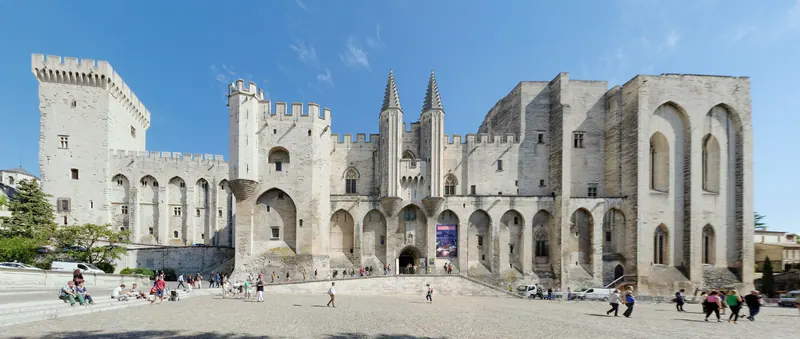
Palais des Papes

Palais Vieux from 1335 under Benedict XII, Palais Neuf from 1342 under Clement VI; papal residence to 1403; prison and barracks until 1906

Two palaces welded together — Benedict XII's fortress of 1335 and Clement VI's wing of 1342 — and at roughly 15,000 m² the largest Gothic palace in Europe. The rooms are bare because the army used them as a barracks for a century, so go for the four painted spaces that survived and find the Chambre du Cerf first.

Good with children Works in the rain
Walking directions
Museum

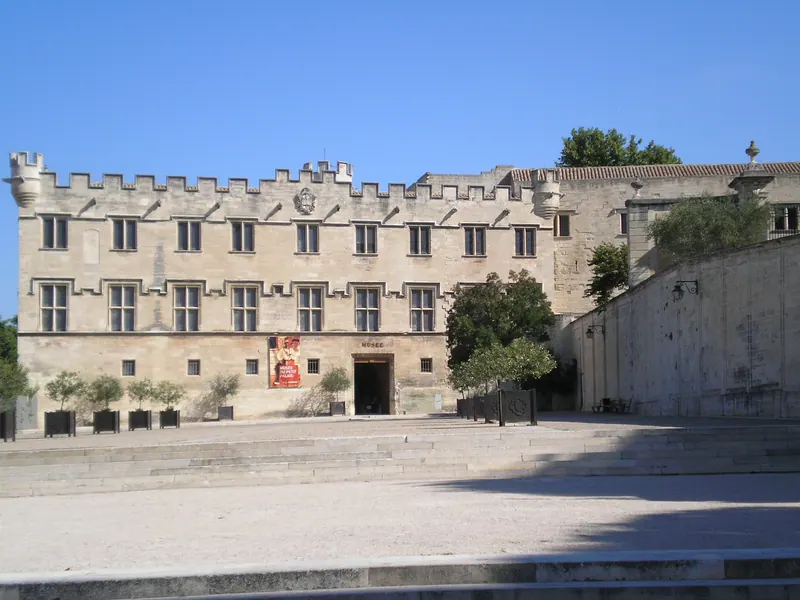
Musée du Petit Palais

Cardinal's livrée from the 1310s; archbishops' palace from 1475, rebuilt by Giuliano della Rovere (later Julius II); museum since 1976

The archbishops' palace at the top of the Place du Palais, free to enter, holding over 300 Italian paintings from the Campana collection alongside the best room of 14th-century Avignon sculpture anywhere. Find the fragments of Cardinal Jean de Lagrange's tomb — the earliest French transi, a cardinal carved as a rotting corpse.

Works in the rain Free or cheap Quiet corner
Walking directions
Landmark

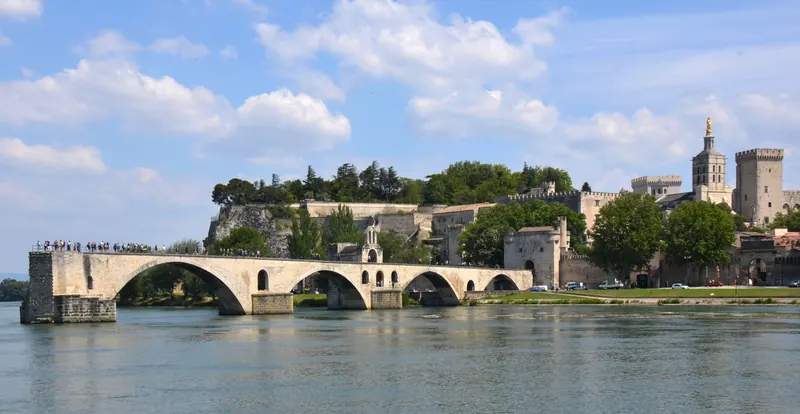
Pont Saint-Bénézet

Built from the late 12th century, traditionally begun 1177; 22 arches originally, 4 today; abandoned after the flood of 1669

Four arches of a bridge that once had twenty-two and ran some 900 m across both channels of the Rhône, abandoned in the 17th century after the river knocked it down once too often. Walk out to the end, look at the two-storey chapel built into the second pier, then read the honest note below about the song.

Good with children Free or cheap
Walking directions