Medieval Booker

Castle ◆ Avignon

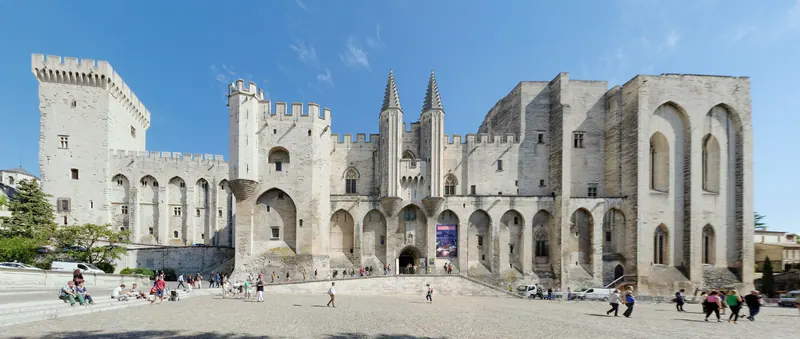
Palais des Papes

Two palaces welded together — Benedict XII's fortress of 1335 and Clement VI's wing of 1342 — and at roughly 15,000 m² the largest Gothic palace in Europe. The rooms are bare because the army used them as a barracks for a century, so go for the four painted spaces that survived and find the Chambre du Cerf first.

Where and when

Where
Place du Palais, 84000 Avignon, Avignon, France Open in Google Maps Walking directions
Era
Palais Vieux from 1335 under Benedict XII, Palais Neuf from 1342 under Clement VI; papal residence to 1403; prison and barracks until 1906
Opening
Daily. 1 March–1 November 09:00–19:00; 2 November–18 December 10:00–17:00; 19–31 December 10:00–18:00; 1–4 January 10:00–18:00; 5 January–6 February 10:00–17:00; 7–28 February 10:00–18:00. Last entry one hour before closing; the gardens close 30 minutes before (as of August 2026)
Price
Palais + Pontifical Gardens €16 adult / €13 reduced / €10 child 10–17, free under 10. Combined Palais + Gardens + Pont d'Avignon €19.50 / €16 / €12, free under 10. Free for Avignon residents on Saturdays, Sundays and public holidays. The webapp Les Clefs du Palais is included (as of August 2026)
Best time
First entry of the day, or the last two hours; allow about two hours inside, plus half an hour for the Pontifical Gardens, which close 30 minutes earlier. In July the Cour d'Honneur carries a 2,000-seat stage for the Festival d'Avignon and the monument's hours change on get-in and performance days — check the palace's own events calendar before booking a July visit.
Good for
Good with childrenWorks in the rain
Official site
palais-des-papes.com
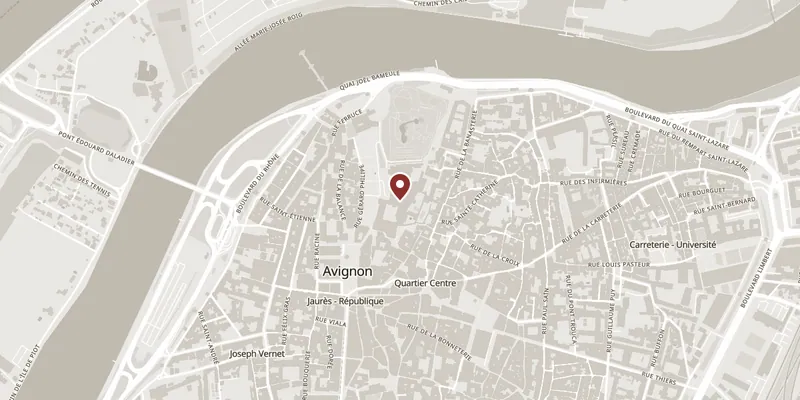
Map showing where Palais des Papes is
Open in Google Maps Walking directions © MapTiler © OpenStreetMap contributors

Checked

What is Palais des Papes?

Clement V was elected in 1305 and never entered Rome; the papal court settled at Avignon in 1309 and stayed for sixty-eight years. Benedict XII began the Palais Vieux in 1335 beside the cathedral — a blank-walled block around a cloister, austere on purpose. Clement VI, a Limousin aristocrat with different tastes, added the Palais Neuf from 1342. Together they make about 15,000 m² of floor, and the whole thing is built as a fortress: high curtain walls, machicolated towers, one defensible way in. Rome was ungovernable, mercenary companies roamed Provence, and after 1378 two rival popes claimed the office — the Avignon pope Benedict XIII was besieged inside this building in 1398.

Be ready for empty rooms. The palace was sacked in 1791, then served as a prison and from the early 1800s as a barracks for the military engineers, who inserted extra floors, plastered the walls, cut new windows and hacked frescoes off in saleable pieces. The prisons left in 1871, the army in 1906, and the public came in from 1907. There is no furniture, no treasury and no state apartment as anyone would recognise one.

What survived is the point, and it is all painting. In the Tour de la Garde-Robe, Clement VI’s private study — the Chambre du Cerf — was painted in 1343 by a Franco-Italian team with hunting, ferreting, fowling and fishing across every wall, a secular room in a papal palace. Two floors of the Tour Saint-Jean hold Matteo Giovannetti’s chapels: the Chapelle Saint-Martial above, painted between 13 October 1344 and 1 September 1345 and fully restored in 2014, and the Chapelle Saint-Jean below it, 1346–48. The Chambre du Pape of about 1337–38 keeps its blue ground of vines and oak leaves with birds and squirrels. In the Grande Audience, Giovannetti’s Prophets of 1353 runs twenty Old Testament figures across the vault. Photography is banned in all the painted rooms.

For scale, the route also takes in the Grande Chapelle, the Grand Tinel banqueting hall, the Cour d’Honneur and the terraces. Since 1 May 2026 the HistoPad tablet has gone: the palace now runs a free webapp, Les Clefs du Palais, on your own phone in six languages, with films and augmented-reality reconstructions promised from autumn 2026. Bring headphones and a charged battery.
What visitors say

4.5 from 53,049 ratings

  • Natalija Ljubicic

    5 out of 5 a month ago

    There are not enough words to describe Avignon. Palais de papes, jardines, city...everything like a dream. Most of the hotels do not have parking so it is a good choice to park just across a city walls in Park de halles/ gare city center. 24 h ticket is 19€.

    Read this review on Google
  • Mike Z

    4 out of 5 2 months ago

    It is most popular visitor attraction in Avignon. The exterior architecture is grand and impressive, but not so much on the inside as there is no period furniture to make visit experience richer. Few rooms with leftover original frescos… Here is the positive note though: it is the only museum in the city open on Mondays.

    Read this review on Google
  • C J

    5 out of 5 2 months ago

    Just awe inspiring. We almost had every room to ourselves. We got there as it opened at 9am, which I recommend. It's just an incredible self guided tour through history. Each doorway leads to something new. I'll put a photo at the end, as I circled back in to see how busy it was at 10am... Yikes

    Read this review on Google

Ratings and reviews from Google. See all on Google Maps

Frequently asked questions

Why did the popes live in Avignon?

Clement V was elected in 1305, found Rome ungovernable and never went there. The curia settled at Avignon in 1309 and seven popes ruled from the city until Gregory XI returned to Rome in January 1377. Clement VI bought the town outright from Joanna of Naples in 1348.

How much does the Palais des Papes cost?

€16 for an adult with the Pontifical Gardens, €13 reduced and €10 for children aged 10 to 17, free under 10. The combined ticket with the Pont d'Avignon is €19.50 for an adult, as of August 2026.

Why are the rooms in the Palais des Papes empty?

The palace was sacked in 1791 and then used as a prison and a military engineers' barracks until 1906, with extra floors inserted, walls plastered over and frescoes cut out. It opened as a monument in 1907. The surviving decoration is in a handful of painted rooms.

Where are the frescoes in the Palais des Papes?

The Chambre du Cerf, Clement VI's study, is in the Tour de la Garde-Robe. Matteo Giovannetti's Chapelle Saint-Martial (1344–45) and Chapelle Saint-Jean (1346–48) are stacked in the Tour Saint-Jean, Saint-Martial above Saint-Jean. The Chambre du Pape and the Prophets of 1353 in the Grande Audience complete the set.

Is the HistoPad still used at the Palais des Papes?

No. The agreement with Histovery ended on 1 May 2026 and the tablet was withdrawn. The palace now provides a free webapp called Les Clefs du Palais, opened on your own smartphone in six languages, with films and augmented-reality reconstructions announced for autumn 2026.

Festivals in Avignon

Medieval festivals in Avignon
Reenactment & Battles Medieval Markets & Fairs +1

Festival Médiéval de la Rose d'Or

Avignon, France

Every autumn some 60 to 70 historical associations camp on the Île de la Barthelasse, the island in the Rhône facing the Palais des Papes, for a re-enactors' festival with a market, archery, tournaments and a closing battle. Running since 2007 and organised by volunteers without public subsidy, it is one of the largest medieval gatherings in southern France; the 2026 edition, billed as the twentieth, falls on 10–11 October.

2026
Family

More places in Avignon

Places in Avignon
Museum

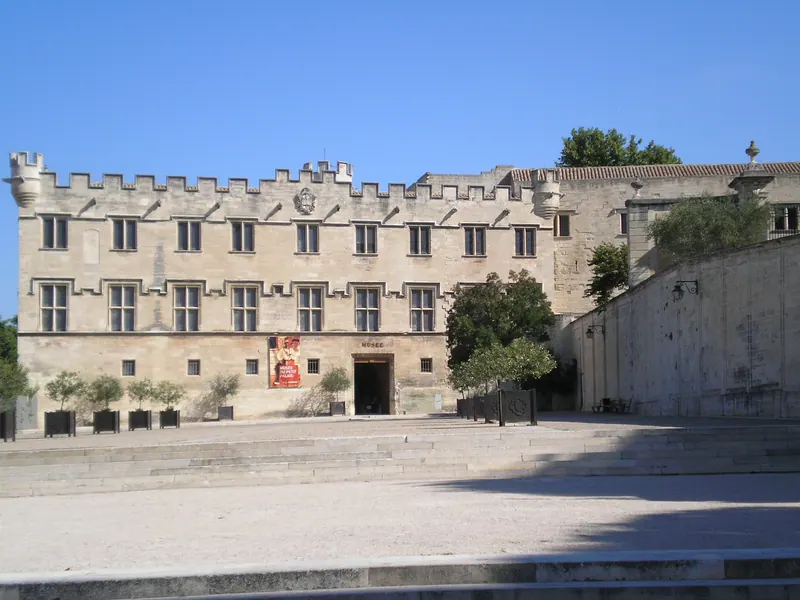
Musée du Petit Palais

Cardinal's livrée from the 1310s; archbishops' palace from 1475, rebuilt by Giuliano della Rovere (later Julius II); museum since 1976

The archbishops' palace at the top of the Place du Palais, free to enter, holding over 300 Italian paintings from the Campana collection alongside the best room of 14th-century Avignon sculpture anywhere. Find the fragments of Cardinal Jean de Lagrange's tomb — the earliest French transi, a cardinal carved as a rotting corpse.

Works in the rain Free or cheap Quiet corner
Walking directions
Landmark

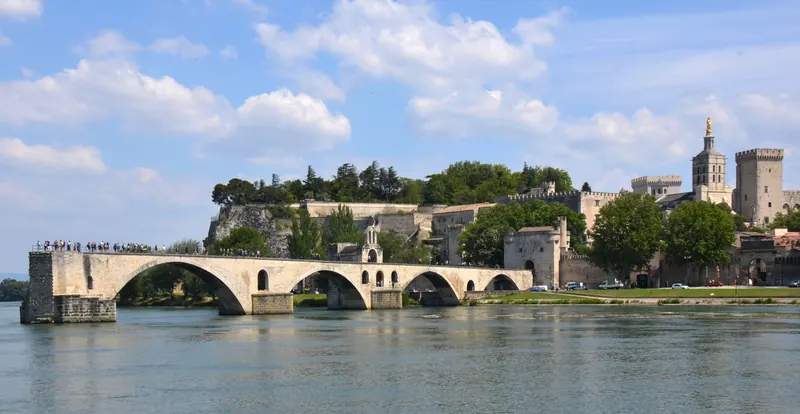
Pont Saint-Bénézet

Built from the late 12th century, traditionally begun 1177; 22 arches originally, 4 today; abandoned after the flood of 1669

Four arches of a bridge that once had twenty-two and ran some 900 m across both channels of the Rhône, abandoned in the 17th century after the river knocked it down once too often. Walk out to the end, look at the two-storey chapel built into the second pier, then read the honest note below about the song.

Good with children Free or cheap
Walking directions
View

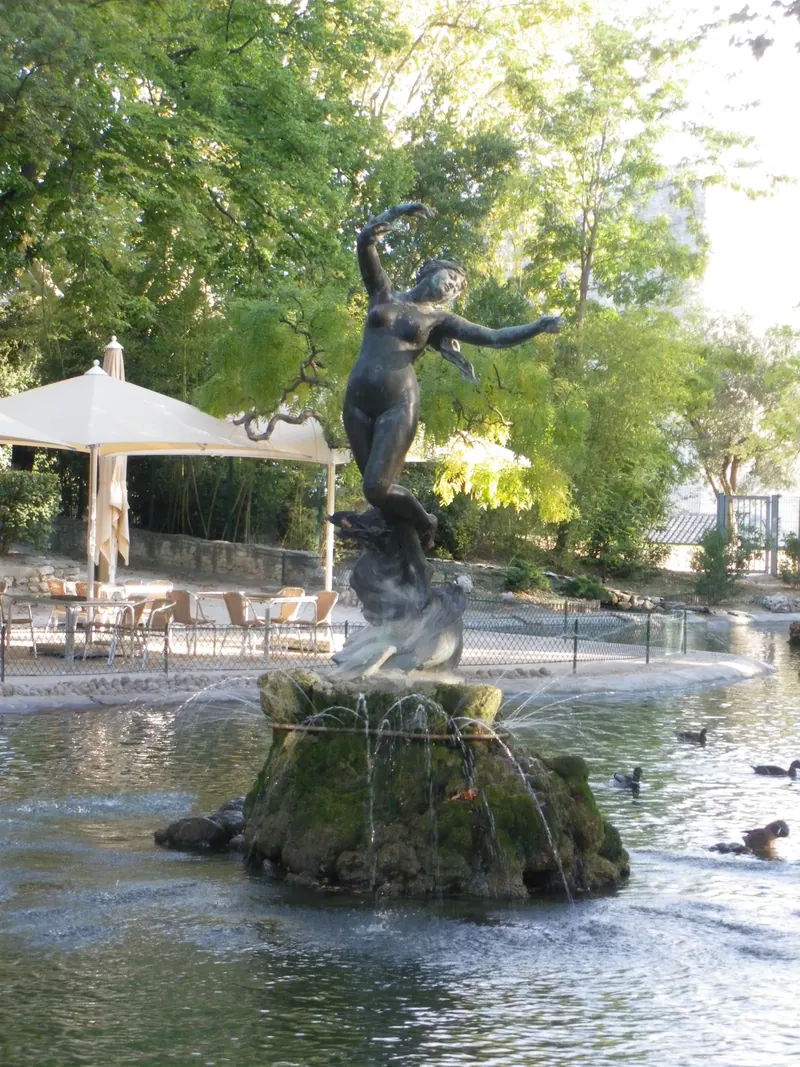
Rocher des Doms

Occupied since prehistory; the rock the cathedral and papal palace were built on; the garden itself is 19th-century

The limestone outcrop the whole city grew on, now a free public garden above the palace and the one place you look down on the broken bridge rather than along it. Walk in from the Place du Palais, then take the free rampart passage from the garden down to the Pont Saint-Bénézet instead of doubling back.

Free or cheap Good with children Quiet corner
Walking directions