Medieval Booker

Castle ◆ Avignon

Fort Saint-André

The King of France's fortress on the hill opposite Avignon, built to stare at the popes across the Rhône, and the only place you see the whole papal city from outside itself. Ten minutes by bus from the Porte de l'Oulle — go up through the twin drum towers of the gate and turn left along the rampart.

Where and when

Where
Montée du Fort, 30400 Villeneuve-lès-Avignon, Avignon, France Open in Google Maps Walking directions
Era
Royal fortress ordered by Philip the Fair, built in the second half of the 14th century under John the Good and Charles V, around a Benedictine abbey of the late 10th century
Opening
1 June–13 July 10:00–13:00 and 14:00–18:00; 14 July–31 August 09:00–13:00 and 14:00–18:00; September 10:00–13:00 and 14:00–18:00; October–May 10:00–13:00 and 14:00–17:00. Last entry one hour before closing. Closed 1 January, 1 May, 1 and 11 November, 25 December (as of August 2026)
Price
€7 adult; free for under-18s and for EU residents aged 18–25; €5.50 in groups of 20+. The €20 PASS Monuments & Musée Villeneuvois covers the fort, the Abbaye Saint-André, the Chartreuse, the Musée Pierre-de-Luxembourg and the Tour Philippe-le-Bel, and is valid one year (as of August 2026)
Best time
Late afternoon in spring or autumn: the sun is behind you and lands on the front of the Palais des Papes across the river. In July and August it opens at 09:00, which is the only cool hour on an exposed hilltop.
Good for
Good with childrenQuiet corner
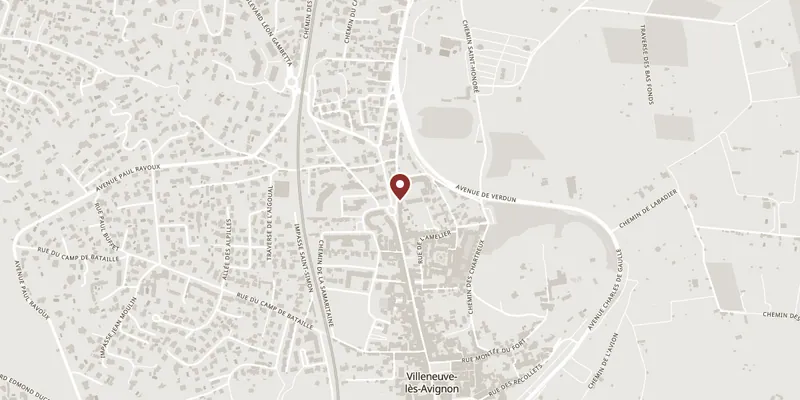
Map showing where Fort Saint-André is
Open in Google Maps Walking directions © MapTiler © OpenStreetMap contributors

Checked

What is Fort Saint-André?

Everything about this fort is a political statement. Avignon and its bank belonged to the pope; the far bank was France. Philip the Fair ordered a royal fortress on Mont Andaon at the end of the 13th century, and the enclosure that stands there was built in the second half of the 14th under John the Good and Charles V, at exactly the moment the papacy was at its most powerful across the water. The message was not subtle: the French crown was going to be visible from every window of the Palais des Papes.

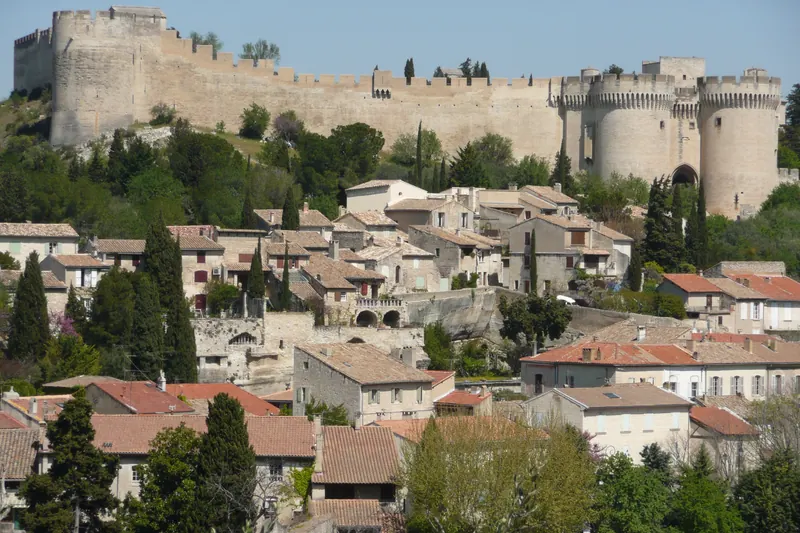
The fort did not go up on empty ground. The Abbey of Saint-André, Benedictine, had been on the hill since the late 10th century, together with a small village, and the king’s wall was thrown round both of them. So the enclosure is not a castle in the keep-and-bailey sense: it is a walled hilltop with an abbey, gardens, a Romanesque chapel and the footprint of a vanished village inside it.

The part everyone photographs is the gate: two enormous round drum towers flanking a single arch, still complete to the parapet. You go up inside the towers, and the rampart walk runs from there. Look for the graffiti: after Provence joined France in 1481 the fort lost its purpose and became a prison — Protestants were held here during the Wars of Religion, and in the 18th century it served as an overflow hospital for the Invalides in Paris. Prisoners’ carvings from the 18th and 19th centuries survive on the walls.

From the top you get the panorama that makes the trip worth it: the Rhône, the Île de la Barthelasse, the four arches of the Pont Saint-Bénézet pointing at you, the whole silhouette of Avignon with the palace on its rock, and Mont Ventoux beyond.

Two practical warnings. It closes for lunch, 13:00 to 14:00 all year, which catches people out. And the €7 ticket is the fortress only — the Abbaye Saint-André and its terraced gardens inside the walls are privately run with their own ticket and their own hours; the €20 Villeneuve pass covers both, plus the Chartreuse, the museum and the Tour Philippe-le-Bel, and is valid a year.
What visitors say

4.4 from 2,585 ratings

  • Seppe Ghesquiere

    5 out of 5 4 weeks ago

    Free entrance > 25y and EER Interesting setting and one guide let us watch Tour de France with him

    Read this review on Google
  • Stuart Stokell

    4 out of 5 7 months ago

    Went on a wet morning in January 2026. We were the only people in the whole place and loved it. Very interesting to explore the ruins as well as the remaining intact buildings. If you're not great with heights, stay off the battlements. The site isn't at all wheelchair friendly - it's a hilltop fort after all. Lots oof wonderful stone, spiral staircases and a few very interesting little videos shown. The little church is particularly interesting. Fabulous views over Avignon and surrounding countryside. Staff very friendly and helpful.

    Read this review on Google
  • S Edwards

    5 out of 5 8 months ago

    Very interesting castle. The siege machine and gun were good to see, as was the building. Worth a walk from Avignon. There is a large monastery right alongside, but we didn't have time to visit.

    Read this review on Google

Ratings and reviews from Google. See all on Google Maps

Frequently asked questions

Why was Fort Saint-André built?

To assert the King of France's power on the frontier with papal territory. Avignon and its bank belonged to the pope; Villeneuve was French. Philip the Fair ordered the fortress in the late 13th century and it was built in the second half of the 14th under John the Good and Charles V.

How much does Fort Saint-André cost?

€7 for an adult, free for under-18s and for EU residents aged 18 to 25, as of August 2026. The €20 Villeneuve pass covers it along with four other monuments and is valid for a year.

How do you get to Fort Saint-André from Avignon?

Orizo bus line 5 from the Porte de l'Oulle across the Pont Daladier to Villeneuve, roughly ten minutes, then a walk up the hill. A free shuttle also runs from the Piot relay car park to the Villeneuve sites in high summer.

Is the abbey inside Fort Saint-André included in the ticket?

No. The Abbaye Saint-André and its gardens stand inside the fortress walls but are separately owned, separately ticketed and keep their own hours. Both are covered by the €20 PASS Monuments & Musée Villeneuvois.

What can you see from Fort Saint-André?

The Rhône and the Île de la Barthelasse, the surviving arches of the Pont Saint-Bénézet, the whole of Avignon with the Palais des Papes on its rock, and Mont Ventoux on a clear day.

Festivals in Avignon

Medieval festivals in Avignon
Reenactment & Battles Medieval Markets & Fairs +1

Festival Médiéval de la Rose d'Or

Avignon, France

Every autumn some 60 to 70 historical associations camp on the Île de la Barthelasse, the island in the Rhône facing the Palais des Papes, for a re-enactors' festival with a market, archery, tournaments and a closing battle. Running since 2007 and organised by volunteers without public subsidy, it is one of the largest medieval gatherings in southern France; the 2026 edition, billed as the twentieth, falls on 10–11 October.

2026
Family

More places in Avignon

Places in Avignon
Castle Start here

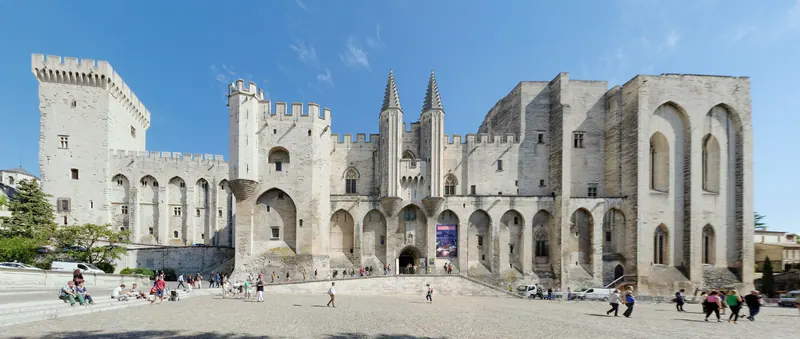
Palais des Papes

Palais Vieux from 1335 under Benedict XII, Palais Neuf from 1342 under Clement VI; papal residence to 1403; prison and barracks until 1906

Two palaces welded together — Benedict XII's fortress of 1335 and Clement VI's wing of 1342 — and at roughly 15,000 m² the largest Gothic palace in Europe. The rooms are bare because the army used them as a barracks for a century, so go for the four painted spaces that survived and find the Chambre du Cerf first.

Good with children Works in the rain
Walking directions
Museum

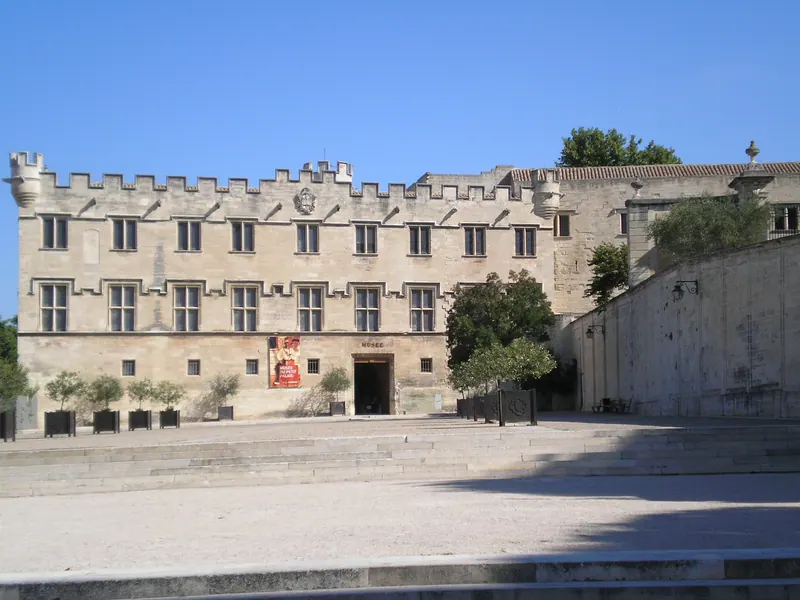
Musée du Petit Palais

Cardinal's livrée from the 1310s; archbishops' palace from 1475, rebuilt by Giuliano della Rovere (later Julius II); museum since 1976

The archbishops' palace at the top of the Place du Palais, free to enter, holding over 300 Italian paintings from the Campana collection alongside the best room of 14th-century Avignon sculpture anywhere. Find the fragments of Cardinal Jean de Lagrange's tomb — the earliest French transi, a cardinal carved as a rotting corpse.

Works in the rain Free or cheap Quiet corner
Walking directions
Landmark

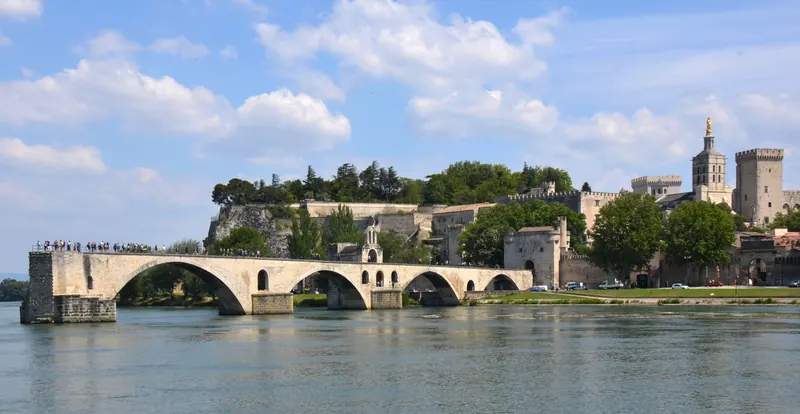
Pont Saint-Bénézet

Built from the late 12th century, traditionally begun 1177; 22 arches originally, 4 today; abandoned after the flood of 1669

Four arches of a bridge that once had twenty-two and ran some 900 m across both channels of the Rhône, abandoned in the 17th century after the river knocked it down once too often. Walk out to the end, look at the two-storey chapel built into the second pier, then read the honest note below about the song.

Good with children Free or cheap
Walking directions