Medieval Booker

Museum ◆ Avignon

Musée du Petit Palais

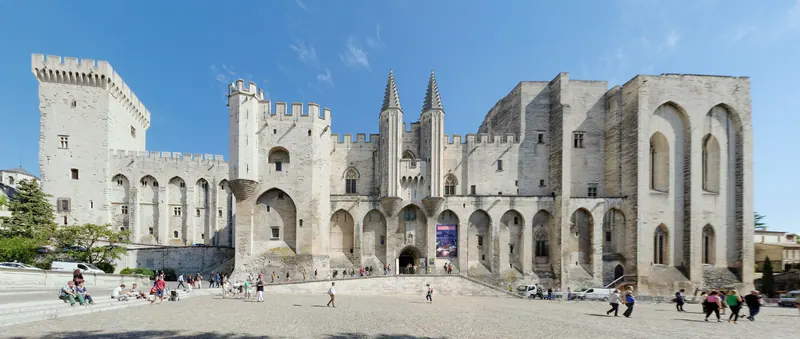
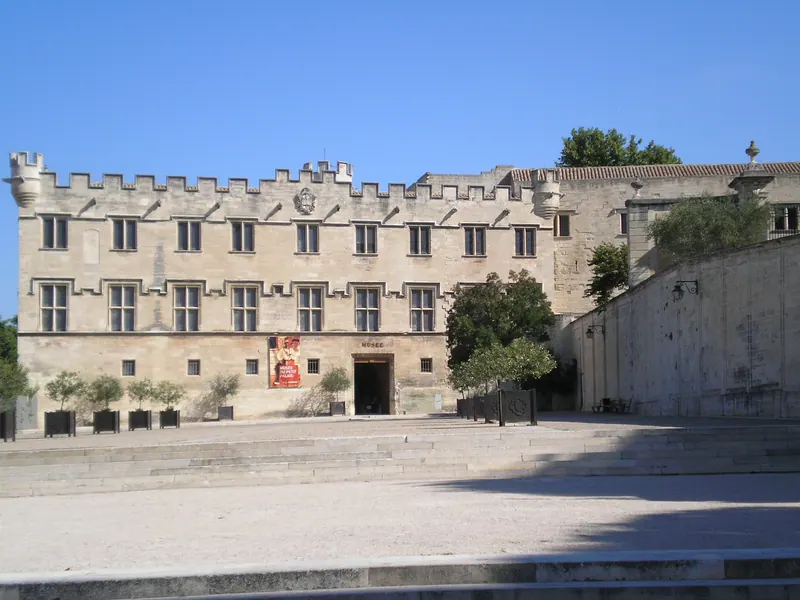
The archbishops' palace at the top of the Place du Palais, free to enter, holding over 300 Italian paintings from the Campana collection alongside the best room of 14th-century Avignon sculpture anywhere. Find the fragments of Cardinal Jean de Lagrange's tomb — the earliest French transi, a cardinal carved as a rotting corpse.

Where and when

Where
Place du Palais 21, 84000 Avignon, Avignon, France Open in Google Maps Walking directions
Era
Cardinal's livrée from the 1310s; archbishops' palace from 1475, rebuilt by Giuliano della Rovere (later Julius II); museum since 1976
Opening
Closed Mondays. 1 April–31 October, Tuesday–Sunday 10:00–18:00. 1 November–31 March, Tuesday–Friday 11:00–18:00, Saturday–Sunday 10:00–18:00. Closed on some public holidays (as of August 2026)
Price
Permanent collections free for everyone. Temporary exhibitions are charged separately (as of August 2026)
Best time
Straight after the Palais des Papes, while you still have the popes in your head — or first thing, because it is free and almost nobody queues. Twice a year it opens late on a third Thursday, 18:00–21:00.
Good for
Works in the rainFree or cheapQuiet corner
Official site
www.petit-palais.org
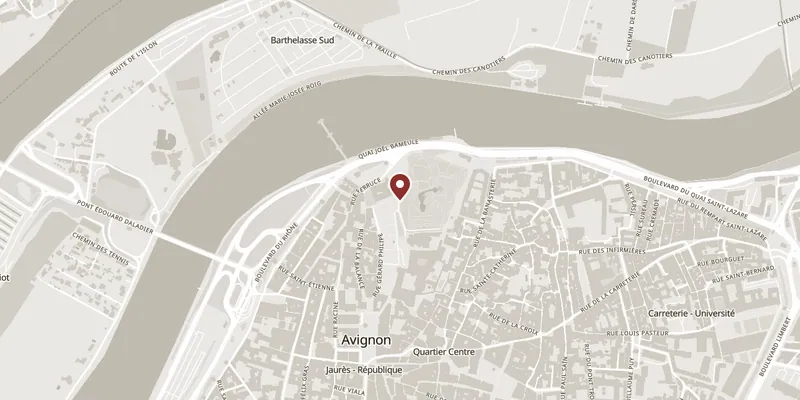
Map showing where Musée du Petit Palais is
Open in Google Maps Walking directions © MapTiler © OpenStreetMap contributors

Checked

What is Musée du Petit Palais?

The building began in the 1310s as a cardinal’s livrée, one of the private palaces the curia’s princes built around the papal court. Benedict XII bought it in 1335 for the bishop of Avignon; when the see was raised to an archbishopric in 1475 it became the archbishop’s palace, and it was rebuilt late in the 15th century by Archbishop Giuliano della Rovere, who left Avignon to become Pope Julius II in 1503. It has held the museum since 1976.

The painting is the Campana collection: over 300 Italian panels assembled by the Marchese Giampietro Campana, bought by France in 1861 and deposited here from the Louvre. It runs continuously from 13th-century work still working in Byzantine conventions, through Sienese and Florentine trecento, to the quattrocento — Taddeo di Bartolo, Carpaccio, and Botticelli’s Virgin and Child. If you have walked round the palace wondering what the popes actually looked at, this is the answer, and it is one of the largest holdings of early Italian painting in France after the Louvre.

The part most visitors skip is the Avignon and Provençal sculpture at the start of the circuit, and it is the reason to come. Fourteenth-century Avignon was where the cardinals died, and their tombs were made by the best carvers in Europe. Two cases hold the surviving fragments of the tomb of Cardinal Jean de Lagrange, worked between 1388 and after his death in 1402, dismantled and rediscovered in the basement of the church of Saint-Martial in 1963. Its transi — the cardinal shown as a shrivelled, opened corpse rather than a sleeping prince — is the earliest known in France and one of the earliest anywhere. Everything grim in later medieval funerary art starts near here.

Practically: the permanent collection is free, always. It is open Tuesday to Sunday and closed on Mondays; from April to October it runs 10:00–18:00 daily except Monday, and in winter it does not open until 11:00 on weekdays. There are stairs and no full step-free route. It is fifty metres from the palace gate, so it is the obvious pairing — and, unusually, the cheaper visit is the better art.
What visitors say

4.3 from 492 ratings

  • Kseniia Polikarkina

    5 out of 5 3 weeks ago

    The best place for visiting 30/07/26 entrance was for free. 3 floors with amazing art! Very good bravo 🫶🏻🤍🙏🏻

    Read this review on Google
  • Paul Lancaster

    5 out of 5 5 months ago

    If you love Catholic iconography, this is a wonderful museum to visit. Lots of other artwork as well. Particularly 13th and 14th century. And admission is free

    Read this review on Google
  • Josh

    2 out of 5 9 months ago

    They have some wonderful art, but they also had the lights off in some of their galleries, had other galleries closed off, and herded is out a half hour before they even close. Make sure you go early, and pay attention to their seasonally changing hours.

    Read this review on Google

Ratings and reviews from Google. See all on Google Maps

Frequently asked questions

Is the Petit Palais in Avignon free?

Yes. The permanent collections are free to everyone, all year. Only temporary exhibitions carry a charge, as of August 2026.

What is in the Musée du Petit Palais?

Over 300 Italian paintings of the 13th to 16th centuries from the Campana collection, on deposit from the Louvre — including Botticelli and Carpaccio — plus a major collection of 14th-century Avignon and Provençal sculpture.

What is the tomb of Cardinal Jean de Lagrange?

A monumental Avignon tomb worked between 1388 and after 1402, dismantled and rediscovered in the basement of the church of Saint-Martial in 1963. Surviving fragments are displayed in two cases; its transi, showing the cardinal as a decayed corpse, is the earliest known in France.

Is the Petit Palais open on Mondays?

No. It opens Tuesday to Sunday. From April to October the hours are 10:00–18:00; in winter it opens at 11:00 on weekdays and at 10:00 at weekends.

What was the Petit Palais building before it was a museum?

A cardinal's palace from the 1310s, bought for the bishop of Avignon in 1335, and the archbishops' palace from 1475. Archbishop Giuliano della Rovere rebuilt it in the late 15th century before becoming Pope Julius II in 1503.

Festivals in Avignon

Medieval festivals in Avignon
Reenactment & Battles Medieval Markets & Fairs +1

Festival Médiéval de la Rose d'Or

Avignon, France

Every autumn some 60 to 70 historical associations camp on the Île de la Barthelasse, the island in the Rhône facing the Palais des Papes, for a re-enactors' festival with a market, archery, tournaments and a closing battle. Running since 2007 and organised by volunteers without public subsidy, it is one of the largest medieval gatherings in southern France; the 2026 edition, billed as the twentieth, falls on 10–11 October.

2026
Family

More places in Avignon

Places in Avignon
Castle Start here

Palais des Papes

Palais Vieux from 1335 under Benedict XII, Palais Neuf from 1342 under Clement VI; papal residence to 1403; prison and barracks until 1906

Two palaces welded together — Benedict XII's fortress of 1335 and Clement VI's wing of 1342 — and at roughly 15,000 m² the largest Gothic palace in Europe. The rooms are bare because the army used them as a barracks for a century, so go for the four painted spaces that survived and find the Chambre du Cerf first.

Good with children Works in the rain
Walking directions
Landmark

Pont Saint-Bénézet

Built from the late 12th century, traditionally begun 1177; 22 arches originally, 4 today; abandoned after the flood of 1669

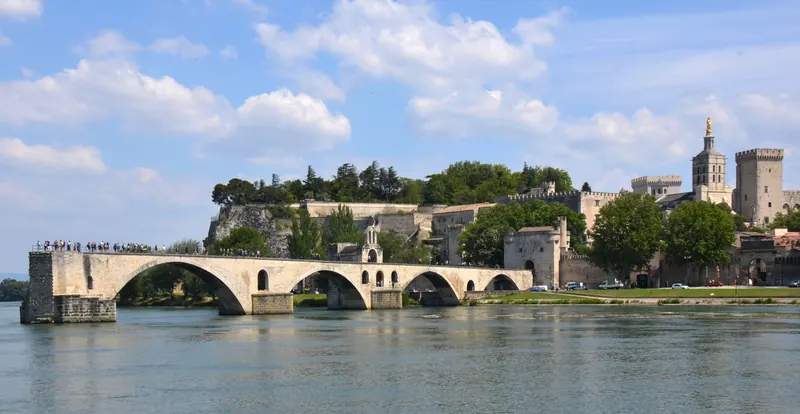
Four arches of a bridge that once had twenty-two and ran some 900 m across both channels of the Rhône, abandoned in the 17th century after the river knocked it down once too often. Walk out to the end, look at the two-storey chapel built into the second pier, then read the honest note below about the song.

Good with children Free or cheap
Walking directions
View

Rocher des Doms

Occupied since prehistory; the rock the cathedral and papal palace were built on; the garden itself is 19th-century

The limestone outcrop the whole city grew on, now a free public garden above the palace and the one place you look down on the broken bridge rather than along it. Walk in from the Place du Palais, then take the free rampart passage from the garden down to the Pont Saint-Bénézet instead of doubling back.

Free or cheap Good with children Quiet corner
Walking directions