Medieval Booker

Landmark ◆ Avignon

Pont Saint-Bénézet

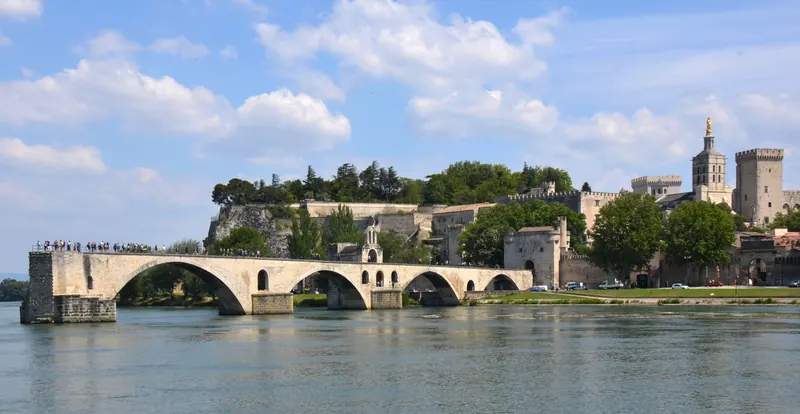
Four arches of a bridge that once had twenty-two and ran some 900 m across both channels of the Rhône, abandoned in the 17th century after the river knocked it down once too often. Walk out to the end, look at the two-storey chapel built into the second pier, then read the honest note below about the song.

Where and when

Where
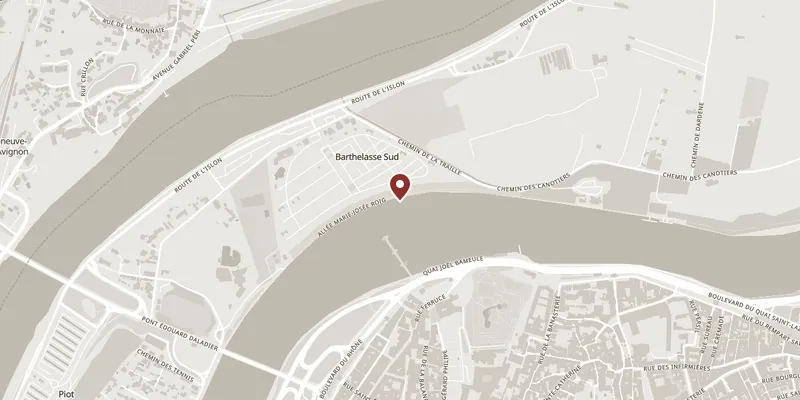
Boulevard du Rhône, 84000 Avignon, Avignon, France Open in Google Maps Walking directions
Era
Built from the late 12th century, traditionally begun 1177; 22 arches originally, 4 today; abandoned after the flood of 1669
Opening
Open daily all year. 1 March–1 November 09:00–19:00; 5 January–6 February 10:00–17:00, with other winter periods on shorter hours. Last entry 30 minutes before closing (as of August 2026)
Price
Bridge alone €6 adult, €4 child 10–17, free under 10. Combined with the Palais des Papes and the Pontifical Gardens €19.50 adult / €12 child 10–17. Audioguide in 11 languages included. Free for Avignon residents at weekends and on public holidays (as of August 2026)
Best time
Late afternoon, when the light comes down the river from the west and the coach groups have gone. If you only want the picture and not the walk, the free view from the Rocher des Doms above is better than anything you can shoot from the deck.
Good for
Good with childrenFree or cheap
Official site
avignon-pont.com
Map showing where Pont Saint-Bénézet is
Open in Google Maps Walking directions © MapTiler © OpenStreetMap contributors

Checked

What is Pont Saint-Bénézet?

The legend, told on the bridge’s own audioguide, is that a shepherd boy named Bénézet was ordered by a voice from heaven to build a bridge at Avignon in 1177, proved his commission by lifting a stone no one else could move, and died before it was finished. Whoever actually built it, the crossing went up in the late 12th century and it mattered enormously: for centuries it was the only fixed bridge on the lower Rhône between Lyon and the sea, and it linked the Kingdom of France on the west bank with the Empire on the east.

It was about 920 m long, four metres wide and carried on 22 arches, striding over the Île de la Barthelasse in the middle of the river. Four arches survive. The Rhône took the rest in instalments — it was broken in war, rebuilt in the 13th century, and repeatedly wrecked by floods until the great inundation of 1669 knocked out most of what was left and the town gave up paying for repairs. St Bénézet’s relics were removed in 1674 as the structure threatened to go.

On the second pier stands the Chapelle Saint-Nicolas, in two storeys — a Romanesque lower chapel of the late 12th century for the bridge brotherhood, and a Gothic upper chapel added later when the roadway was raised. Bénézet himself was buried in it. It is the one piece of medieval architecture on the bridge and most people photograph it from the bank without ever going inside.

About the song. Sur le pont d’Avignon in its familiar form is not medieval: the tune everyone knows was popularised by Adolphe Adam for an opéra-comique staged in Paris in 1853. Older versions run sous — under — the bridge, and the dancing is generally explained as happening in the taverns and open ground of the Île de la Barthelasse, in the shade of the arches, rather than on a four-metre roadway full of carts.

The visit takes about 35 minutes, includes an audioguide in eleven languages and a 3D reconstruction of the full bridge, and there is a lift: the monument carries the Tourisme & Handicap label. Free supervised luggage storage is available at the entrance, which is useful on a train-day stop.
What visitors say

4.2 from 21,143 ratings

  • C J

    5 out of 5 2 months ago

    Takes around 20 minutes to see, there are extra rooms and info that would make it longer, but boy was it hot. Iit looks nicer from across the river to be fair though. We did it after the palace, so it felt a bit underwhelming even though it isn't.

    Read this review on Google
  • Dan Keahey

    3 out of 5 2 months ago

    It was okay but nothing spectacular. It might be more appealing if you didn’t have to pay just to walk out to the end of a half-way bridge. I did it because we were there, but I don’t think it’s a highlight of Avignon.

    Read this review on Google
  • Mark Ayears

    5 out of 5 3 months ago

    Fascinating story, lovely views of the Rhone and very interesting research films. Much more than we expected. Worth every cent.

    Read this review on Google

Ratings and reviews from Google. See all on Google Maps

Frequently asked questions

How many arches does the Pont d'Avignon have left?

Four, out of an original twenty-two. The complete bridge ran roughly 920 m across both channels of the Rhône and was about four metres wide.

Why does the Pont d'Avignon stop in the middle of the river?

The Rhône destroyed it repeatedly. After the flood of 1669 carried away most of the remaining arches, the city stopped rebuilding because the cost of maintenance was impossible, and the bridge was abandoned.

Did people really dance on the Pont d'Avignon?

Probably not on it. Older versions of the song say sous — under — the bridge, and the dancing is usually placed on the Île de la Barthelasse beneath the arches. The tune everybody knows was popularised by Adolphe Adam for an opéra-comique in Paris in 1853.

How much does it cost to go on the Pont d'Avignon?

€6 for an adult and €4 for children aged 10 to 17, free under 10, as of August 2026. A combined ticket with the Palais des Papes and the Pontifical Gardens is €19.50.

What is the chapel on the Pont d'Avignon?

The Chapelle Saint-Nicolas, built on the second pier in two storeys: a Romanesque lower chapel of the late 12th century, where Bénézet was buried, and a Gothic upper chapel added when the roadway was raised.

Festivals in Avignon

Medieval festivals in Avignon
Reenactment & Battles Medieval Markets & Fairs +1

Festival Médiéval de la Rose d'Or

Avignon, France

Every autumn some 60 to 70 historical associations camp on the Île de la Barthelasse, the island in the Rhône facing the Palais des Papes, for a re-enactors' festival with a market, archery, tournaments and a closing battle. Running since 2007 and organised by volunteers without public subsidy, it is one of the largest medieval gatherings in southern France; the 2026 edition, billed as the twentieth, falls on 10–11 October.

2026
Family

More places in Avignon

Places in Avignon
Castle Start here

Palais des Papes

Palais Vieux from 1335 under Benedict XII, Palais Neuf from 1342 under Clement VI; papal residence to 1403; prison and barracks until 1906

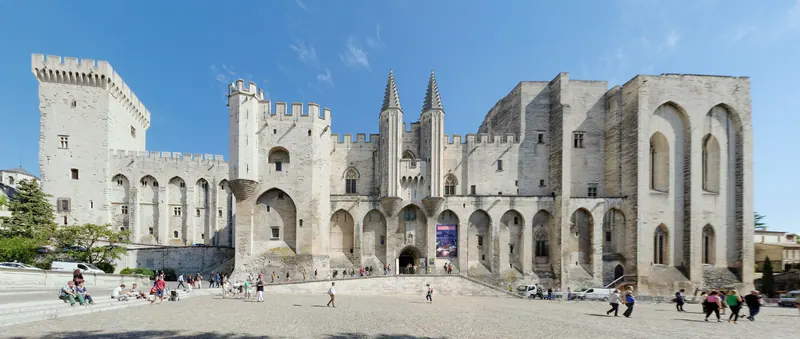
Two palaces welded together — Benedict XII's fortress of 1335 and Clement VI's wing of 1342 — and at roughly 15,000 m² the largest Gothic palace in Europe. The rooms are bare because the army used them as a barracks for a century, so go for the four painted spaces that survived and find the Chambre du Cerf first.

Good with children Works in the rain
Walking directions
Museum

Musée du Petit Palais

Cardinal's livrée from the 1310s; archbishops' palace from 1475, rebuilt by Giuliano della Rovere (later Julius II); museum since 1976

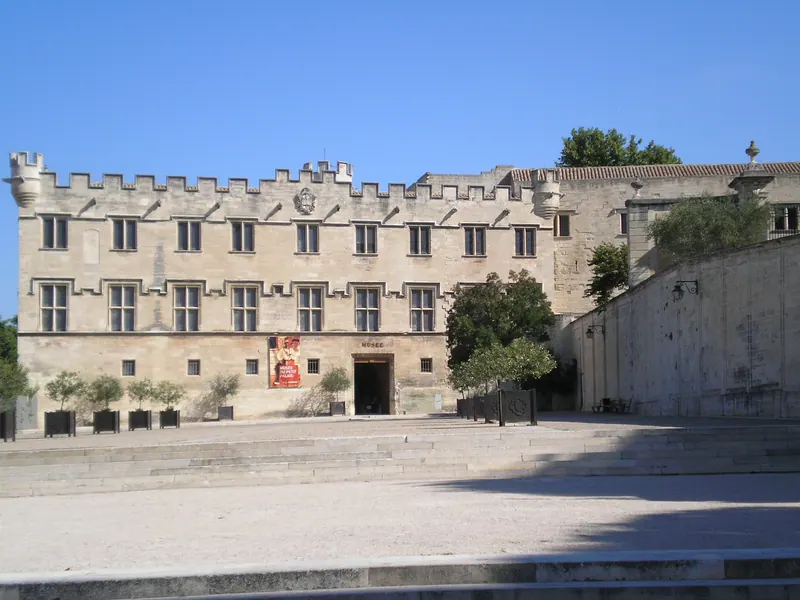
The archbishops' palace at the top of the Place du Palais, free to enter, holding over 300 Italian paintings from the Campana collection alongside the best room of 14th-century Avignon sculpture anywhere. Find the fragments of Cardinal Jean de Lagrange's tomb — the earliest French transi, a cardinal carved as a rotting corpse.

Works in the rain Free or cheap Quiet corner
Walking directions
View

Rocher des Doms

Occupied since prehistory; the rock the cathedral and papal palace were built on; the garden itself is 19th-century

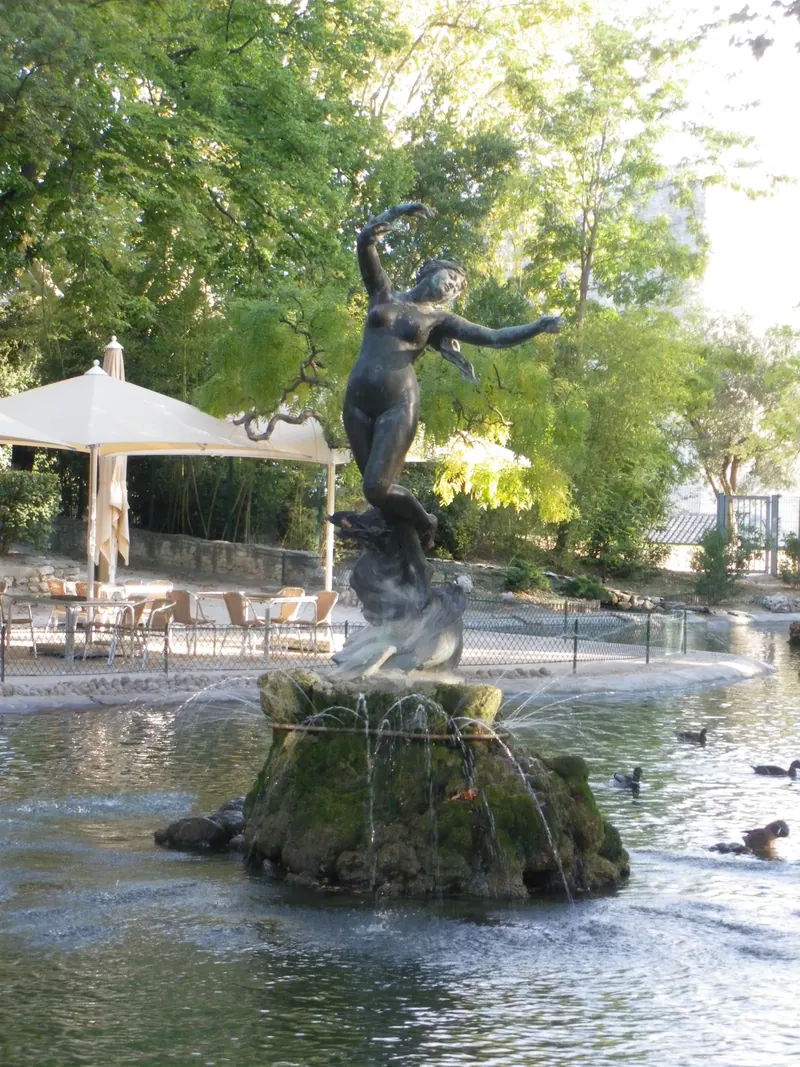
The limestone outcrop the whole city grew on, now a free public garden above the palace and the one place you look down on the broken bridge rather than along it. Walk in from the Place du Palais, then take the free rampart passage from the garden down to the Pont Saint-Bénézet instead of doubling back.

Free or cheap Good with children Quiet corner
Walking directions