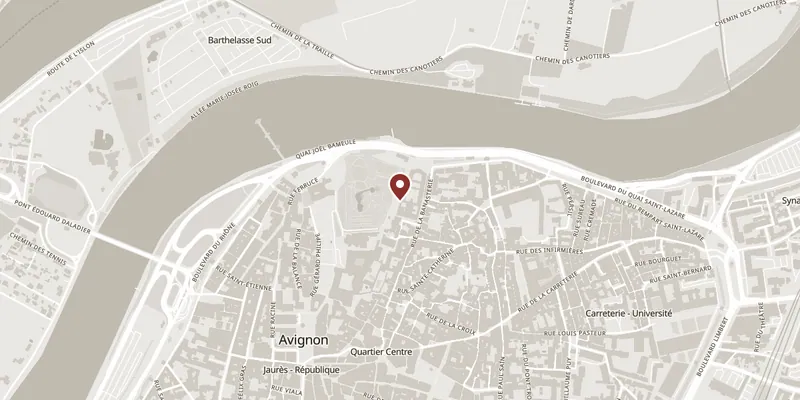
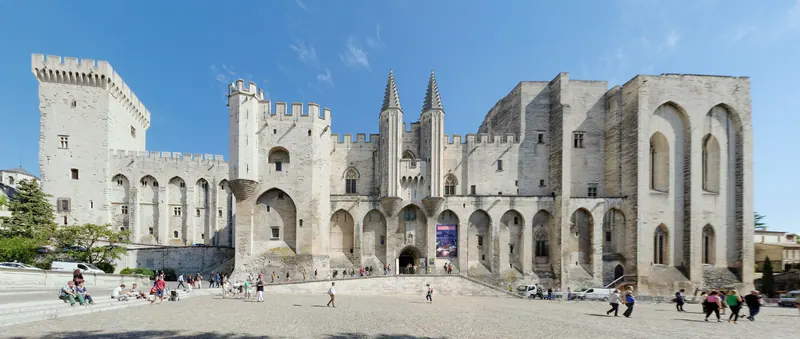
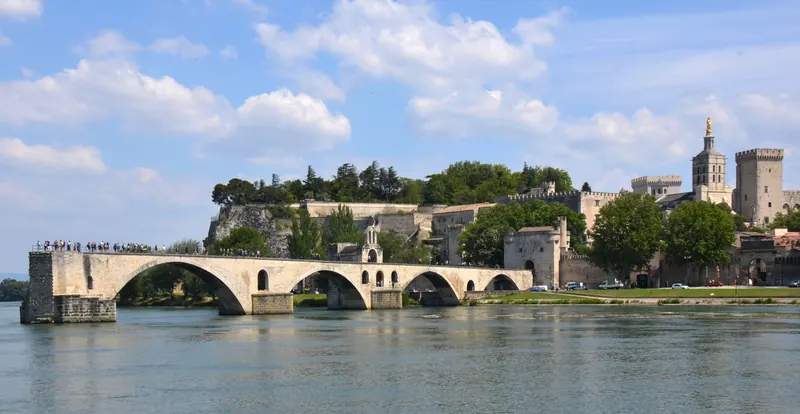
This rock is why Avignon exists. It stands at the highest point of the town, straight above the Rhône, it has been occupied since prehistory, and the cathedral and then the papal palace were put on it because it is the only defensible ground for miles. Dom comes from domus — the bishop’s house. Everything below it is the town that gathered underneath.
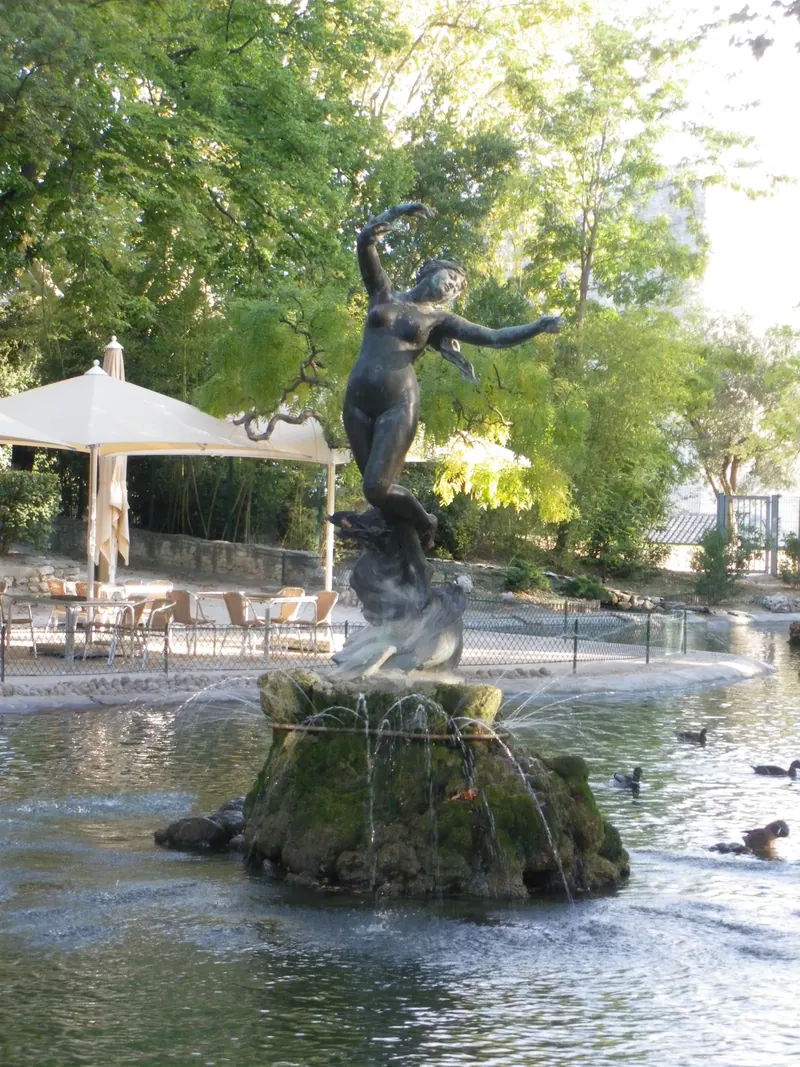
Be clear about what you are walking in: the garden is 19th-century, laid out in the English style under the Second Empire, with a duck lake, century-old trees, a playground, a café and gravel walks. The medieval interest is entirely the ground and the view.
And the view is the reason to come. From the terrace on the north side you look down on the Pont Saint-Bénézet — four arches ending in the water, with the Île de la Barthelasse behind them, which is the picture people try and fail to take from the bridge itself. Straight across the Rhône is Villeneuve-lès-Avignon: the Tour Philippe-le-Bel where the bridge used to land on the French bank, and the ramparts of Fort Saint-André on their hill above it. On a clear day you get the Dentelles de Montmirail and Mont Ventoux to the east. Standing here for five minutes explains the whole political geography — pope on this side, king of France on that one, one bridge between them.
There are three ways up: the ramp from the Place du Palais past the cathedral, the Escaliers Sainte-Anne behind the palace, and the steps from the riverbank. The useful trick is the exit: from the garden you can get onto the city walls and walk through a covered passage and a turret down to the entrance of the Pont Saint-Bénézet, free, without retracing your steps.
It opens at 07:30 every day of the year and closes at 18:00 from October to March, 20:00 in April, May, August and September, and 22:00 in June and July. Dogs are not allowed.