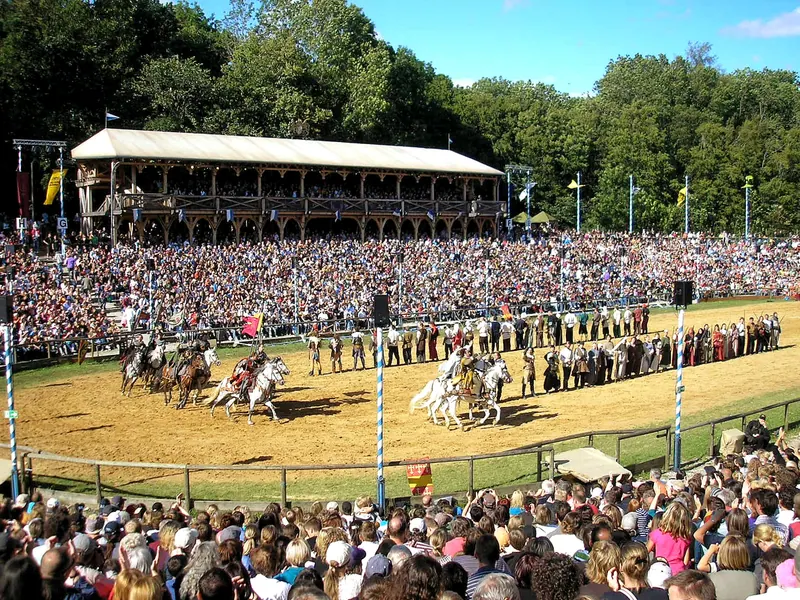
The lance drops in the last three strides. Until then the rider carries it upright, because three metres or so of ash held level at a canter would pull his arm out of its socket; then it comes down into the couch under the arm, the point crosses the horse’s neck, and two men meet at a combined canter with a wooden wall between the horses and nothing at all between the lances. That is a joust, and at the Kaltenberger Ritterturnier (Kaltenberg Knights’ Tournament) at Schloss Kaltenberg, Germany, 9–25 July 2027, confirmed, you can watch it in an arena the organiser puts at about 13,000 people and calls the largest show of its kind in Europe. By the end of this you’ll know a tilt from a mêlée, what the herald is counting, which of the jousts on this site are theatre and which are sport, and where to stand. I have ridden at a quintain and been hit by it. The quintain won.
What is jousting?
Two mounted riders, a course, and a lance each; the aim is to strike the other man’s shield or helm hard enough to break your lance, and if you can, to put him on the ground. It is one against one, run in a fixed number of passes, and it is scored. Everything else at a tournament is something other than a joust.
Tilt versus mêlée
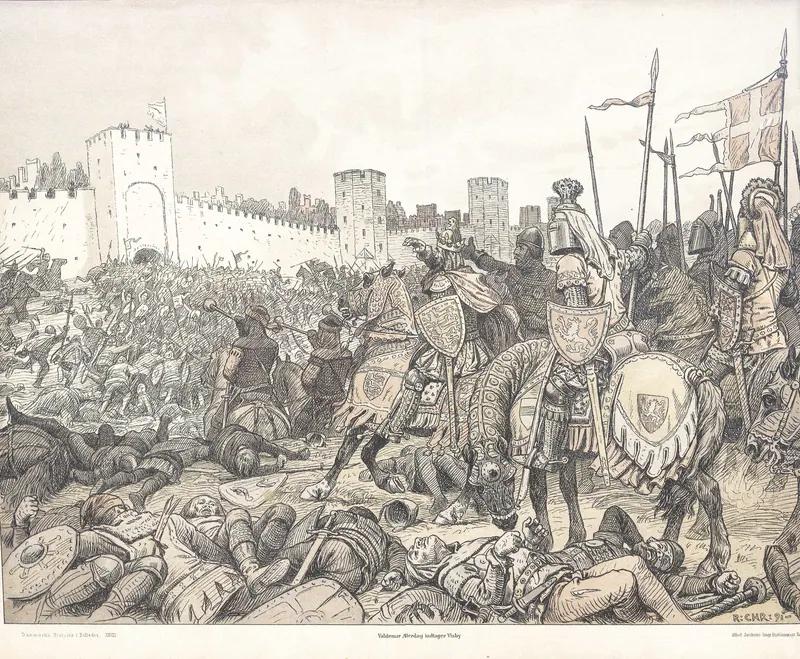
The joust is the single combat; the mêlée, which the older word for the whole event, tourney, once meant, is teams: two lines of riders, or two lines on foot, fighting until a signal or a surrender, and in the 12th century it was fought across open country with real weapons and ransoms. A pas d’armes was the theatrical version, a knight holding a bridge or a gate against all comers for a set number of days. And the quintain was the training: a post with a pivoting arm, a shield on one end and a weighted sack on the other, which swings round and hits you in the back of the head if you strike the shield and do not get out of the way. Children ride it at most festivals now, on ponies or on foot. The sack has not changed its opinion of anyone.
What is the tilt?
The barrier down the middle of the course. Before it existed, riders met in an open field and could pass on either side, and a horse that veered took the other horse head on. A cloth hung on a rope, the toile, is first recorded separating the riders at a joust in Arras in 1429; the idea was probably Italian, since early barrier jousts were called the Italian course, and it reached England in the 1430s. The cloth became a wooden wall, and the wall is what you see at every festival now.
Nothing changed the joust more than the tilt. Riders pass left shoulder to left shoulder, each with the lance couched under the right arm and angled across the horse’s neck, so every hit lands at an angle across the barrier, and the horses, which were the expensive part, stopped dying in collisions. It also made the joust safer to stage in a town square, which is why it survived into the 16th century as a court spectacle long after anyone fought a war with a lance.
How is jousting scored?
By what the lance does, and by where it does it. A clean hit on the shield that breaks the lance scores; a hit on the helm scores more; an unhorsing wins outright; a hit that does nothing, or lands where it should not, scores nothing or costs you.
Attaints, broken lances and unhorsing
The rules most English jousters still quote were drawn up in 1466 by Sir John Tiptoft, Earl of Worcester, for Edward IV. Under them the prize went to the man who broke the most spears “as they ought to be broken”, or struck the sight of the helm three times, or met his opponent coronal to coronal twice, or bore a man down with the stroke of a spear. Striking the horse, hitting a man in the back, or barging into the tilt three times forfeited the prize. The word attaint means a hit; Tiptoft cared whether the hit broke the spear.
Courses: how many passes make a joust
A joust is run in courses, a set number of passes agreed before the riders mount, commonly a handful, and the points are tallied across them. Nobody wins a joust on one pass, which is worth knowing at a show, where the story often needs a single dramatic fall. The tally is the sport; the fall is the theatre.
What a modern competition scores
The modern scored circuit keeps Tiptoft’s idea and adds a judge and a breakaway tip. Arundel Castle’s international tournament, run over six days in July, awards points for hits and an extra point when the lance breaks, by the organiser’s own description, and competes riders in national teams; the Royal Armouries’ tournament in Leeds, at Easter, describes itself as a sporting competition and not a black-knight-versus-white-knight show.
Lance tips on that circuit are made to shatter, so a clean break is the evidence the judge is looking for, and the splinters are the price the front row pays.
What is the lance, and what is a coronal?
The lance is a tapered pole of ash or cypress, about 2.4 to 3 m long by the usual figures, with a vamplate, a flared steel disc, protecting the hand. For the joust of peace it carries a coronal, a crown-shaped head with three or four blunt points that spreads the impact and grips the shield rather than piercing it; for the joust of war, which was rarer than the films suggest, it carried a sharp head. Modern shows use balsa or breakaway tips that explode into splinters on contact, which looks worse and is much better.
The splinter is the point of the design. In 1559 Henry II of France took one through the visor of his helm in a tournament and died of it ten days later, which is the fact behind every grille, every frog-mouth helm and every rule about where you may hit a man. A coronal does not stop a lance breaking. It stops the broken end going somewhere it should not.
How heavy is the armour?
Lighter than the myth and heavier than you would like. A full plate harness for the field weighed roughly 20 to 25 kg by the usual museum figures, spread across the body so that a fit man could mount unaided, run and get up from a fall. One built for the joust was heavier, sometimes far heavier, because it added reinforcing plates on the left side that took the hit, a grandguard over the shoulder and a manifer over the bridle hand, and a frog-mouth helm of around 4 to 5 kg whose slit gave the rider a view only when he leaned forward into the charge. Sit up straight and you see the inside of your own helmet, which is one reason jousters lean.
The horse carried the man, the saddle and sometimes plate of its own, and it was the expensive half of the partnership. As for the story that knights were winched into the saddle by a crane: it is a myth, and one that any reenactor at the rail will correct before you have finished asking.
Is the jousting at a festival real or staged?
Mostly staged, and the good ones say so. Show jousting is a stunt discipline: a scripted contest between houses, professional riders, rehearsed falls, and sometimes fire. Scored competition, with judges and breakaway lances, exists on a smaller circuit. Both are worth watching, one for the story and one for the tally. You should know which one you have bought.
The shows on this site are Kaltenberg, where the French troupe Cavalcade under Mario Luraschi rides a story with full-contact jousting, horse stunts and pyrotechnics; Carcassonne, a 45-minute tournament with falconry in the lices of the Cité; the Loxwood Joust, where the joust is the daily set piece of a produced kingdom; the Visegrád International Palace Games, whose jousts on the Danube bank are choreographed by the organiser’s own description; and Middelaldercentret, where a tournament is ridden daily in a town that keeps the year 1400. Karlštejn’s tournaments, at 11:00 and 16:00 during the wine festival, are ridden by a stunt group too. Nothing about a script makes the hits soft; a stunt rider takes a coronal on a steel shield at a canter and is expected to fall off correctly, which is harder than staying on.
The competitions are Arundel Castle, in West Sussex, whose international tournament ran 21–26 July 2026 with eight riders in four national teams, and the Royal Armouries in Leeds, whose international tournament ran 3–6 April 2026 with riders from Britain, Poland and Portugal. Neither is in our database yet and neither had announced 2027 when we checked; both are linked at the end of this piece. Visby Medieval Week (Medeltidsveckan) runs a ticketed tournament on Strandgärdet that sells out before the week starts; ask the organiser whether the year you go is scored or staged, because we could not settle it.
How to tell in ten seconds: a scoreboard, a judge with a flag, and nobody dies at the end. If the herald announces the winner before the first course, you are at a show, and you may as well enjoy the fire.
Is jousting safe?
For the rider, safer than it looks and less safe than a show pretends. The tilt stops the horses colliding, breakaway tips stop the lance driving through, the plate on the left side is thicker than anywhere else on the body, and there is a medic at the rail at any event worth its licence. Falls are the risk, and the stunt riders rehearse them.
For the horse, the training is the safety. A jousting horse runs a straight line at a wall with a man shouting on the far side of it, and it does that because it has done it a thousand times without being hurt. What your cheer at a fall costs is the horse’s nerve, so cheer the hit, not the man on the ground.
For you, the rope.
Splinters from a breaking lance go up and out, and the front row on the side where the lances are couched, which is the riders’ right, gets the shower. Stand two rows back with a small child, and never lean over the barrier to photograph a horse at the canter, because the horse has an opinion about that too.
What should you watch for from the stands?
- The lance dropping into the couch in the last three strides, and how late the rider leaves it. Late is skill; early is nerves.
- Where the coronal lands. Shield is the target; helm is the prize; anything below the belt or on the horse is the rider’s fault.
- Whether the lance breaks. A hit that bends the rider back in the saddle and leaves the lance whole scored nothing under Tiptoft and scores little now.
- The horse’s line along the tilt. A horse that drifts away from the barrier is a horse that has been hit before and remembers.
- The number of courses, and whether the tally moves. If it does not, nobody is counting.
- Who the herald says won, and when he says it. Before the first pass is a script; after the last is a sport.
Where to see a joust
One entry per event, dates with their status, prices with their year, and the label. The longer list is under jousting tournaments; the summer months are under July and August.
Kaltenberger Ritterturnier, Kaltenberg, Germany (show)
Three weekends in July at Schloss Kaltenberg, about 50 km west of Munich: 9–25 July 2027, confirmed. Tickets started at €34.90 a day in 2026 and everything inside is ticketed, the market included. The arena holds about 13,000 by the organiser’s figure and the Saturday show runs from 16:00 into the night. Bring a coat, and read the Germany page for what else July holds.
Tournoi de chevalerie de Carcassonne, Carcassonne, France (show)
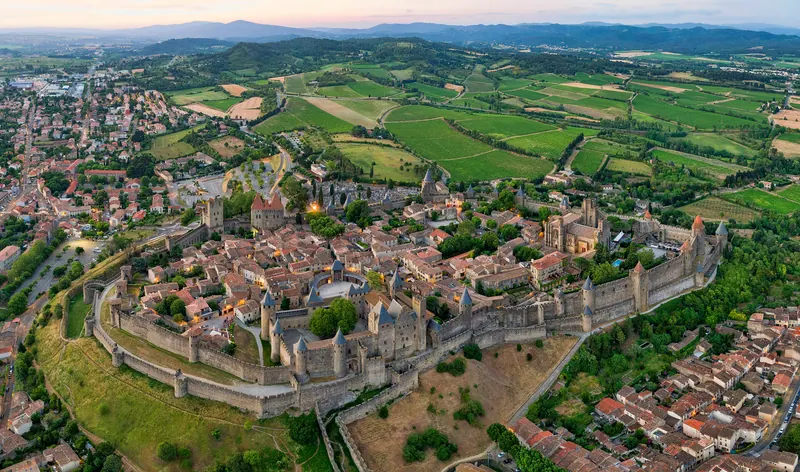
In the lices of the Cité, the space between the two walls, daily except Saturdays from mid-July to late August; the 2026 season ran 12 July–27 August with 45-minute shows at 14:00, 15:30 and 17:00, and 2027 is expected on the same pattern. €13 for adults and €9 for children aged five to ten in 2026, with a falconry display in the same ticket. The Carcassonne guide has the walls; the Carcassonne knight show has the horses.
The Loxwood Joust, Loxwood, England (show)
Three weekends in August on Loxwood Meadow, West Sussex, a produced kingdom with a daily joust as its centrepiece; the 2027 dates were not announced when we checked and three weekends in late July or August are usual. Day tickets were £27 for adults and £8 for children aged four to fourteen in 2026, and parking must be booked with the ticket. The Saturdays sold out in advance in 2026. What a produced festival is, against a reenactment, is in medieval festival or renaissance faire.
Visegrád International Palace Games, Visegrád, Hungary (show)
9–11 July 2027, confirmed, on the Danube bank below the palace an hour north of Budapest, with jousts the organiser describes as choreographed, archery, crafts and a procession. Ticketed by the day; prices vary and are published on the organiser’s site.
Middelaldercentret, Nykøbing Falster, Denmark (show)
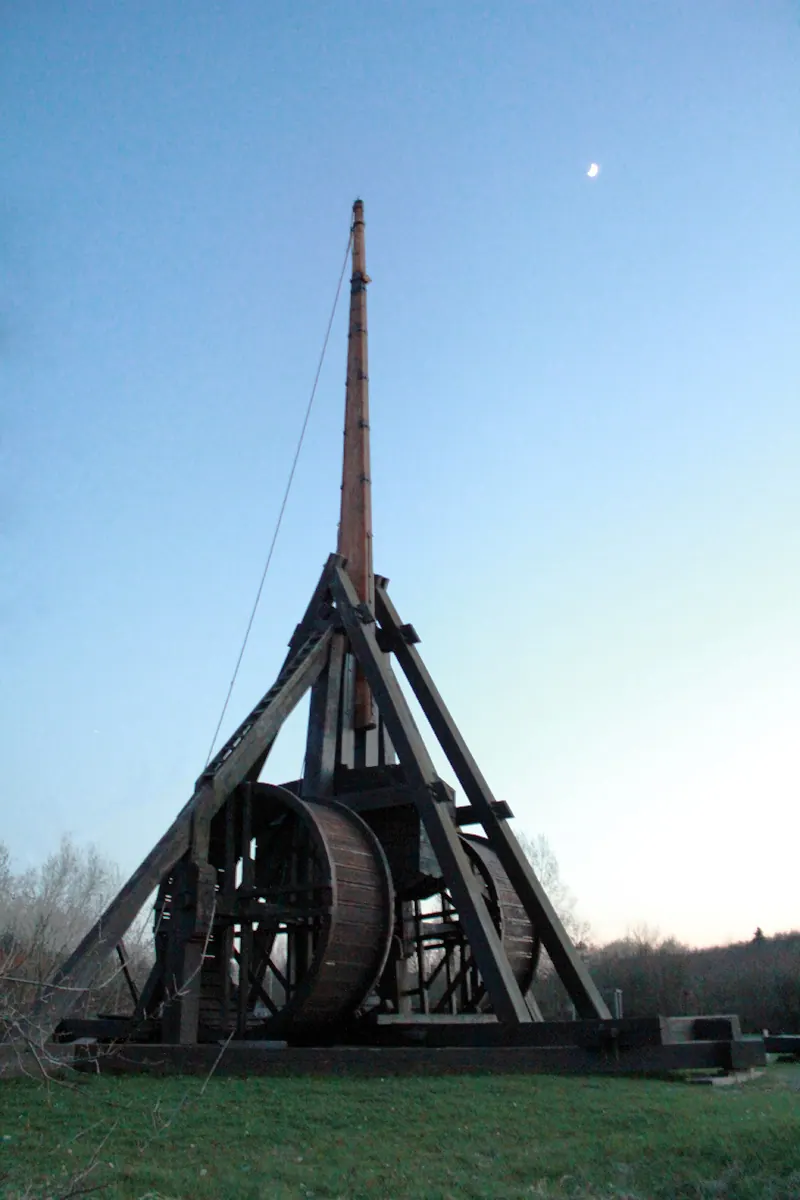
A tournament ridden daily through the season in a reconstructed town that keeps the year 1400, and the trebuchets are fired daily too; the 2027 season is expected from 5 May to 19 September. Adults 179–209 kr in 2026 by season, and the ticket is valid for seven days, so see the joust twice.
Visby Medieval Week, Visby, Sweden (ask)
Expected 8–15 August 2027, dates not yet announced. The tournament on Strandgärdet is ticketed and sells out before the week begins, and the Visby guide explains why the bed is the harder booking. Ask whether the year’s tournament is scored.
Tewkesbury Medieval Festival, Tewkesbury, England (mêlée, not a joust)
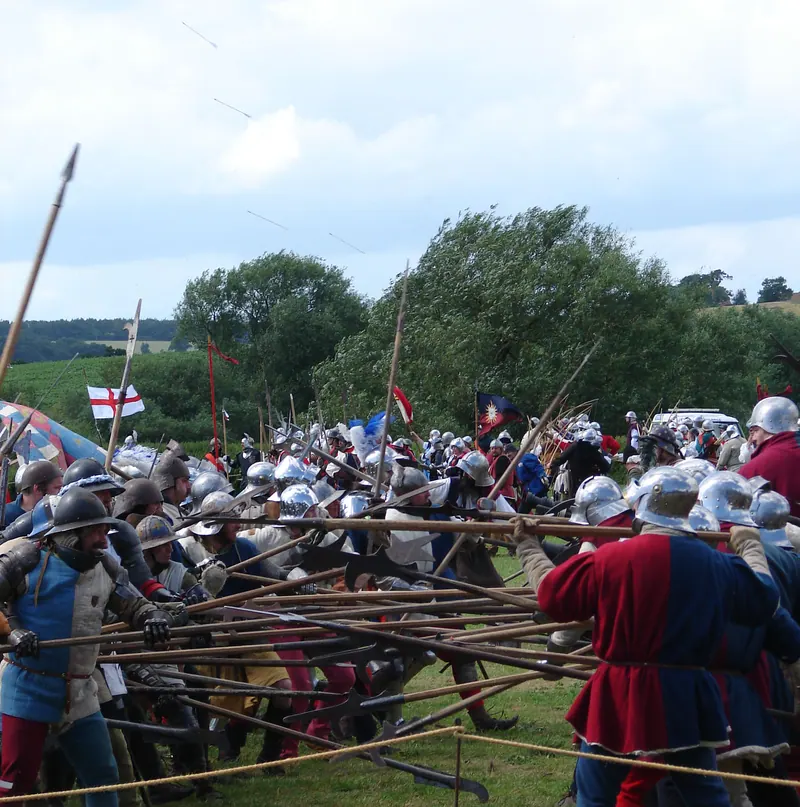
10–11 July 2027, confirmed, and free. There is no tilt at Tewkesbury; there is a battle of around 2,000 reenactors at 16:00 on the Saturday and 15:00 on the Sunday, and foot combat between, which is the mêlée in its modern form. It is on this list so nobody buys a train ticket expecting a joust.
Two more, in one line each
The Landshuter Hochzeit 1475, 25 June–18 July 2027, confirmed, stages its Ritterspiele, the knights’ games, inside a re-enacted royal wedding that happens once every four years; the Landshut guide has the tickets. And the Karlštejnské vinobraní near Prague rides its tournaments at 11:00 and 16:00 on the last weekend of September, with the emperor watching.
For the sport: Arundel and Leeds (competition)
Arundel Castle in West Sussex ran its International Medieval Jousting Tournament on 21–26 July 2026 with eight riders in four national teams; the Royal Armouries in Leeds ran its International Jousting Tournament on 3–6 April 2026. Both score, both use breakaway lances, and neither had announced 2027 when we checked; they are the two we would send a friend to who wanted to see a lance break for points. The manners for the rail, at either kind, are in medieval fair etiquette.
My own lance, the one time I rode a course that counted, came back whole. That is the wrong result, and the man on the other side of the tilt will tell you so with his hands.