Medieval Booker

Landmark ◆ Visby

Korsbetningen and Solberga Convent

The field where about 1,800 Gotlandic farmers were killed on 27 July 1361 and buried in their armour, in at least five mass graves on the ground of Solberga convent, under a 14th-century limestone cross whose inscription is still legible. Free, unfenced, open at all hours, about fifteen minutes' walk outside Söderport — and it only works if you go to Fornsalen first.

Where and when

Where
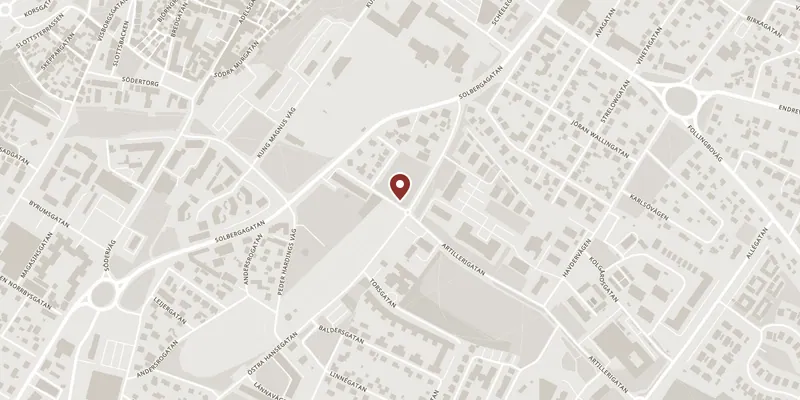
Östra Hansegatan at the junction with Artillerigatan, Korsbetningen, Visby — about 400 m east of Söderport, Visby, Sweden Open in Google Maps Walking directions
Era
Cistercian convent founded 1246, abandoned 1404; mass graves of the battle of 27 July 1361; memorial cross raised later in the 14th century
Opening
Unfenced open ground, accessible at all hours all year. Unlike almost everything else in Visby it has no season — the ruins inside the wall shut on 4 October and this does not. It is a grass site with no shelter and no facilities, so choose daylight and dry weather (as of August 2026)
Price
Free. There is no ticket, no gate and no visitor centre (as of August 2026)
Best time
The same day as Fornsalen, and in that order: the museum first, then the fifteen-minute walk out through Söderport. Late July if you want the anniversary — the battle was 27 July.
Good for
Free or cheapQuiet corner
Official site
www.lansstyrelsen.se
Map showing where Korsbetningen and Solberga Convent is
Open in Google Maps Walking directions © MapTiler © OpenStreetMap contributors

Checked

What is Korsbetningen and Solberga Convent?

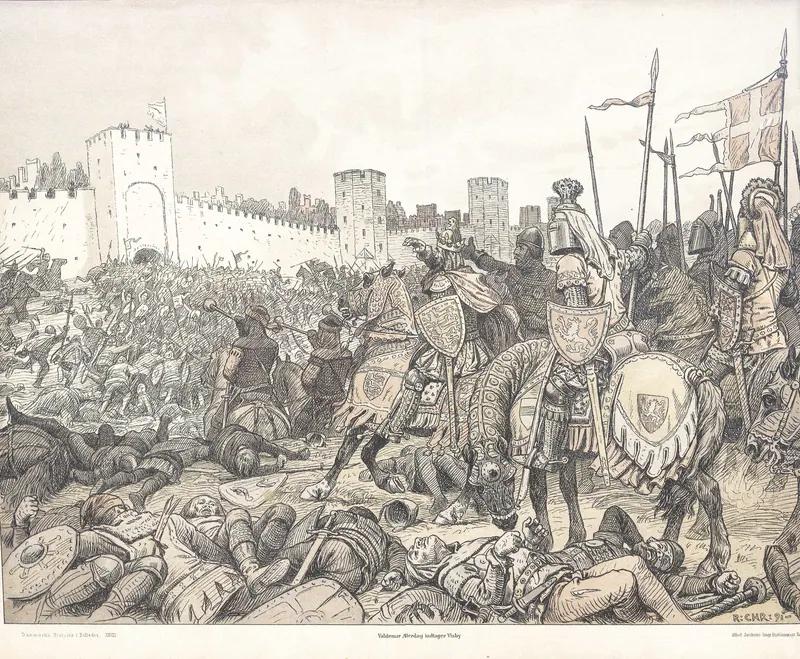
On 27 July 1361 — the Tuesday after St James’s day — a Danish army of a little over 2,000 men under King Valdemar Atterdag met a roughly equal levy of Gotlandic farmers outside Visby’s eastern wall. Around 1,800 Gotlanders were killed. The town behind the wall did not fight on; it came to terms. The dead were buried where they fell, on ground belonging to Solberga convent, in at least five pits.

What makes this ground matter is that nobody stripped the bodies. It was high summer, the burials were hurried, and the dead went into the pits still wearing their mail and their coats of plates. Excavations run by the National Heritage Board between 1905 and 1928 lifted roughly 1,800 individuals out of them, and the armour and the injured bone they produced remain the most-cited physical evidence anywhere for what medieval weapons actually did to people. The finds are split between the 1361 room at Gotlands Museum, twenty minutes’ walk away on Strandgatan, and the Swedish History Museum in Stockholm.

The graves were not a modern discovery. In 1811, workmen digging for a powder magazine here turned up skulls with battle injuries; in 1905 a plantation being laid out hit skeletons and mail, and the archaeologists were called in. A limestone ring cross had stood on the site the whole time — the Gotlandic ringed form, with a crucified Christ, raised on one of the graves later in the 14th century and cut with the line Anno Domini MCCCLXI feria III post Jacobi ante portas Visby in manibus Danorum ceciderunt Gutenses, hic sepulti, orate pro eis: “In the year of Our Lord 1361, on the Tuesday after St James’s day, the Gotlanders fell before the gates of Visby into the hands of the Danes. They are buried here. Pray for them.” A cross carrying that inscription still stands on the site. Whether the stone you are looking at is the 14th-century original or a later replacement is not something we could settle against an official source — worth asking at Fornsalen.

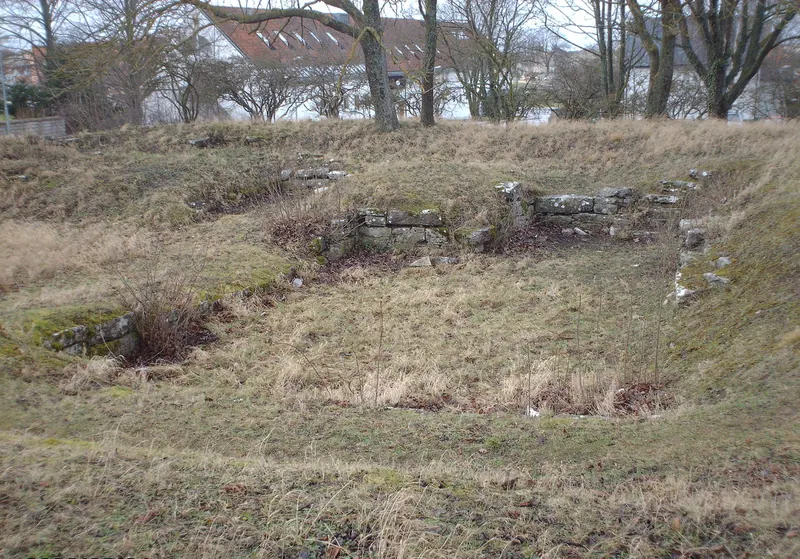
The ground around it is Solberga, Gotland’s only nunnery: Cistercian, founded in 1246 at the islanders’ own request, given up in 1404 when the abbess and twelve nuns moved inside the wall. Excavated parts of the convent’s outbuildings are exposed; raised earth banks and stone footings mark the rest; the church is laid out in blocks on the grass with the real foundations still buried beneath. A ground-penetrating radar survey in spring 2025 went looking for its eastern edge.

Practically, this is an open patch of grass along Östra Hansegatan where Artillerigatan meets it, about 400 m east of Söderport, with a residential street down one side. Owned by the National Property Board, protected as a registered ancient monument, and always accessible. No gate, no ticket, no visitor centre.
What visitors say

3.5 from 2 ratings

Ratings and reviews from Google. See all on Google Maps

Frequently asked questions

Can you visit the Battle of Visby mass graves?

Yes. The site is Korsbetningen, on the grounds of the former Solberga convent along Östra Hansegatan, about 400 m east of Söderport. It is unfenced, free and open at all hours. The graves themselves were excavated between 1905 and 1928 and are no longer visible; what you see is the ground, the convent remains and the memorial cross.

What happened at Korsbetningen in 1361?

On 27 July 1361 a Danish army of a little over 2,000 men under Valdemar Atterdag defeated a roughly equal force of Gotlandic farmers outside Visby's wall. About 1,800 Gotlanders were killed and were buried on the spot, in at least five mass graves, without being stripped of their armour.

Is the memorial cross at Korsbetningen original?

A limestone ring cross was raised on one of the graves later in the 14th century, carrying a Latin inscription that names the date and asks visitors to pray for the dead. A cross with that inscription still stands on the site. We could not confirm from an official source whether the stone now standing is the 14th-century original or a later replacement.

Where can I see what was found at Korsbetningen?

The mail, coats of plates and skeletal material are divided between the "1361 – striden om Gotland" room at Gotlands Museum (Fornsalen) on Strandgatan and the Swedish History Museum in Stockholm.

How far is Korsbetningen from Visby old town?

About 400 m east of Söderport, or roughly fifteen minutes on foot from the middle of the old town. There is no dedicated parking for the site, but there is parking nearby.

What was Solberga convent?

Gotland's only nunnery: a Cistercian house founded in 1246 at the islanders' request, outside the town wall. It was given up in 1404, when the abbess and twelve nuns moved inside Visby. Excavated outbuildings, earth banks and stone footings survive, and the church is marked out in blocks on the grass.

Festivals in Visby

Medieval festivals in Visby
Featured
Medieval Markets & Fairs Jousting & Tournaments +1

Visby Medieval Week

Visby, Sweden

Medeltidsveckan fills the walled Hanseatic town of Visby on Gotland with eight days of medieval markets, jousting, concerts, lectures and camps every August. Founded in 1984, it is Scandinavia's largest medieval festival and draws around 40,000 visitors, many of them in costume.

Expected 2027
Family

More places in Visby

Places in Visby
Landmark Start here

Visby Ring Wall (Ringmuren)

Seaward wall c. 1250; landward wall 1270s–80s; raised 3–4 m in the 1350s; Kruttornet c. 1160

3.4 km of 13th-century town wall, up to 11 m high, with 27 of its original 29 ground towers still standing — the oldest surviving town wall in northern Europe and the only complete circuit left in the Nordic countries. Walk the outside of the landward stretch between Norderport and Söderport, and know before you come that there is no rampart walk: you cannot get onto the top of it.

Free or cheap Quiet corner Good with children
Walking directions
Museum

Gotlands Museum (Fornsalen)

Museum founded 1875; collections from prehistory to the Middle Ages, with the Spillings hoard of the 870s and the 1361 battle finds

The island museum on Strandgatan, holding the Spillings hoard — about 67 kg of Viking-age silver — Gotland's picture stones, and the armour and skulls dug out of the 1361 battle graves at Korsbetningen. It is the room where everything else you look at in Visby is explained, and under-19s get in free.

Works in the rain Good with children
Walking directions
Church

Visby Cathedral (Sankta Maria)

Consecrated 27 July 1225 as the German merchants' church; cathedral of the diocese of Visby since 1572

Consecrated on 27 July 1225 as the church of the German merchants in Visby, and the only one of the town's medieval churches that still has a roof and a congregation. Entry is free, and from late June to mid-August it stays open until 21:00 — the one medieval interior here you can sit in during the evening.

Free or cheap Quiet corner Best in the evening
Walking directions
All articles