Medieval Booker

Church ◆ Visby

S:ta Karin Church Ruin (Sankta Katarina)

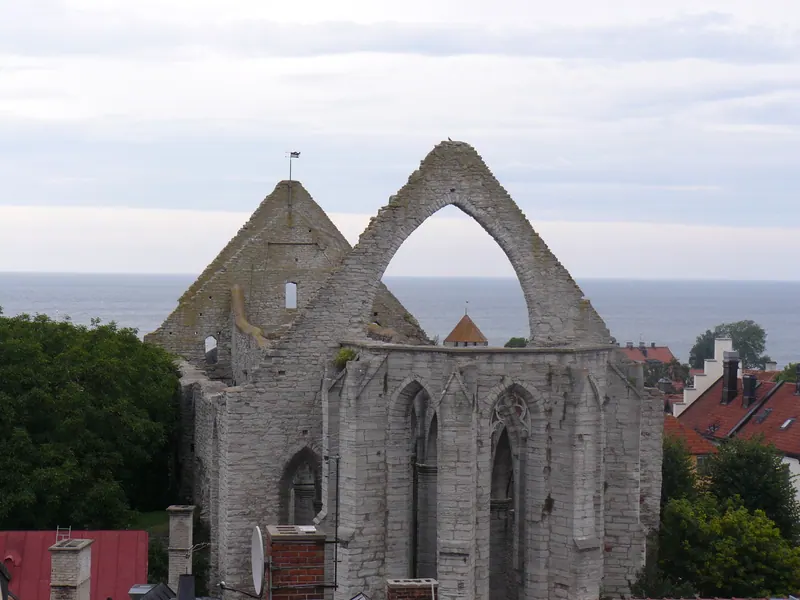
The Franciscan convent church on Stora Torget, begun after the friars arrived in 1233 and never finished — the largest of Visby's church ruins, roofless, free, and open daily from 1 May to 4 October. Its vaults were built of brick, which nothing else in this limestone town was.

Where and when

Where
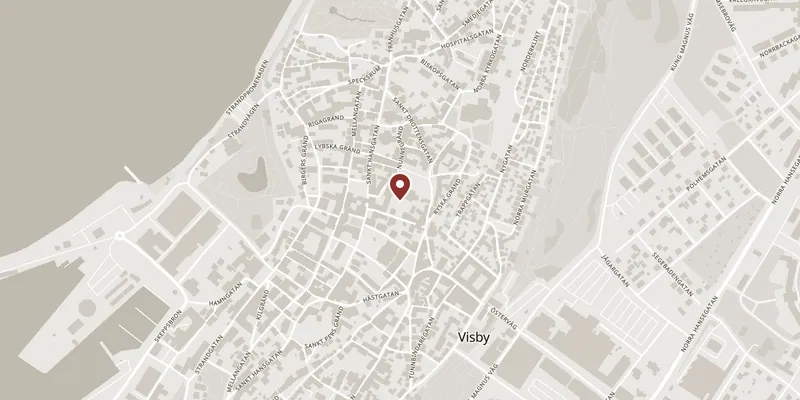
Stora Torget, Visby, Visby, Sweden Open in Google Maps Walking directions
Era
Franciscan convent founded 1233, first church c. 1250; damaged by collapse in 1402, choir consecrated 1412, nave never completed; abandoned late 1520s
Opening
Season 1 May – 4 October 2026, daily 09:00–17:00. Outside that season it is not open and you look at it from the square. It also closes without notice when booked for a private event. A synthetic skating rink has been set up inside the ruin in some winters and cancelled in others — do not plan a trip around it (as of August 2026)
Price
Free. Guided ruin tours are bookable through Gotlands Museum (bokningen@gotlandsmuseum.se) and goGotland, priced separately (as of August 2026)
Best time
Straight after it opens at 09:00. It is on the main square, so it is the one hour of the day when the biggest ruin in Visby is empty.
Good for
Free or cheapGood with childrenQuiet corner
Official site
www.gotlandsmuseum.se
Map showing where S:ta Karin Church Ruin (Sankta Katarina) is
Open in Google Maps Walking directions © MapTiler © OpenStreetMap contributors

Checked

What is S:ta Karin Church Ruin (Sankta Katarina)?

Visby is a town of roofless churches. Gotlands Museum, which maintains them for the National Property Board, counts eleven ruins in its care — S:t Lars, Drotten, S:t Clemens, S:t Olof, S:t Per, S:t Hans, S:ta Gertrud, Helge And, S:t Göran, S:t Nicolai and this one — while SFV’s own overview of the world heritage site says thirteen churches stood here; only five carry published opening hours — S:ta Karin, S:t Lars, Drotten, S:t Olof and S:t Clemens — and the rest are events venues, fenced sites or walls you look at from the street, so do not try to tick them all off. Do two properly. This is the first.

The Franciscans — the Grey Friars — reached Visby in 1233 and began a convent church a decade or so later; the first building was up by about 1250. Then it was rebuilt and enlarged all through the 1300s, and it went badly. A collapse in 1402 did serious damage; the rebuilt choir was not consecrated until 1412; and work stopped altogether around the middle of the 1400s with the nave never finished. That is why the ruin reads oddly today — you are standing in a building that was a construction site for two centuries and then simply stopped being one.

The detail to look for is the material. Every comparable structure in Visby was raised in the island’s own limestone; S:ta Karin’s vaults were built of brick, and it is the only one. Look up at the springing of the arches at the east end, where the tall choir arcade survives more or less to full height, and the change of material is obvious.

The convent was in use until the end of the 1520s, when the Danish Reformation reached Gotland and both church and convent buildings were abandoned to weather. Conservation campaigns followed in the 1930s and in 1957, and in January 2015 the National Property Board took over its care from the National Heritage Board.

It sits directly on Stora Torget, so it is the ruin you will walk past anyway: an open shell of arches with grass underfoot and the square’s cafés on three sides. Entry is free during the season. It is closed to the public whenever it has been booked for a private event, which happens often in July and August and is not announced in advance.
What visitors say

4.7 from 194 ratings

  • Henri Salmi (Henkka)

    5 out of 5 a month ago

    Huge ruins of a medieval church next to the main square of Visby. Amazing architechture and a place you should definitively visit. The building of the church started in early 13th century and it was originally a convent of the Franciscan fraternity order. The church was never fully completed, it collapsed partially in the 15th century.

    Read this review on Google
  • Cat

    4 out of 5 a month ago

    Pretty busy ruin that is open during daytime until 18:00. Not the best one in Visby but cool. I know nothing about the history really, simply just visited because it was open when I passed by.

    Read this review on Google
  • Juyin Inamdar

    3 out of 5 3 years ago

    Basically ruins right in the town center. When I visited, this wasn’t open to have a look around but you could pretty much see it just from outside.. Fascinating how the ruins are still upholding some columns.

    Read this review on Google

Ratings and reviews from Google. See all on Google Maps

Frequently asked questions

When is S:ta Karin ruin open?

1 May to 4 October 2026, daily 09:00–17:00, free of charge. It is closed to the public outside that season and whenever it has been booked for a private event.

How much does it cost to visit Visby's church ruins?

Nothing. The ruins Gotlands Museum publishes opening hours for — S:ta Karin, S:t Lars and Drotten daily 09:00–17:00, S:t Clemens daily 11:00–17:00, S:t Olof weekdays 08:00–15:30 — are free during the 1 May – 4 October season. Guided tours are a separate, paid booking through Gotlands Museum or goGotland.

How many church ruins are there in Visby?

Gotlands Museum maintains eleven for the National Property Board; SFV's own overview of the world heritage site puts the number of Visby churches at thirteen. Only five have published opening hours, so pick two rather than attempting all of them.

What makes S:ta Karin different from the other Visby ruins?

It is the largest of them, it stands on the main square, and its vaults were built of brick — everything else comparable in Visby was built of the island's limestone. It is also the one that was never finished: work stopped in the mid-1400s with the nave incomplete.

Who built S:ta Karin?

The Franciscans, who arrived in Visby in 1233 and began their convent church about a decade later. The first church was complete around 1250; rebuilding ran through the 1300s, a collapse in 1402 caused serious damage, and the rebuilt choir was consecrated in 1412.

Festivals in Visby

Medieval festivals in Visby
Featured
Medieval Markets & Fairs Jousting & Tournaments +1

Visby Medieval Week

Visby, Sweden

Medeltidsveckan fills the walled Hanseatic town of Visby on Gotland with eight days of medieval markets, jousting, concerts, lectures and camps every August. Founded in 1984, it is Scandinavia's largest medieval festival and draws around 40,000 visitors, many of them in costume.

Expected 2027
Family

More places in Visby

Places in Visby
Landmark Start here

Visby Ring Wall (Ringmuren)

Seaward wall c. 1250; landward wall 1270s–80s; raised 3–4 m in the 1350s; Kruttornet c. 1160

3.4 km of 13th-century town wall, up to 11 m high, with 27 of its original 29 ground towers still standing — the oldest surviving town wall in northern Europe and the only complete circuit left in the Nordic countries. Walk the outside of the landward stretch between Norderport and Söderport, and know before you come that there is no rampart walk: you cannot get onto the top of it.

Free or cheap Quiet corner Good with children
Walking directions
Museum

Gotlands Museum (Fornsalen)

Museum founded 1875; collections from prehistory to the Middle Ages, with the Spillings hoard of the 870s and the 1361 battle finds

The island museum on Strandgatan, holding the Spillings hoard — about 67 kg of Viking-age silver — Gotland's picture stones, and the armour and skulls dug out of the 1361 battle graves at Korsbetningen. It is the room where everything else you look at in Visby is explained, and under-19s get in free.

Works in the rain Good with children
Walking directions
Church

Visby Cathedral (Sankta Maria)

Consecrated 27 July 1225 as the German merchants' church; cathedral of the diocese of Visby since 1572

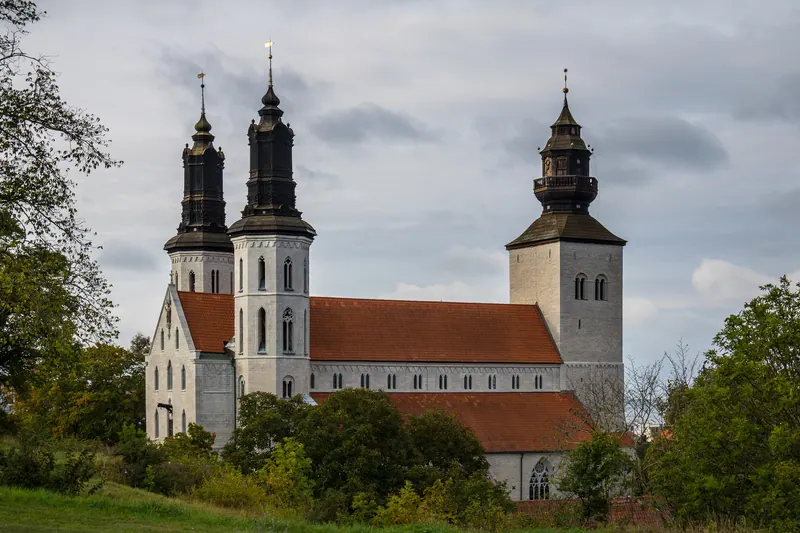
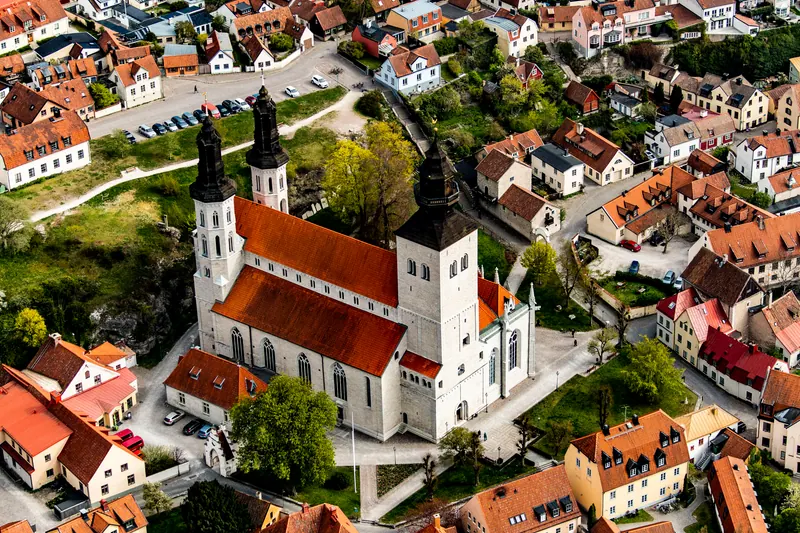
Consecrated on 27 July 1225 as the church of the German merchants in Visby, and the only one of the town's medieval churches that still has a roof and a congregation. Entry is free, and from late June to mid-August it stays open until 21:00 — the one medieval interior here you can sit in during the evening.

Free or cheap Quiet corner Best in the evening
Walking directions
All articles