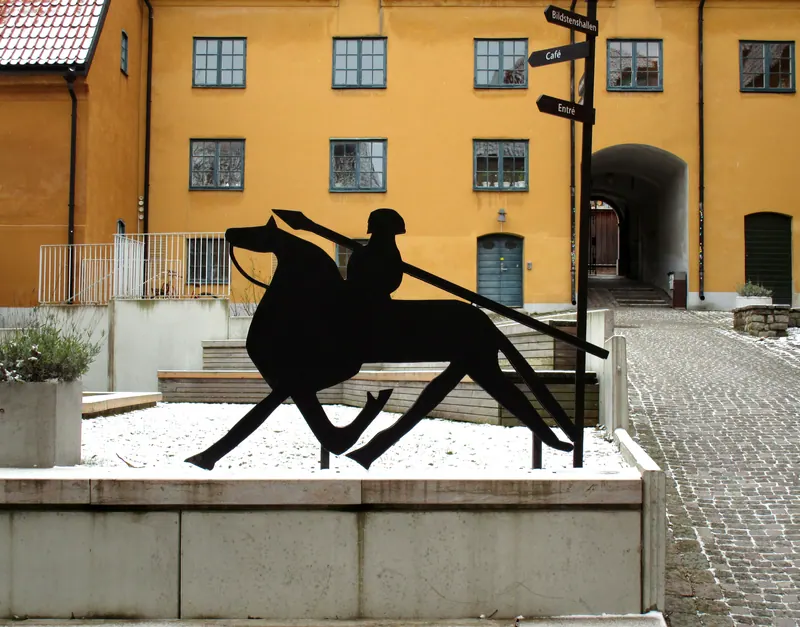
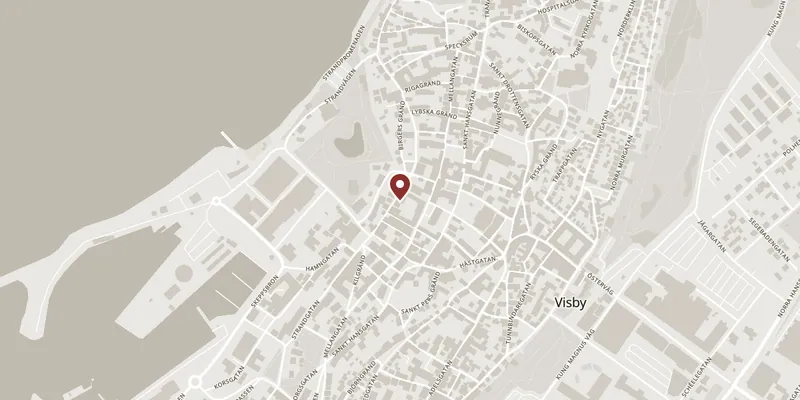
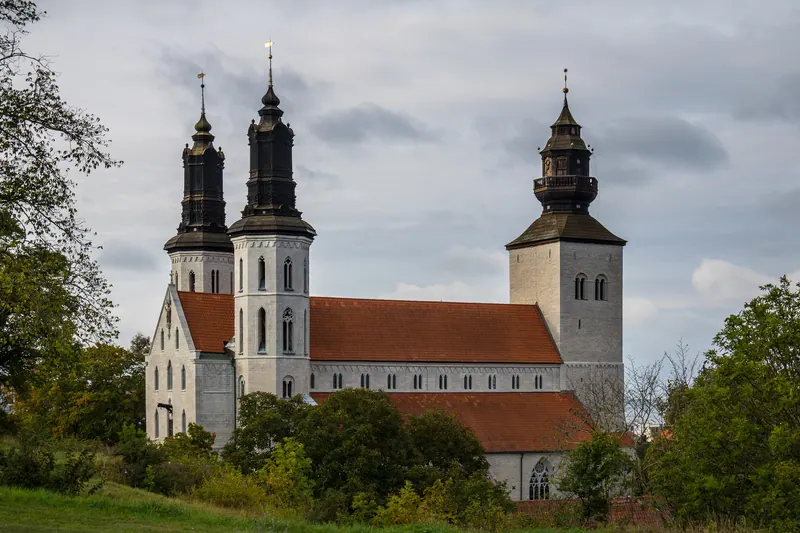
Gotlands Museum’s main building stands on Strandgatan in the lower town, a few minutes from the harbour. It was founded in 1875 by Gotlands Fornvänner, the island’s antiquarian society, and its collections run to some 400,000 objects. Four rooms are the reason to come.
Skattkammaren, the treasure chamber, holds the Spillings hoard: roughly 67 kg of silver and more than 14,000 coins, buried on a farm in Othem parish north of Visby and found in 1999. The museum describes it as the world’s largest Viking-age silver hoard. Most of the coins are Islamic dirhams, which is the whole point — this is Gotland’s eastern trade in physical form, silver arriving by the kilo from Central Asia and being weighed rather than counted.
Bildstenshallen is the picture-stone hall. Gotland’s carved limestone slabs, made between roughly the 5th and the 11th centuries, survive in numbers found nowhere else, and they are the nearest thing to a picture book the Norse world left behind: ships under striped sail, riders met by women holding drinking horns, whirling sun discs.
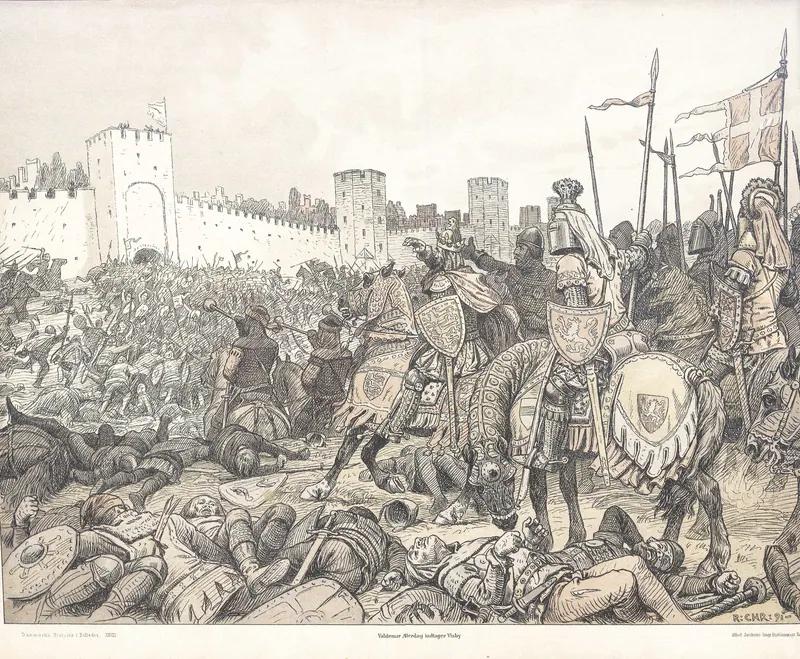
1361 – striden om Gotland is the Battle of Visby room. When the mass graves at Korsbetningen, just outside the wall, were excavated between 1905 and 1928 they held roughly 1,800 dead, buried in haste in late July and many of them still wearing their mail and coats of plates. The armour and the wounded skulls in this room are among the most-cited physical evidence anywhere for what medieval weapons actually did to people. The graves themselves are a twenty-minute walk away.
Midgård – Gotlands vikingar takes the island from the Stone Age to the Middle Ages. Around those four rooms sit 430-million-year-old fossils, medieval church art, and Skepp & skoj, a hands-on Viking room for children.
One current oddity worth knowing: Gotlands Konstmuseum’s own building on S:t Hansgatan is closed for rebuilding, so the art collection is shown inside Fornsalen on the same ticket. Allow two hours, three if you read the labels.