Medieval Booker

Church ◆ Visby

Visby Cathedral (Sankta Maria)

Consecrated on 27 July 1225 as the church of the German merchants in Visby, and the only one of the town's medieval churches that still has a roof and a congregation. Entry is free, and from late June to mid-August it stays open until 21:00 — the one medieval interior here you can sit in during the evening.

Where and when

Where
Västra Kyrkogatan, 621 55 Visby (parish office at Norra Kyrkogatan 4), Visby, Sweden Open in Google Maps Walking directions
Era
Consecrated 27 July 1225 as the German merchants' church; cathedral of the diocese of Visby since 1572
Opening
2026 hours: 1 January – 21 June 09:00–17:00; 22 June – 16 August 09:00–21:00; 17–30 August 09:00–19:00; 31 August – 31 December 09:00–17:00. Access is limited during services, funerals, weddings and concerts, and different hours apply during Almedalen Week and Medieval Week (as of August 2026)
Price
Free. Guided tours are arranged and priced through the parish office (as of August 2026)
Best time
After 19:00 between 22 June and 16 August, when it is still open and everyone else has gone to dinner.
Good for
Free or cheapQuiet cornerBest in the evening
Official site
www.svenskakyrkan.se
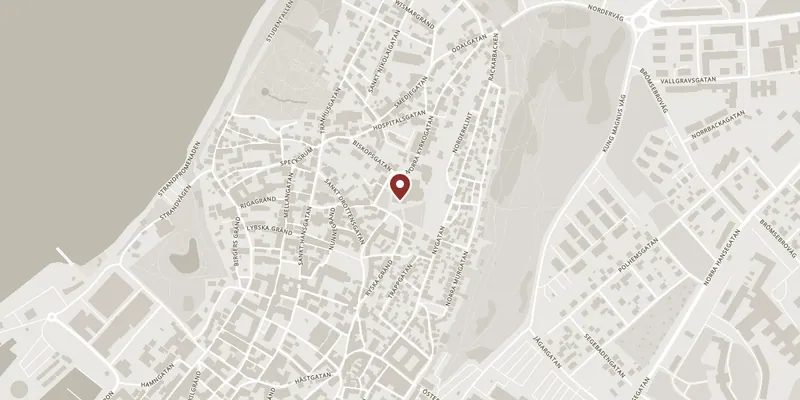
Map showing where Visby Cathedral (Sankta Maria) is
Open in Google Maps Walking directions © MapTiler © OpenStreetMap contributors

Checked

What is Visby Cathedral (Sankta Maria)?

Sankta Maria was the Germans’ church. Merchants trading into Visby paid levies towards a stone church from the second half of the 12th century, and it was consecrated on 27 July 1225 by Bishop Bengt of Linköping. It began as a Romanesque basilica, was rebuilt as a hall church in the middle of the 13th century by pulling the transepts into the nave, gained a large chapel about fifty years after that, and received Gothic tracery windows piecemeal through the 14th century. The west tower was heightened in 1423.

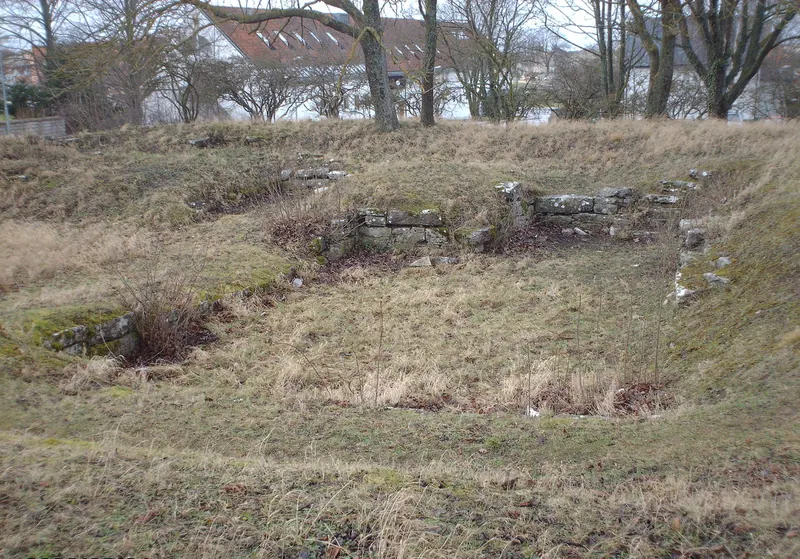
Then the town’s decline took the rest of Visby’s churches with it. Every other medieval parish church inside the ring wall lost its roof and stands open to the sky. St Mary’s did not, because after the Reformation it was the one kept in use, and in 1572 it was raised to be the cathedral of the new diocese of Visby. It is a stranger experience than it sounds: you spend a day walking through roofless naves with grass floors, and then you step into the one building that was allowed to keep its ceiling.

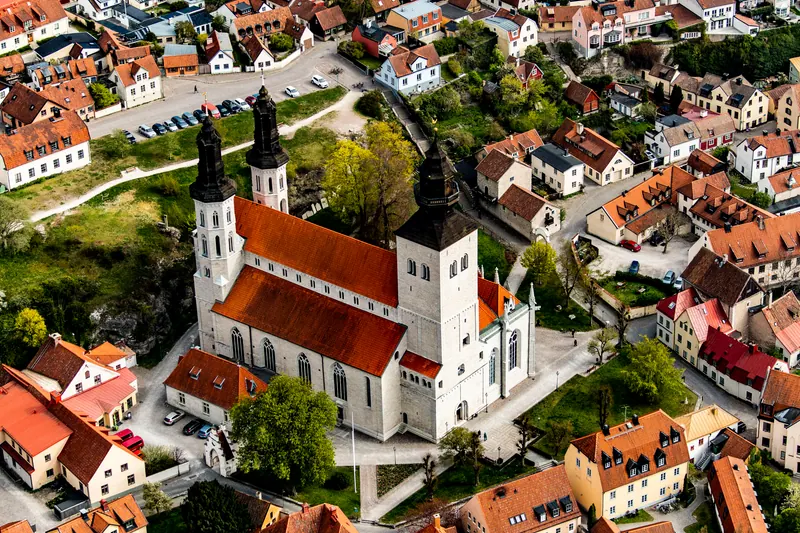
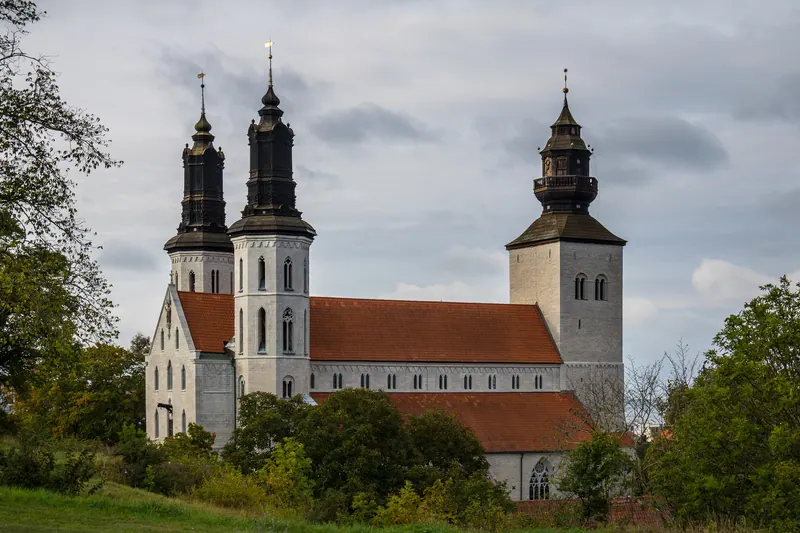
What to look for inside: the oak tabernacle of the mid-13th century; the wooden figure of the risen Christ in the rood, also 13th-century; the carved pulpit of 1684, the gift of Johan Wolters, a German trader who became the town’s mayor; and the Hanseatic chest that the parish says has been kept here for close to eight hundred years. From outside — and from the ferry — the shape to know is the three towers: one square tower at the west end and two slimmer ones at the east.

Entry is free. The parish runs guided tours in Swedish and English, including one that goes up into the roof space above the vaults, arranged through the cathedral office. In early August the building becomes a Medieval Week venue for concerts, processions and services, and normal opening hours stop applying.
What visitors say

4.6 from 589 ratings

  • Simon Drury

    4 out of 5 a month ago

    The cleanest cathedral that I have ever seen (and I have visited quite a few around the world) Free entrance. Beautiful stained glass windows.

    Read this review on Google
  • Dmitri

    5 out of 5 a year ago

    Well worth making a visit. One of the few churches on the island that remains not destroyed. The inside is pristine and looks like it has been taken care of very well. The entrance is free, but it's worth giving a donation.

    Read this review on Google
  • Timo Honkanen

    4 out of 5 a year ago

    This centrally located and beautiful church is a must-visit while in Visby. Its architecture is impressive, and the history behind it makes the visit even more meaningful. Reading a bit about its past beforehand will make the experience all the more rewarding.

    Read this review on Google

Ratings and reviews from Google. See all on Google Maps

Frequently asked questions

Is Visby Cathedral free to enter?

Yes, entry is free during opening hours. Guided tours, including one into the roof space above the vaults, are arranged through the parish office.

How old is Visby Cathedral?

It was consecrated on 27 July 1225, having been built from the second half of the 12th century onwards with money levied from German merchants trading into Visby. The west tower was heightened in 1423.

Why is Visby Cathedral the only medieval church in Visby still in use?

Visby had around a dozen medieval churches. After the Reformation only St Mary's was kept in use; the rest lost their roofs and stand as ruins. In 1572 it became the cathedral of the new diocese of Visby.

What are the opening hours of Visby Cathedral?

In 2026: 09:00–17:00 from 1 January to 21 June, 09:00–21:00 from 22 June to 16 August, 09:00–19:00 from 17 to 30 August, and 09:00–17:00 for the rest of the year. Services and concerts can restrict access.

What should I look for inside Visby Cathedral?

The mid-13th-century oak tabernacle, the 13th-century wooden figure of the risen Christ in the rood, the carved pulpit of 1684 given by the merchant and mayor Johan Wolters, and the Hanseatic chest the parish says has been kept in the church for nearly 800 years.

Festivals in Visby

Medieval festivals in Visby
Featured
Medieval Markets & Fairs Jousting & Tournaments +1

Visby Medieval Week

Visby, Sweden

Medeltidsveckan fills the walled Hanseatic town of Visby on Gotland with eight days of medieval markets, jousting, concerts, lectures and camps every August. Founded in 1984, it is Scandinavia's largest medieval festival and draws around 40,000 visitors, many of them in costume.

Expected 2027
Family

More places in Visby

Places in Visby
Landmark Start here

Visby Ring Wall (Ringmuren)

Seaward wall c. 1250; landward wall 1270s–80s; raised 3–4 m in the 1350s; Kruttornet c. 1160

3.4 km of 13th-century town wall, up to 11 m high, with 27 of its original 29 ground towers still standing — the oldest surviving town wall in northern Europe and the only complete circuit left in the Nordic countries. Walk the outside of the landward stretch between Norderport and Söderport, and know before you come that there is no rampart walk: you cannot get onto the top of it.

Free or cheap Quiet corner Good with children
Walking directions
Museum

Gotlands Museum (Fornsalen)

Museum founded 1875; collections from prehistory to the Middle Ages, with the Spillings hoard of the 870s and the 1361 battle finds

The island museum on Strandgatan, holding the Spillings hoard — about 67 kg of Viking-age silver — Gotland's picture stones, and the armour and skulls dug out of the 1361 battle graves at Korsbetningen. It is the room where everything else you look at in Visby is explained, and under-19s get in free.

Works in the rain Good with children
Walking directions
Landmark

Korsbetningen and Solberga Convent

Cistercian convent founded 1246, abandoned 1404; mass graves of the battle of 27 July 1361; memorial cross raised later in the 14th century

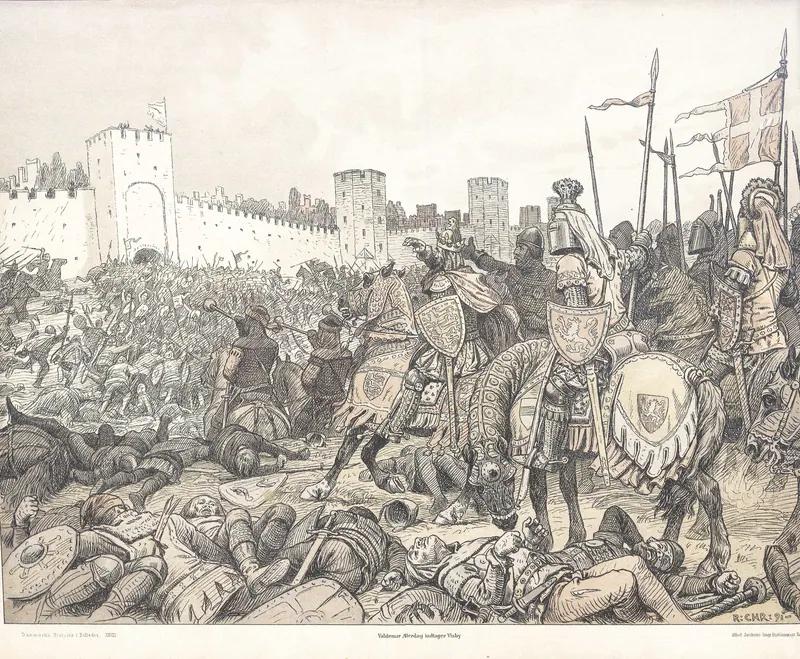
The field where about 1,800 Gotlandic farmers were killed on 27 July 1361 and buried in their armour, in at least five mass graves on the ground of Solberga convent, under a 14th-century limestone cross whose inscription is still legible. Free, unfenced, open at all hours, about fifteen minutes' walk outside Söderport — and it only works if you go to Fornsalen first.

Free or cheap Quiet corner
Walking directions
All articles