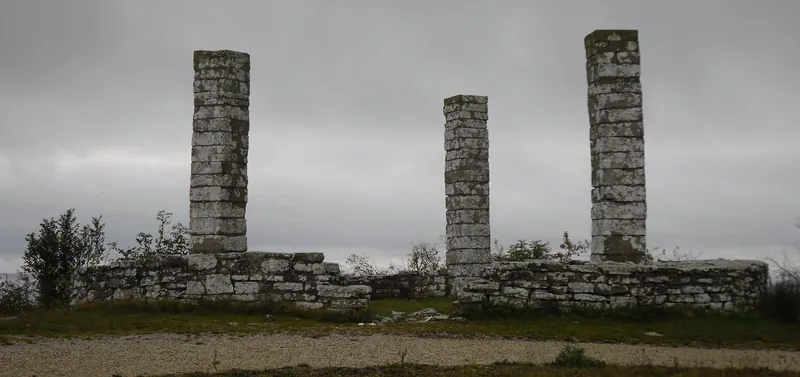
Region Gotland calls it Scandinavia’s oldest standing medieval gallows, and it is believed to have been built in the 1200s. Three limestone pillars, each about six metres high, stand inside a circular stone wall sixteen metres in diameter and roughly a metre high and a metre thick. Nothing about the siting is accidental: it is on the open klint edge north of the town, where the pillars and whatever hung from them were visible both from Visby and from the sea. That was the point.
It stayed in use for six hundred years. The last execution here was the beheading of the Visby hatmaker Anders Johan Hasselberg in 1845. Archaeological work in the reserve has shown that a number of those executed here were also buried here, which is worth knowing before you walk across the grass. The gallows is protected as a fornlämning — a registered ancient monument under the Cultural Heritage Act — and it is an offence to disturb, dig, cover or alter it in any way.
The surrounding Galgberget nature reserve is a genuinely good hour rather than a grim errand. There are two limekiln ruins, one of them hexagonal and ten metres high, the other rectangular and twelve; a stone labyrinth of twelve settings measuring 19 by 18 metres; dramatic cliff edges; and a set of viewpoints over the sea. Paths are gravel and accessible, there are two car parks (upper and lower), two barbecue sites — one with a sea view — and an accessible toilet at the upper car park, open in summer.
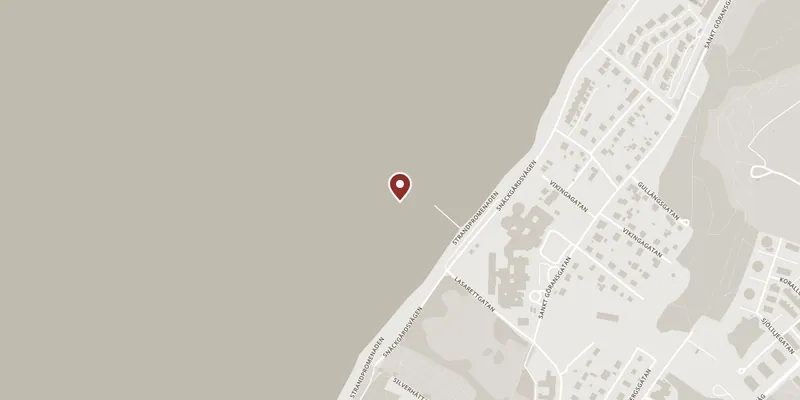
Getting there is easy and does not need a car: it is immediately north of Visby, reachable on foot or by bicycle from the old town, or about 1.5 km north on road 149 with parking that takes coaches. There is no fee and no gate.
The reason it belongs on a medieval list rather than a walking list is simple. Visby gives you the wall, the churches and the museum, all of them curated and interpreted. This is the one medieval structure around the town that has not been tidied up, has no ticket desk, no sign to queue at and nothing arranged for you — a 13th-century instrument of public death standing on a cliff, still doing exactly what it was built to do, which is be visible from a long way off.