A wet gambeson takes two days to dry on a radiator and never really does, and I tell you that so you understand the first rule: wear what the ground and the weather demand, and worry about looking the part second. No festival on our list makes you dress up. A few gates charge less if you do: in 2026 the Óbidos Medieval Market charged costumed adults €10 instead of €12, the Médiévales de Provins €9 a day instead of €12, and Karlštejnské vinobraní let complete medieval costume in for nothing. By the end you’ll know whether to bother, what to put on your feet, and what goes in the bag.
Do you have to dress up for a medieval festival?
No. Not one festival on our list requires costume, and at most of them the people in ordinary clothes outnumber the people in wool by a wide margin. You will not be turned away, stared at, or asked to explain yourself. A £30 linen tunic over your own trousers is enough to feel included without looking like you’ve come from a birthday party, and a cloak over jeans is the standard compromise for anyone under 10.
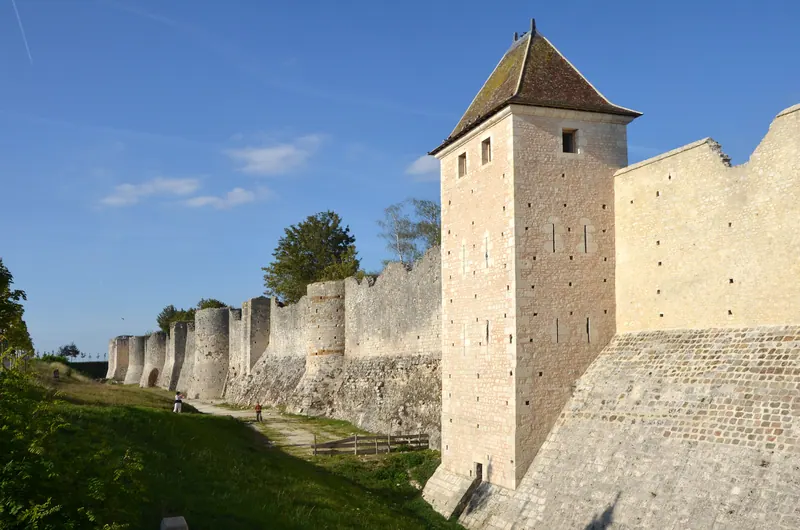
Where it pays: Óbidos in 2026 charged €10 for a costumed adult against €12, and €6 for a costumed child against €8, with costume hire stands by the entrance for those who arrive empty-handed. Provins charged €9 a day or €12 for the weekend in full medieval costume against €12 and €16 online. Karlštejn let anyone in complete medieval costume in free, on top of under-15s being free anyway, which makes a kirtle the cheapest ticket in Czechia for one weekend in September. Each gate decides what “complete” means, and the cloak-over-jeans compromise rarely qualifies.
Where it is the norm rather than the exception: Visby Medieval Week, where a large share of visitors dress for the whole week and the organisers say you are as welcome in a raincoat as a kirtle; and Jornadas Medievales de Ávila, where residents are encouraged to dress for one of the three cultures and the balconies are decorated along the parade route. In both, the costume is the town’s, and you are a guest.
If you only want to do it once, do it at Visby, and borrow.
What should you wear if you’re not dressing up?
Feet
Boots for meadows, trainers for cobbles, nothing new. Tewkesbury Medieval Festival is fields beside a river meadow and English Heritage’s own words for the ground at the Battle of Hastings Reenactment in October are “grass, can be muddy”. Boots, then, with socks you have walked in before. Ávila, Tallinn and Visby are cobbles on hills, and trainers with grip beat anything with a leather sole, which on wet stone is a way to meet the ground.
Layers
Three places teach the same lesson differently. On Gotland the pattern is drizzle, then heat, then drizzle, and a wool layer over linen copes with both and dries on you. Ávila sits at 1,130 m and the evenings are cold in early September while the afternoon is not. The field at the Battle of Grunwald Reenactment has little shade and a battle at 15:00 in July. One layer more than the forecast, and a hat in the bag whatever the forecast.
Wool and linen over polyester
Sparks. Every festival worth the name has a forge, a fire act, or both, and polyester near either goes from fabric to a problem faster than you can step back. Wool smoulders and stops; linen is cool and washes. They also handle sweat, which polyester stores for you and returns in the evening, and a camp at nine in the morning already smells of woodsmoke, which wool wears well and fleece does not.
Hats, sun and rain
A wide brim beats a cap and a hood beats both, because a hood goes up in the rain without taking your hands off anything. A golf umbrella in a crowd on a slope is how you make enemies at a battle; a packable rain layer makes none. Sun cream goes on before the queue, not after.
What should you wear if you are dressing up?
The £30 version
A tunic or a kirtle, a belt, hose or plain trousers, and a hood. That is a costume, and the whole lot can be had for about £30 if the tunic is linen and the rest is from your wardrobe. Spend the money where it shows: the belt, which is what everyone looks at, and the shoes, which are what you will be standing in for nine hours. Skip the sword.
“Costume” versus “kit”
A costume is something you wear to look the part for a day. Kit is a reenactor’s word for clothing and equipment researched to a period and a place, and a gambeson is not a “padded tunic” any more than an arming sword is a longsword; the fair etiquette guide covers what to ask a reenactor and what not to touch. Reenactors care because they are being judged on it by other reenactors. You are not, so don’t worry about it; the only person who will ever comment on your tunic is me, and only in print.
What not to wear
Plastic armour near fire, for the reasons above. A toy sword where the rules forbid it: weapons and peace-tie policies differ by festival and we haven’t verified each, so check the official site before you pack anything blade-shaped. Horned Viking helmets never existed; that is the whole sentence, and we will not say it again.
Children
The cloak-over-normal-clothes rule: a cloak goes over whatever they were going to wear anyway, costs little, and comes off when it is hot. The wooden sword question has one answer. Buy it at the end of the day, not the start, or you will carry it, the child and the bag from the far car park.
What should you bring?
- A water bottle, because refill points vary by site and at Swedish prices a bought bottle is a small tragedy.
- Cash. Tewkesbury’s official parking is £10 per car per day, cash only, and market stalls everywhere are happier with it.
- A folding seat or blanket for any battle; the bank along the field fills an hour before.
- Sun cover and a rain layer, both, in any month from June to September.
- A bag that closes, because you will put it down on straw next to a cooking fire and forget it for an hour.
- A power bank; the programme is on your phone and the phone will be in the cold.
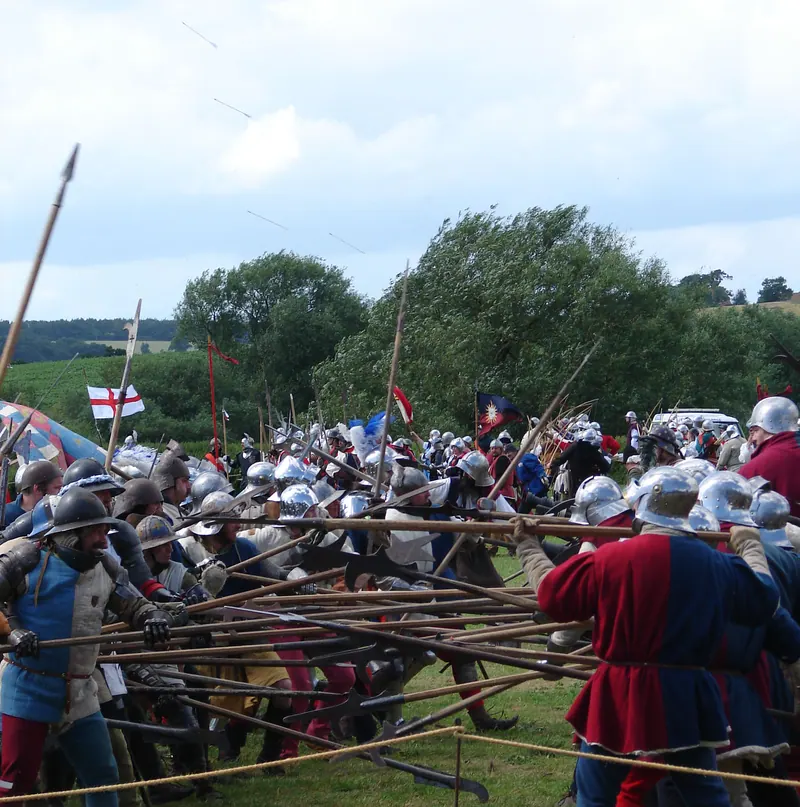
- Earplugs for small children near cannon. Tewkesbury’s battle includes cannon and black powder; Grunwald’s 15:00 is loud.
- Tissues, for reasons that do not need explaining to anyone who has used a field toilet at four in the afternoon.
Leave at home: the golf umbrella, glass of any kind, and the dog unless you have checked. Guédelon Castle and Tewkesbury both welcome dogs on a lead; others differ, so check the festival’s rules.
What do the festivals themselves tell you to bring?
- Grunwald: water, sun protection, a blanket or folding seat, and cash for the fair; the field has little shade and the queues to leave are long.
- Battle: boots; the ground is grass, in English Heritage’s own words, and it is October.
- Visby: book ahead; the tournament, concerts and courses sell out before the week starts, and the organisers say so.
- Ávila: a jumper; at 1,130 m the evenings are cool even in early September.
- Esslingen: a weekday afternoon, if you want to see the craft demonstrations rather than the back of a coat.
Tips we’d give a friend
- Break the boots in. A festival is 10 miles on grass or cobbles, and new leather will let you know at mile three.
- One layer more than the forecast, always. The forecast is for the town; you are standing in a field or on a wall.
- Wear the cloak, skip the sword. The cloak earns its place at the first drizzle; the sword is a thing to carry.
- Put the programme times in your phone before you lose signal in a river meadow.
- If you can only afford to dress one person, dress the child. They will be asked to join things, and you will be handed the bag.
- Check the gate rules for costume discounts the week before: Óbidos, Provins and Karlštejn all had them in 2026, and each decides what counts.
- Sit down for the battle, in the front row on the ground, before the people with chairs arrive. The calendar will tell you when; the first-timer’s guide will tell you where, and the Tewkesbury guide will tell you which field.
Boots, wool, a hat, cash, something to sit on. Everything else is costume, and costume is optional, which is the one thing the gate and I agree on.