Medieval Booker

Mureș County, Transylvania ◆ Romania

Medieval Sighișoara

Saxon-founded citadel town in Transylvania, continuously inhabited since the 12th century and a UNESCO site since 1999, with nine surviving guild towers, the 64 m Clock Tower and the house where Vlad the Impaler is said to have been born.

1 festival 6 places no articles yet next event 23 July 2027

Why is Sighișoara a medieval destination?

Sighișoara (Schäßburg in German, Segesvár in Hungarian) was founded by Transylvanian Saxons, German-speaking settlers invited by the kings of Hungary from the mid-12th century to hold the eastern frontier. A document of 1280 records the town as Castrum Sex on the site of an earlier fort; it was a royal centre by 1337 and received urban status in 1367, becoming one of the seven Saxon strongholds that gave Transylvania its German name, Siebenbürgen.

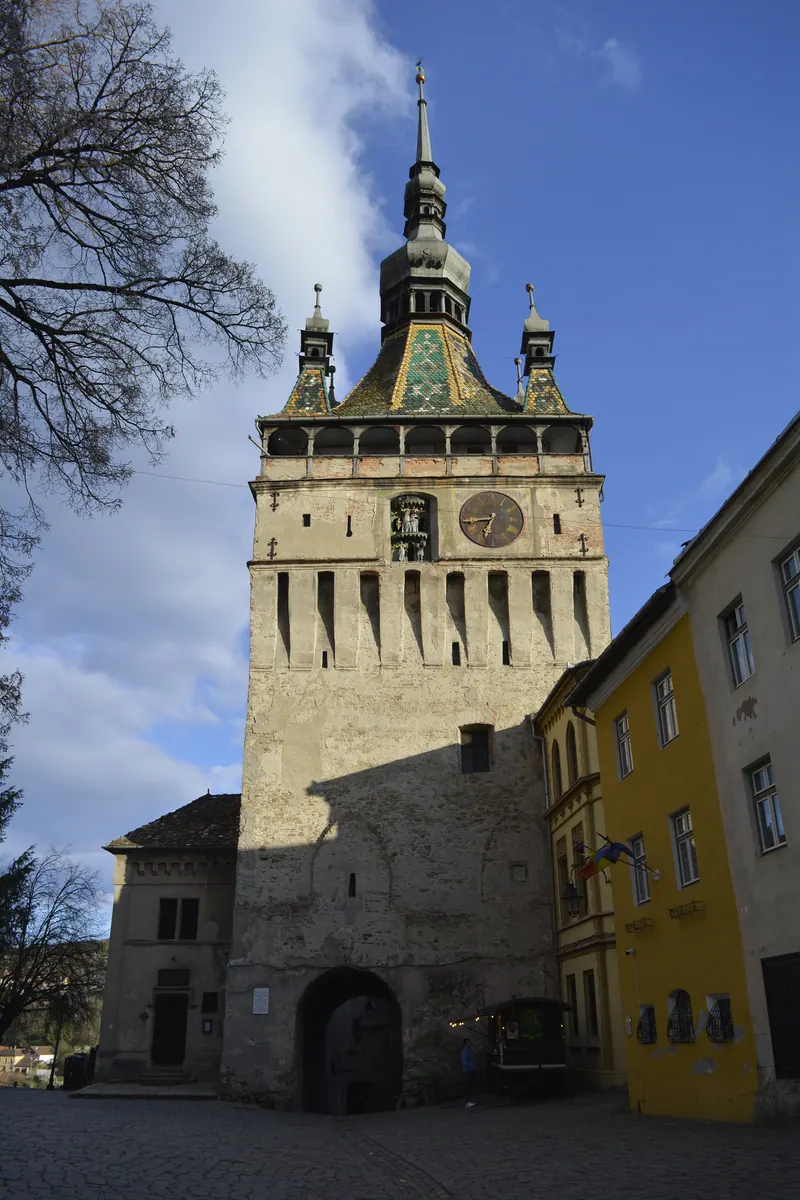
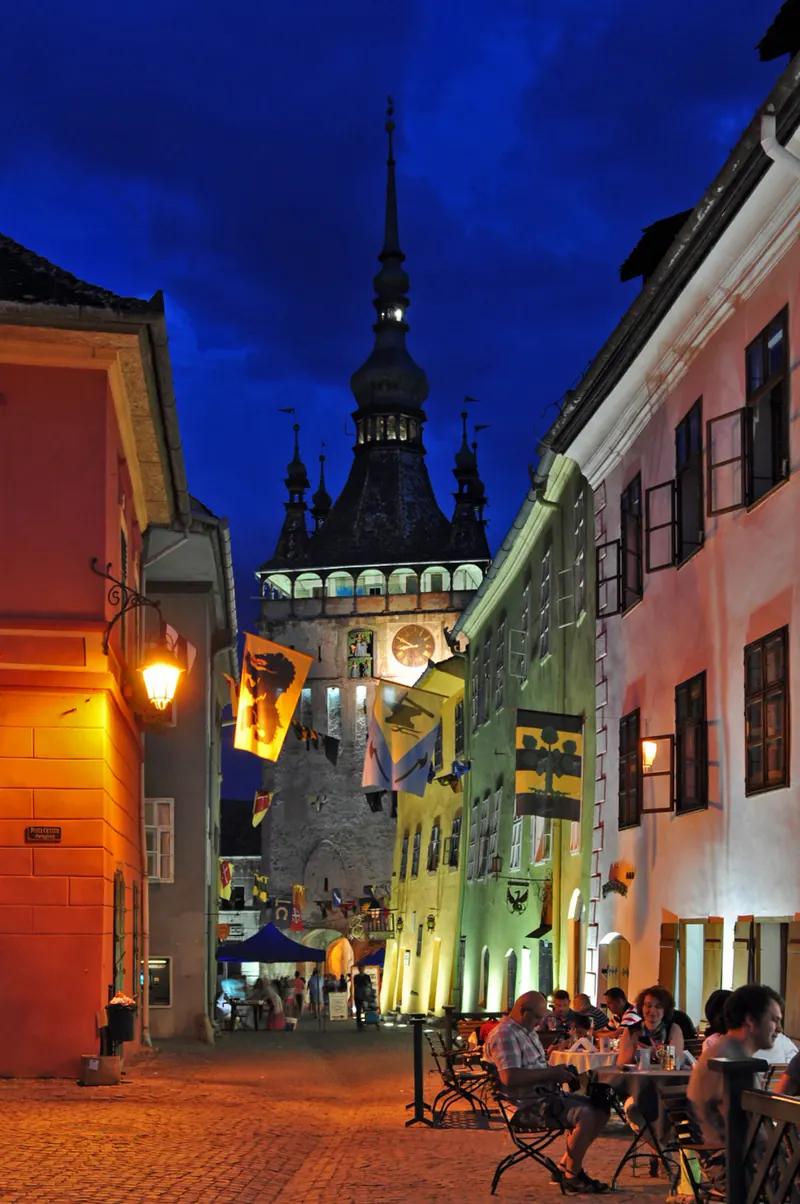
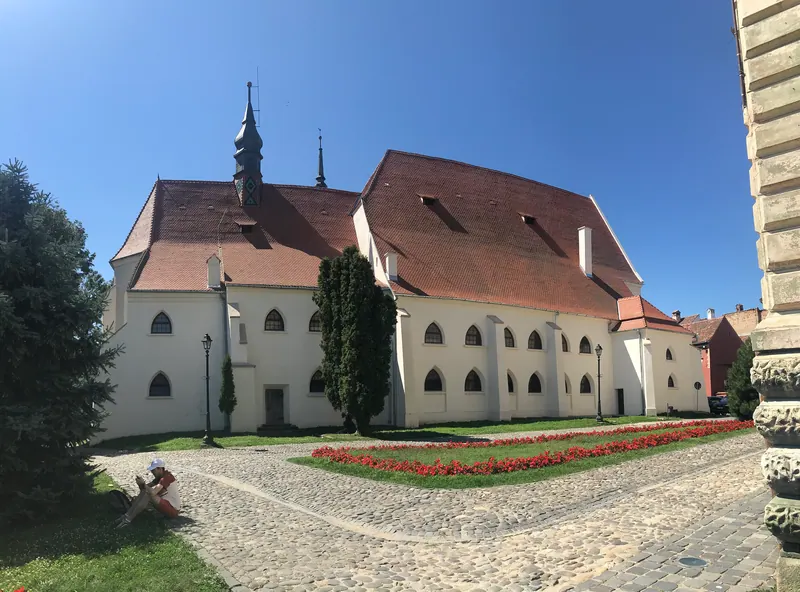
The citadel on its hill keeps the layout of a fortified guild town. Of the 14 towers that once guarded the walls, nine survive, each built and defended by a craft guild: the Tailors’, Tinsmiths’, Ropemakers’, Butchers’, Furriers’, Bootmakers’, Ironsmiths’ and Tanners’ towers and the 64 m Clock Tower, whose wooden figurines and clock were added after the fire of 1676 and which now houses the history museum. The covered wooden Scholars’ Stairs (1642) climb to the Gothic Church on the Hill and the old German school; the Dominican Monastery Church, Lutheran since the Reformation, stands beside the Clock Tower.

Vlad II Dracul, prince of Wallachia, lived here in exile from 1431 to 1435 and minted coins in the town; his son Vlad III, the Impaler, is generally said to have been born here around 1431, and the house on the citadel square that carries his name is now a restaurant. The town also produced Hermann Oberth, the rocketry pioneer, born in 1894.

The historic centre was inscribed on the UNESCO World Heritage List in 1999 as an outstanding example of a small fortified medieval town. Sighișoara lies on the railway between Brașov (about two hours) and Cluj-Napoca; the citadel is a steep walk from the station and is pedestrianised during the Medieval Festival on the last weekend of July.
Medieval festivals in Sighișoara

Featured
Living History & Museums Music, Feasts & Theatre +1

Sighișoara Medieval Festival

Sighișoara, Romania

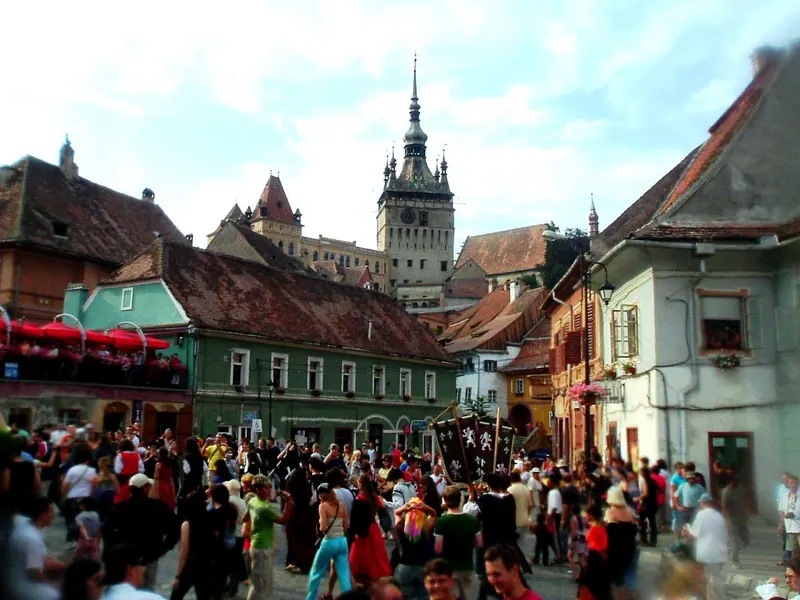
The Sighișoara Medieval Festival fills the UNESCO-listed Saxon citadel with three days of free parades, knights' displays, medieval music, theatre, crafts and concerts on the last weekend of July. First held in May 1992, it is Romania's oldest medieval festival; the 31st edition ran 24–26 July 2026.

Expected 2027
Free Family

Months with a festival are linked. Expected dates say so. July

What else to see in medieval Sighișoara

Short list on purpose. Everything here is somewhere we'd actually send you, checked and still standing.

Landmarks & bridges

Landmark Start here

The Clock Tower and the History Museum

Gate tower of the later 14th century; Baroque roof 1677; museum since 1899

The 64 m gate tower that has shut the citadel's main entrance since the 14th century, with the town's history museum stacked up its six floors and an open wooden gallery under the roof. Climb it for the gallery and for the figure niches beside the clock faces — but know before you go that the famous week-day gods turn once a day, at midnight.

Good with children Works in the rain
Walking directions
Landmark

The citadel wall and the guild towers

Wall and towers 14th–17th century; nine of the original fourteen towers survive

A wall of 930 m with fourteen towers and five artillery bastions, each tower built, armed and manned by one craft guild — tailors, tinsmiths, ropemakers, butchers, furriers, bootmakers, blacksmiths, tanners. Nine towers still stand; walk the outside of the wall from the Clock Tower and find three of them, because only the Clock Tower opens and this is a walk rather than a visit.

Free or cheap Quiet corner Best in the evening
Walking directions
Landmark

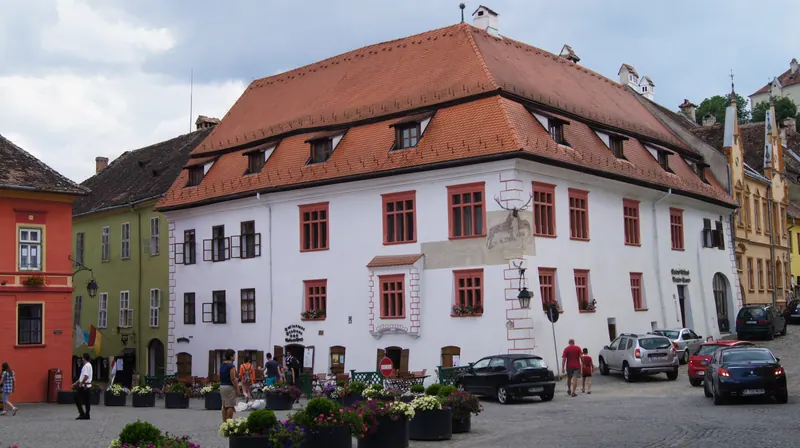
Casa Vlad Dracul

Ground-floor vault 14th–15th century; Vlad II Dracul in Transylvania 1431–1436; house identified as the birthplace in 1945

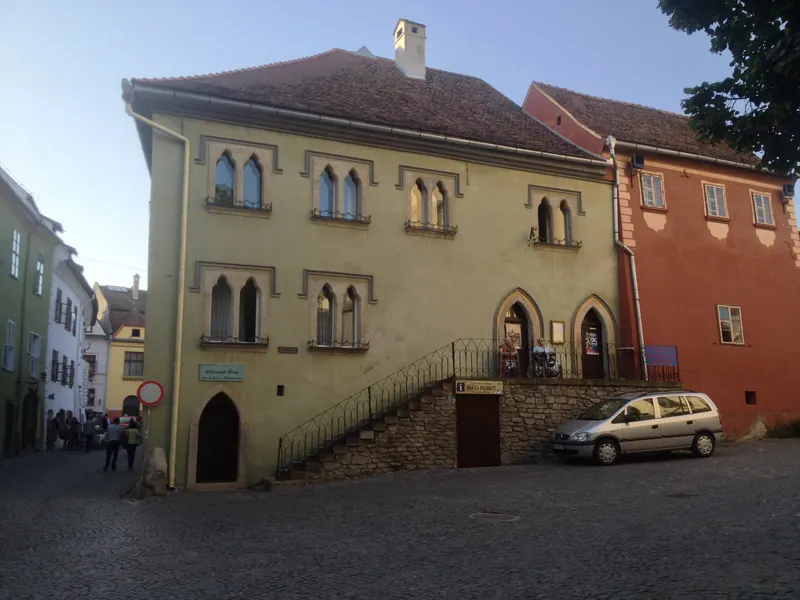
The ochre house between the citadel square and the Clock Tower, sold hard as the birthplace of Vlad III the Impaler, with a wrought-iron dragon over the door and a restaurant on the ground floor. Go for the painting on the first floor — it is the entire reason anyone ever said he was born here, and knowing that is more interesting than the sign outside.

Free or cheap
Walking directions
Landmark

The Saxon cemetery on the hill

Burial ground of the Saxon Evangelical community; the adjoining Ropemakers' Tower rebuilt 1350

The Evangelical parish's burial ground, spread under trees on the plateau behind the Church on the Hill, where the German-speaking town buried itself for centuries and the stones still record the dead man's trade. Come down into it from the church rather than climbing up to it, and give it twenty minutes.

Quiet corner Free or cheap
Walking directions

Churches & ossuaries

Church

The Church on the Hill and the Scholars' Stair

First mentioned 1345; rebuilt as a hall church 1429–1488; covered stair 1642

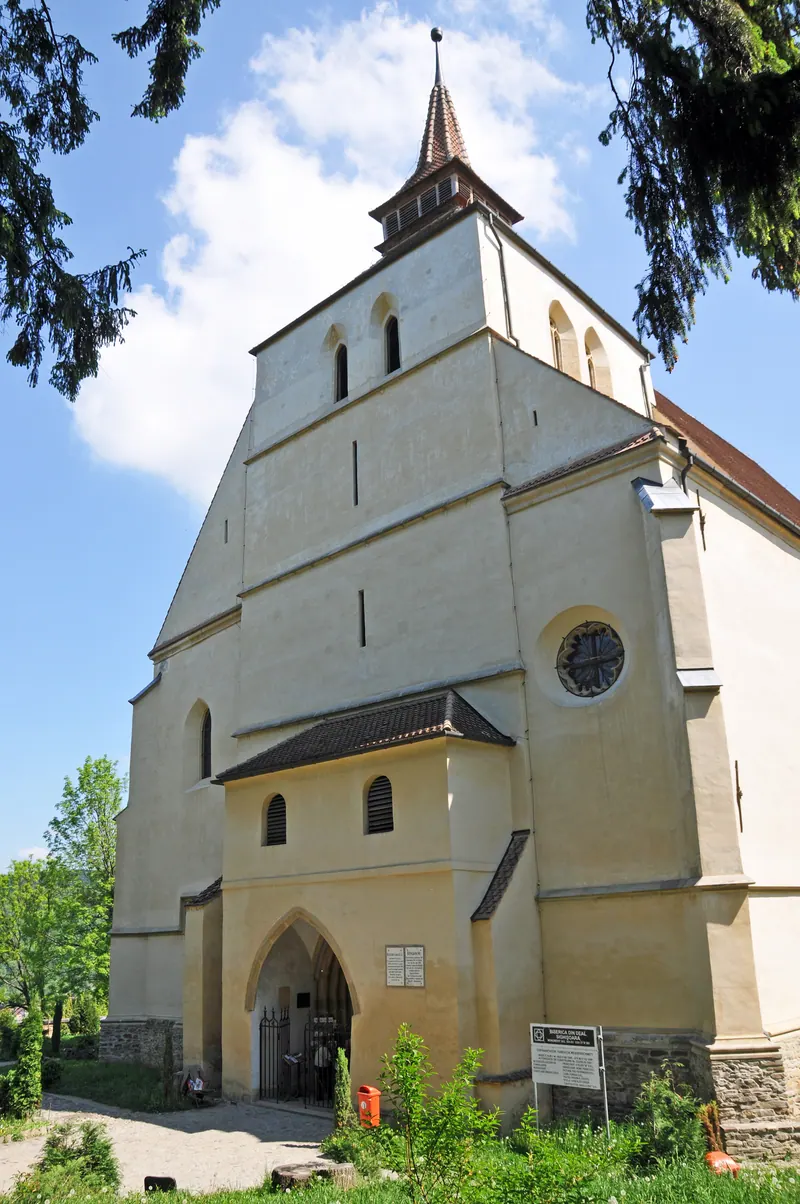
The Gothic hall church at the top of the citadel, rebuilt between 1429 and 1488 on a church first mentioned in 1345, reached by a roofed wooden stair of 1642 with about 175 steps. Go for the wall paintings of 1483 and 1488 that spent two centuries under limewash, and for the crypt beneath the choir — the only medieval one known in Transylvania.

Church

The Monastery Church

Dominican friary from 1298; hall church rebuilt c. 1492–1515; Lutheran parish church since 1556

The Dominicans' church, recorded from 1298, rebuilt as a late-Gothic hall church around 1500 and the Saxons' main town church since the Reformation. Go in for the Anatolian carpets: three dozen 16th- and 17th-century Turkish rugs hanging on the walls and gallery fronts of a Lutheran church, given by merchants who traded south into the Ottoman lands.

Works in the rain Quiet corner
Walking directions
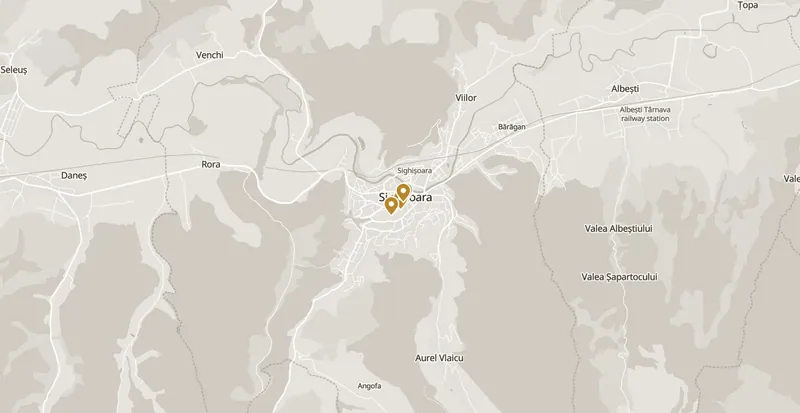
Map of the places worth your time in Sighișoara
Everything above, on one map. Tap a link to open it in Google Maps on your phone. © MapTiler © OpenStreetMap contributors