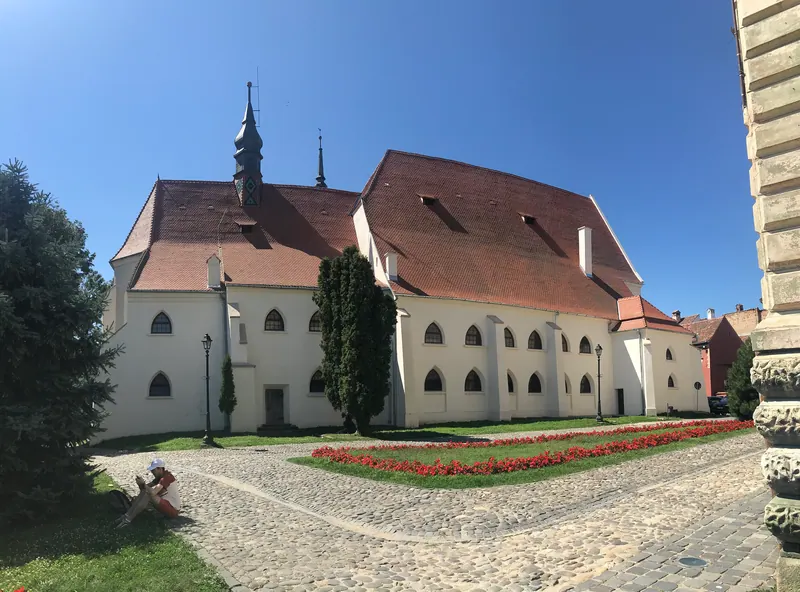
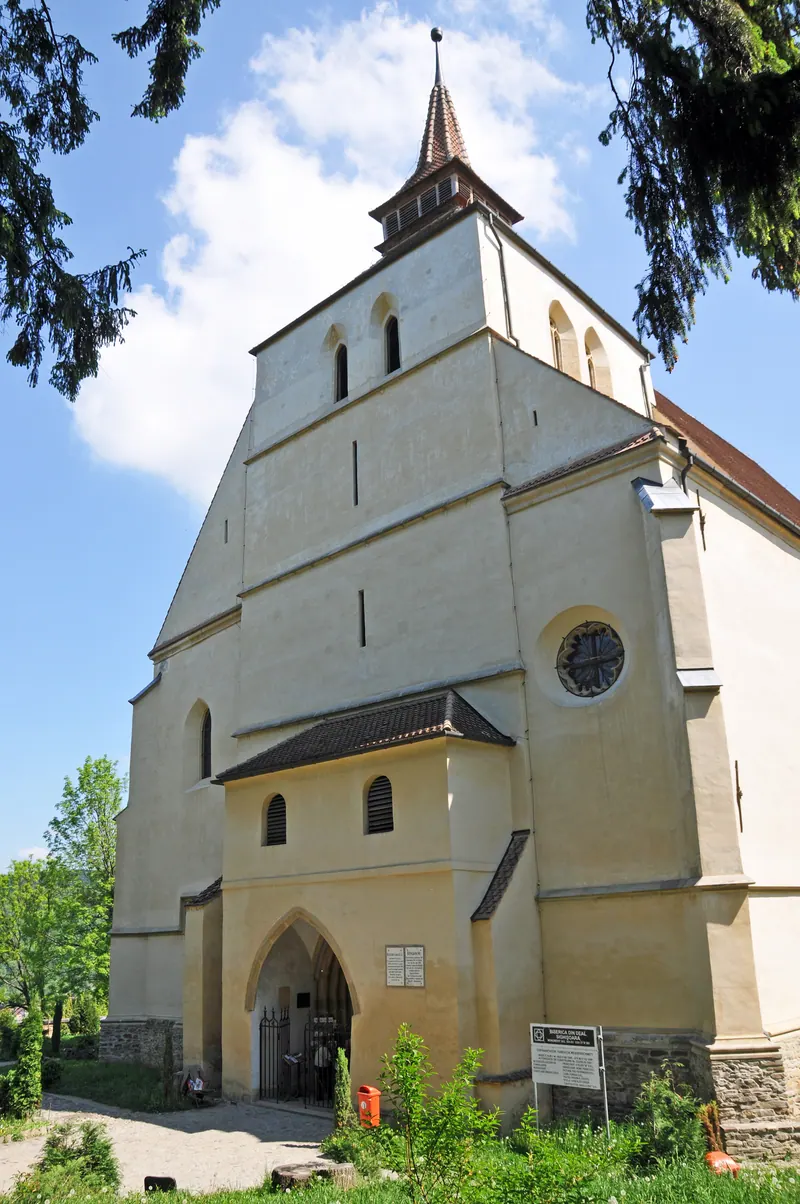
The Dominican friary in Sighișoara is documented from 1298. Its church was rebuilt and enlarged into a Gothic hall church in the decades either side of 1500 — two naves on a row of pillars, a plan common in Transylvanian town churches. In 1556 the friary was dissolved and its property secularised; the church passed to the Saxon Lutheran community and has been their parish church ever since. It is where the congregation still meets on Sunday mornings at 10:00. The convent buildings around it are gone: they were cleared in the 19th century and the town hall was built on the ground.
The carpets are the thing nobody expects. Transylvanian Saxon merchants bought Anatolian rugs on the trade route south through Wallachia to the Ottoman ports, and gave them to their churches as memorials — hung over the pews, along the gallery fronts and on the walls, where they stayed for four centuries because a Lutheran church had no use for painted altars and every use for a wall covering. Counts of what survives here differ: the Mureș county tourism board says 39, most of them 17th-century; other listings say 35 of the 16th and 17th centuries. Either way it is one of the significant surviving groups of Anatolian rugs outside Turkey, the largest being at the Black Church in Brașov. Stand in the middle of the nave and look up and around before you look at anything else.
The rest of the fittings are worth a slow lap. The bronze baptismal font of 1440 is the oldest object in the building. There is a stone doorframe carved in 1570 in Transylvanian Renaissance style, a Baroque altar of 1680, and a painted organ case with painted gallery panels — the loud Baroque furniture of a church that kept its Gothic bones.
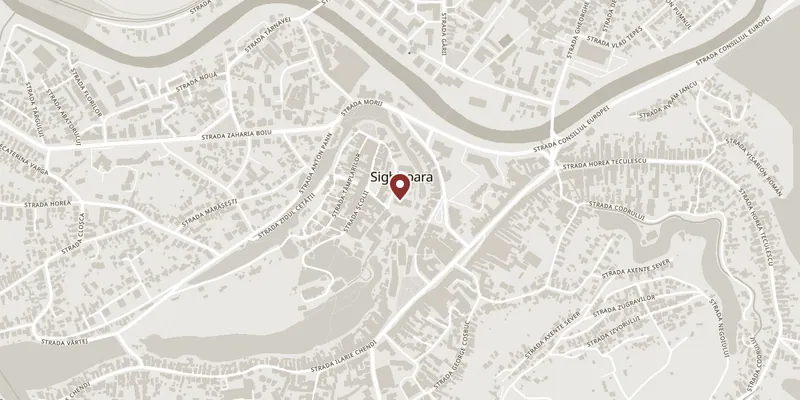
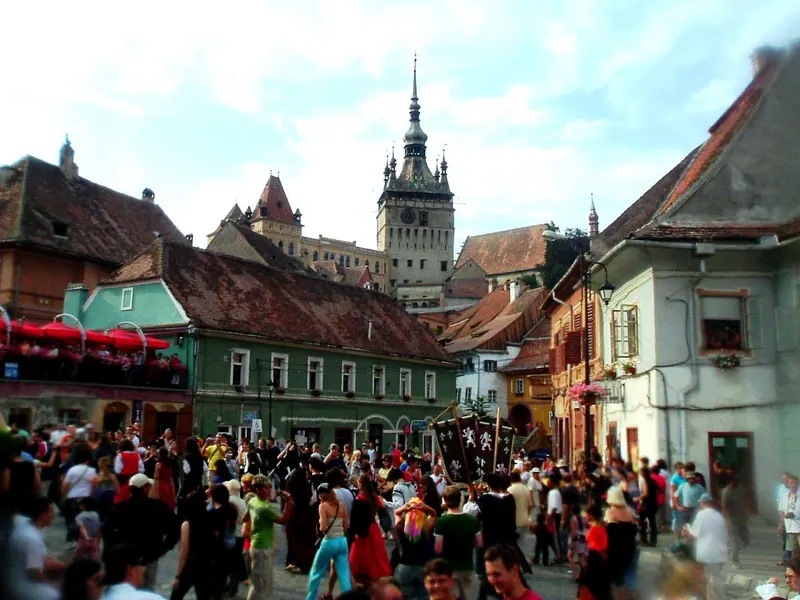
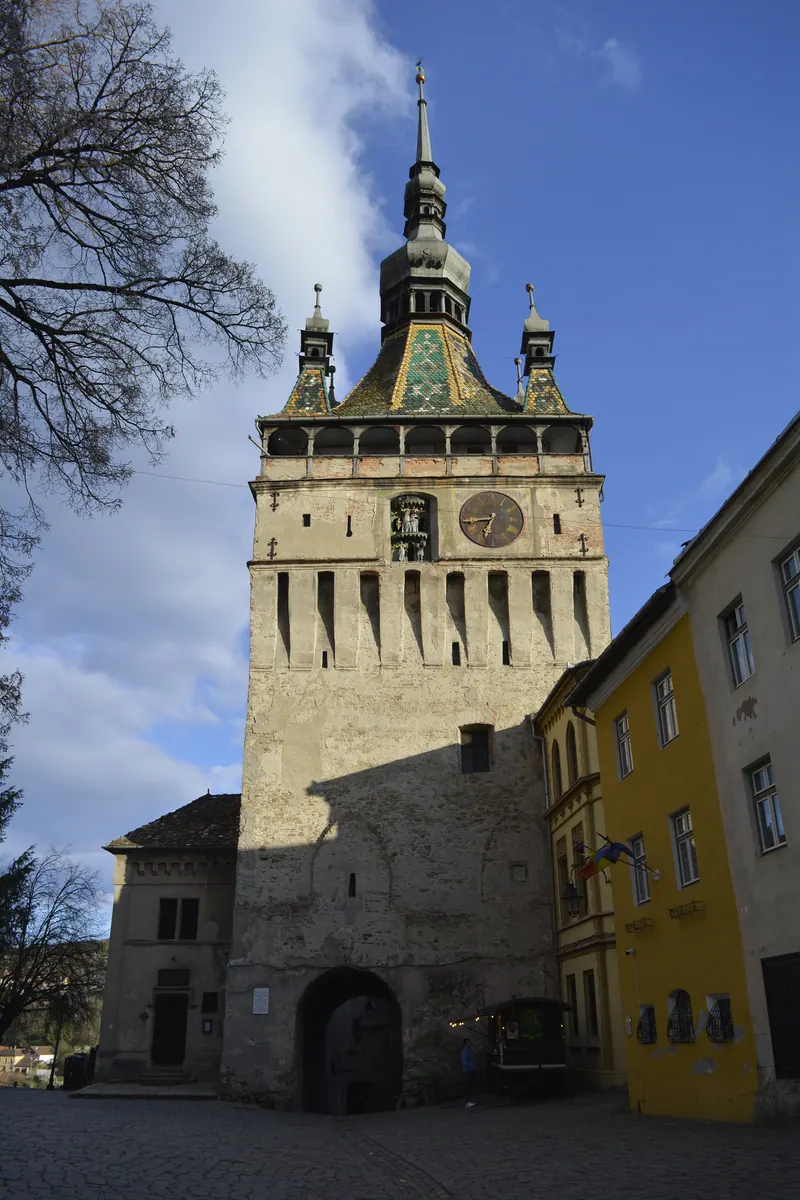
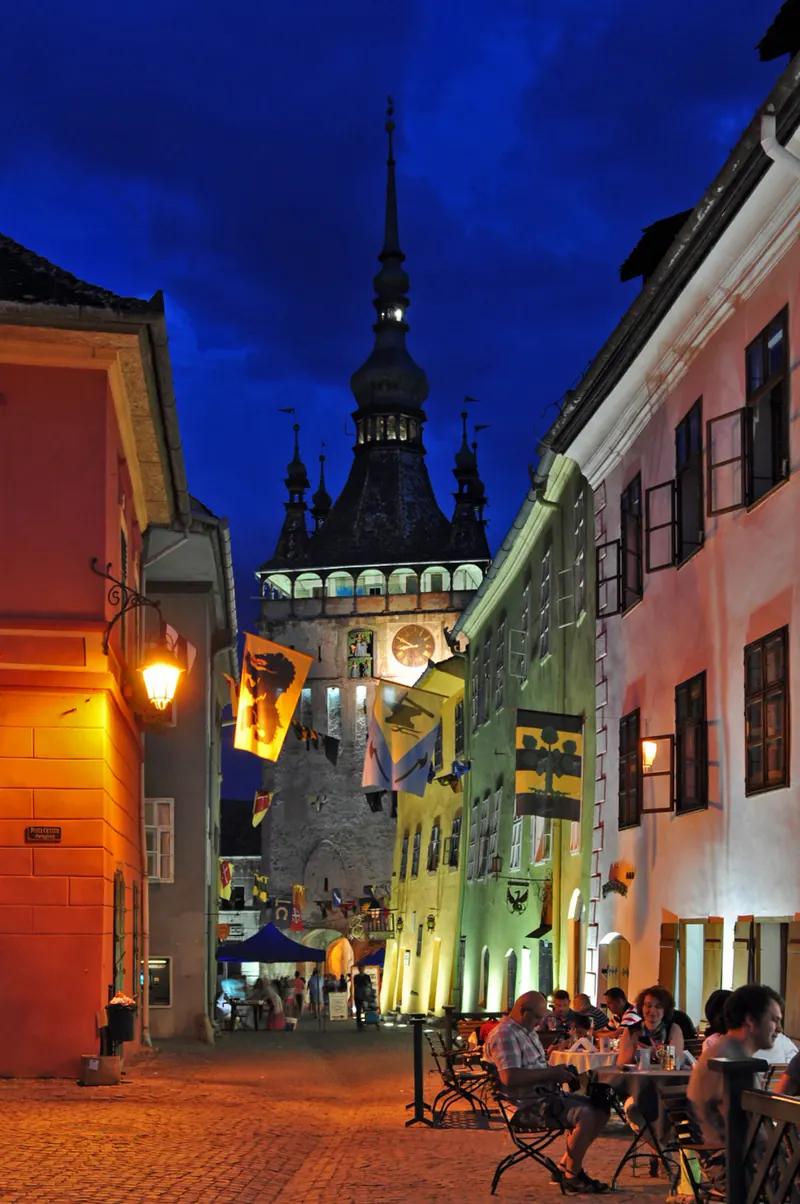
It stands on the citadel square, thirty seconds from the Clock Tower, and it is the easiest thing on this list to fit into a short visit. The parish also lists summer concerts on Friday evenings at 18:00 from June to September without saying which of its two churches they are in — worth asking at the ticket desk, because this is the one with the organ gallery.