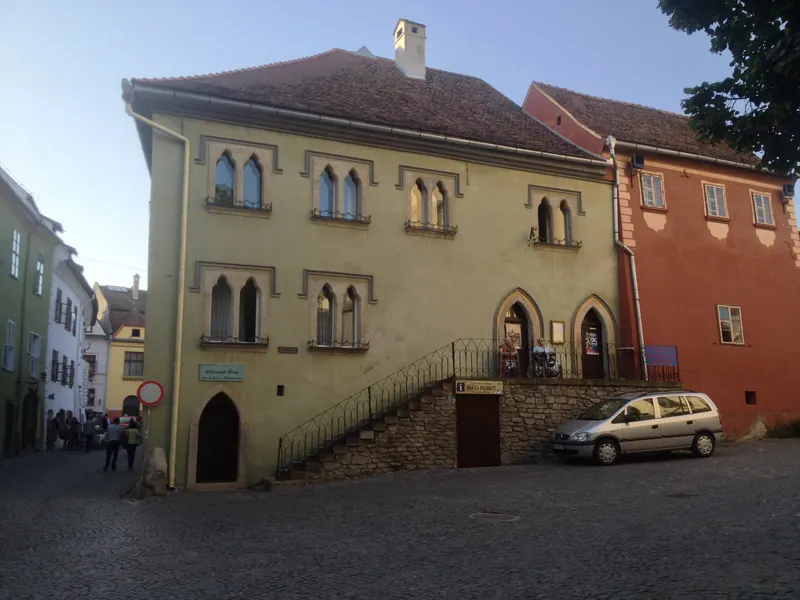
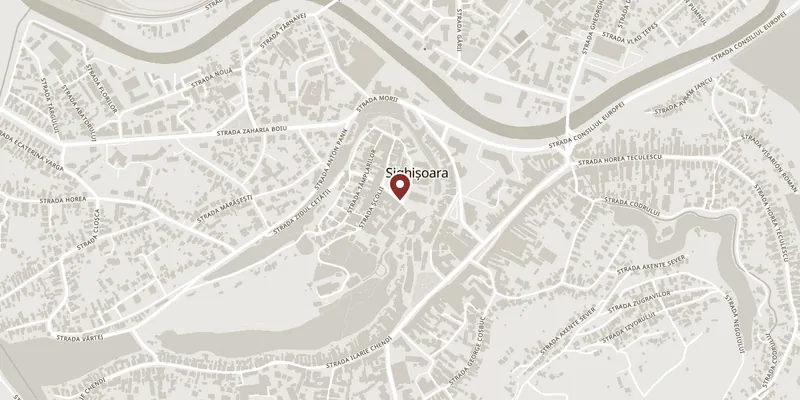
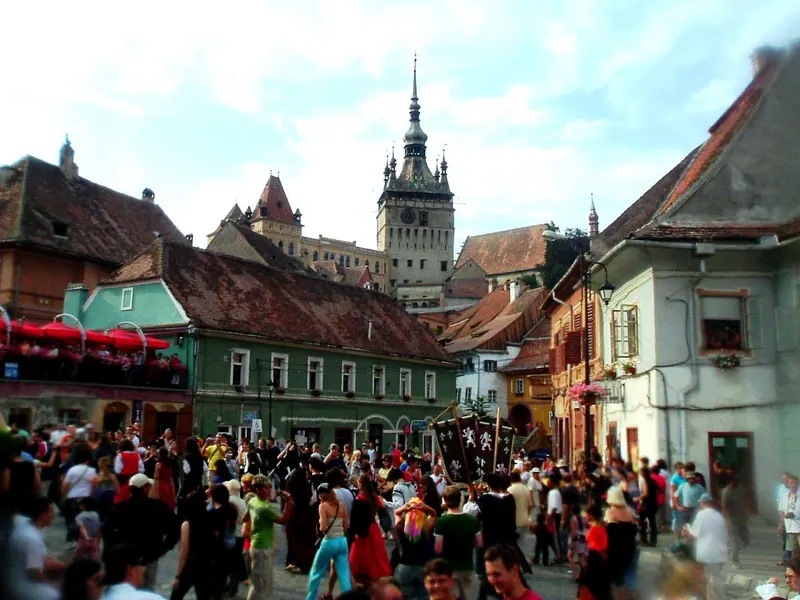
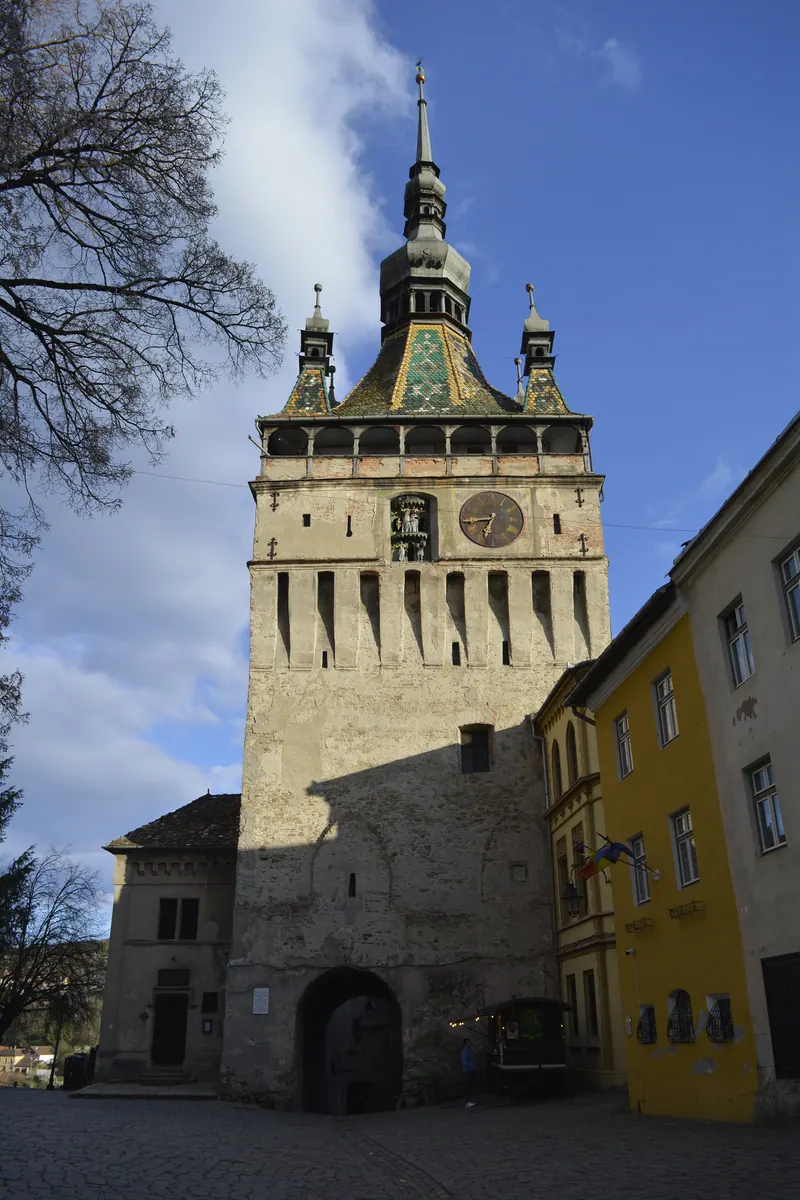
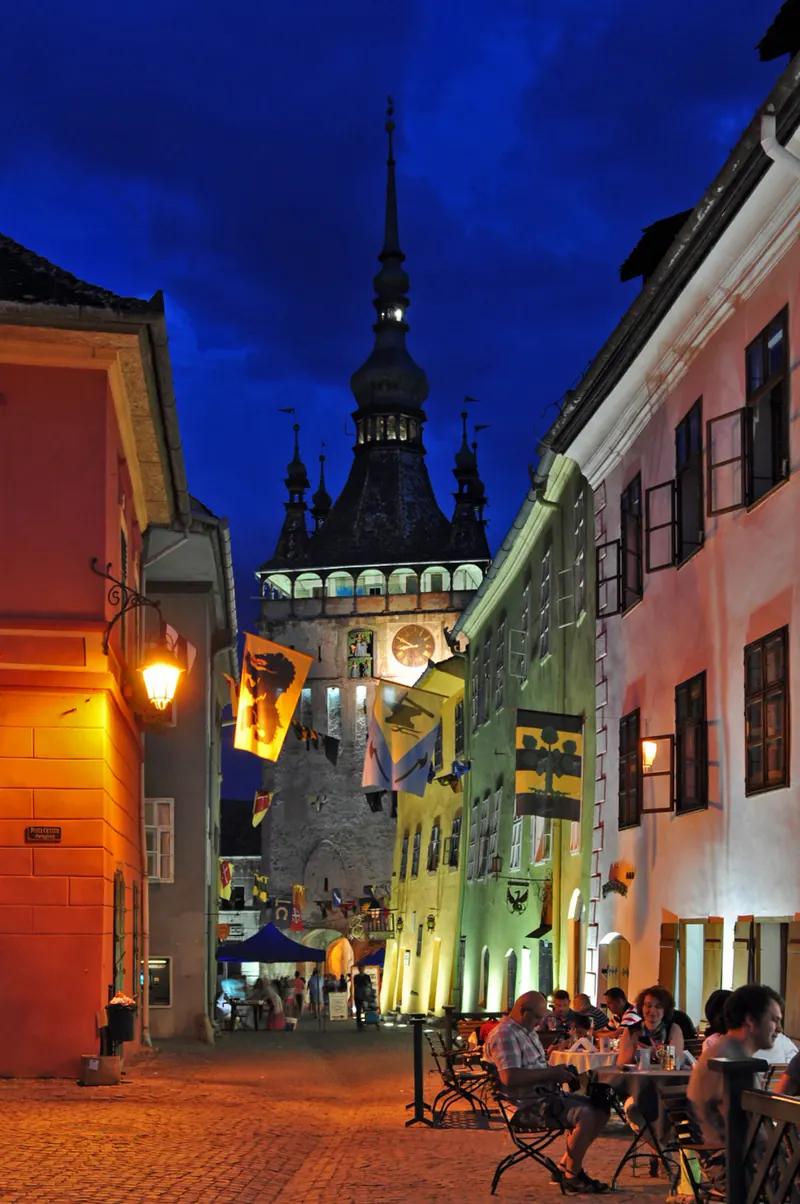
Take the building first. The barrel vault of river stone on the ground floor is 14th- or 15th-century, and Romania’s national tourism board calls this, apparently, the oldest surviving civil building in the citadel. It stands on the corner of Strada Cositorarilor where the lane runs from the citadel square down to the Clock Tower gate.
What is documented. Vlad II Dracul was invested into the Order of the Dragon in 1431 and spent the years to 1436 in southern Transylvania, waiting to take the throne of Wallachia. Two letters tie him to this town: one of late 1431 in which he writes that the Sighișoara men are coming with him, and one of about 1436 concerning the moving of his mint. Silver coin was struck for him at Sighișoara, carrying a shield with a cross on one face and a dragon on the other. That dragon is where the names come from — Dracul for the father, Drăculea, son of the dragon, for the son.
What is not documented. Nobody knows when or where Vlad III was born. Historians put the birth between 1428 and 1431 and name Sighișoara because that is where his father was, which is an inference rather than a record. The Romanian history magazine Historia states it flatly: in the absence of documents we cannot know whether the child came to Sighișoara with his father at all. Vlad III’s own first documented appearance in Transylvania is at Mediaș in 1476. No contemporary source names this house, or any house.
Where the claim came from. In 1945 a Dr I. Culcer connected the building to the fresco on the west wall of its first floor — four figures, one of them a woman, three in Western dress and one in oriental costume with a turban — and identified the turbaned man as Vlad Dracul. The house has been the birthplace ever since. Go up and look at the painting: everything sold on the street outside rests on that one reading of it.
And then be straight about the rest. Bram Stoker never came to Romania and his novel has nothing to do with this address; the capes, fangs and plastic bats are a trade of the last thirty-five years. Wanting to see where a documented, unusually violent 15th-century prince may have been born is a perfectly good reason to walk up here. Just know which part is evidence.