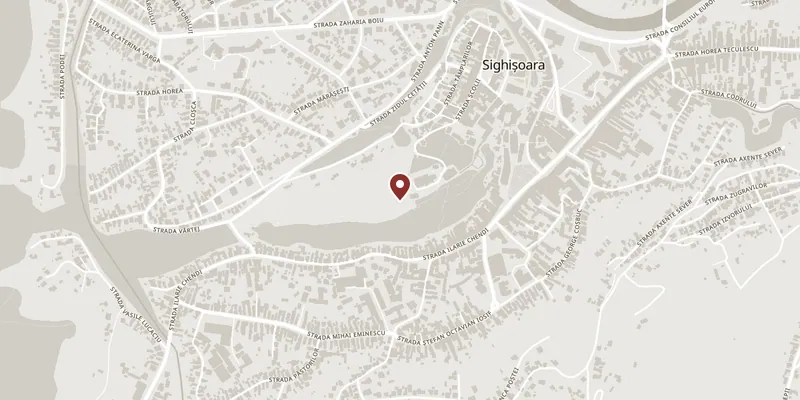
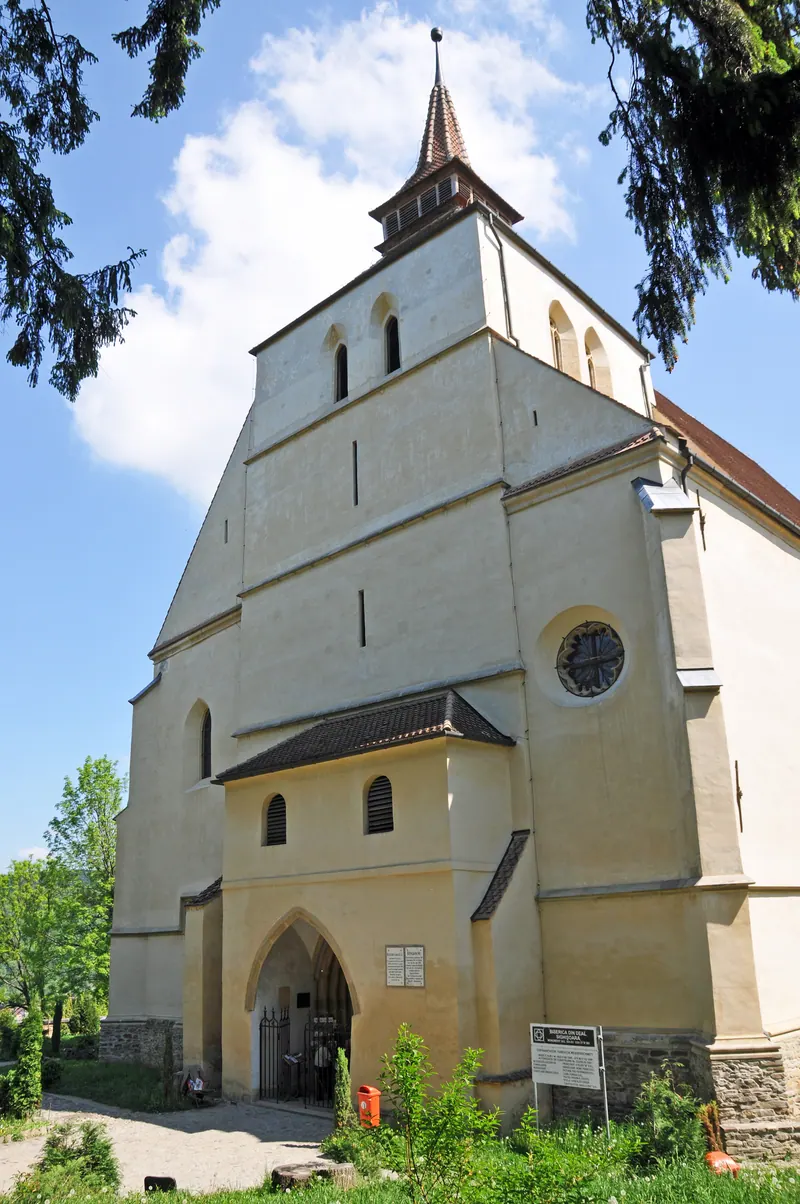
Sighișoara was a Saxon town — German-speaking settlers brought in by the kings of Hungary from the mid-12th century to hold the frontier — and this is where it buried its people. The cemetery lies west of and behind the Church on the Hill on the plateau of the School Hill, inside the UNESCO-listed historic centre, and it is still maintained by the Evangelical parish.
It does not look like a municipal graveyard. It is wooded and unclipped, with old trees, gravel paths and family plots stepped into the slope, and it is the quietest ground inside the citadel by a long way. Read the stones: German names in Gothic lettering, and, on many of them, the trade of the man buried underneath. Those are the same trades that owned the towers on the wall a few hundred metres away — tanner, tinsmith, furrier, ropemaker — which is the clearest lesson in what a guild town actually was that Sighișoara has to offer, and it is free.
The other thing you notice is where the dates stop. After 1990 almost the whole remaining Saxon population of Sighișoara left for Germany, ending eight centuries of settlement in the space of a few years. Family plots run through generations and then simply end. Some are tended by relatives who come back; many are not.
At the edge of the cemetery stands the Ropemakers’ Tower, rebuilt in 1350 after the Tatar invasion and the only one of the nine surviving guild towers that is lived in — the cemetery’s caretaker has it. It is a private house, so look at it and leave it alone.
Getting in: through the churchyard of the Church on the Hill, or from the top of the covered stair. It is a working cemetery, not an attraction, and the paths are uneven and steep in places. Take the loop down through the trees and come out on the lower side rather than doubling back on yourself.