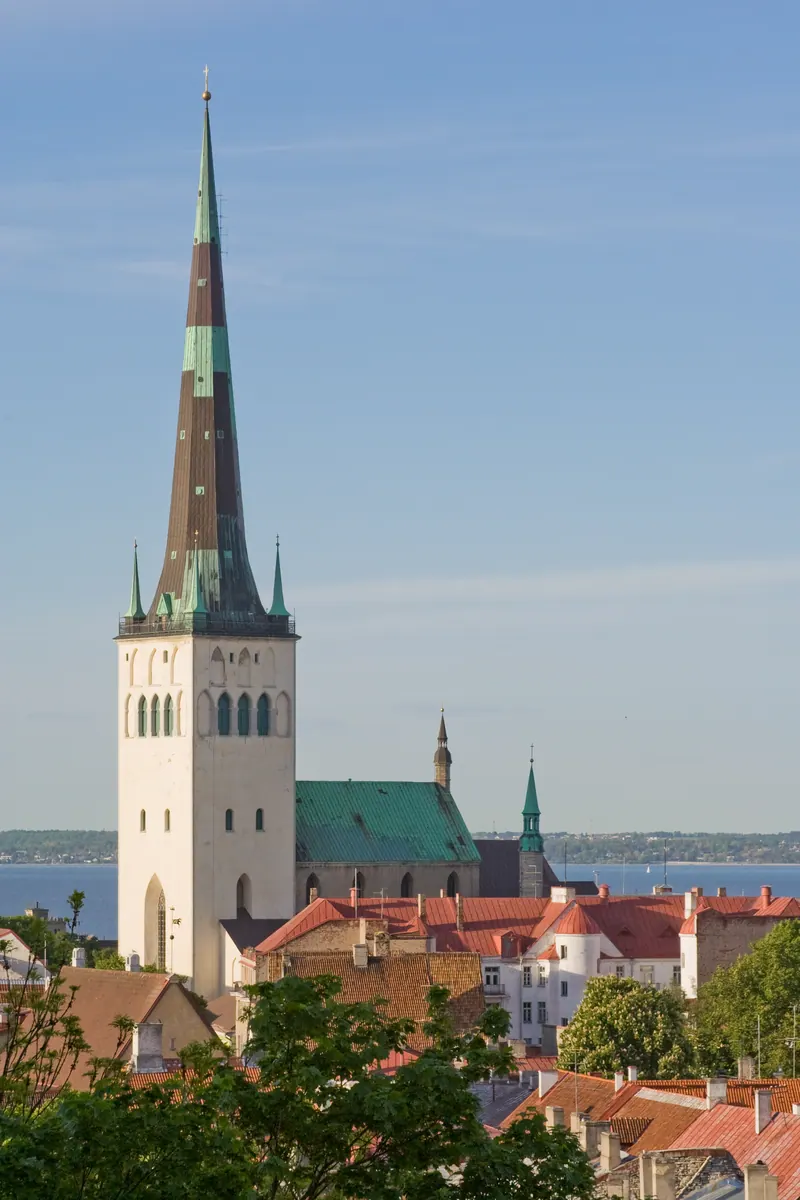
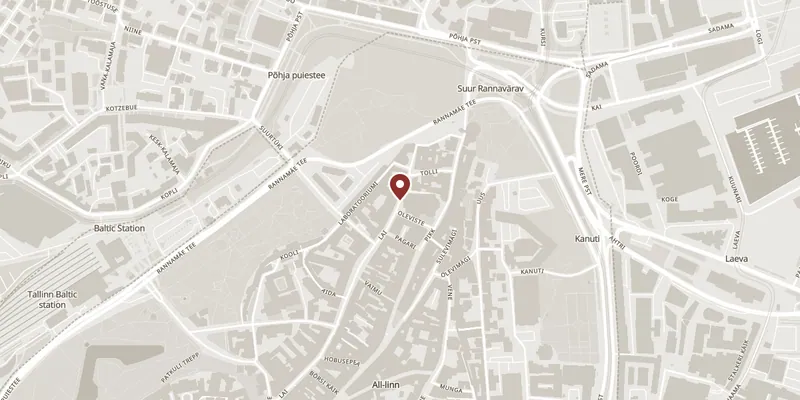
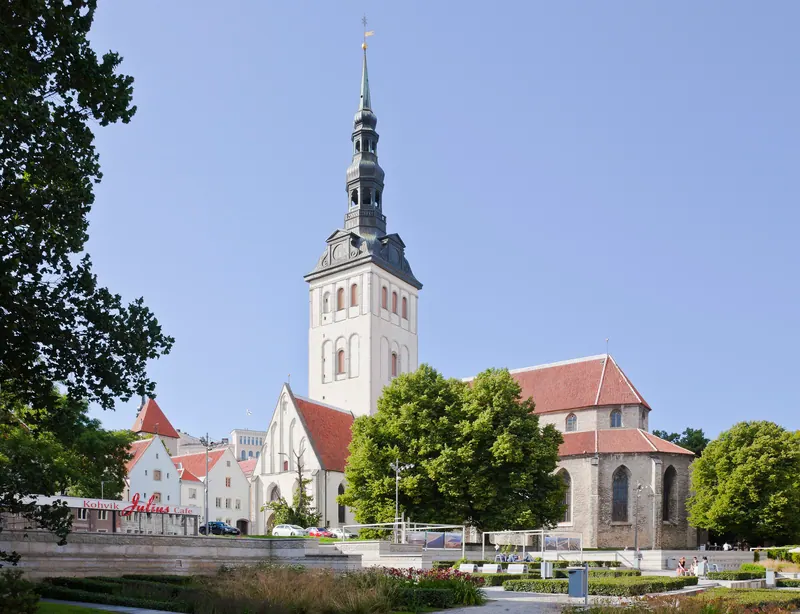
St Olaf’s — Oleviste — is named for the sainted king of Norway and first appears in the records in 1267, in the part of the lower town that faced the harbour. A medieval craftsman is said to have described the spire as eighty-four fathoms tall; if he meant Rhineland fathoms that is about 159 m, which would have made it the tallest building in the world for most of the 16th century. He probably meant local fathoms, and the claim is disputed — treat it as a good story rather than a fact. The building has burned three times and been struck by lightning something like ten times. The present spire stands at 123.7 m.
The tower climb is the visit. 232 steps of medieval stone spiral staircase, tight and worn, bring you to a narrow open gallery at about 60 m with a 360-degree circuit: the whole walled Old Town below you, Toompea and Tall Hermann to the west, the harbour and the bay north, and the glass towers of the modern city to the south. It is the only Old Town platform high enough to look down on the roofscape rather than into it, and unlike the lift at Niguliste you earn it.
Bring layers and expect wind. The gallery is open to the weather, the parapet is at chest height, and the stair is single-file in places, which means waiting for people coming down. The tower opens seasonally, 1 April to 31 October, and the last people are let up at 17:30.
The church below is an active congregation of the Estonian Evangelical Christian Baptist Church, and the interior is a tall, plain, whitewashed hall — its medieval fittings did not survive the fires. It is normally free to walk into, which is the right way to see it: five minutes inside, then the stair.
One modern footnote worth knowing: during the Soviet occupation the spire was used as a radio-surveillance and broadcasting mast, and that use is part of the standard telling of the building’s history.