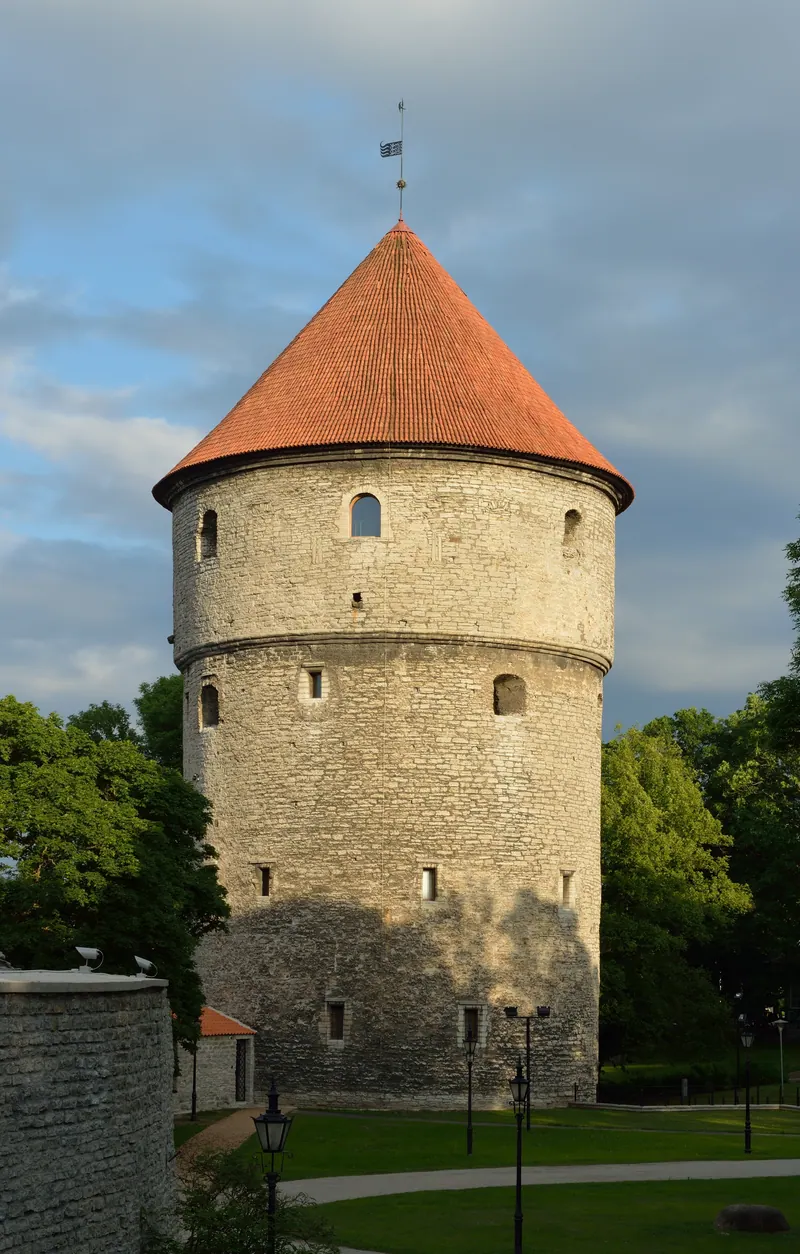
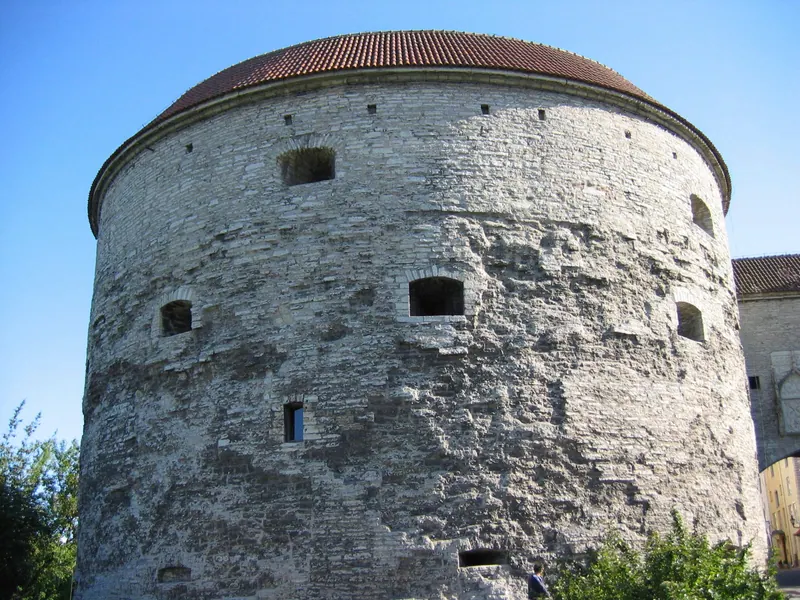
The name is Low German for “peep into the kitchen”, which is what the gunners could do from the upper storeys — look down the chimneys of the houses below. The tower was completed in its original form in 1483 as the town’s first purpose-built artillery tower, on the slope where the lower town’s wall meets Toompea, and it is the tallest defensive tower Tallinn has. Six floors of exhibition run up the inside, covering the history of the city’s fortifications, the people who built houses against the walls, and the artists who later lived in the tower itself. Cannonballs said to have been fired during the Livonian War bombardments of the 1570s are still lodged in the outer masonry; the tower’s nickname is first recorded in 1577, in a description of the second siege of Tallinn.
The museum is four towers, not one. Kiek in de Kök, the Maiden Tower (Neitsitorn, which has a reconstructed 1980s café interior among its displays and a working café), the Marstal Tower and the Short Leg Gate Tower are all on the full ticket, and you can walk between them.
Underneath run the bastion passages, galleries built into the earth ramparts in the late 17th and early 18th centuries when the medieval wall was reinforced with Swedish-era bastions. They were later used as shelters. You can walk them on your own without a tour, or book a guided one. The Carved Stone Museum is down there too — the city’s lapidarium of architectural stone, portals and grave slabs pulled out of demolished buildings, which is where a lot of Tallinn’s medieval carving ended up.
Practical warnings the museum makes itself, and they are real: no wheelchair access, steps of very uneven height, surfaces that can be slippery, not recommended if you dislike heights or struggle with stairs, and the passages are not recommended for children under seven. The tunnels hold 10–12 °C all year round.
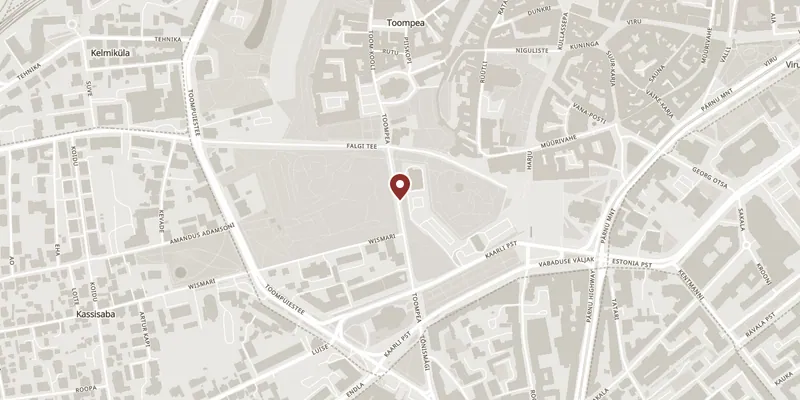
It is a five-minute walk up from Freedom Square (Vabaduse väljak) on Komandandi tee, at the foot of the Toompea slope.