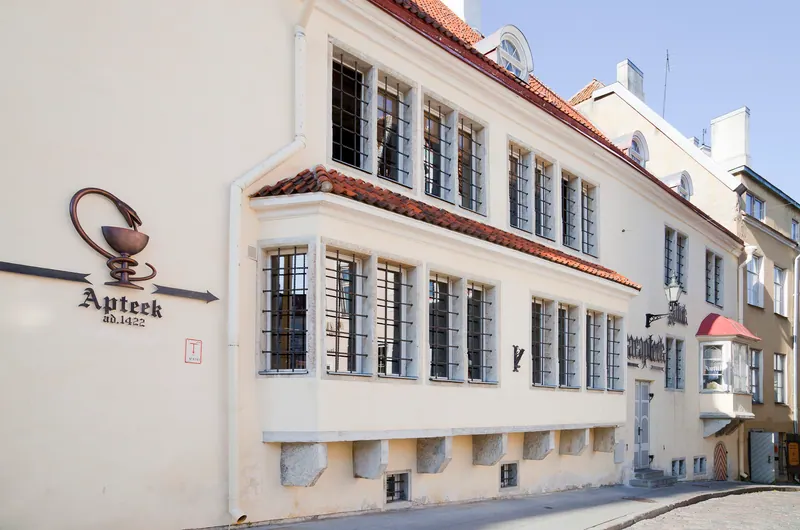
The pharmacy appears in the town records in 1422, already under its third owner, so it was open some years before that. Its own claim, and the wording matters, is to be the oldest pharmacy in Europe that has continuously been in business in the same building. Other European pharmacies are older as institutions; this one is arguing about premises and continuity, not foundation date, and on that ground the claim stands up.
One family ran it for ten generations. The Burcharts held the lease from about 1582 until 1911, and the shop supplied the council, the guilds and the town’s poor. What it sold in the Middle Ages is documented and worth reading the labels for: mummy powder, burnt hedgehog, bat powder, powdered “unicorn horn”, and marzipan — sold here as medicine long before anyone thought of it as a sweet.
There are two halves to a visit and both take about ten minutes. The front is a working modern pharmacy, so you queue with people buying paracetamol. Off it is the museum room, free to individual visitors, with the old fittings, jars, instruments and a display on medieval pharmacy and the treatments the shop actually dispensed. Guided groups of ten or more pay €2 a head, and workshops on herbal preparations are run in the cellar by arrangement.
The specific thing to do is buy something. The counter still sells claret (klaret), the spiced and sweetened wine the pharmacy sold as a restorative, alongside marzipan, herbal teas, herbal salt and a sea-buckthorn ointment. It is the only place on this list where the medieval product and the till are in the same room.
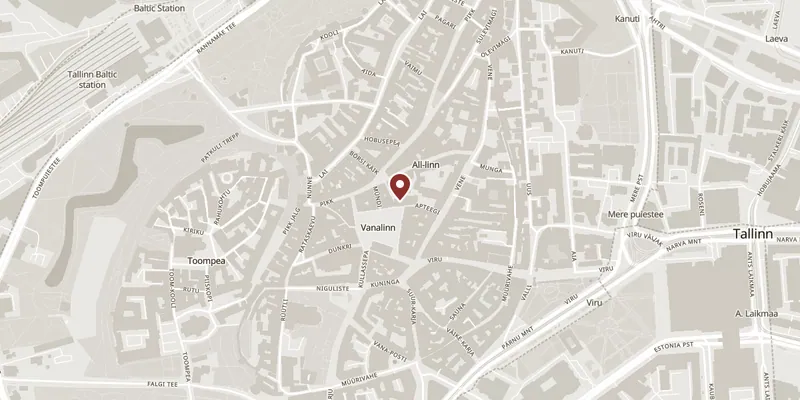
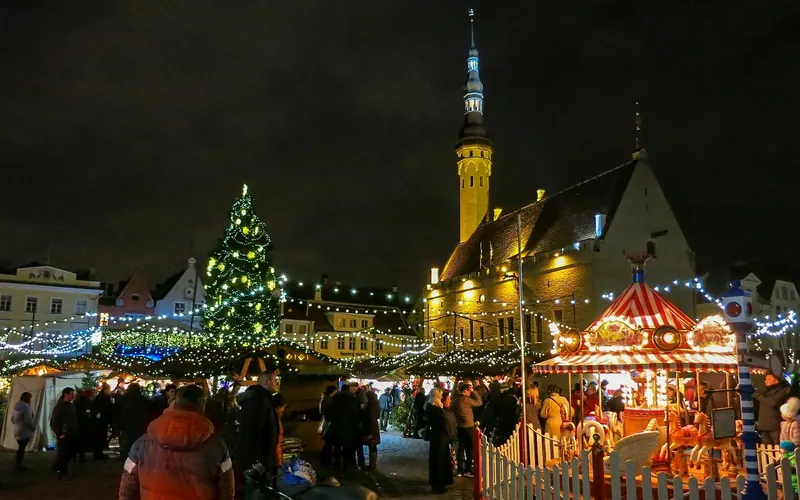
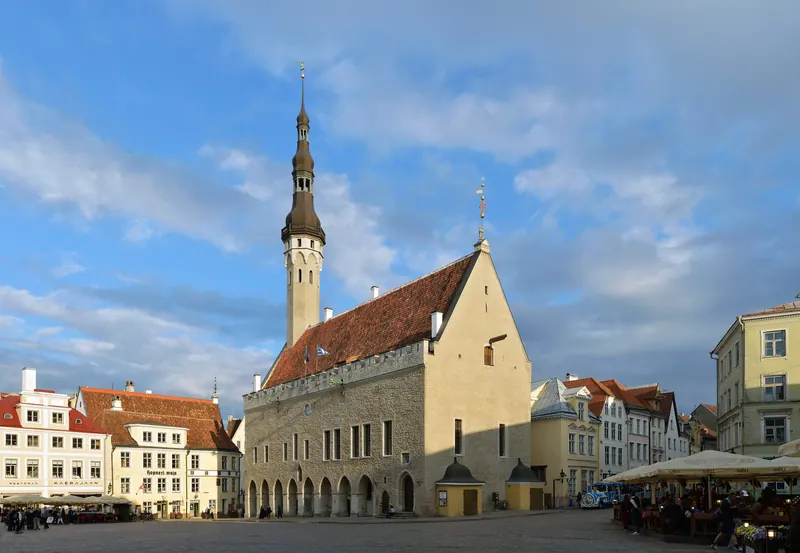
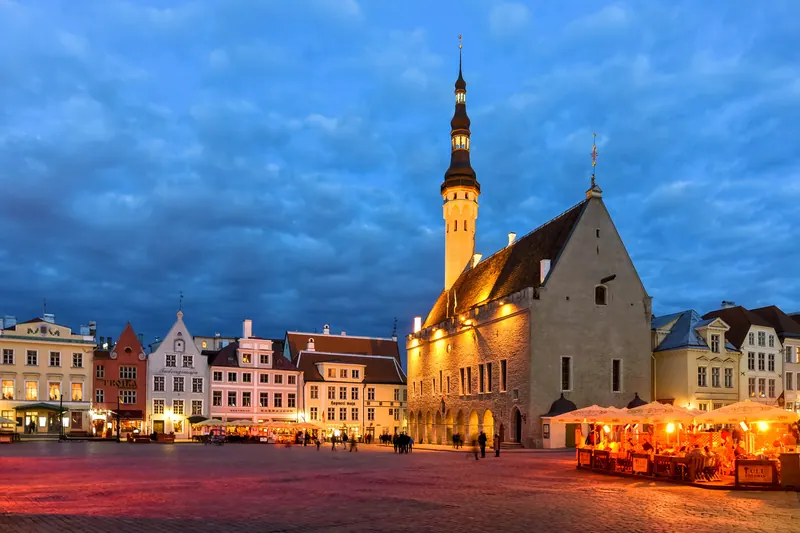
It is on the north side of Town Hall Square at number 11, thirty seconds from the Town Hall door. Open Monday to Saturday, closed on Sundays, with a short lunch break in the early afternoon.