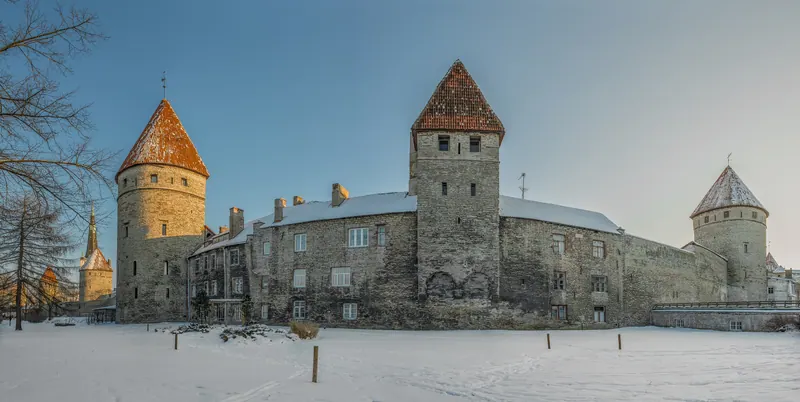
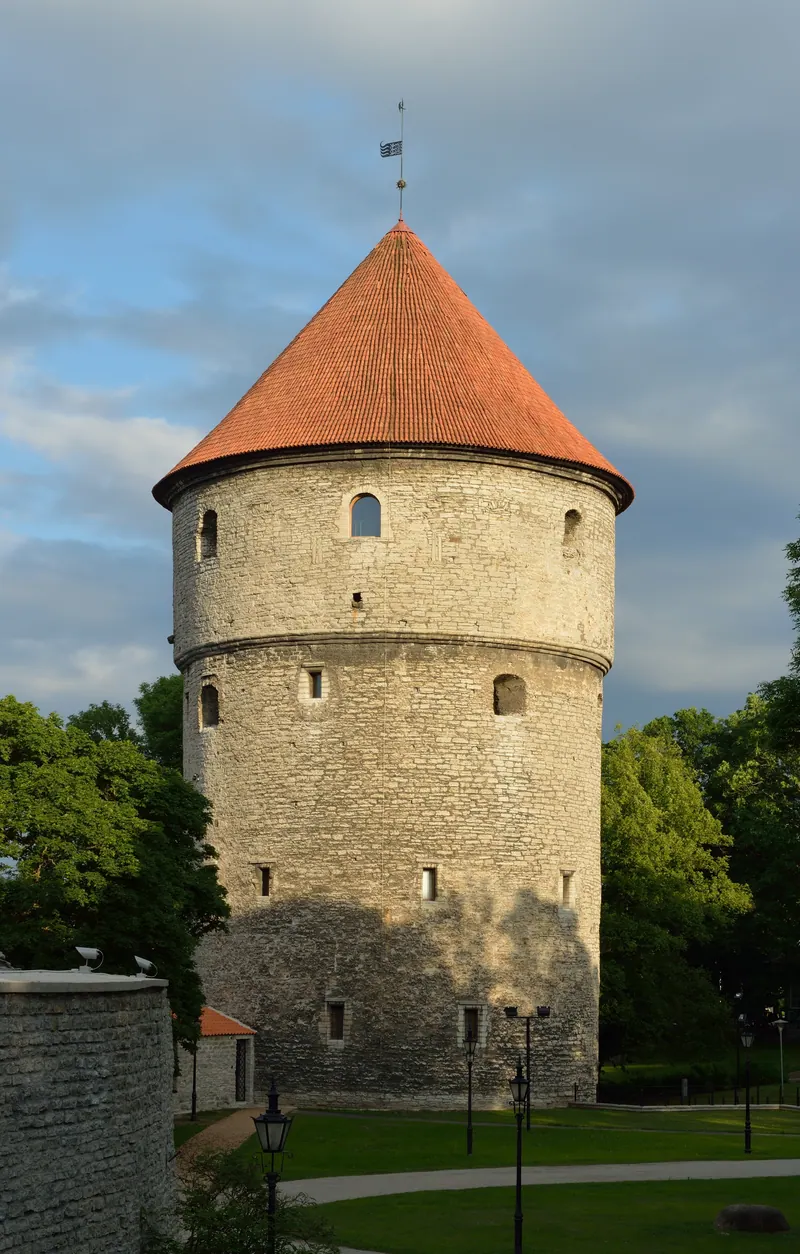
Tallinn began walling its lower town in 1265, on the orders of Queen Margaret Sambiria of Denmark, and kept building for three centuries. At its greatest extent the circuit ran about 2.4 km with 46 towers. Tallinn’s official tourism office puts what survives today at about 1.85 km of wall, 26 defensive towers, two intermediate gates and parts of two front gates — one of the most complete medieval town defences left in northern Europe, and the reason the Old Town reads as a walled town rather than a district with old bits in it.
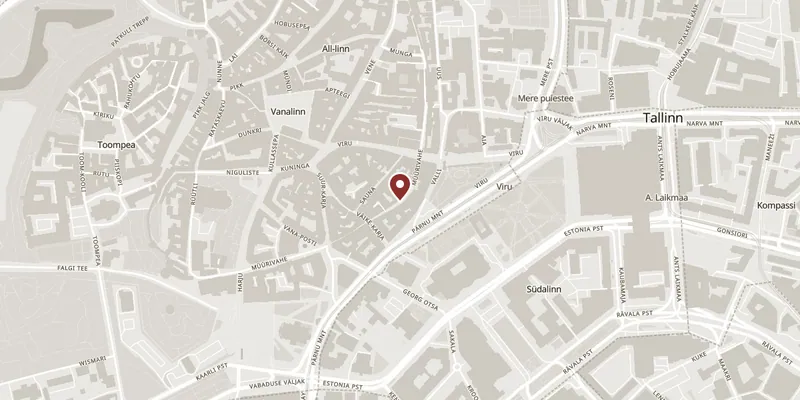
Most of it you look at from outside. Hellemann Tower, on the east wall on Müürivahe, is where you get up on top of it. The tower itself is 14th-century, now used as an art gallery with a small inn attached, and from it a walkway of nearly 200 m runs along the wall head to the Munkadetagune Tower. It is the longest continuous stretch of wall walk open in the city. What it gives you that a photograph cannot is the geometry: the arrow loops, the height of the parapet, how narrow the fighting platform actually is, and the fact that the wall was built with houses pressed against its inner face.
The stretch is covered along much of its length, which makes it a working option in bad weather, and it takes about twenty minutes at a walk. Tickets are €4 adult, €2 student, the same price all year, and free with a Tallinn Card. It opens daily 11:00–18:00 from 16 April to 14 October, and 11:00–17:00 from 15 October to 15 April on Mondays and Wednesday to Sunday — closed on Tuesdays in winter.
The other walkable stretch is the Nunne, Sauna and Kuldjala towers on the north-west corner (entrance on Väike-Kloostri, also signed from Gümnaasiumi): three 14th-century towers with a shorter piece of wall between them, €5 adult and €2 student, looking straight across at Toompea. Its hours shrink through the year and it is closed Tuesdays year round, plus Wednesdays from September to May.