Medieval Booker

Landmark ◆ Prague

Vyšehrad and the Gorlice casemates

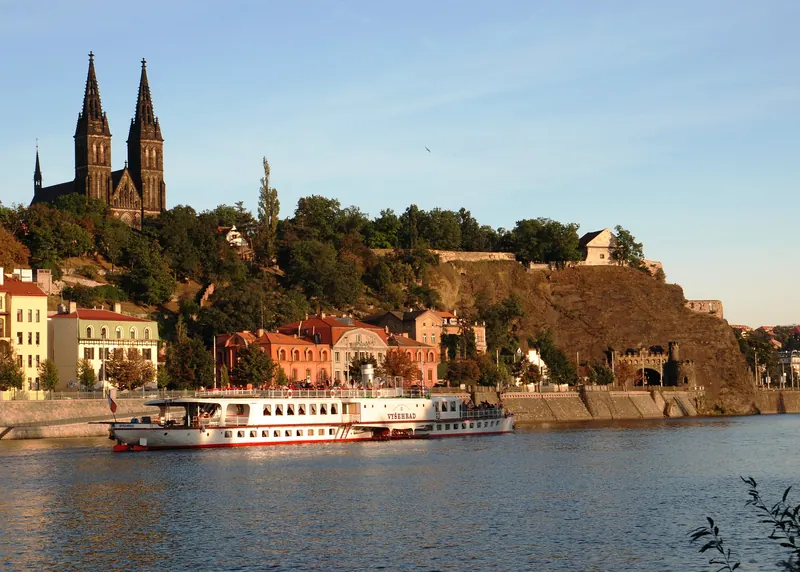
The other castle: the rock south of the city that Bohemian legend makes the seat of Libuše and where Vratislav II held court after 1070. The park is free and empty; the paid part is a guided walk through the fortress casemates to the Gorlice hall, where six original Baroque statues from Charles Bridge stand indoors.

Where and when

Where
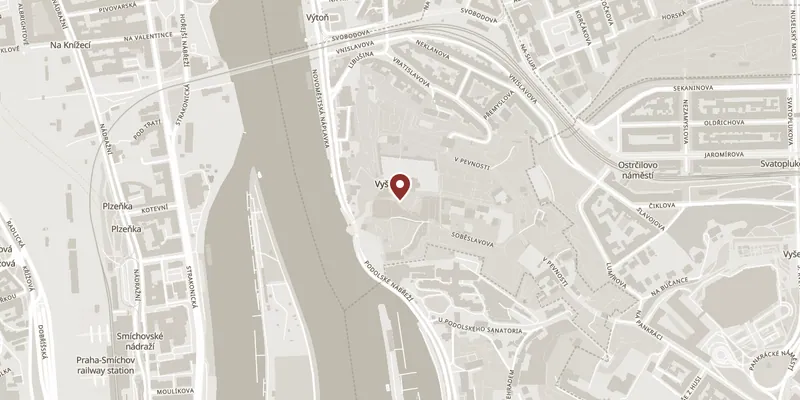
V Pevnosti 159/5b, 128 00 Praha 2, Prague, Czechia Open in Google Maps Walking directions
Era
Royal seat from 1070 under Vratislav II; rotunda c. 1100; Baroque fortress from the 1650s
Opening
Grounds open daily and freely. Casemate tours run daily except Monday, roughly 09:30–17:00, ticketed at the Infocentre or the Brick Gate; the Gothic Cellar display is closed for renovation and shown in the Gunpowder House instead (as of August 2026)
Price
Fortress grounds and park free. Guided casemates and Gorlice tour CZK 330 at the gate / 295 online for adults, 250 / 225 students and over-65s, 165 / 150 children 6–15 (as of August 2026)
Best time
Late afternoon: the west ramparts look straight down the Vltava into the sunset, and the coach tours never come here.
Good for
Free or cheapQuiet cornerGood with children
Official site
www.praha-vysehrad.cz
Map showing where Vyšehrad and the Gorlice casemates is
Open in Google Maps Walking directions © MapTiler © OpenStreetMap contributors

Checked

What is Vyšehrad and the Gorlice casemates?

Vyšehrad is a hill fort of the 10th century that became a royal seat when Vratislav II, crowned the first King of Bohemia in 1085, moved his court here and founded the collegiate chapter of SS Peter and Paul in 1070. Charles IV rebuilt it in the 1340s and made it the start of the coronation route: a new king spent the eve of his coronation here before processing to the castle. The Hussites destroyed most of it in 1420, and in the 17th century the Habsburgs flattened what remained into a Baroque artillery fortress. That is what you walk on today — bastions, gates and ramparts, not a medieval castle.

What survives from before 1420 is worth finding on the way round. The Rotunda of St Martin (about 1100) is one of the oldest standing buildings in Prague, a plain Romanesque cylinder with a cannonball lodged in the wall above the door. The foundations of the basilica of St Lawrence (late 11th century) are sheltered under a small building near the centre. Fragments of Charles IV’s gatehouse, the Špička, are built into a house on V Pevnosti. The Devil’s Column — three broken pieces of stone in the lawn — carries a legend about a bet between a priest and the devil.

The casemates are the paid attraction: a guided walk of 45–60 minutes into the tunnels the garrison used to move between bastions, ending in Gorlice, a vaulted underground assembly hall that now holds six original Baroque statues taken off Charles Bridge and replaced there by copies. Seeing them at arm’s length, indoors, under artificial light, is a completely different object from the silhouettes on the parapet. Tours are guided in Czech and English and start from the Brick Gate.

The basilica of SS Peter and Paul is neo-Gothic (1885–1903). The Gothic Cellar exhibition on Vyšehrad’s history has been displaced by renovation into the Gunpowder House as of 2026, under the title “The Rise and Fall of Vyšehrad”.
What visitors say

4.5 from 252 ratings

  • Tamrong Kamkom

    5 out of 5 2 months ago

    Good experience. The tour is very informative and interesting. I have a chance to see the original sculptures of the Charles Bridge.

    Read this review on Google
  • Stefan Danov (ninjaiscrazy)

    5 out of 5 2 months ago

    We bought the tickets online 1 day before. They are valid for the Gorlice hall and casemates with a guided tour. Petar, our guide in English was very friendly and knowledgeable, sharing interesting facts with us about the casemates, walls, air raid shelters and the Charles bridge sculptures. Stumbled upon this gem by pure accident but it easily turned out to be one of our best choices to come - after the tour, which was 45 mins, we were left at the brick gate where we got up to the castle and were treated to some very nice views of Prague, and an exhibition of Visehrad castle which our ticket also included. Bring a jacket, even in the summer as the tunnels and hall are about 15 degrees in the summer.

    Read this review on Google
  • Joya Elhajj

    5 out of 5 8 months ago

    It’s one of the important tours to see in Prague. You will get to explore the underground and to learn things about the city that Maybe locals don’t know about. Thomas is the perfect person for this job, really liked him.

    Read this review on Google

Ratings and reviews from Google. See all on Google Maps

Frequently asked questions

Is Vyšehrad free to enter?

Yes. The fortress grounds, ramparts, park and cemetery are free and open. Only the casemates tour, the Gothic Cellar exhibition and the Brick Gate gallery are ticketed.

What is in the Gorlice hall at Vyšehrad?

Six original Baroque statues removed from Charles Bridge and replaced there by copies, displayed in a large vaulted underground hall built as a garrison assembly space. It is reached on the guided casemates tour.

How much is the Vyšehrad casemates tour?

CZK 330 for an adult bought on site, or 295 online, as of August 2026. The tour lasts 45–60 minutes and is guided in Czech and English.

What is the oldest building at Vyšehrad?

The Rotunda of St Martin, built around 1100 — one of the oldest surviving buildings in Prague. A cannonball from the Prussian bombardment of 1757 is set in the wall above its door.

How do you get to Vyšehrad?

Metro C to Vyšehrad station, then a five-minute walk in through the Tábor Gate; or up the steps from Výtoň by the river if you want the climb.

Festivals in Prague

Medieval festivals in Prague
Featured
Living History & Museums Music, Feasts & Theatre +1

Karlštejnské vinobraní (Karlštejn Wine Harvest Festival with Emperor Charles IV)

Prague, Czechia

Karlštejn's wine-harvest festival brings Emperor Charles IV, Empress Elizabeth of Pomerania and a court of more than 150 costumed courtiers back to the castle he built 30 km south-west of Prague to guard the imperial crown jewels. Held on the last weekend of September, it combines ceremonial processions up to the castle, mounted knights' tournaments, period music, crafts and tastings of young wine and burčák; the 28th edition is confirmed for 26–27 September 2026.

2026
Family

More places in Prague

Places in Prague
Castle Start here

Old Royal Palace and Vladislav Hall

Romanesque core c. 1135; Vladislav Hall 1493–1502 by Benedikt Ried

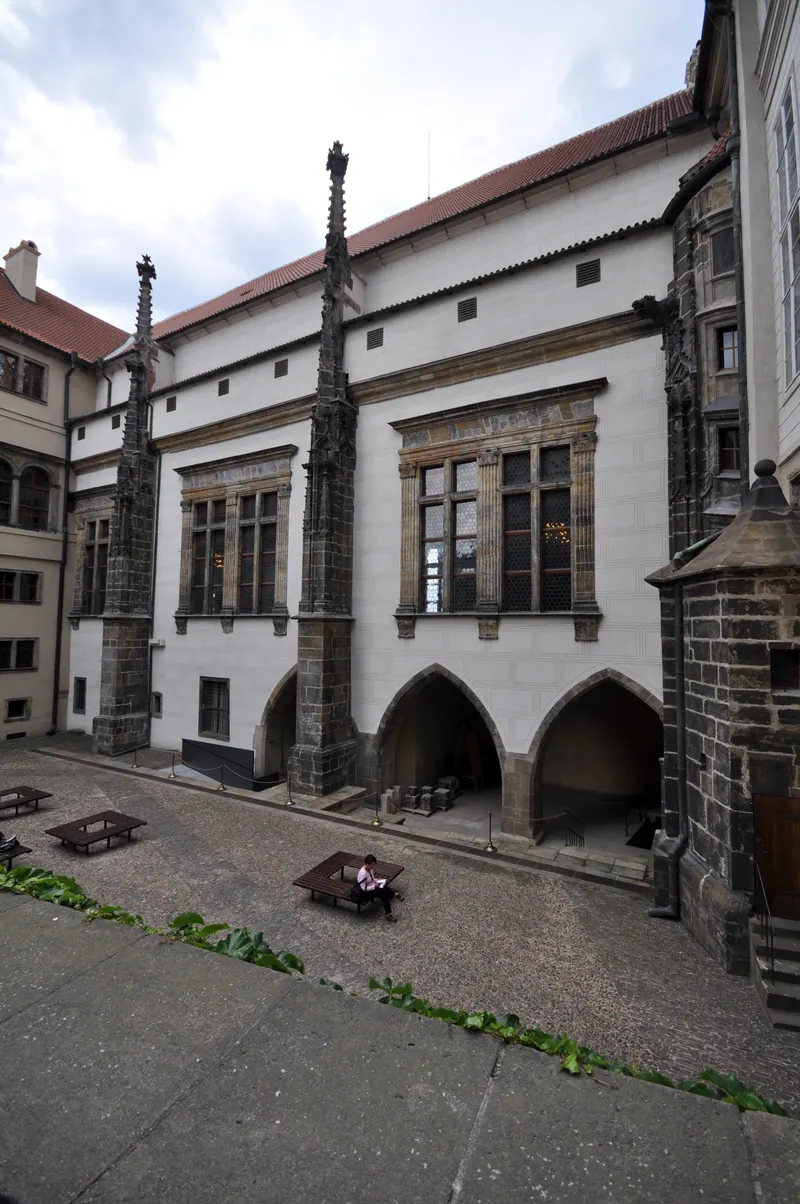
The medieval seat of the kings of Bohemia at Prague Castle, layered from a Romanesque palace of the 1130s up to Benedikt Ried's Vladislav Hall of 1493–1502 — the largest vaulted secular room in late-medieval Europe, built wide enough to hold tournaments indoors. Find the Riders' Staircase: its vault and shallow treads were made so armoured knights could ride their horses into the hall.

Works in the rain Good with children
Walking directions
Church

St Vitus Cathedral (the Wenceslas Chapel)

Begun 1344; choir by Matthias of Arras and Peter Parler; west end completed 1929

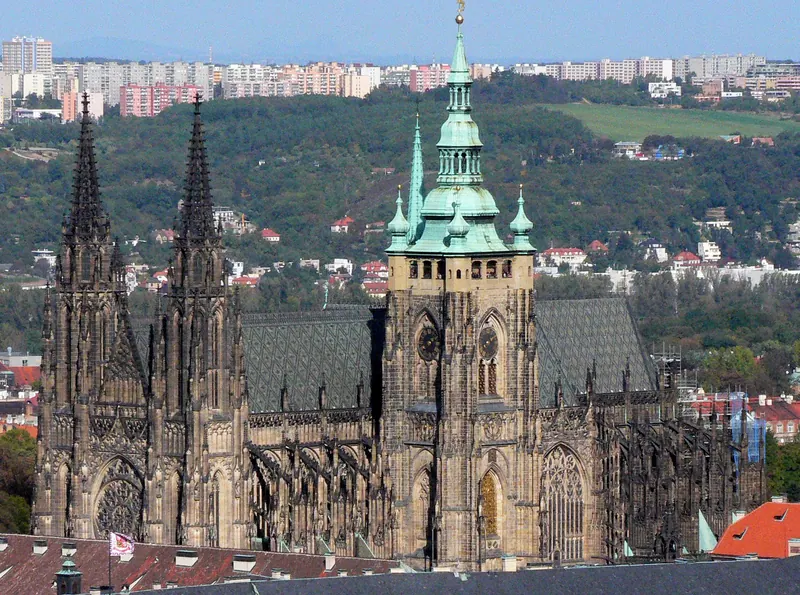
Begun in 1344 by Matthias of Arras and continued by Peter Parler, the coronation and burial church of the kings of Bohemia. Go for one room: the Chapel of St Wenceslas, walled in over a thousand polished Bohemian gemstones, with the door in its corner that has seven locks and holds the crown jewels behind it.

Works in the rain
Walking directions
Landmark

Charles Bridge

Begun 1357 under Charles IV; towers 14th–15th century

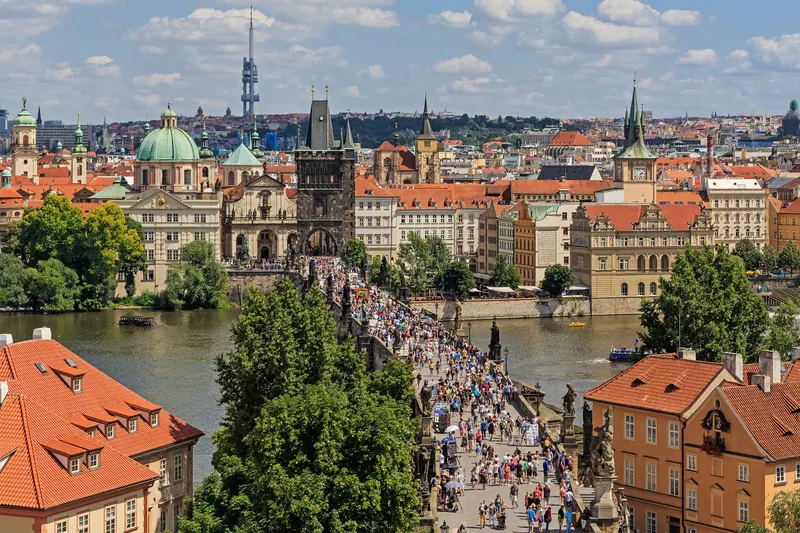
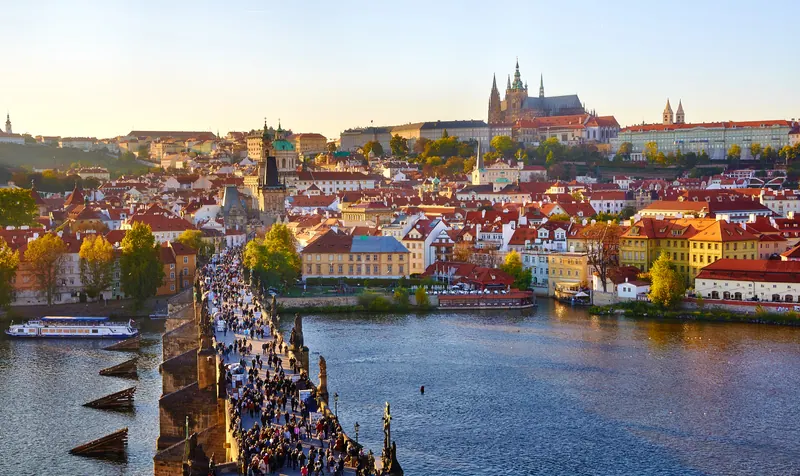
The stone bridge Charles IV began in 1357 to replace a flood-wrecked Romanesque crossing, still carrying foot traffic between the Old Town and the castle. Go for the two medieval gate towers at either end and the sculpture on the Old Town tower's east face, not for the statues on the parapet, which are copies.

Free or cheap Best in the evening Good with children
Walking directions
All articles