Medieval Booker

Landmark ◆ Prague

Charles Bridge

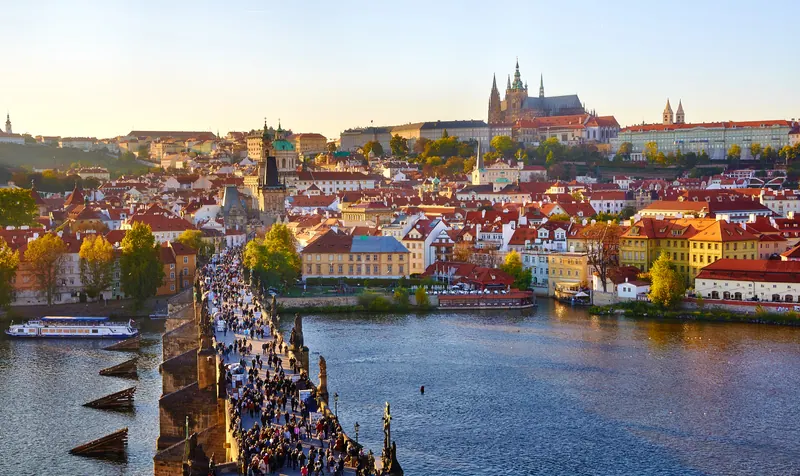
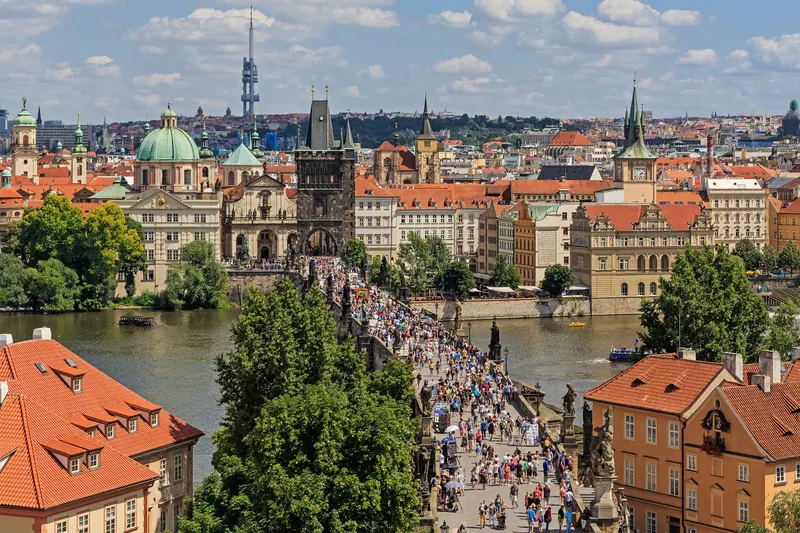
The stone bridge Charles IV began in 1357 to replace a flood-wrecked Romanesque crossing, still carrying foot traffic between the Old Town and the castle. Go for the two medieval gate towers at either end and the sculpture on the Old Town tower's east face, not for the statues on the parapet, which are copies.

Where and when

Where
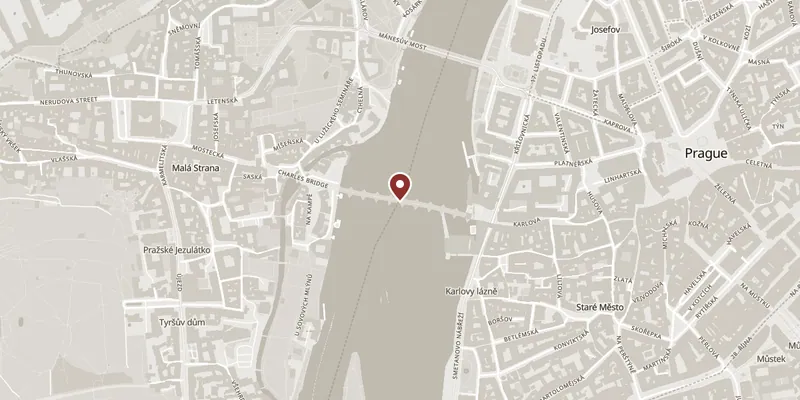
Karlův most, 110 00 Praha 1, Prague, Czechia Open in Google Maps Walking directions
Era
Begun 1357 under Charles IV; towers 14th–15th century
Opening
Bridge open at all hours. Old Town Bridge Tower: Jun–Sep 09:00–20:30; Apr–May 10:00–19:00; Dec 10:00–19:30; Jan–Mar and Oct–Nov 10:00–18:00 (as of August 2026)
Price
Free to cross. Old Town Bridge Tower CZK 250 adult / 170 reduced / 500 family, 50% off in the first hour after opening (as of August 2026)
Best time
Before 07:00, or after 22:00 in summer. The tower is half price in its first opening hour.
Good for
Free or cheapBest in the eveningGood with children
Official site
prague.eu
Map showing where Charles Bridge is
Open in Google Maps Walking directions © MapTiler © OpenStreetMap contributors

Checked

What is Charles Bridge?

Prague’s first stone crossing was the Judith Bridge of about 1170, destroyed by floods in 1342. Charles IV laid the foundation stone of its replacement on 9 July 1357; work continued under Peter Parler’s workshop and the bridge was finished in the early 15th century. It is 515.76 m long and 9.5 m wide, built of sandstone blocks on sixteen arches, and it was the only bridge across the Vltava in Prague until 1841.

The medieval substance is at the ends. The Old Town Bridge Tower stands on the first pier and was built with the bridge in the later 14th century by Parler’s workshop; its east façade — the side facing the Old Town — carries seated figures of Charles IV and his son Wenceslas IV flanking St Vitus, with the coats of arms of the lands of the Bohemian crown below. Look at it from the square in front of the tower before you climb anything; it is free and it is the best 14th-century sculpture in the open air in Prague. The west façade was smashed by Swedish cannon in the siege of 1648 and never restored. At the far end the Lesser Town towers are a pair: the lower one survives from the Judith Bridge, the taller was built in the mid-15th century.

The thirty statues along the parapet are Baroque and later — placed between 1683 and 1928 — and almost all of them are now copies. The originals went to the National Museum’s Lapidarium (closed until further notice as of August 2026) and to the Gorlice casemate hall at Vyšehrad. Two exceptions stand where they always did: the bronze St John of Nepomuk of 1683 and the gilded Calvary crucifix.

Crossing is free and unrestricted at any hour. The Old Town Bridge Tower is ticketed separately: 138 steps to a gallery about 47 m up, with fragments of Gothic painting in the passage vault on the way in.
What visitors say

4.8 from 198,479 ratings

  • John Thomson

    5 out of 5 3 weeks ago

    Structurally sound. Good bridge, would walk it again. A quintessential part of a Prague visit. Well worth a slow walk across. Plenty of cartoonists, status, sights, small stalls and photo opportunities. It can get busy because this is both a tourist hotspot and functional connection within the city.

    Read this review on Google
  • bledea andrei

    5 out of 5 3 weeks ago

    Charles Bridge is one of Prague's most iconic landmarks and a must-visit attraction. Built in the 14th century, it offers stunning views of the Vltava River, Prague Castle, and the historic Old Town. The impressive Baroque statues and medieval atmosphere make it a truly unforgettable place. I highly recommend visiting early in the morning** to avoid the crowds. The bridge is much quieter, the light is perfect for photos, and you can fully appreciate its beauty and historic charm. As the day goes on, especially during peak tourist season, it becomes very crowded. A beautiful and historic landmark that should not be missed when visiting Prague.

    Read this review on Google
  • Burak Delibaş

    5 out of 5 a month ago

    Charles Bridge is the most iconic landmark in Prague and one of the city's highlights. No matter what time you visit, the atmosphere is unique. The historic statues lining the bridge, along with street musicians and local artists, make the walk especially enjoyable. We visited both during the day and in the evening. Around sunset, the views were absolutely stunning. On one side, you can admire Prague Castle, while the other offers beautiful views over the Vltava River, making it a perfect place for photography. If possible, visit early in the morning to avoid the crowds and enjoy a quieter experience. During the day, the bridge becomes very busy. Walking across Charles Bridge is something you simply shouldn't miss when visiting Prague.

    Read this review on Google

Ratings and reviews from Google. See all on Google Maps

Frequently asked questions

Do you have to pay to walk across Charles Bridge?

No. The bridge is a public street, free and open at all hours. Only the bridge towers are ticketed.

Are the statues on Charles Bridge original?

Almost all are copies. The originals, placed between 1683 and 1928, were moved to the National Museum's Lapidarium and to the Gorlice hall at Vyšehrad. The bronze St John of Nepomuk of 1683 and the Calvary crucifix are originals in place.

How old is Charles Bridge?

Charles IV laid the foundation stone on 9 July 1357 and the bridge was completed in the early 15th century. It replaced the Judith Bridge of about 1170, which floods destroyed in 1342.

Is it worth climbing the Old Town Bridge Tower?

Yes if you want the bridge from above and a close look at Parler-workshop sculpture. It is 138 steps to a gallery about 47 m up, CZK 250 for an adult as of August 2026, with half price in the first hour after opening.

When is Charles Bridge least crowded?

Before about 07:00 and after 22:00. In daylight hours between 10:00 and 20:00 it is continuously busy in every season.

Festivals in Prague

Medieval festivals in Prague
Featured
Living History & Museums Music, Feasts & Theatre +1

Karlštejnské vinobraní (Karlštejn Wine Harvest Festival with Emperor Charles IV)

Prague, Czechia

Karlštejn's wine-harvest festival brings Emperor Charles IV, Empress Elizabeth of Pomerania and a court of more than 150 costumed courtiers back to the castle he built 30 km south-west of Prague to guard the imperial crown jewels. Held on the last weekend of September, it combines ceremonial processions up to the castle, mounted knights' tournaments, period music, crafts and tastings of young wine and burčák; the 28th edition is confirmed for 26–27 September 2026.

2026
Family

More places in Prague

Places in Prague
Castle Start here

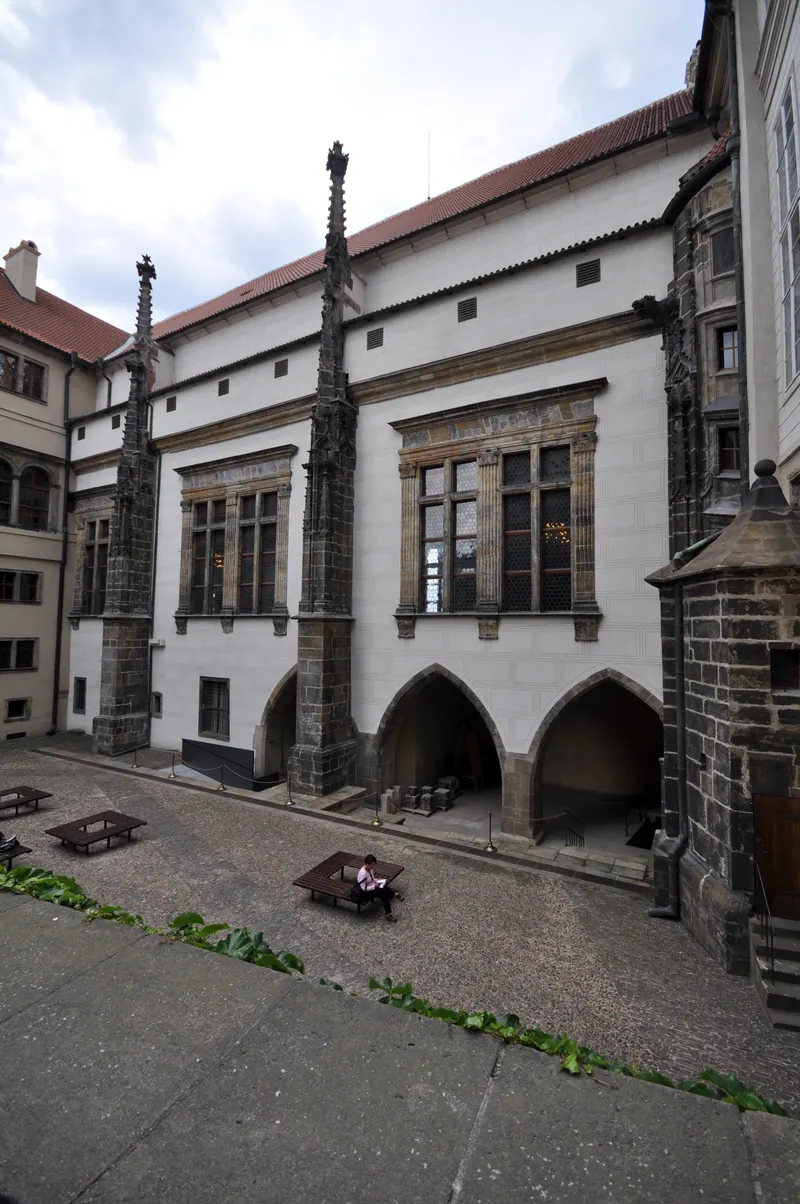
Old Royal Palace and Vladislav Hall

Romanesque core c. 1135; Vladislav Hall 1493–1502 by Benedikt Ried

The medieval seat of the kings of Bohemia at Prague Castle, layered from a Romanesque palace of the 1130s up to Benedikt Ried's Vladislav Hall of 1493–1502 — the largest vaulted secular room in late-medieval Europe, built wide enough to hold tournaments indoors. Find the Riders' Staircase: its vault and shallow treads were made so armoured knights could ride their horses into the hall.

Works in the rain Good with children
Walking directions
Church

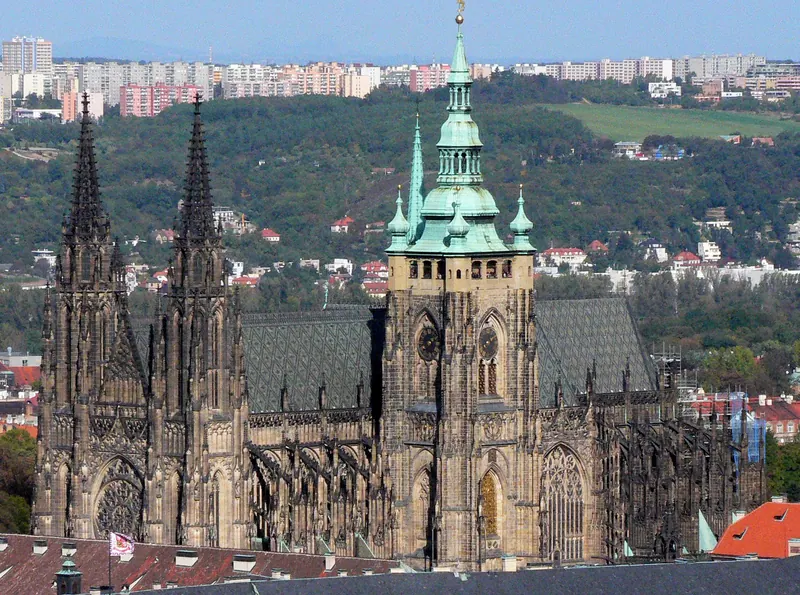
St Vitus Cathedral (the Wenceslas Chapel)

Begun 1344; choir by Matthias of Arras and Peter Parler; west end completed 1929

Begun in 1344 by Matthias of Arras and continued by Peter Parler, the coronation and burial church of the kings of Bohemia. Go for one room: the Chapel of St Wenceslas, walled in over a thousand polished Bohemian gemstones, with the door in its corner that has seven locks and holds the crown jewels behind it.

Works in the rain
Walking directions
Castle

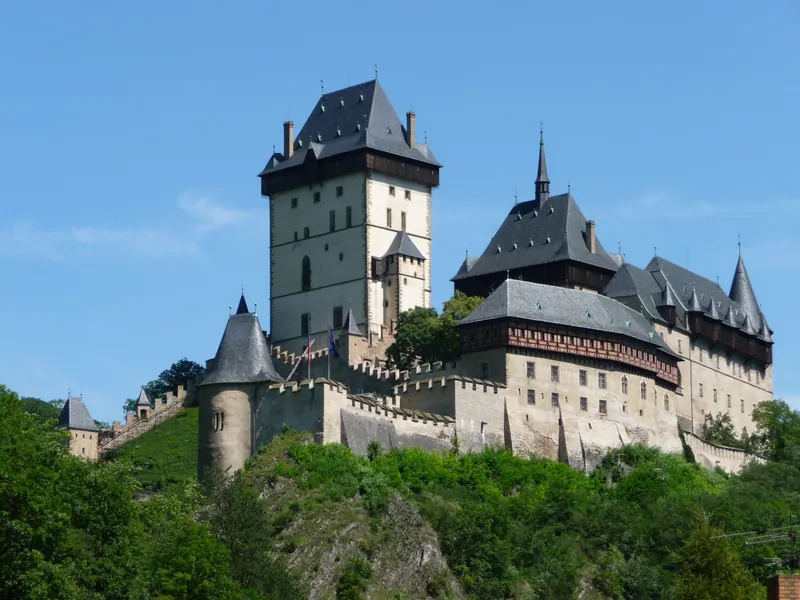
Karlštejn Castle

Founded 1348 by Charles IV, consecrated 1365; rebuilt by Josef Mocker 1887–99

The castle Charles IV built between 1348 and 1365 on a rock above the Berounka, 30 km from Prague, purely to hold the imperial regalia and his relic collection. Book the second route months ahead: it is the only way into the Chapel of the Holy Cross, whose walls carry 129 painted panels by Master Theodoric.

Good with children
Walking directions
All articles